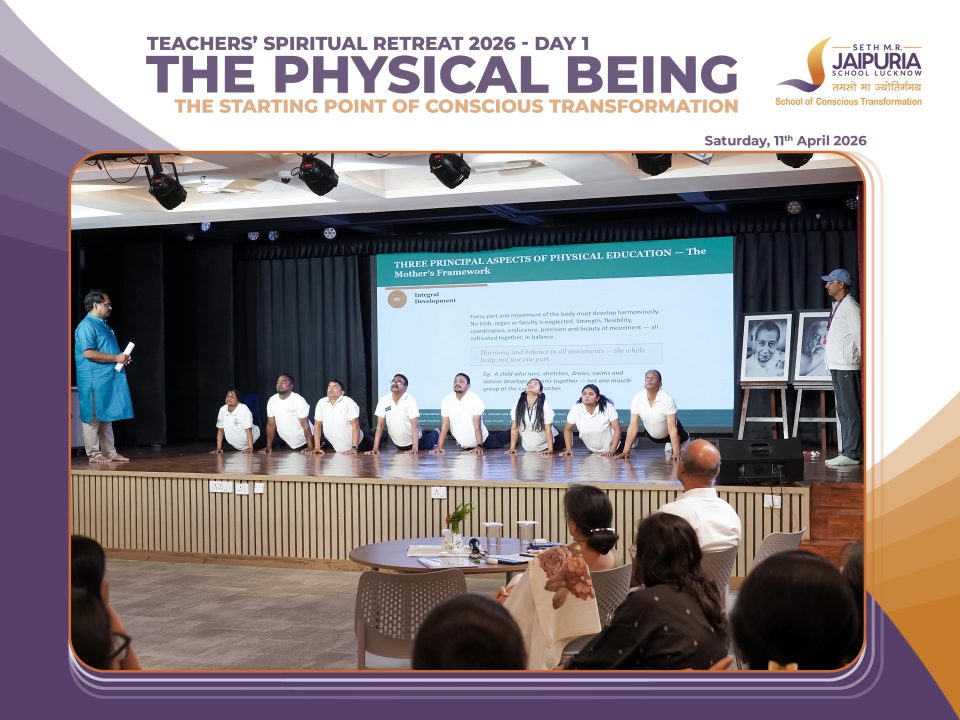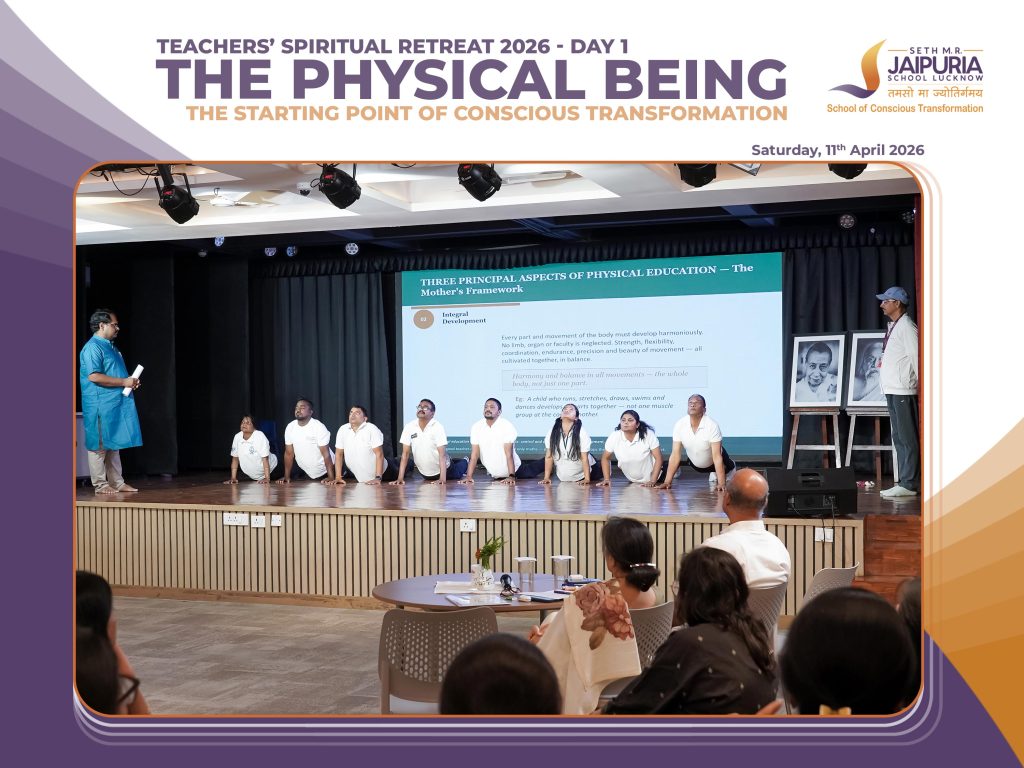


Exploring the Physical Being: Day 1 of SMRJ Teachers’ Spiritual Retreat
April 15, 2026
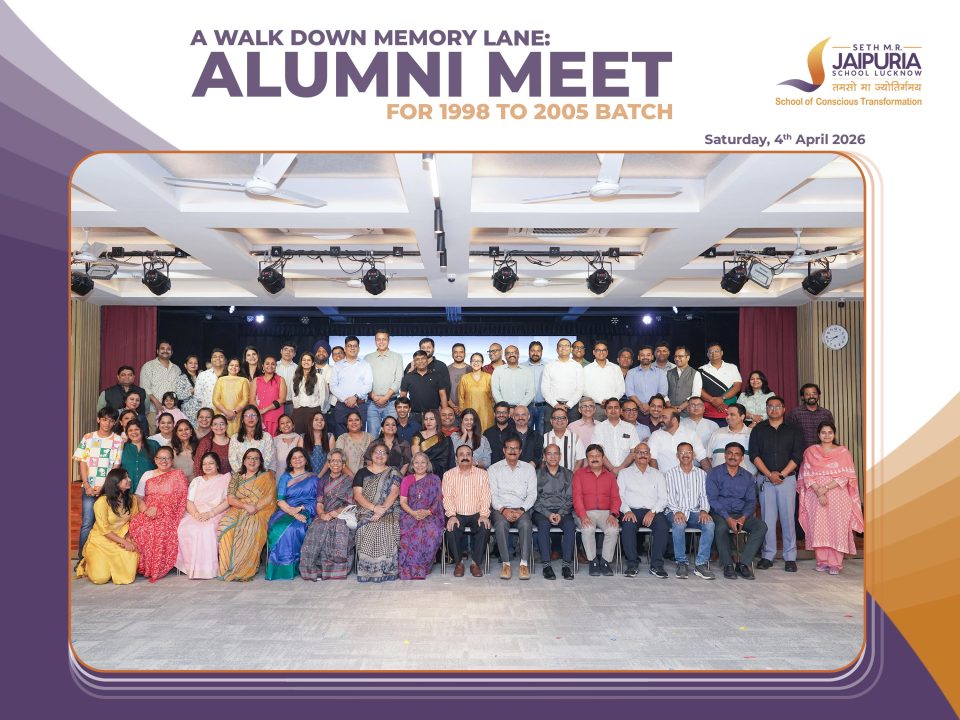
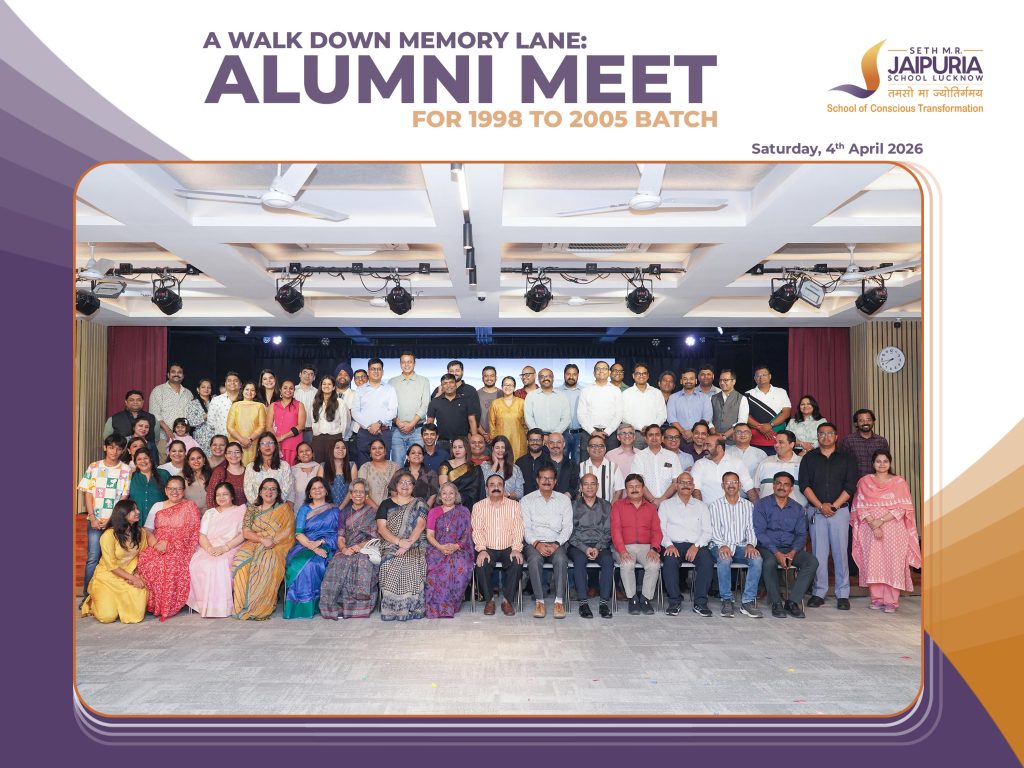
A Walk Down Memory Lane: Alumni Meet for 1998–2005 Batch
April 16, 2026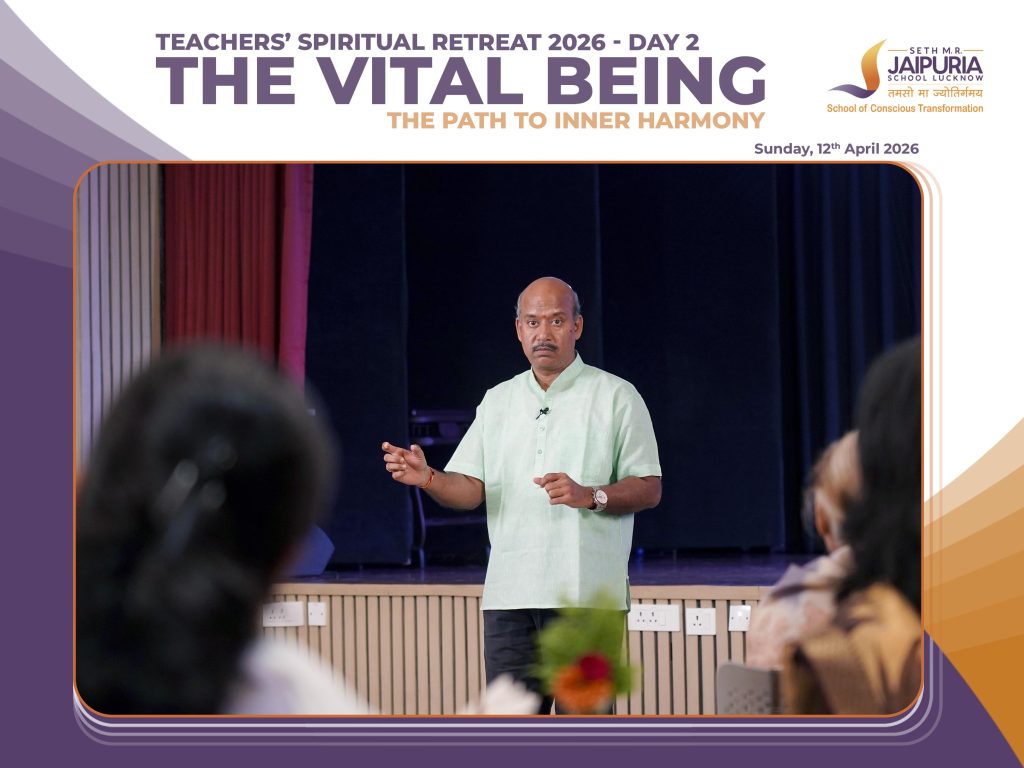
The second day of the Teachers’ Spiritual Retreat 2026 unfolded as a deeper inward journey, moving beyond the physical into the dynamic realm of the vital being. Building on the foundation of the previous day, the sessions invited educators to explore the Pranamaya Kosh, the seat of energy, emotions, desires, and inner drive that shapes human experience.
A Glance at the Day
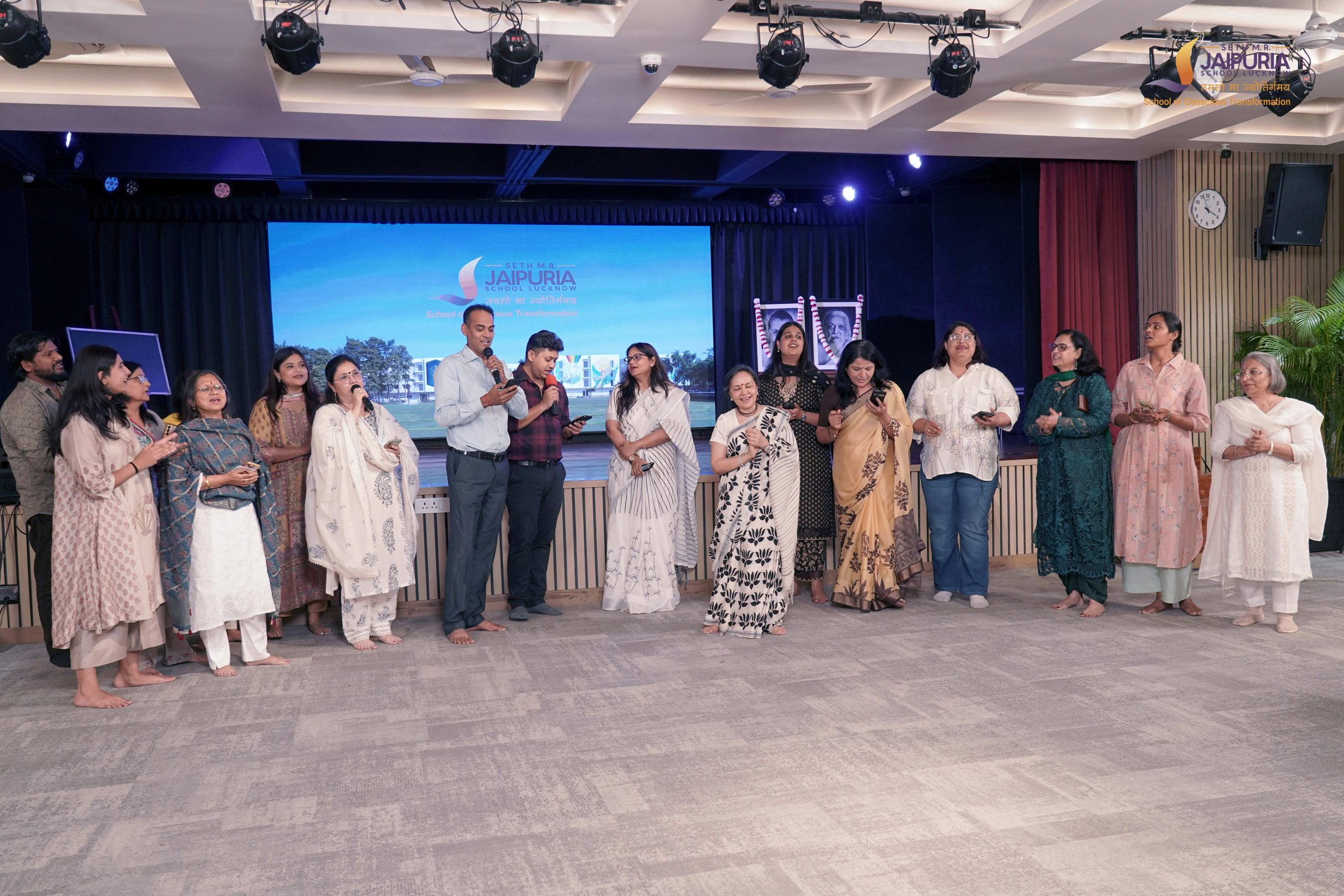
The day centred on vital education, focusing on how our sense organs influence consciousness and behaviour. It began with reflections on Sanskrit shlokas, highlighting how their sound creates calmness, joy, and a deeper inner connection.
Discussions then moved to the power of language, emphasising that the words children hear and use shape their emotional and mental development. Teachers stressed the need to consciously encourage refined speech and make such practices a part of everyday classroom culture.
The sessions also explored how the five senses, or karmendriyas, are linked to action, making awareness essential in how we see, speak, and respond. Teachers reflected on responding with calmness and balance rather than reacting impulsively.
Exploring the Inner Conflict Within Through a Skit
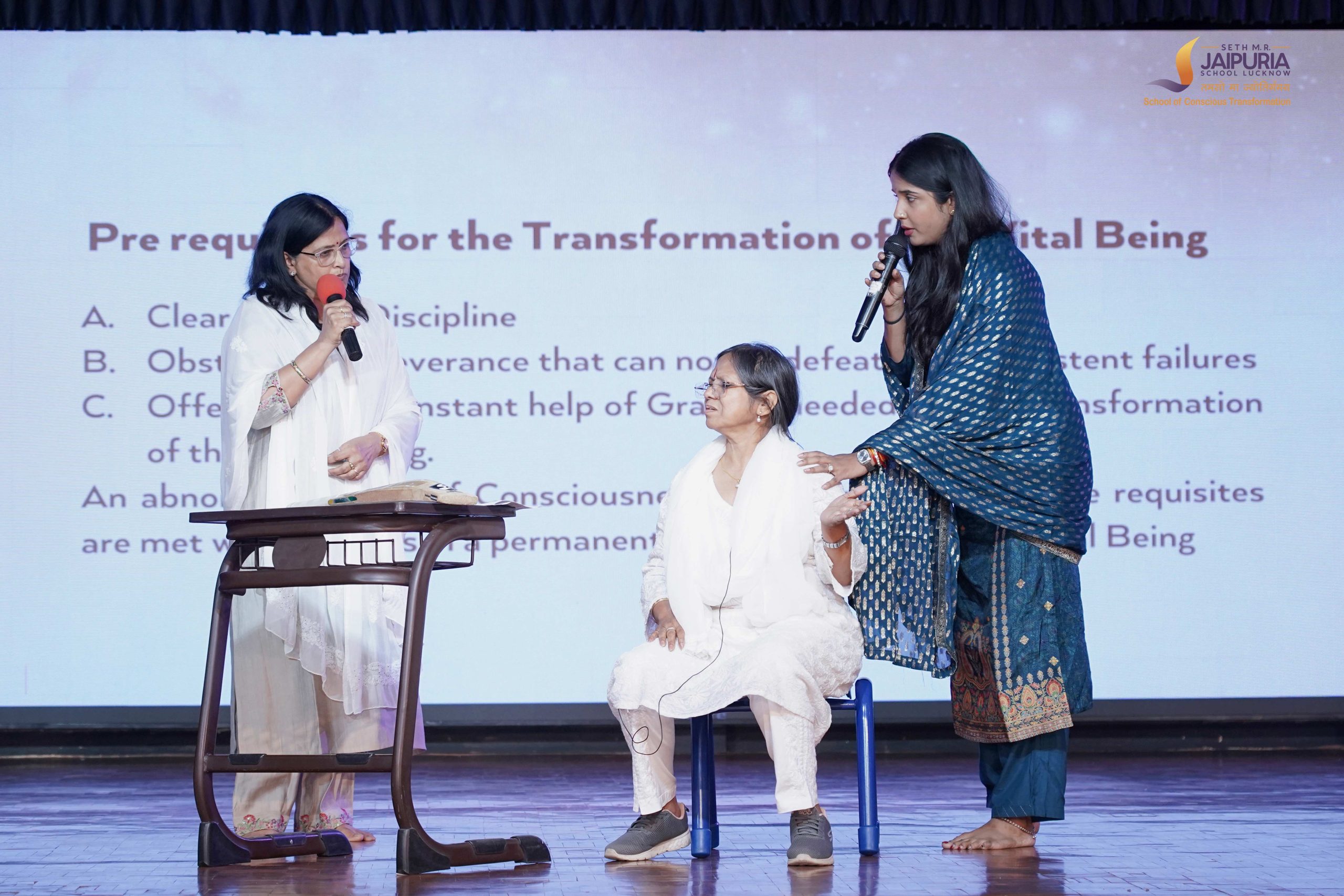
Through a presentation on light and shadow, the teachers brought out the inner conflict every individual faces between clarity and confusion, discipline and distraction. Using Arna’s journey, they showed how the real struggle is not external but within, where the mind, body, and emotions often pull in different directions.
Later, through another presentation, teachers narrated a story in which Krishna and Balram encounter a demon that represents inner fear, showing how it grows stronger when fuelled by doubt and hesitation, and weakens when one turns inward and finds strength within. In another act, they portrayed a real-life situation where a young woman, torn between fear and compassion after witnessing an accident, ultimately chooses to follow her inner voice and help, highlighting how everyday choices are guided by what we choose to listen to within ourselves.
Insights into the Vital Being
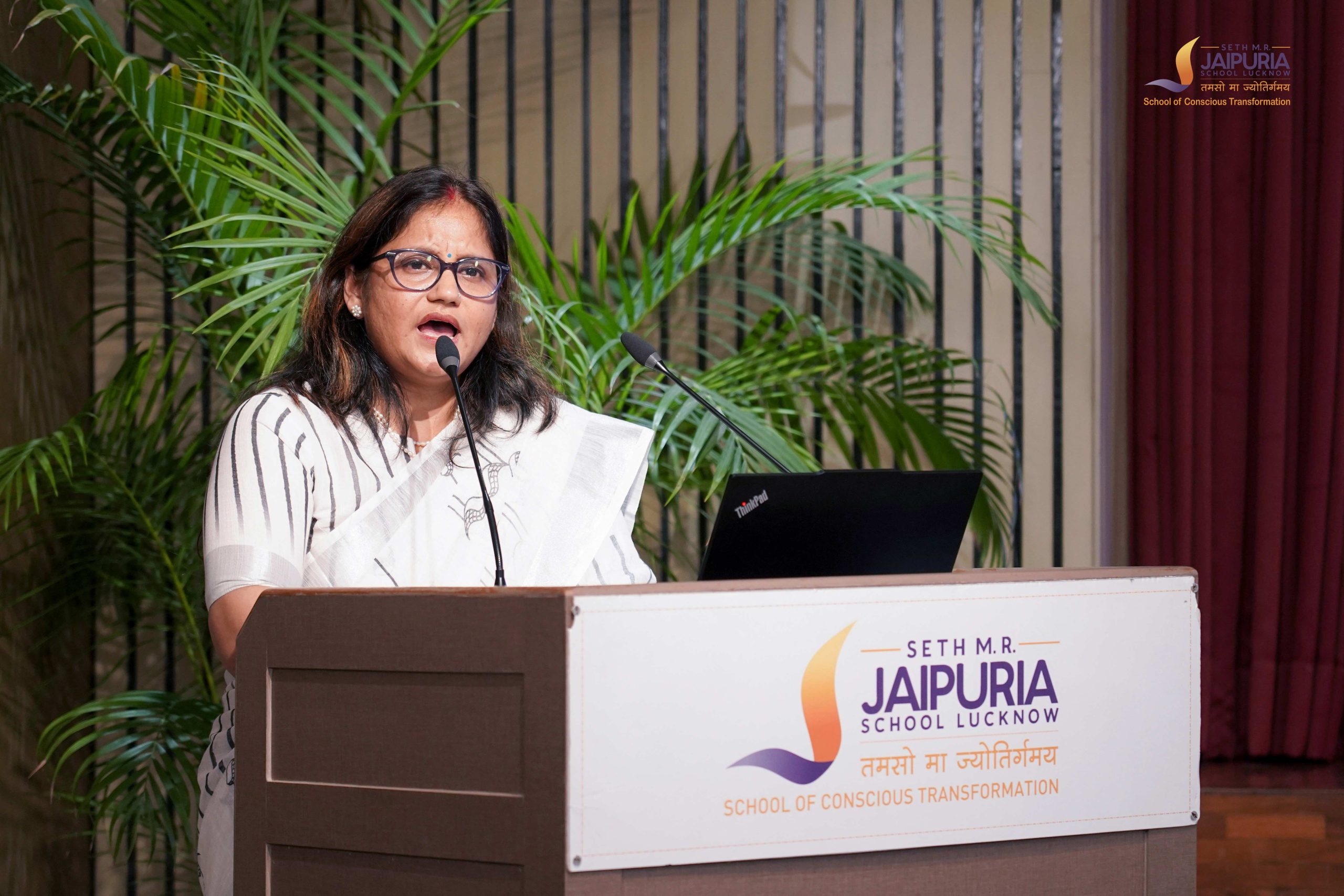
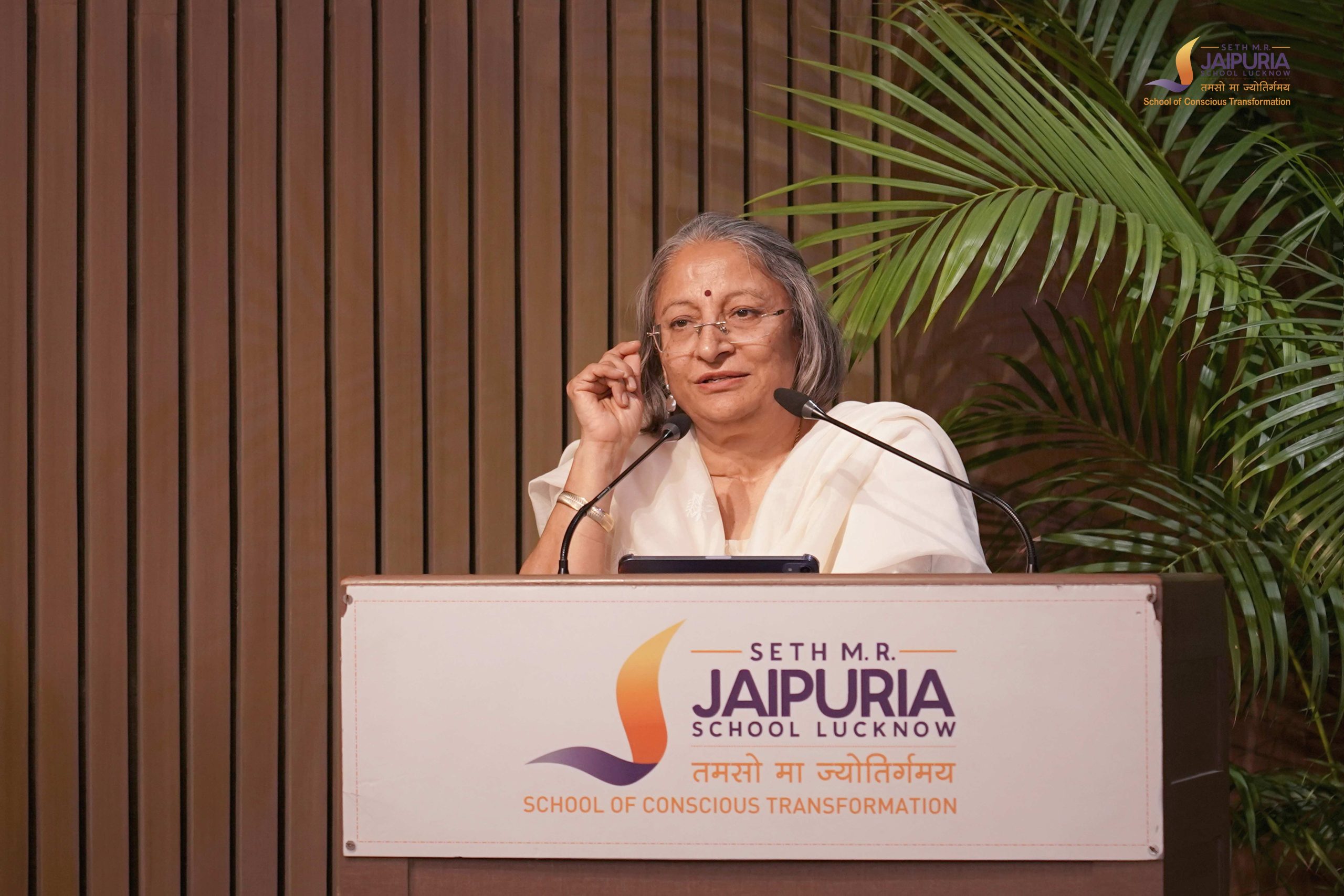
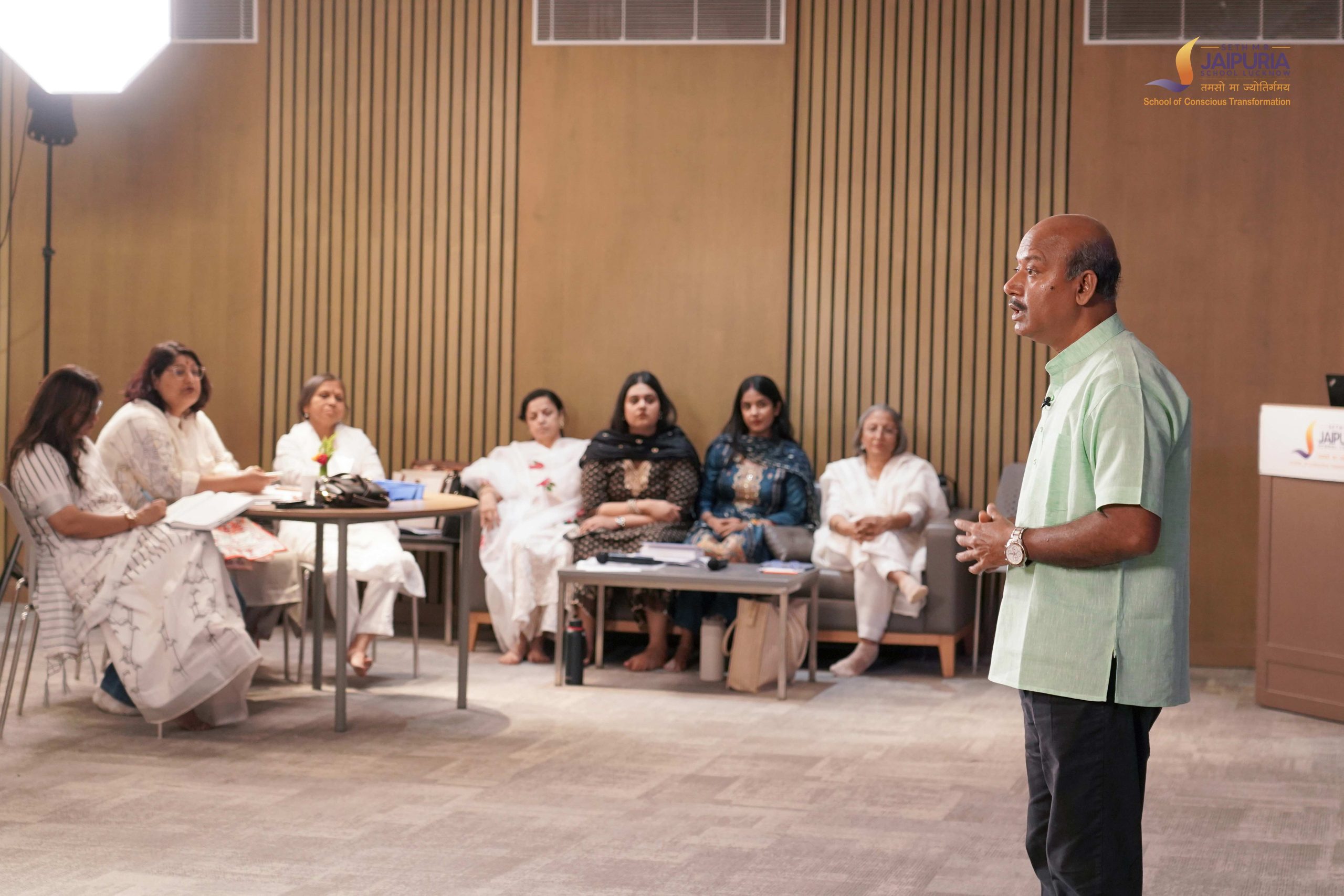
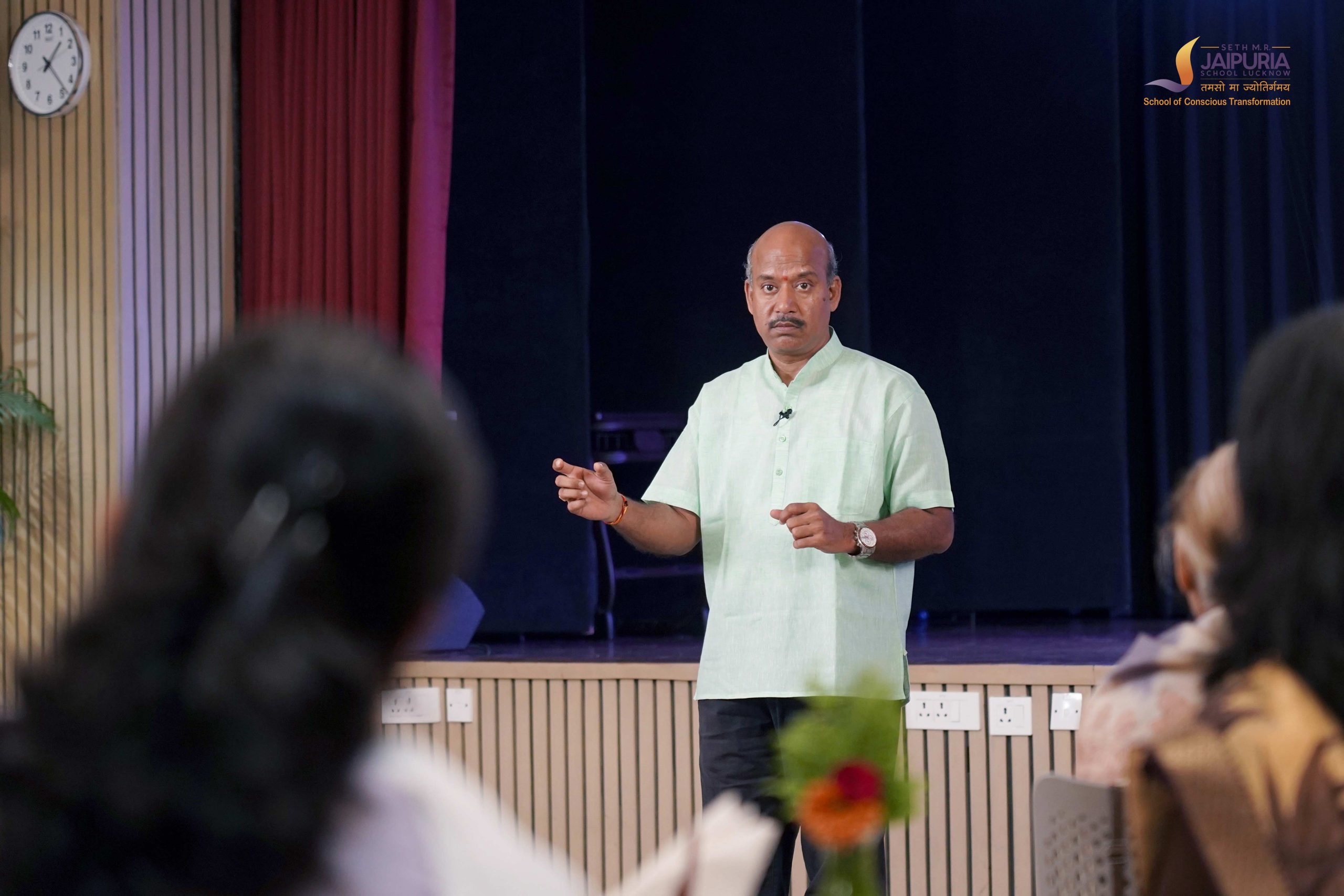
Following the presentations, Prof. Sampadananda Mishra, Dean, Culture and Director, Centre of Human Sciences at Rishihood University, led an insightful session on the vital being, shedding light on the role of life energy in human growth and transformation.
Expanding on the idea of inner development, he spoke about the significance of prana as the force that sustains all aspects of life. He said, “Prana is that force which animates everything within us. The moment it withdraws, the senses, the mind, and the body lose their support. It is this life force that allows every aspect of our being to function and evolve.”
He further emphasised the importance of vital education in shaping human consciousness. Prof. Sampadananda said, “The vital is not something to be rejected or feared. It is the very source of our energy, enthusiasm, and dynamism. But when it remains unrefined, it pulls us towards impulses and limitations. The aim of education is to transform this vital into a conscious and guided force.”
Explaining the journey of human consciousness, he brought in a broader philosophical perspective. He added, “Human life is part of a larger evolutionary journey of consciousness. We are not meant to remain where we are. We are meant to grow, to transform, and to move towards a higher possibility of being.”
Experiencing the Senses Firsthand
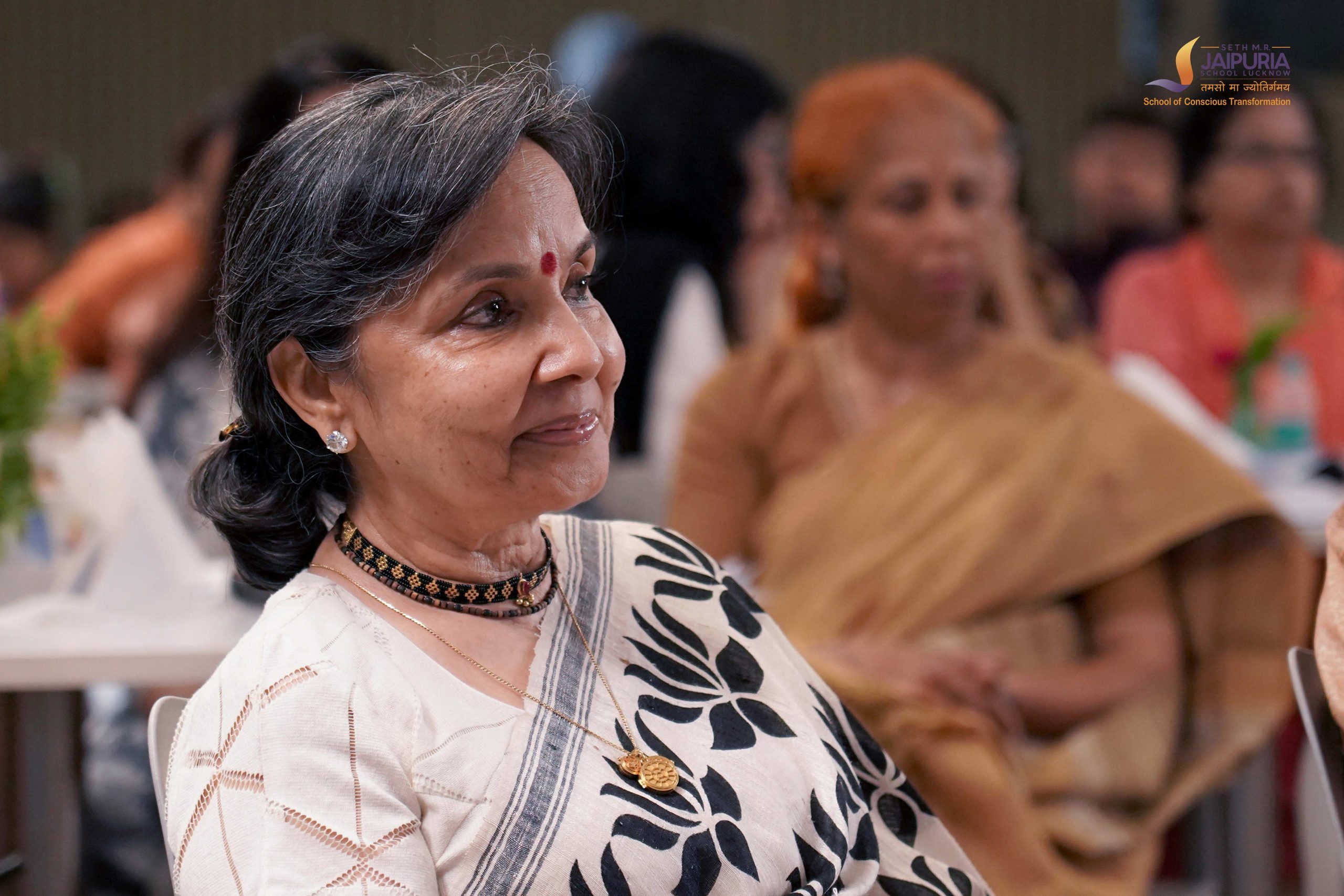
After the session, Nischala Ma’am conducted a sensory activity in which teachers explored the power of their senses through hearing, touch, and taste. The exercise helped them experience how the vital being responds differently to each sensation and how, when approached with awareness, these responses can be refined and transformed. It also brought attention to the physical presence of nature, making participants realise that when we engage consciously with our surroundings, even simple sensory experiences can deepen our connection and understanding.
Finding Connection in Nature
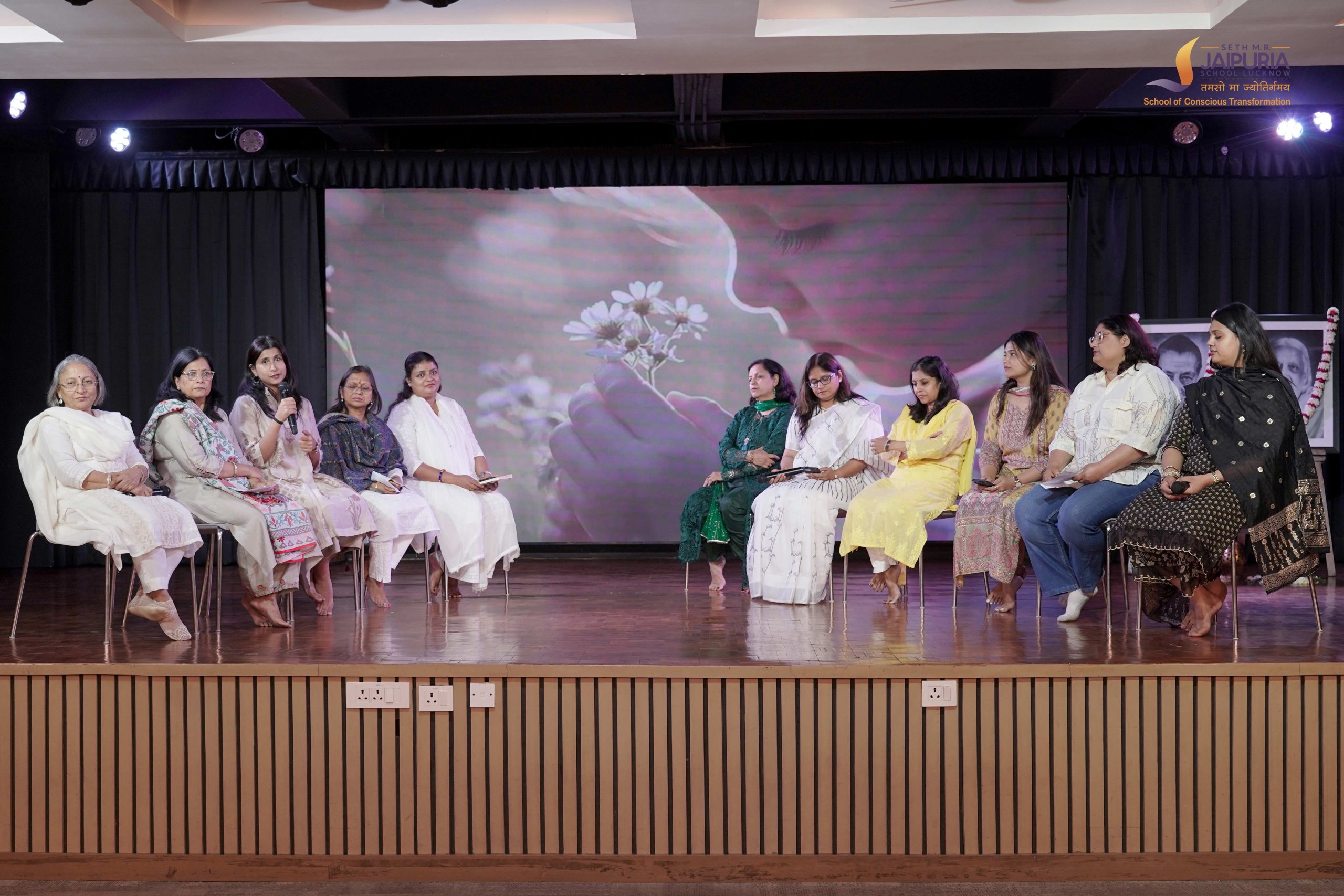
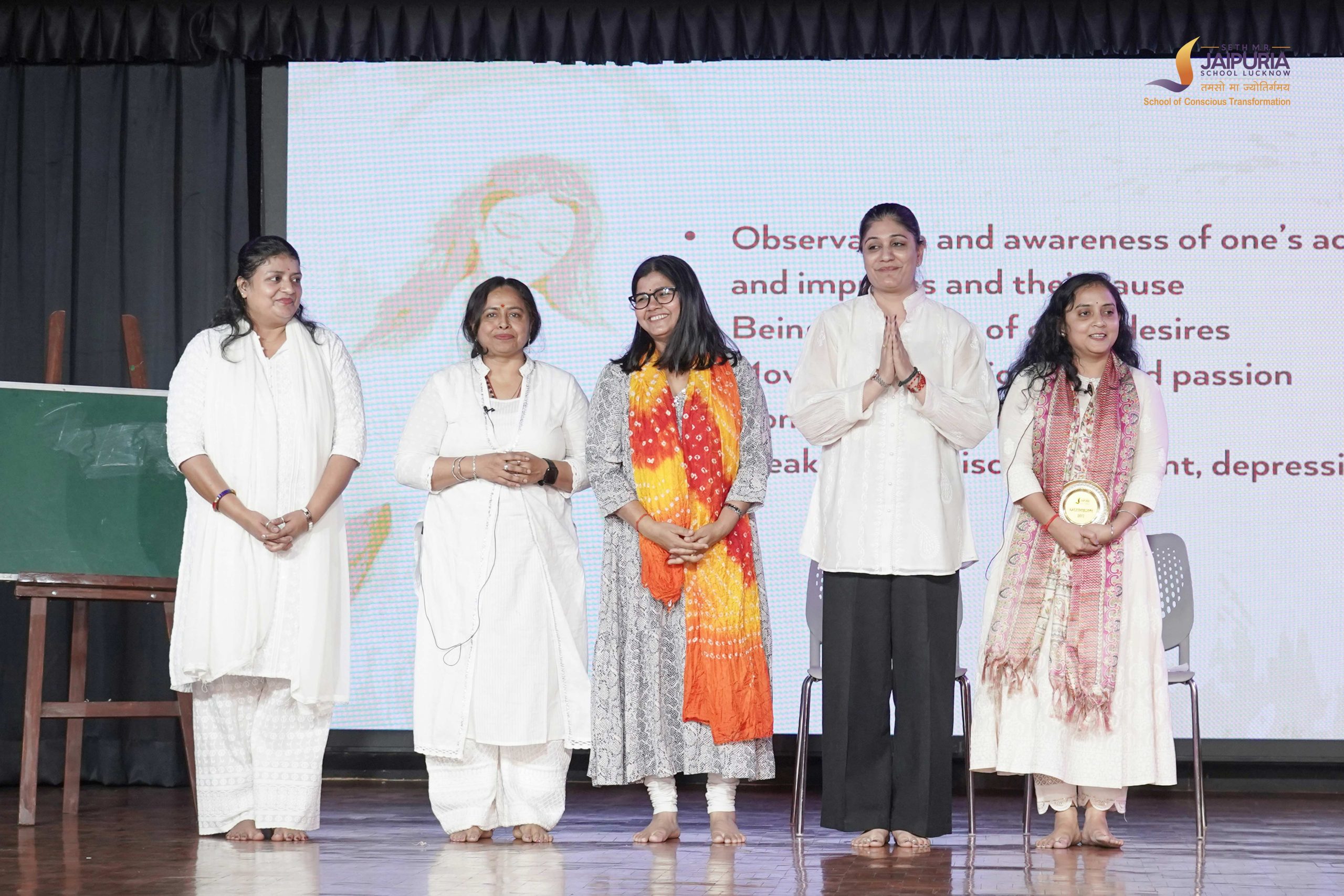
There was also a panel discussion where teachers shared how they connect with nature, and the conversation felt deeply personal. One teacher spoke about her connection with the sea, describing the simple yet beautiful feeling of sand slipping beneath her feet. Another teacher reflected on flowers, how their fragrance brings calmness, and how sunflowers follow the Fibonacci sequence, making one pause and wonder about the design of nature.
The discussion also touched upon birds, with teachers sharing moments of watching them build nests with such care. They spoke about how something so small can create such presence, and how their chirping, when truly heard, brings a quiet sense of peace. The panel brought out how these everyday experiences with nature hold meaning when we take the time to notice them.
When the Classroom Became a Mirror
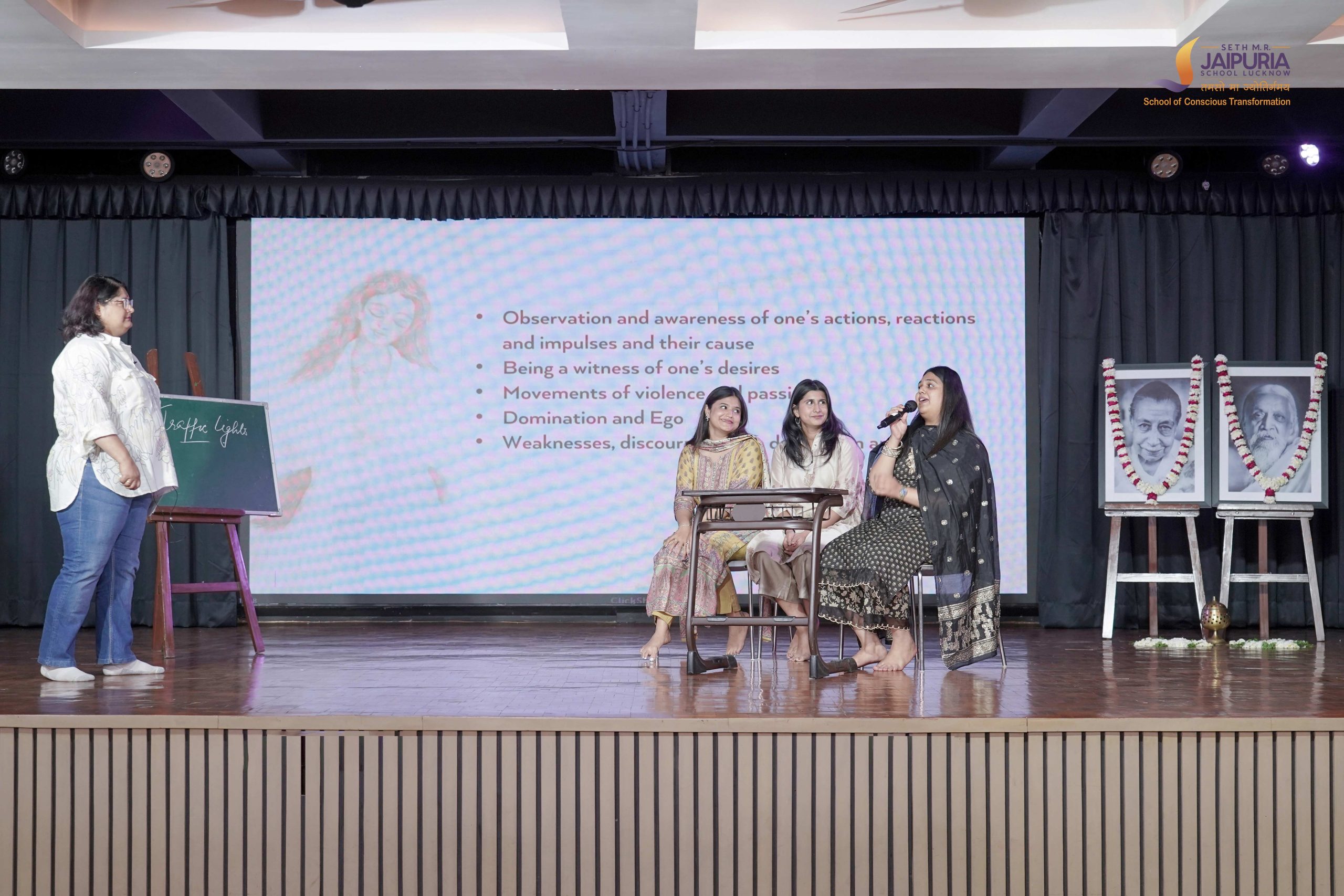
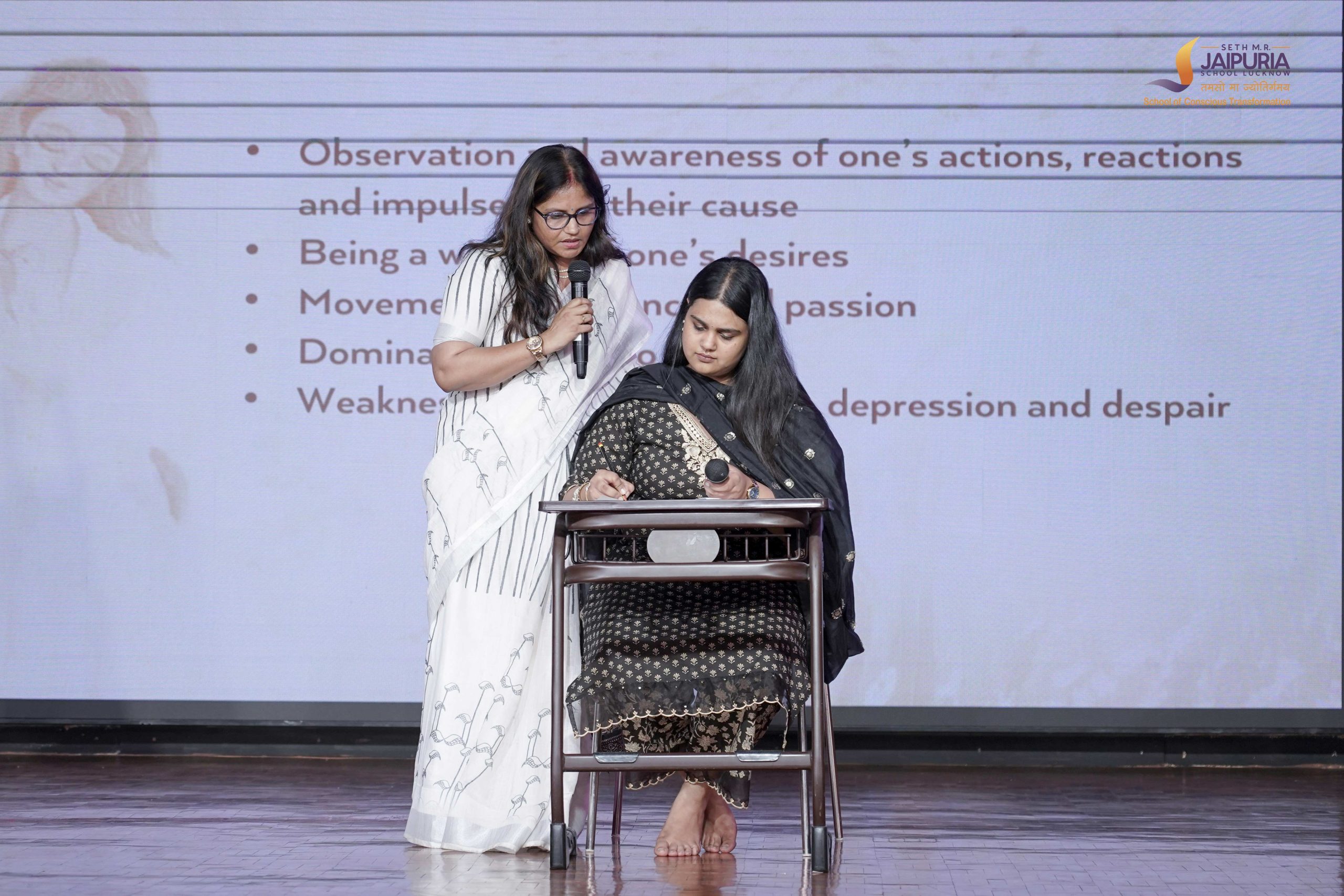
To bring the concept of vital education into a relatable setting, a skit was presented by a group of teachers, built around everyday classroom situations and student life. It began with a simple incident of a teacher reacting impulsively to a student’s comment, and then reimagined the same moment with awareness and a calmer response.
The play then moved into student interactions, showing how emotions like ego, distraction, and lack of focus affect behaviour, especially through the character of a child struggling to concentrate. As the scenes unfolded, it showed how guidance, reflection, and practices like yoga can help channel this restless energy. Overall, the skit grounded the idea of inner transformation in familiar, real-life situations, making it easier to understand and connect with.
Concluding with Conscious Insight
The day concluded with Prof. Sampadananda Mishra bringing the sessions together, speaking about the deep connection between nature and the vital being. He reflected on how harmony with nature is not something external to be achieved, but something that begins within, when the quality of our consciousness changes. He emphasised that this shift is possible through true education, one that refines and elevates our inner being.
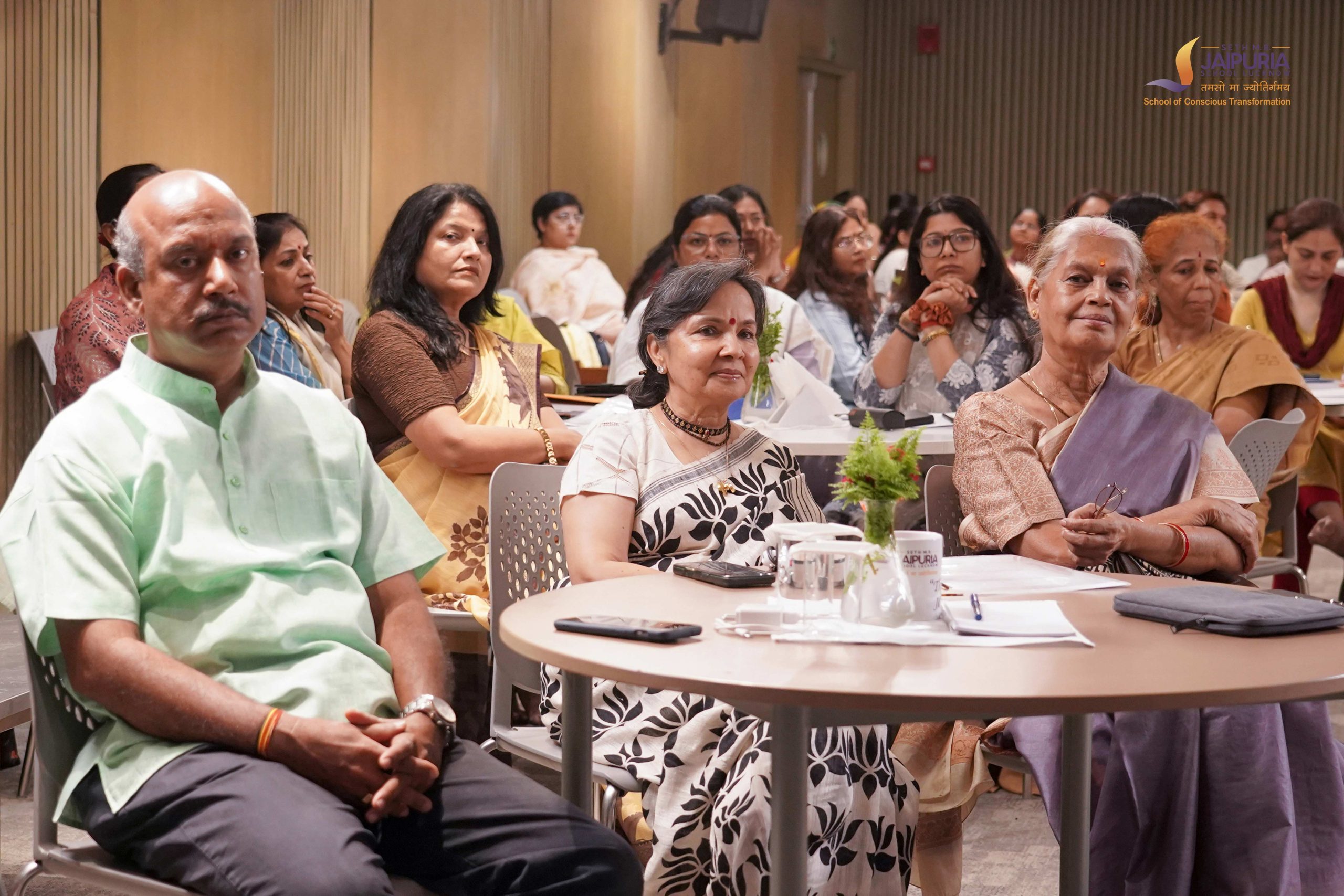
The session then opened into an engaging Q&A, where participants further explored these ideas through questions and reflections.