


A Walk Down Memory Lane: Alumni Meet for 1998–2005 Batch
April 16, 2026
Day 4 of Teachers’ Spiritual Retreat 2026: Awakening the Psychic Being
April 17, 2026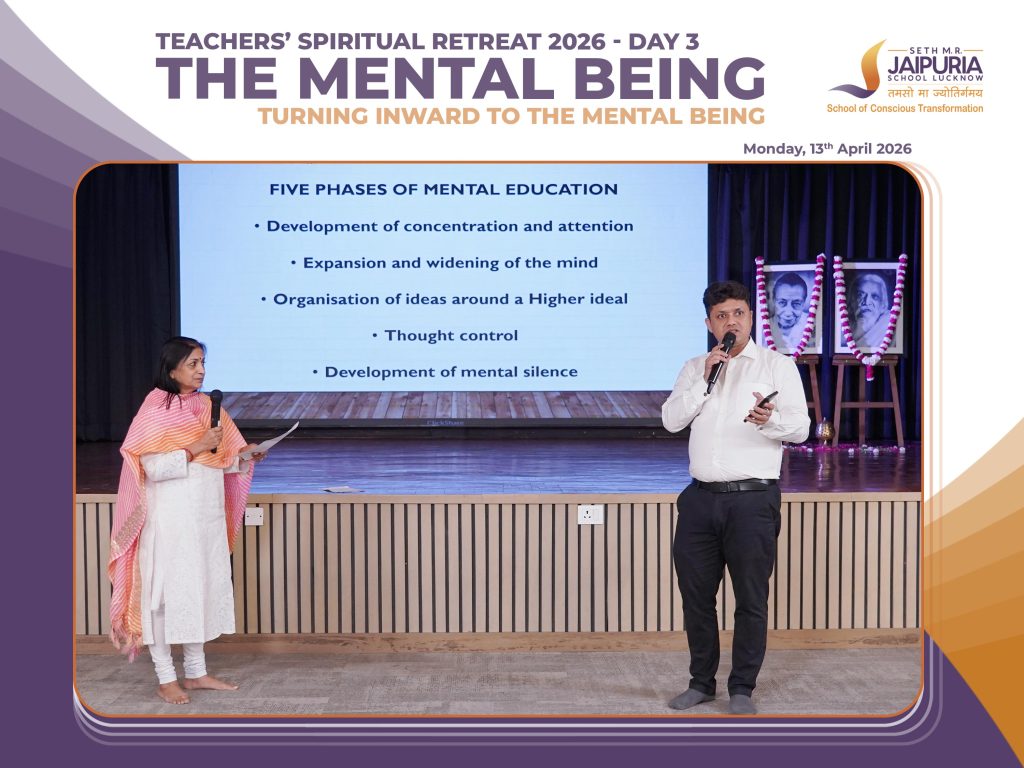
The third day of the Teachers’ Spiritual Retreat 2026 gently moved the focus inward, shifting from the physical and vital to the workings of the mind. Rooted in the vision of Sri Aurobindo Sir and The Mother Ma’am’s fourfold education, the session marked a natural progression into the third stage, mental education and the mental being, after having explored the physical and vital aspects in the previous days.
The Day at a Glance
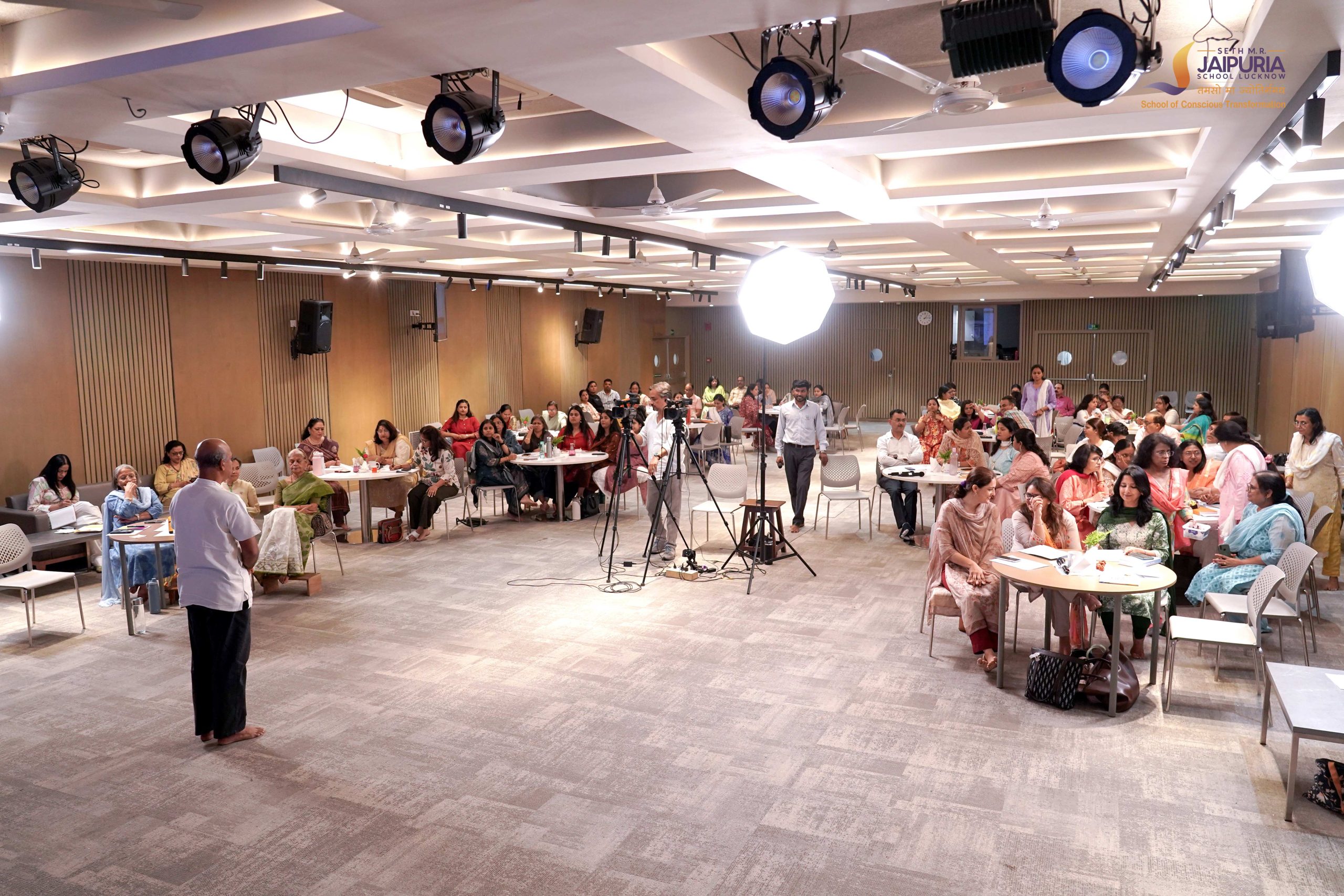
From exploring how true learning goes beyond memorisation to experiencing the mind through guided visualisation, activities, and a thought provoking play, the day unfolded as both reflective and experiential. Insights by Sampadananda Mishra Sir added depth, highlighting the nature, challenges, and refinement of the mind, while discussions on music, classroom practices, and practical activities connected these ideas to everyday teaching.
Entering the Landscape of the Mind
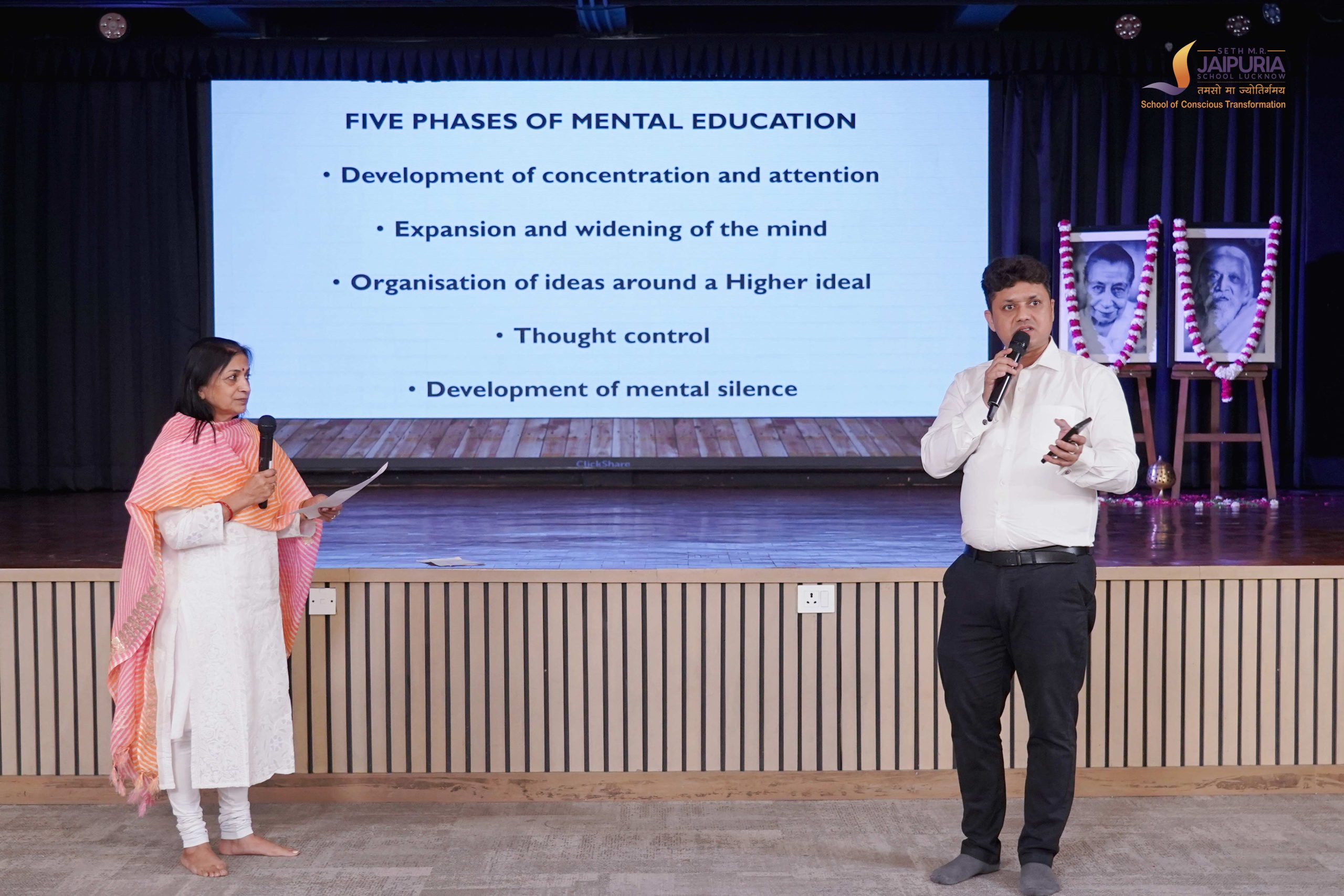
Expanding on the idea of mental education, the first session emphasised the importance of understanding over rote learning. As it was explained, “The core idea is that what is understood is never forgotten, but what is memorised disappears. True mental education prepares a person for a higher life by developing concentration, widening the mind, organising thoughts around a higher idea, rejecting unwanted thoughts, and finally reaching mental silence.”
Referring to the restless nature of the mind through the Bhagavad Gita, it was pointed out, “Arjun says to Krishna that the mind is extremely restless, powerful, and difficult to control, almost like trying to control the wind. To this, Krishna answers that although the mind is difficult to control, it can be brought under control through constant practice and detachment. It is not impossible, but it requires effort, patience, and regular discipline.”
A Journey Inward Through Imagination
Teachers then immersed themselves in a guided visualisation exercise, where they were gently led inward. Beginning with awareness of posture and breath, they were asked to observe their bodies and gradually shift their attention to a vivid inner scene of snow covered mountains and a rising sun. The exercise highlighted the mental being in practice, helping participants observe how the mind creates images, emotions, and meaning, and how it can be trained through awareness.
A play reflecting everyday classroom realities was thoughtfully presented by the teachers. Beginning with familiar scenes of chaos, exam stress, and self doubt, it gradually revealed the deeper struggles within a student’s mind. Through relatable moments and inner dialogues, the performance brought out how distraction, fear, and comparison often take over.
Understanding the Nature of the Mind
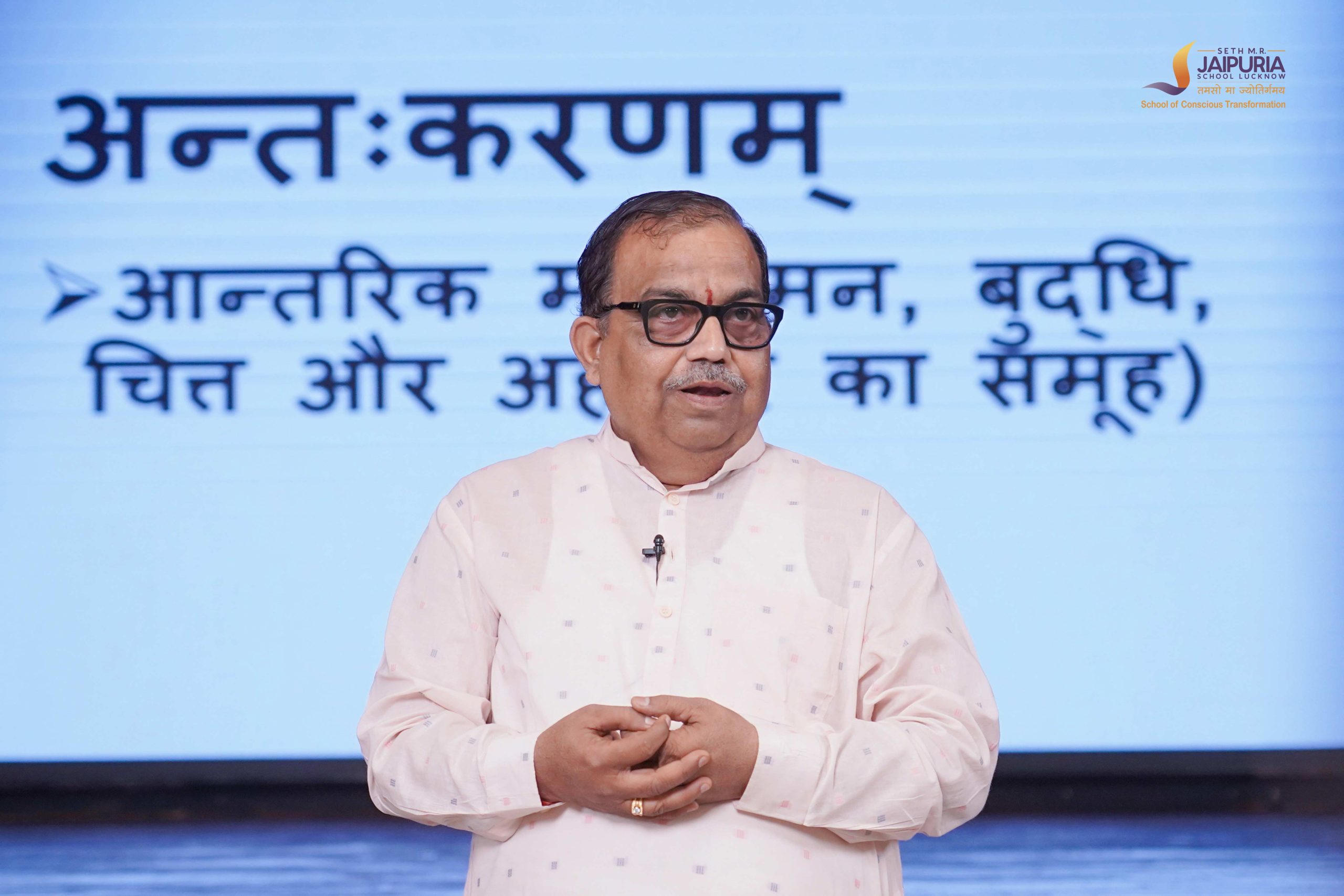
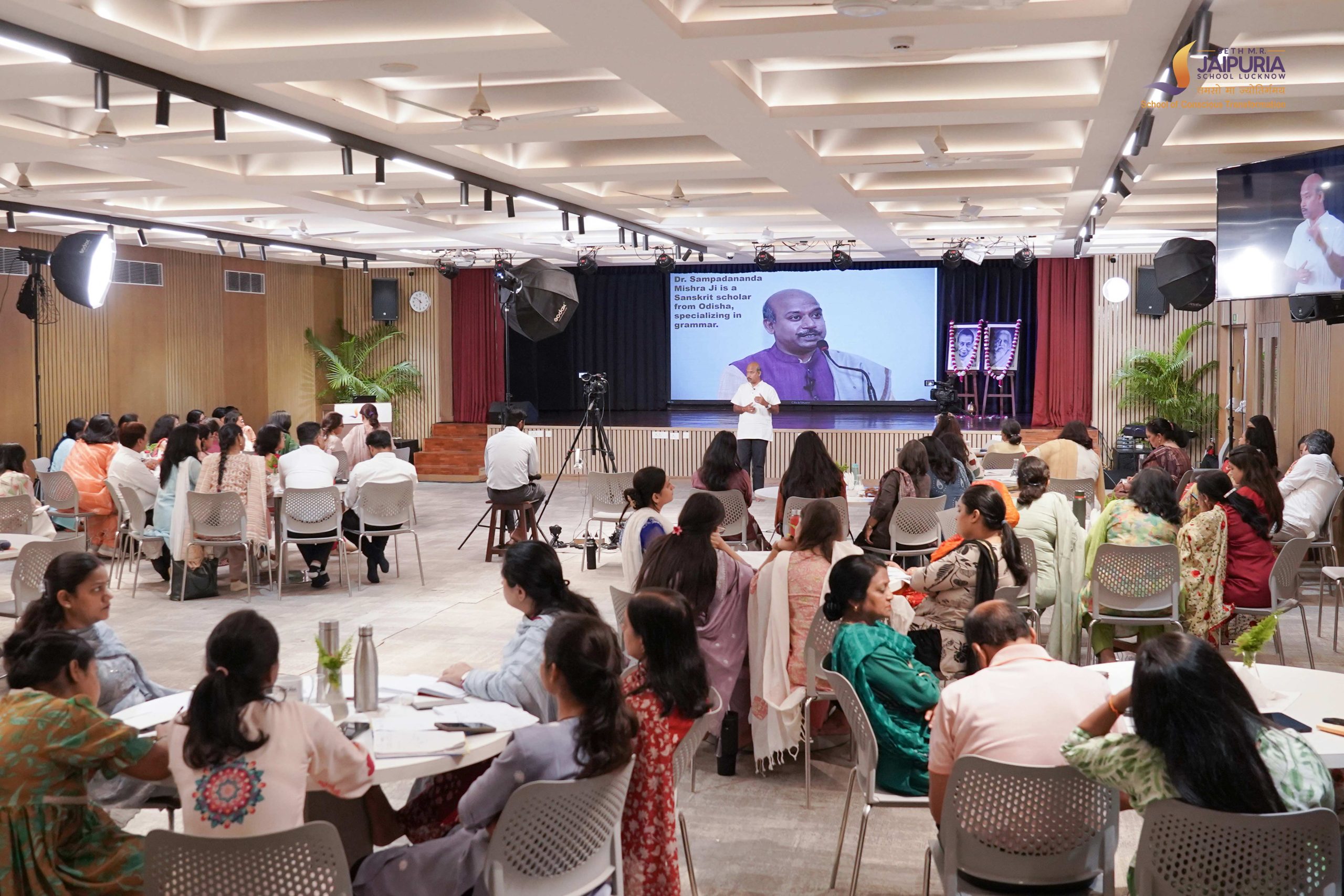
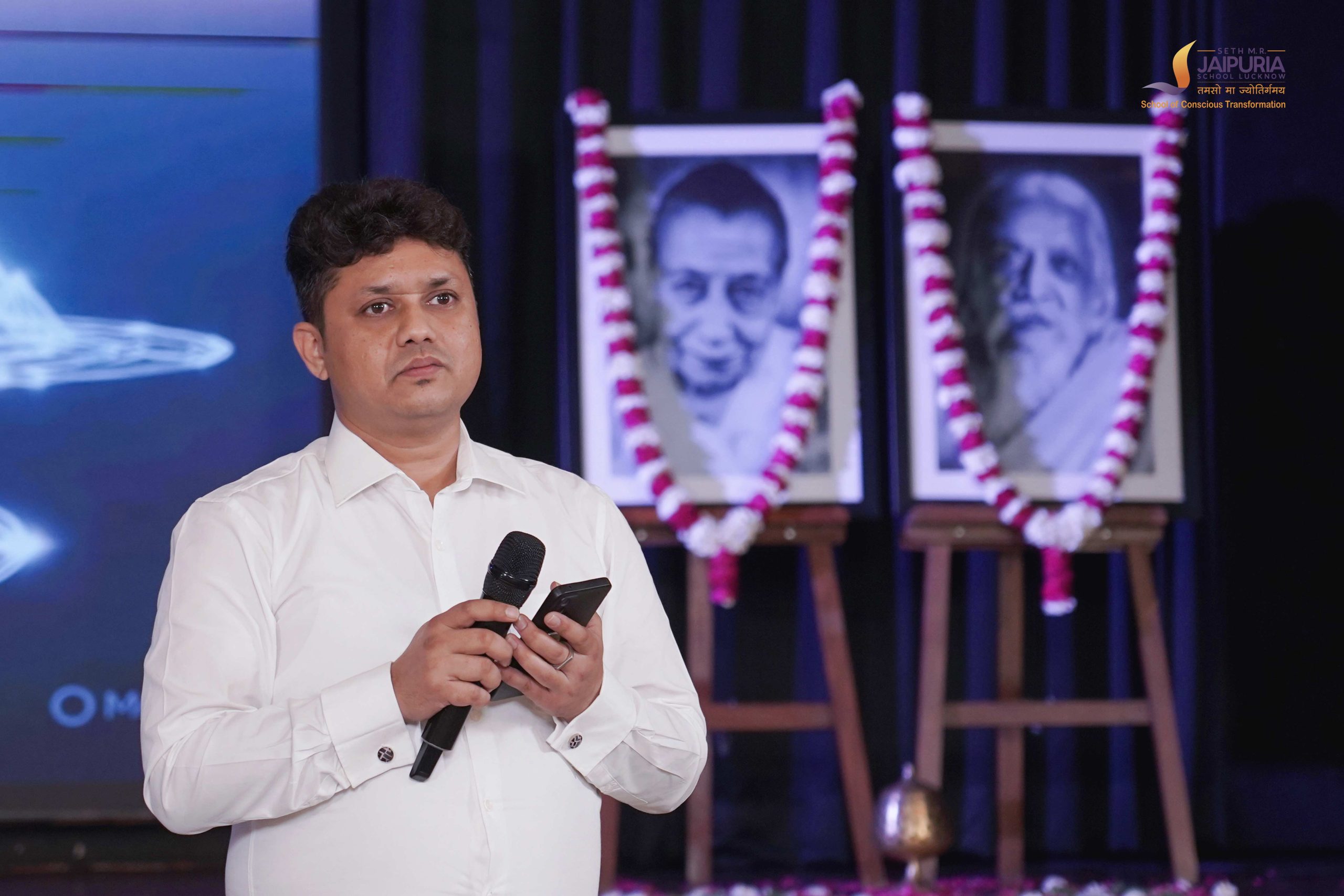
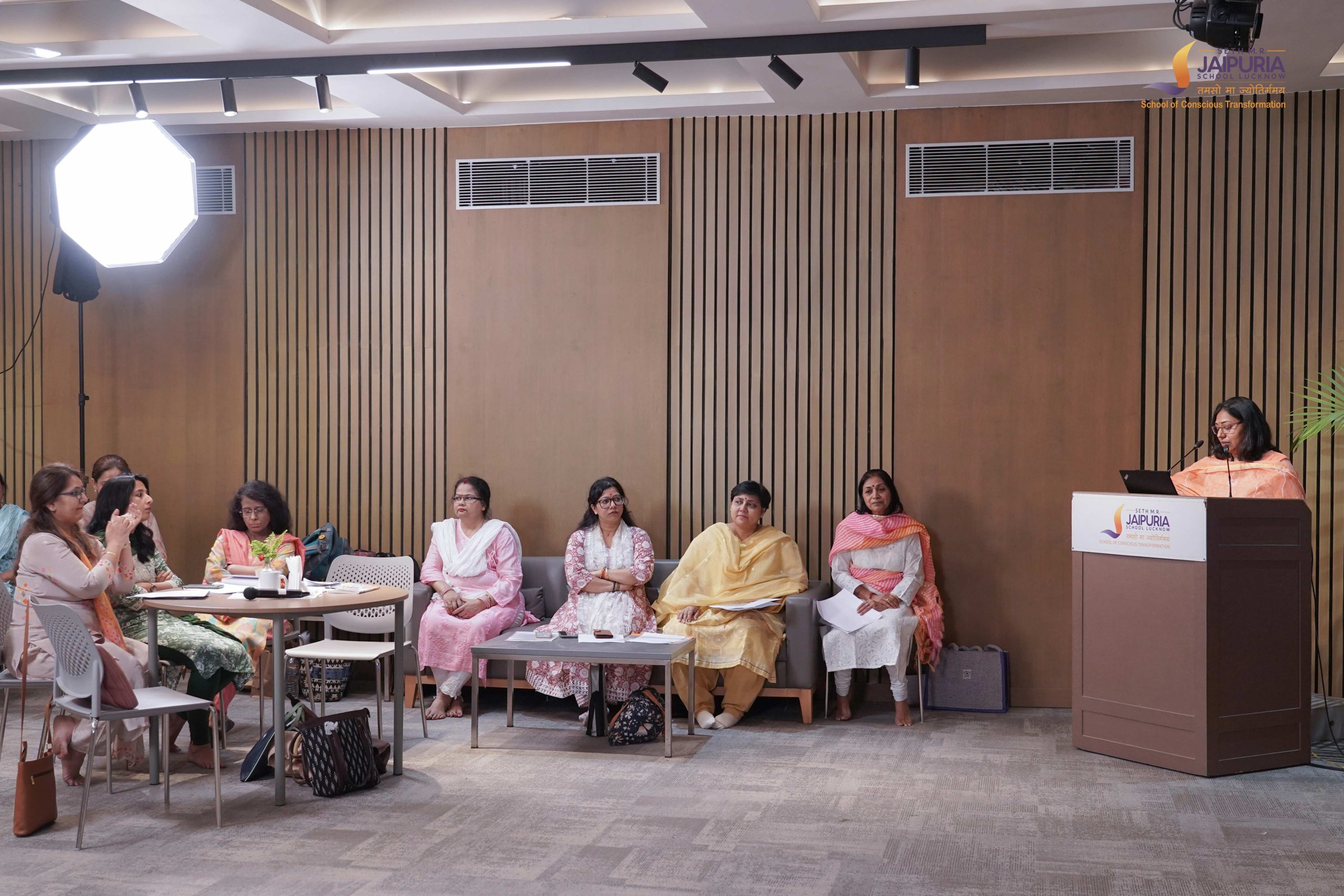
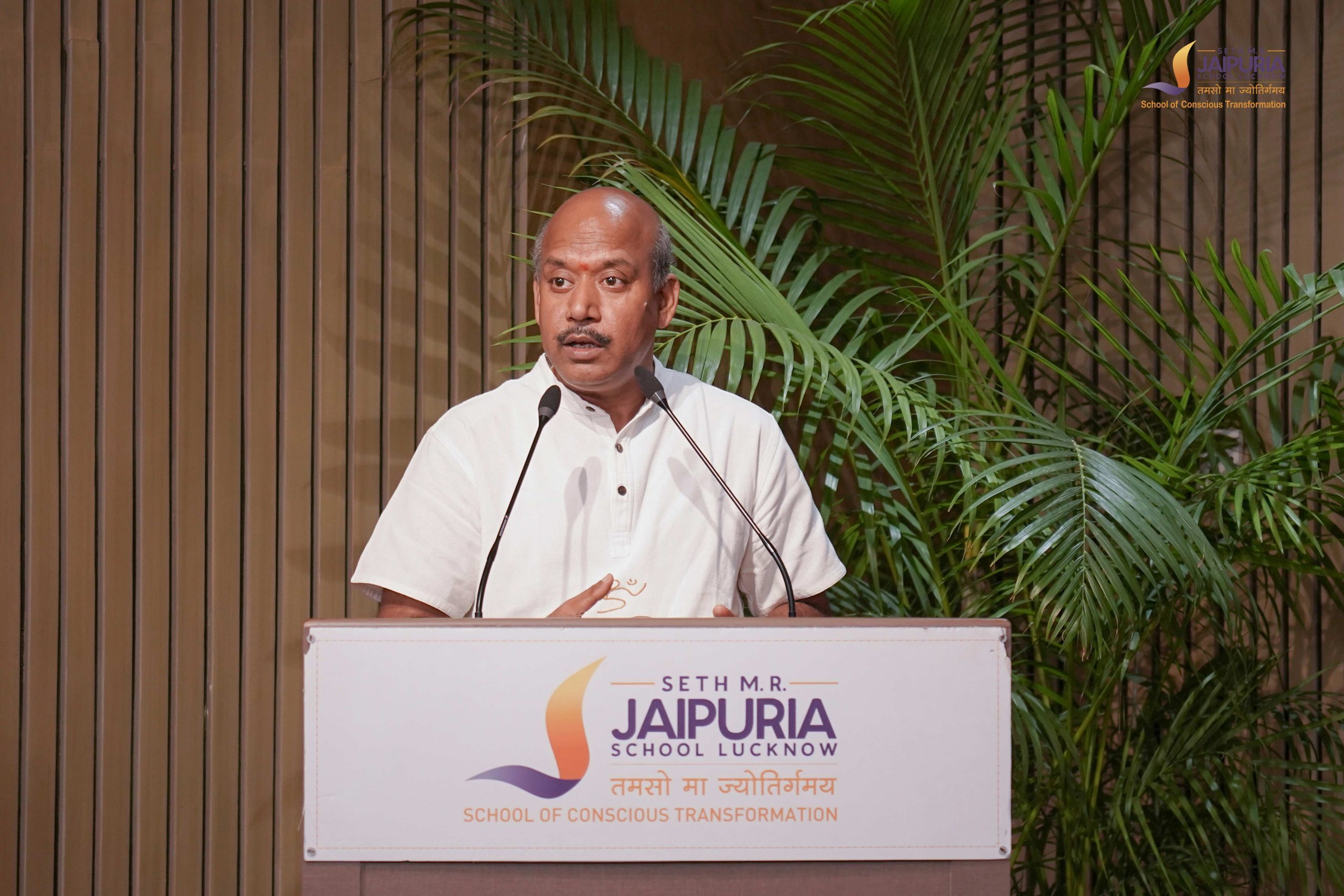
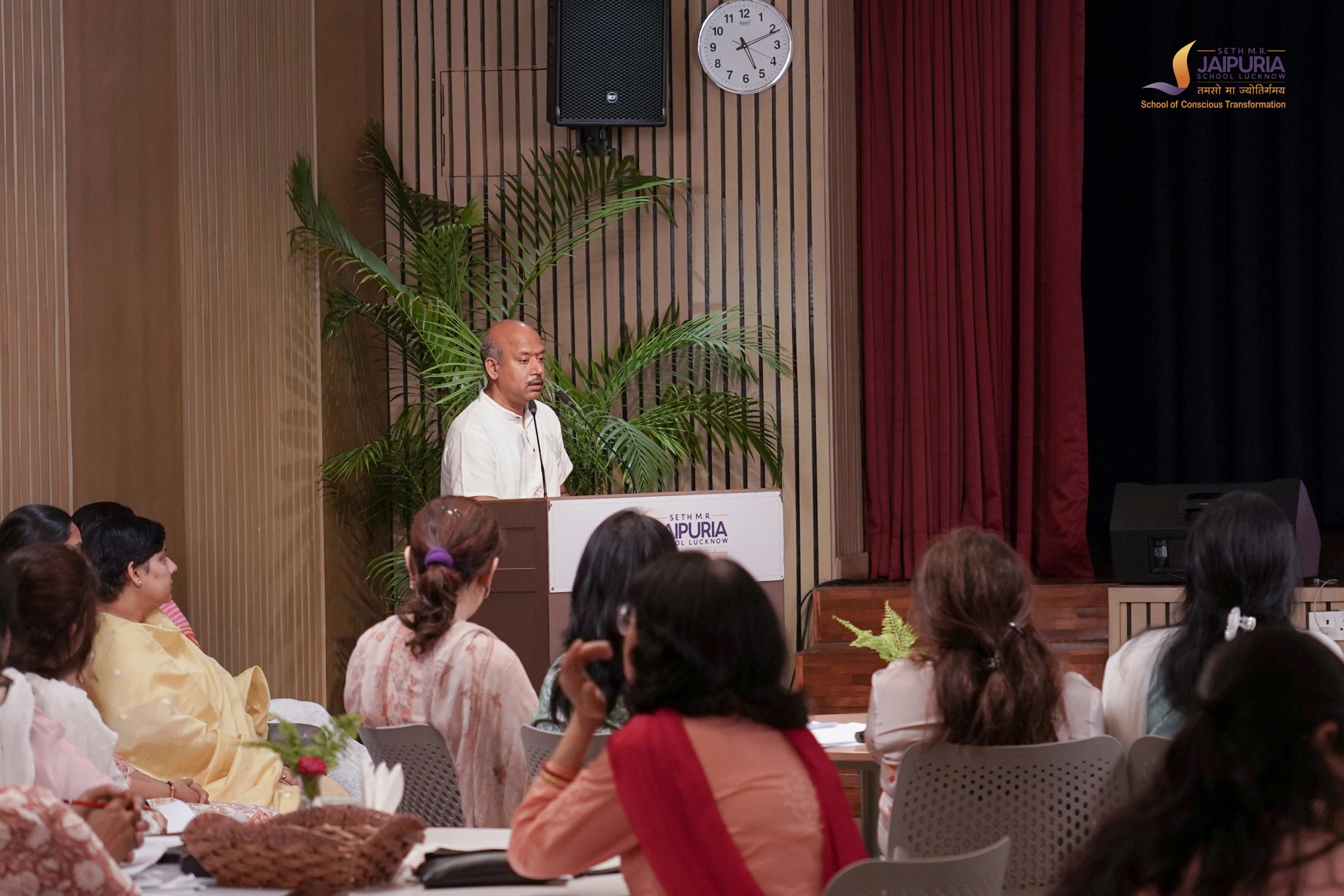
After the play, Sampadananda Mishra Sir, Dean of Culture and Director of the Centre of Human Sciences at Rishihood University, addressed the teachers, taking the reflections deeper into understanding the mind. His talk moved beyond observation to the nature, challenges, and training of the mind itself.
Speaking about the central role of the mind, he grounded the discussion in Indian philosophy, explaining, “In the Upanishads, the mind is described as the leader of the prana and the body. Whatever the prana and the body do is governed by the mind. We need to remember that at present, the mind has become our master, but because of its own limitations, it is not able to guide us or the body in the right direction.”
He then brought in Kabir Das Sir’s perspective to describe the nature of the mind, unpacking its tendencies in a relatable way: “Kabir Das says the mind is chanchal, the mind is restless; the mind is lobhi, it does not want to let go of what it has; the mind is lalchi, it wants to grab what belongs to others; and the mind is chor. Because of these tendencies, the mind keeps wandering and cannot remain steady.”
Connecting this to the idea of education, he made it clear that mental development is ongoing: “Mental education is not something limited to school or a particular age. It is a continuous process. Every day, we need to refine it, expand it, and make it more organised. If this does not happen, then somewhere our education stops.”
Highlighting the deeper challenges of the mind, he said, “The mind has three major defects. The first is vikshep, meaning it is always scattered and never stable or focused. The second is aavaran, where layers act like a covering and block clarity. The third is mal, impurity, where the mind is filled with clutter, with inner garbage that affects our thoughts and responses.”
Bringing the discussion into the classroom, he emphasised the role of teaching methods, saying, “When we talk about the classroom, many teachers feel this is impractical because they have to complete the syllabus. But the focus should be on pedagogy. The way you teach should ensure that while you are completing your subject, you are also developing observation, concentration, creativity, and expression in the child.”
Tuning the Mind Through Music
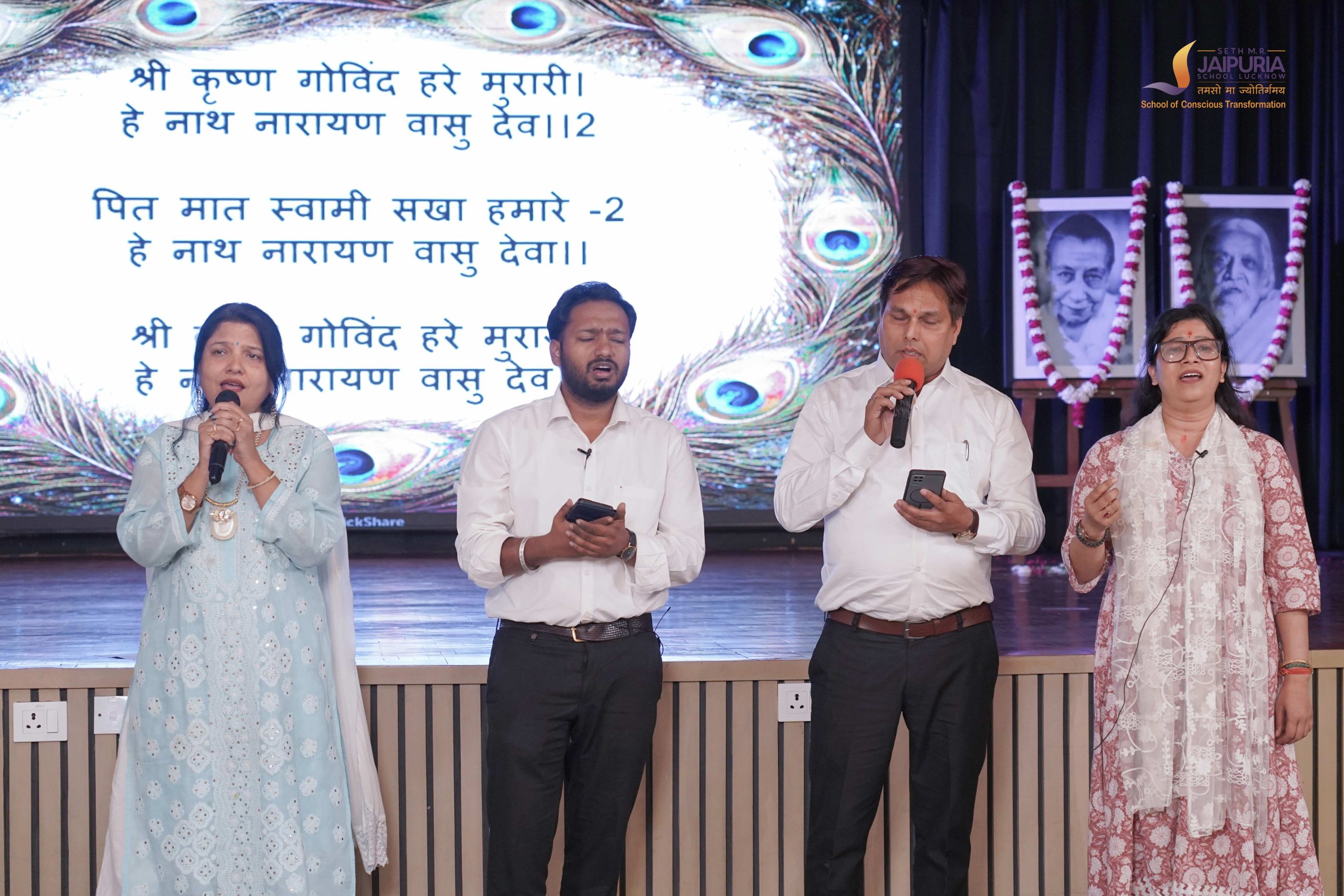
The session then moved into an engaging exploration of the connection between the mental being and music, opening up a discussion on how sound, rhythm, and vibration influence learning and concentration in the classroom.
Drawing the link between music and the mind, it was shared, “It is not only about music as an art, but about how it affects the mental being. Music directly influences our consciousness. It can either discipline it or disturb and scatter it, depending on its quality.”
Reflecting on its impact beyond just learning, the session highlighted, “Music affects not just the mental being but also the physical and vital being, and it does so in a way that deeply shapes our state of consciousness.”
Three Levels of Mind Activity
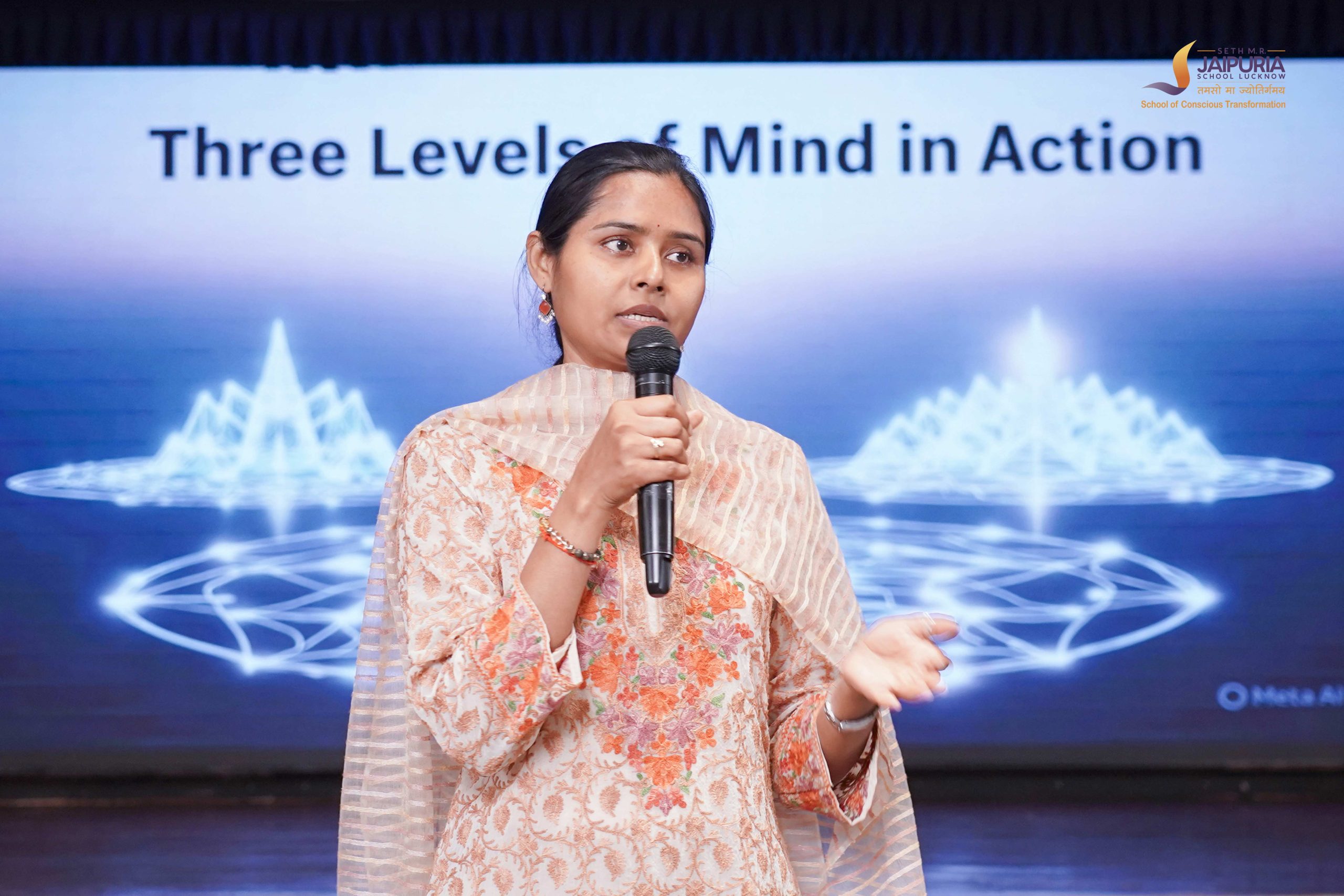
Later, the session transitioned into a hands on activity centred on understanding the three levels of the mind in action. Teachers were invited to step into real life classroom situations and observe how the mind responds at different levels. The lower mind was described as immediate and reactive, driven by fear, comparison, or impulse. The thinking mind brought in analysis, questioning, and logical processing of situations. Moving beyond this, the higher mind was seen as calm, aware, and guided by clarity and deeper values, enabling more conscious and balanced decisions. Through this activity, the aim was not just to understand these levels intellectually, but to recognise how they operate within us in everyday moments.
The Art of Letting Thoughts Rest
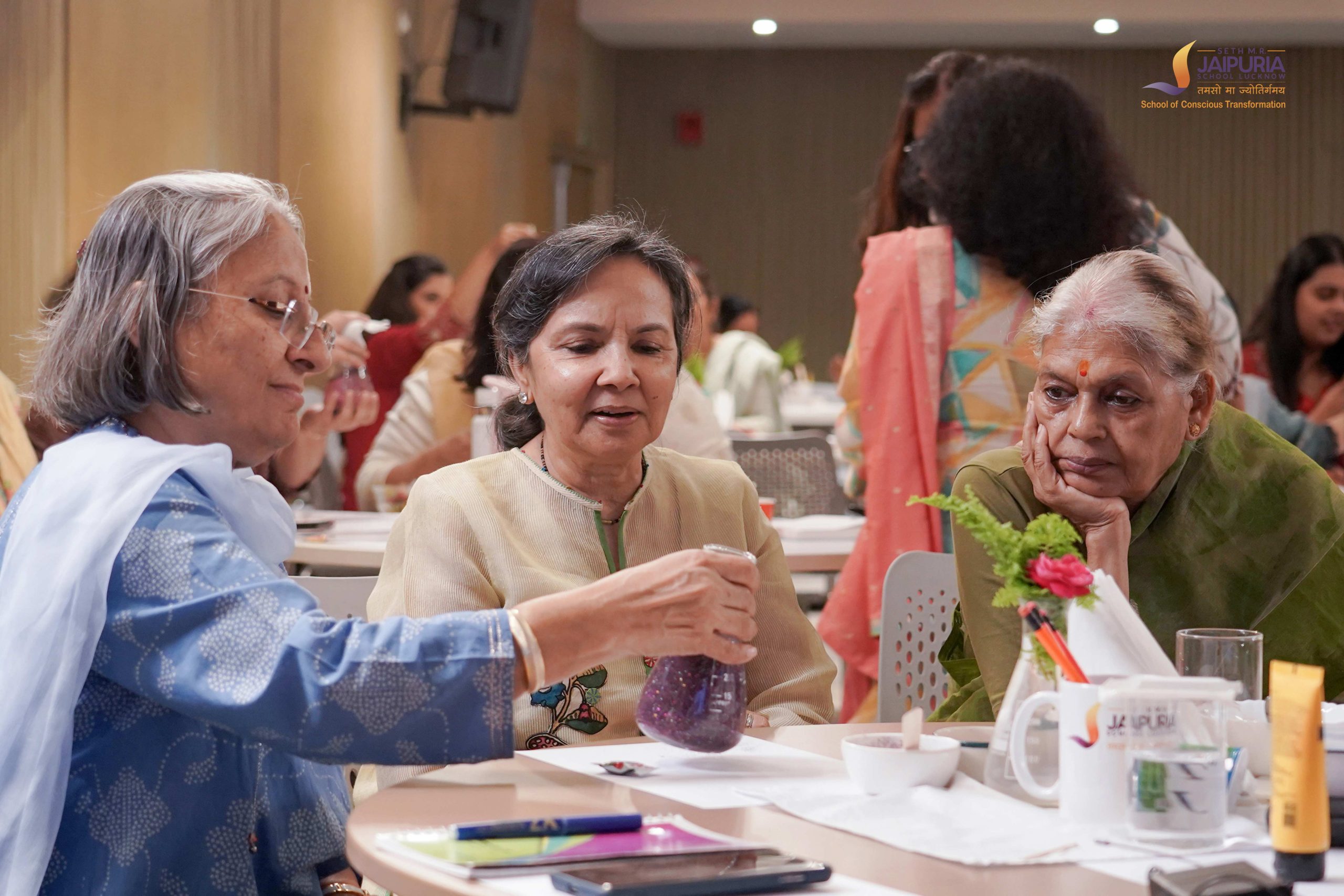
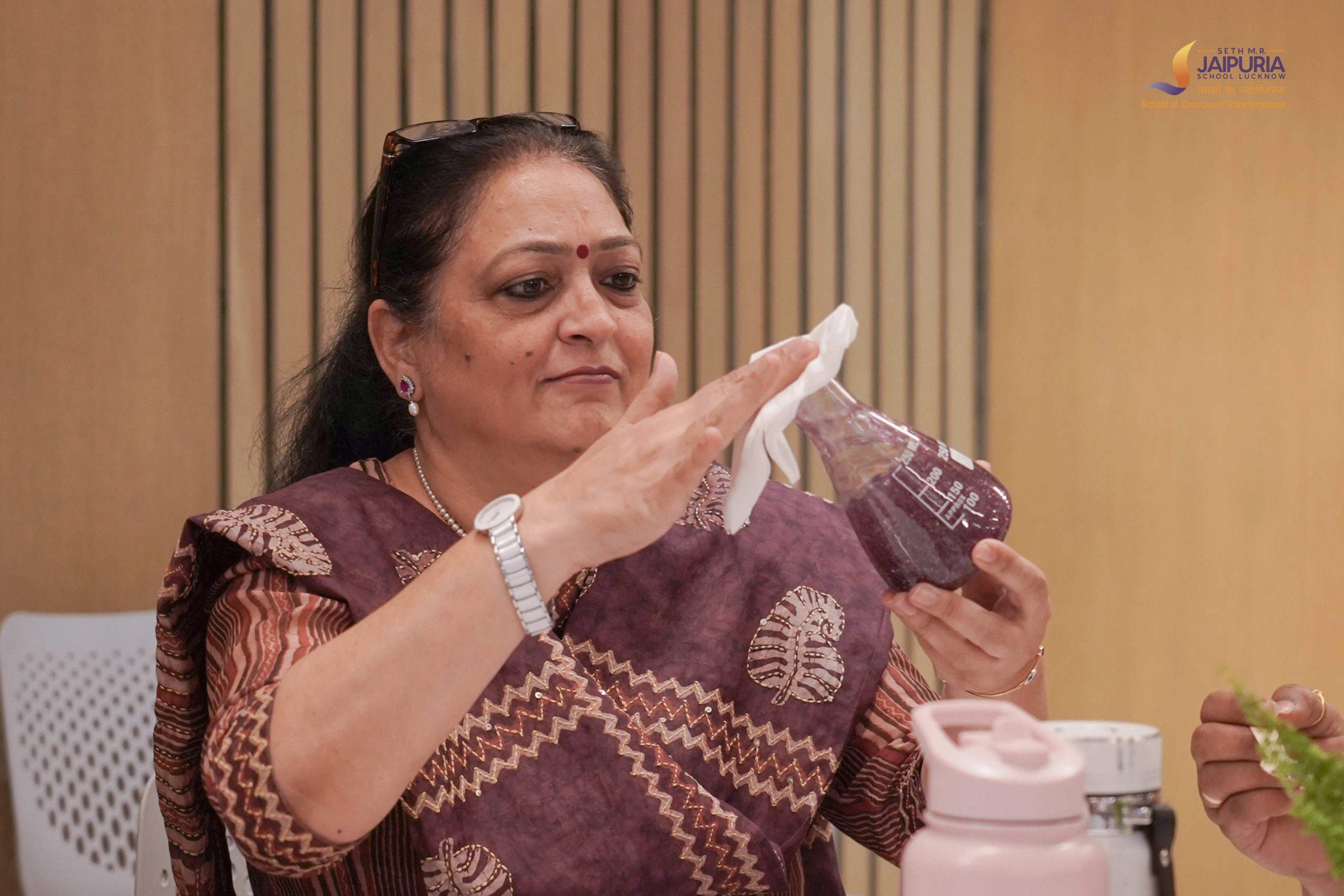
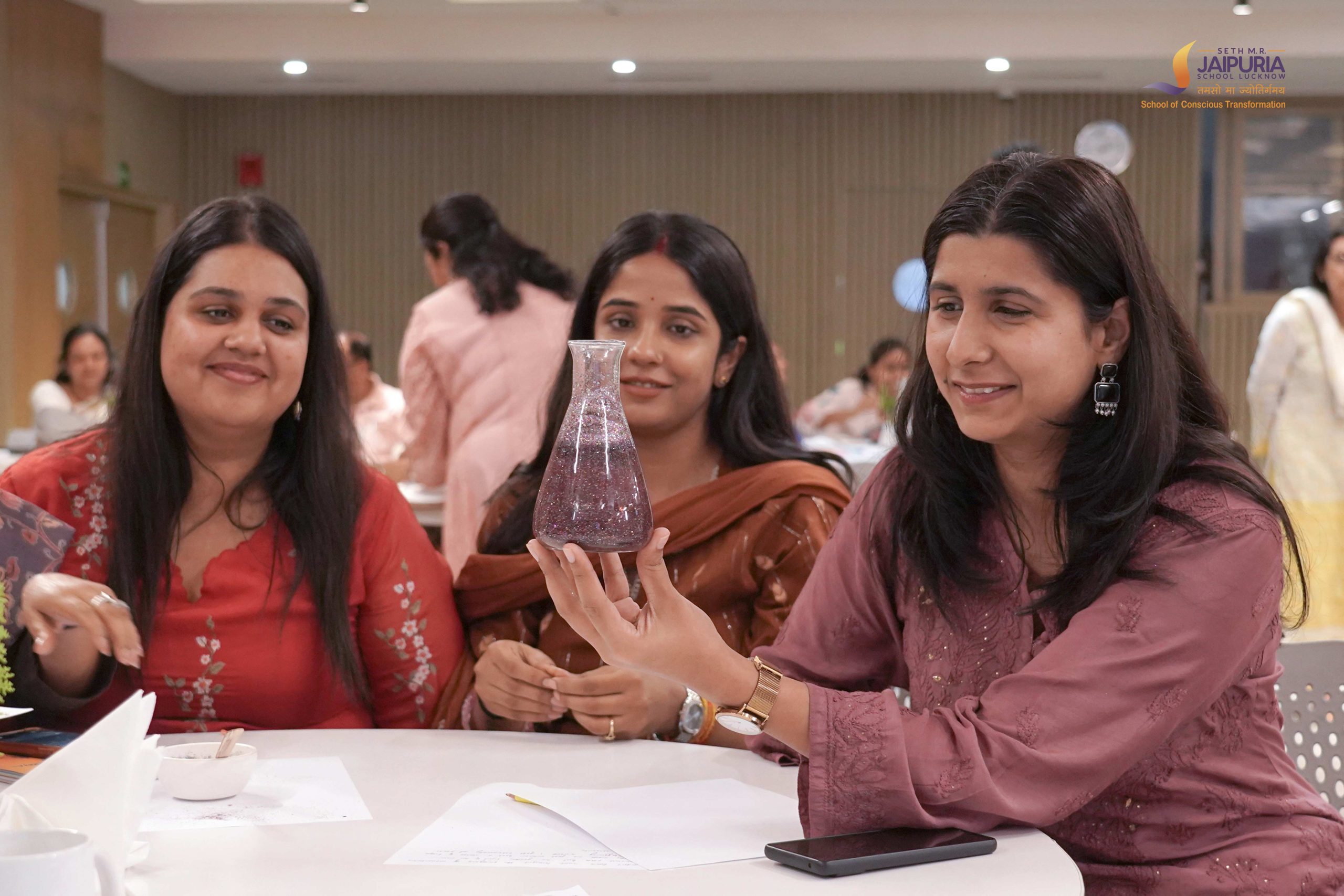
The session then moved into a simple yet powerful “Mind in a Jar” activity, helping teachers visualise how the mind functions in real time. A flask filled with clear water represented a calm mind, while glitter added one spoon at a time symbolised thoughts such as fear, anger, distraction, and worry. As the flask was shaken, the water turned cloudy, reflecting how the mind becomes disturbed and unclear when triggered. However, when left undisturbed, the particles slowly settled, showing that calmness does not remove thoughts but changes our relationship with them.
Drawing from The Mother Ma’am’s teaching, it was explained, “When the mind becomes quiet, clarity comes naturally.”
Roots That Shape the Classroom
The Tree of Conscious Mind activity was introduced as a reflective exercise where teachers explored the qualities that shape their approach and how these translate into their actions in the classroom. They noted key values on sticky notes, placing them on different parts of a tree diagram to connect these qualities with their everyday teaching practices.



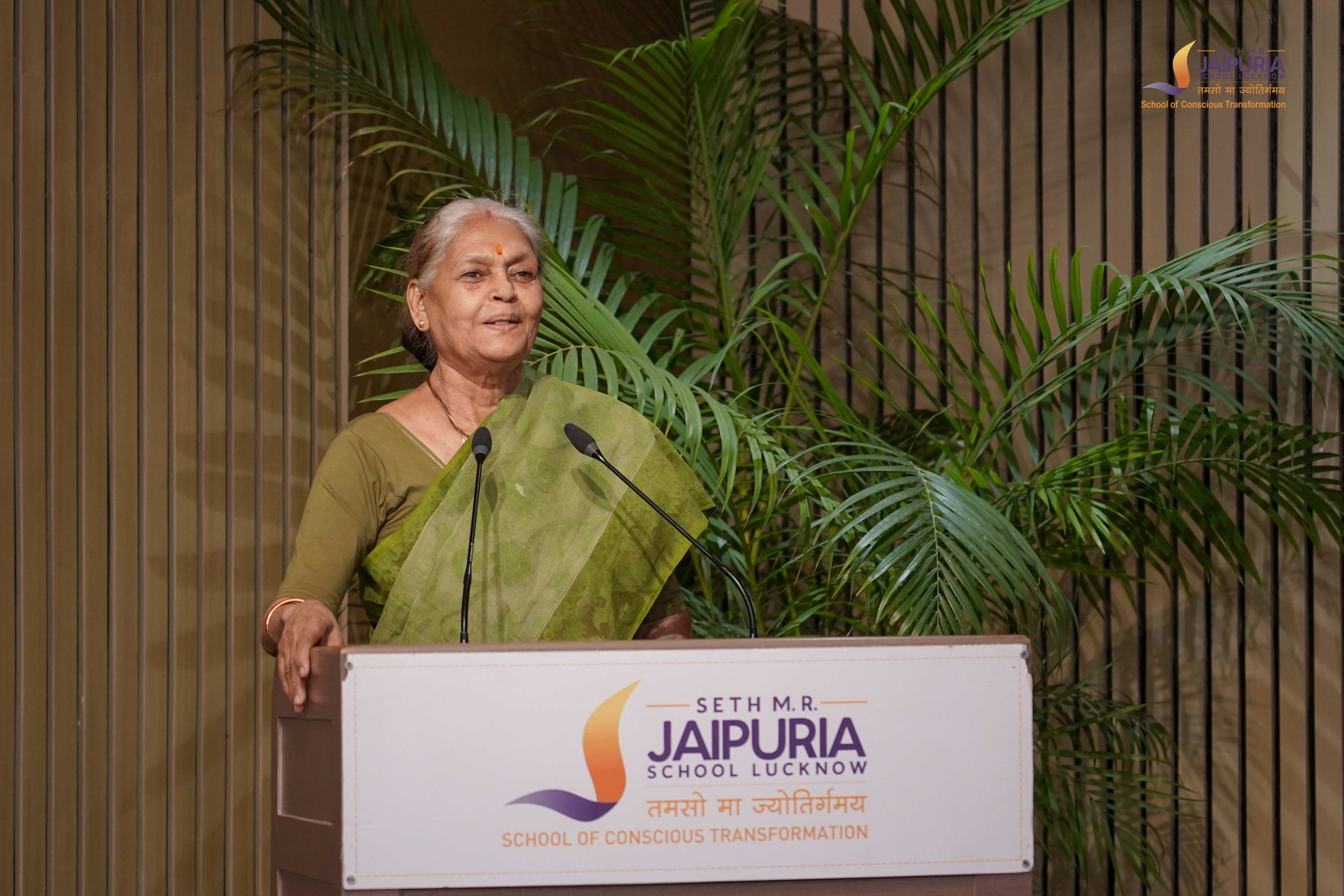
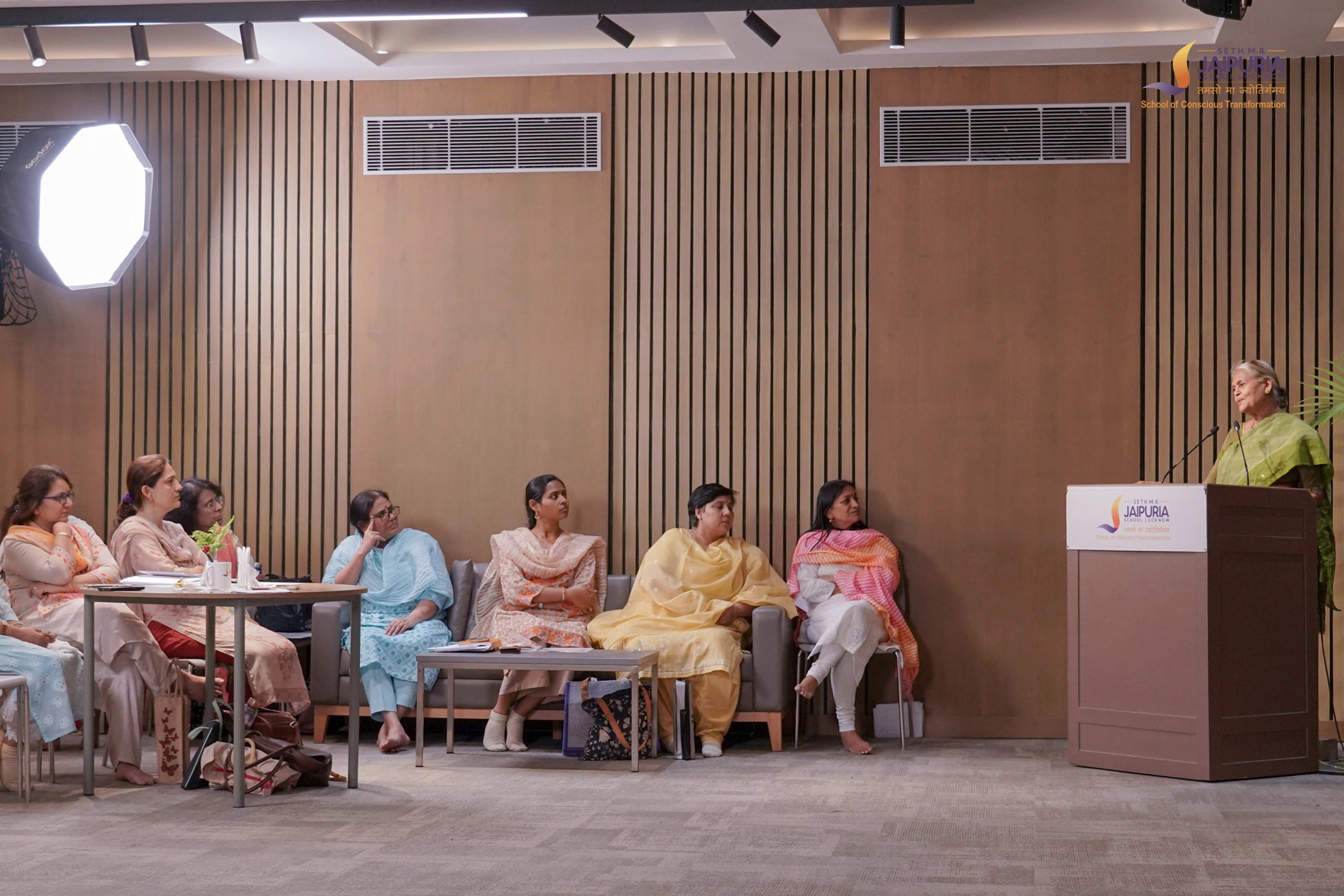

Opening up about the experience, one teacher shared, “It really made me pause and think about what I bring into the classroom every day. We often focus on what we teach, but this activity made me realise how much students learn from how we behave, how we respond, and the kind of energy we carry. Even small things like patience, listening, or staying calm in a situation make a big difference.”
Towards a Clear and Conscious Mind
Concluding the day, Sampadananda Mishra Sir brought the entire discussion together by revisiting the understanding of the lower, thinking, and higher mind, leaving everyone with a deeper lens to reflect upon. He said, “The lower mind turns everything into a negative form, while the unrefined thinking mind leads to overthinking, wrong reasoning, and incorrect conclusions. Unless the mind is refined with higher reasoning, it cannot arrive at clarity or meaningful solutions. If your thinking does not bring harmony, joy, or a lasting answer, it means it still needs refinement.”