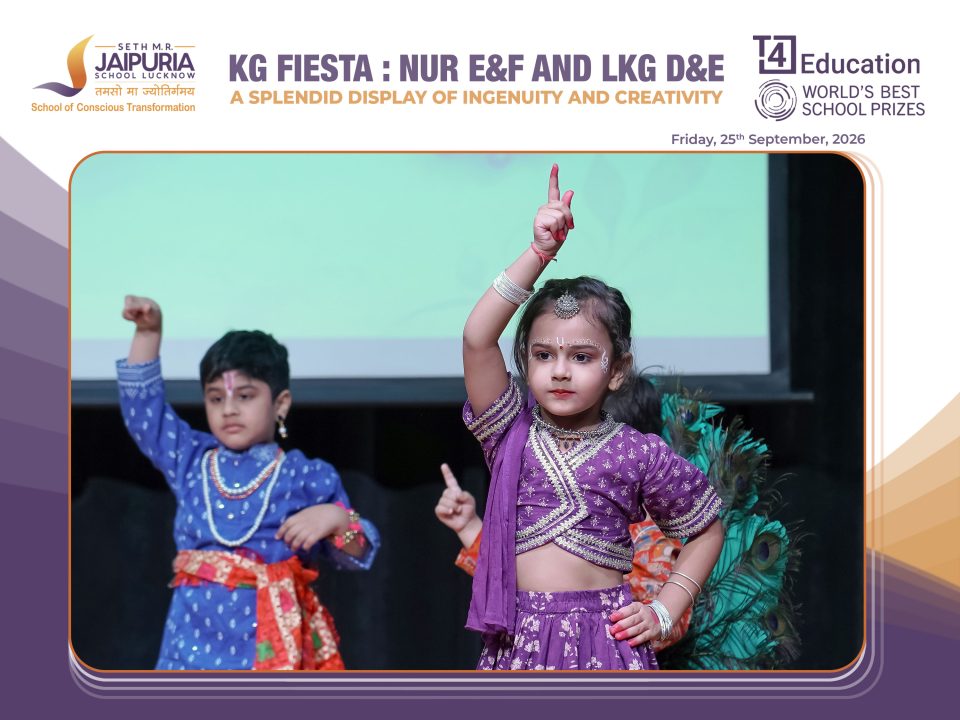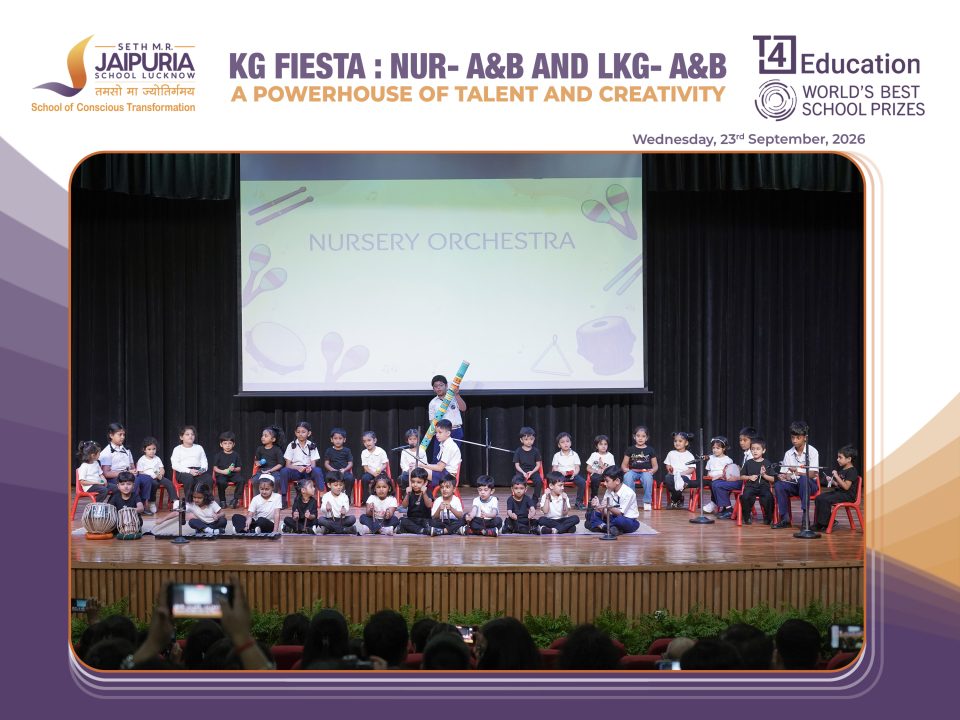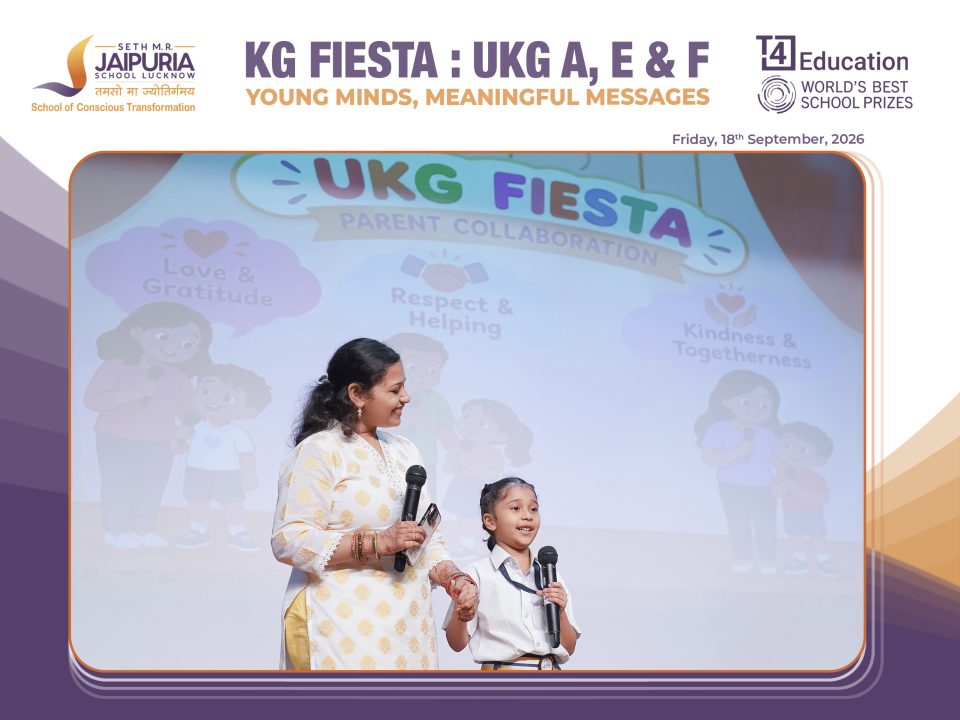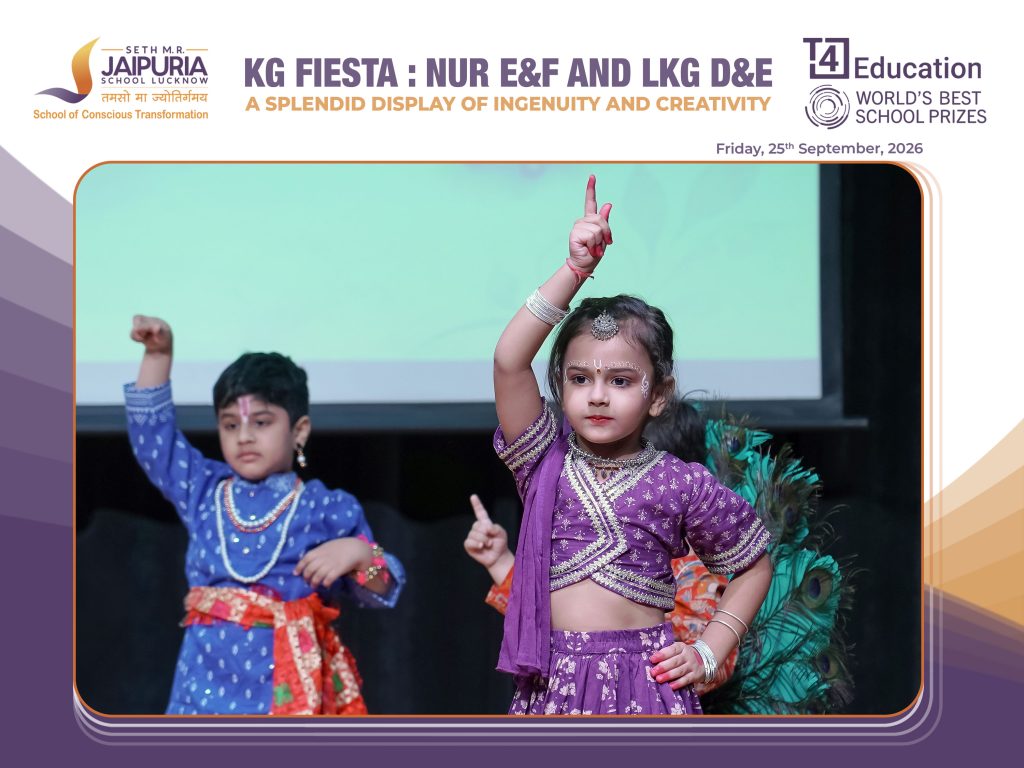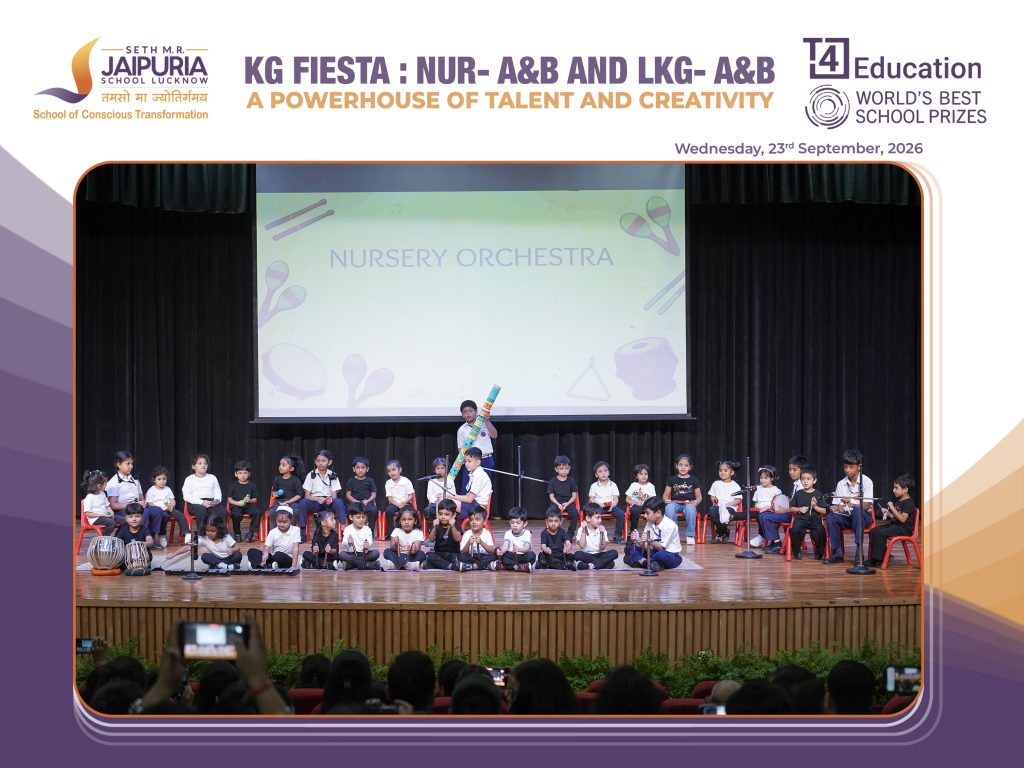


LKG (E & D) and Nursery (E & F) Class Presentations: A Splendid Display of Ingenuity and Creativity
October 16, 2026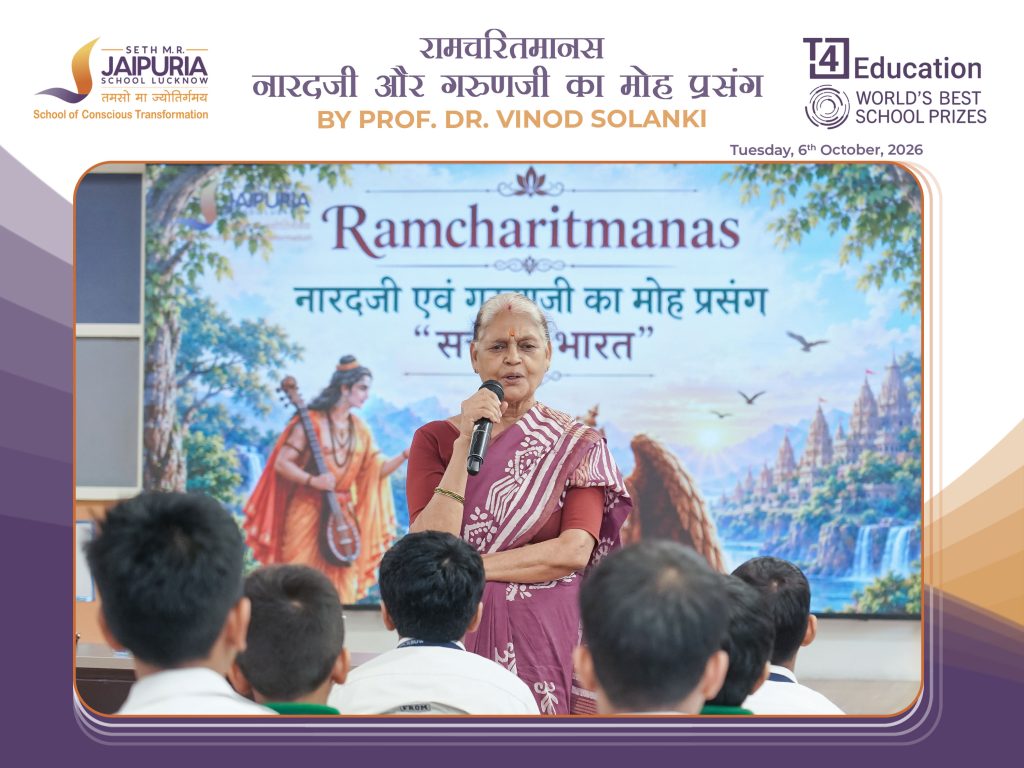
While the previous sessions on Ramcharitmanas focused on the characters Kevat, Shabari, and Jatayu, the 6 October 2026 session was dedicated to Narad, the Devarishi. The story of Narad was discussed by Prof. Vinod Solanki, former Head of the Department of English, Deen Dayal Upadhyay Gorakhpur University, under the broader theme of ‘A Conscious India’, in which she particularly explored the concept of conscious transformation.
The story goes that, amidst the beautiful and majestic Himalayas, Narad performed deep sadhana. Threatened by the prospect of Narad’s single-mindedness eventually challenging his position as the Lord of Heaven, Indra conspired to create an obstacle for Narad’s sadhana by sending Kamadeva. However, Kamadeva —who had even disturbed Lord Shiva with his mischievous tactics, resulting in Lord Shiva opening his third eye and reducing him to ashes—failed to distract Narad from his sadhana. The fact that Narad did not give in to the temptation of sensuality despite Kamadeva’s best efforts, and that he did not feel anger, jealousy, or other desires, made him feel immensely proud. He went to Lord Brahma, Lord Shiva, and Lord Vishnu to boast about the success of his self-mastery. On seeing that Narad had developed an ego that ran counter to the very goal of self-mastery he sought to attain, Lord Vishnu decided to teach him a lesson.
During Narad’s travels, he came upon a beautiful kingdom under the rule of King Shilnidhi. King Shilnidhi’s daughter was to have her swayamvar. On seeing Narad, the King graciously welcomed him warmly. Given that Narad was also an astrologer, the King requested him to predict his daughter’s future. The beautiful princess, Vishwamohini, whose name means ‘one who enchants the entire world’, then arrived. As Narad took her hand and began examining her palm, things took an unexpected turn. Narad became enamoured of her beauty and a strange thought surfaced in his mind ‘Why should I not marry this girl myself?’ At the same time, he realised that the bridegroom would need to match her beauty. It suddenly occurred to him that the one who was as beautiful as Vishwamohini was Lord Vishnu himself. Therefore, he went to Lord Vishnu and requested to borrow his form for the swayamvar. Narad also asked Vishnu to do that which will ensure his true welfare and highest good, to which the Lord agreed.
Narad arrived at the swayamvar. In the meantime, Lord Vishnu asked Lord Shiva to keep him updated about the proceedings. Lord Shiva, in turn, sent two of his attendants to observe Narad. The attendants kept making fun of Narad behind his back. When the princess came with the garland, to Narad’s surprise, she quickly passed over him and chose a handsome prince, who was none other than Lord Vishnu himself in disguise. Perplexed, Narad asked the attendants how this could have happened, and they told him to look at his face. When he did so, to his shock, Narad discovered that he had been given a monkey-like face.
Distraught at what Lord Vishnu had done to him, Narad cast three curses on him: first, that Lord Vishnu would incarnate on earth as a human being; second, since Narad was given the face of a monkey, monkeys would help the Lord in his earthly life; and third, since Lord Vishnu had taken away Vishwamohini from him, someone would abduct the Lord’s wife, causing him immense sorrow. Lord Vishnu graciously accepted the three curses, which found their fulfilment in the life of Lord Ram.
When Lord Ram fought Ravan, he was bound by serpent-arrows, which the Lord accepted unquestioningly. On learning about this, Narad wondered how a mighty Lord could be reduced to such a state of helplessness. Narad went to Garuda, the King of Birds, who freed the Lord. The same doubt that crossed Narad’s mind about the Lord’s invincibility being challenged also arose in Garuda’s mind. After trying to seek answers from Narad, Lord Brahma, and Lord Shiva, Garuda was directed by Lord Shiva to Mount Neelgiri to meet Kakabhushundi, a crow. Despite being an ordinary bird, Kakabhushundi’s powerful narration of the story of Lord Ram dispelled all doubts from Garuda’s mind, and he finally felt at peace.
Beyond captivating the young audience with these engaging narratives, Prof. Solanki demonstrated, through the story of Narad, how the Divine intervenes to create circumstances through his leela that enable inner transformation. Narad himself realised that through the Vishwamohini episode, the Lord had removed the maya surrounding his perceived self-perfection and self-mastery. Through his leela, the Lord thus impressed upon Narad the message that transformation is never a finished accomplishment, but an ongoing process that requires constant vigilance, progress, and growth.
The story of Narad is also highly reminiscent of these words of The Mother:
As soon as you think that you have succeeded in a certain thing, the adverse forces make it a point to attack and spoil it. Moreover, when you think of success, you relax your aspiration and the slightest relaxation is sufficient to spoil the game.
Furthermore, she has also cautioned against the danger of boasting:
How many times, you know, when someone boasts… it may be very childishly… but when someone boasts about something: ‘Oh, I am sure of that, I shall never make that mistake’, immediately I see a hostile formation passing there, like that, and it enters by the little hole made by the boasting.
As we observe the festival of Navaratri, these stories and messages serve as powerful reminders of the inner victories that are yet to be won. This Ramcharitmanas session drives home the message that there is no room for complacency in the journey of conscious transformation.