

Awakening the Heroic Vital: Day 3 of SMRJ Students’ Spiritual Retreat 2026
May 22, 2026
The Harmonious Whole: Day 5 of SMRJ Students’ Spiritual Retreat 2026
May 28, 2026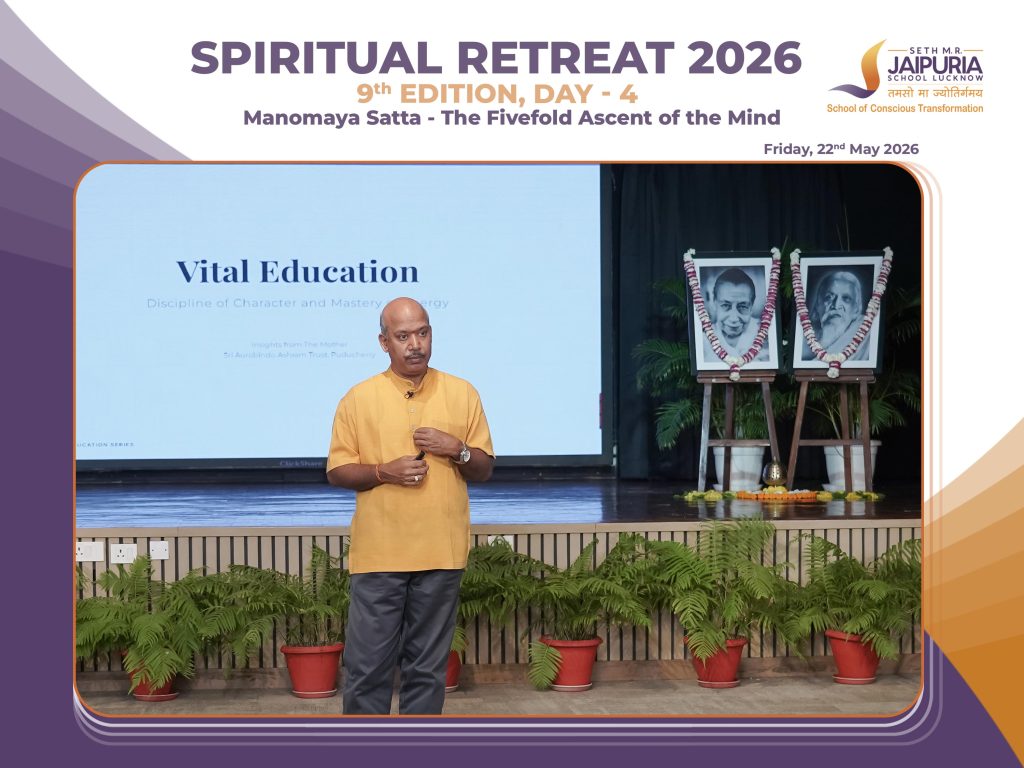
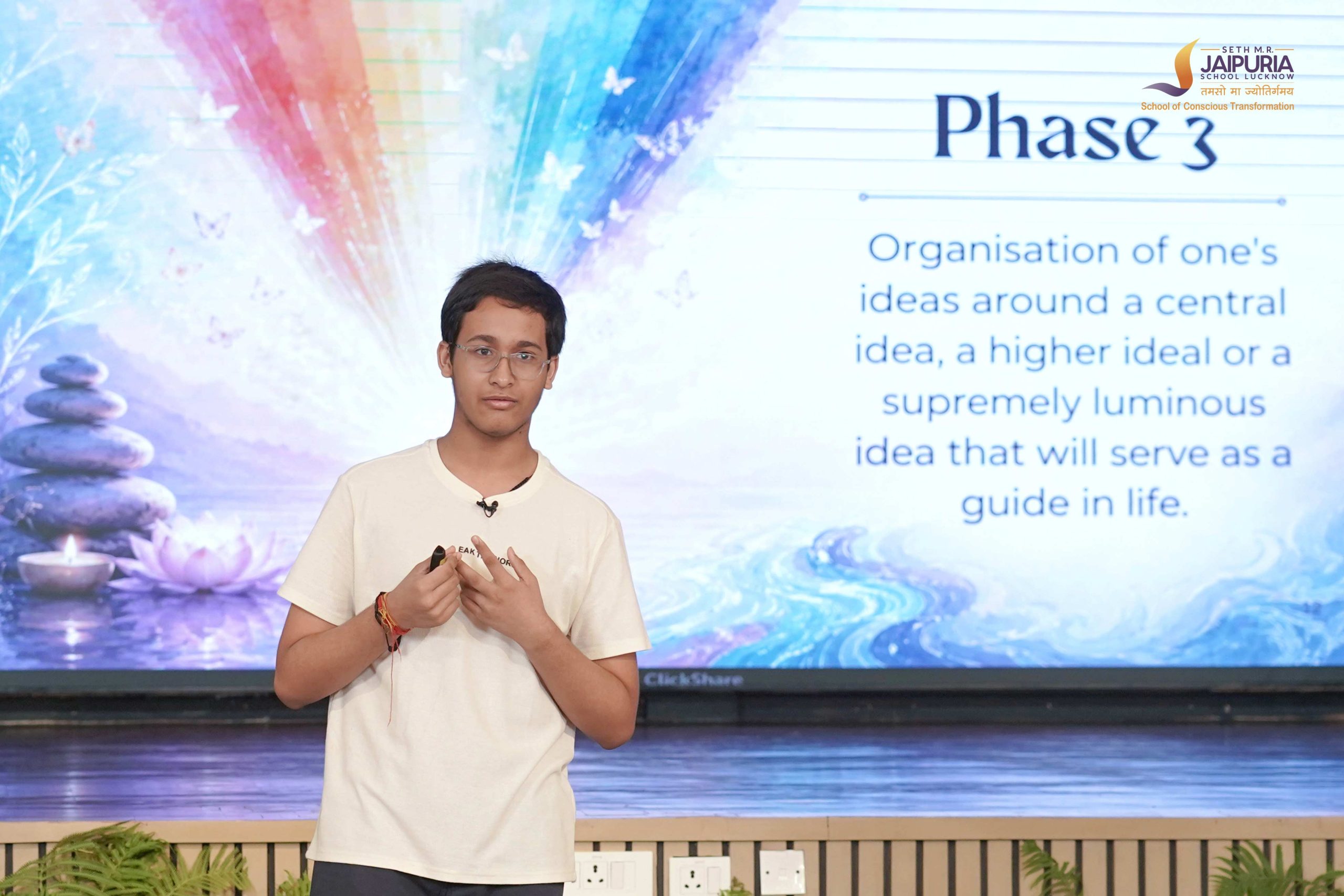
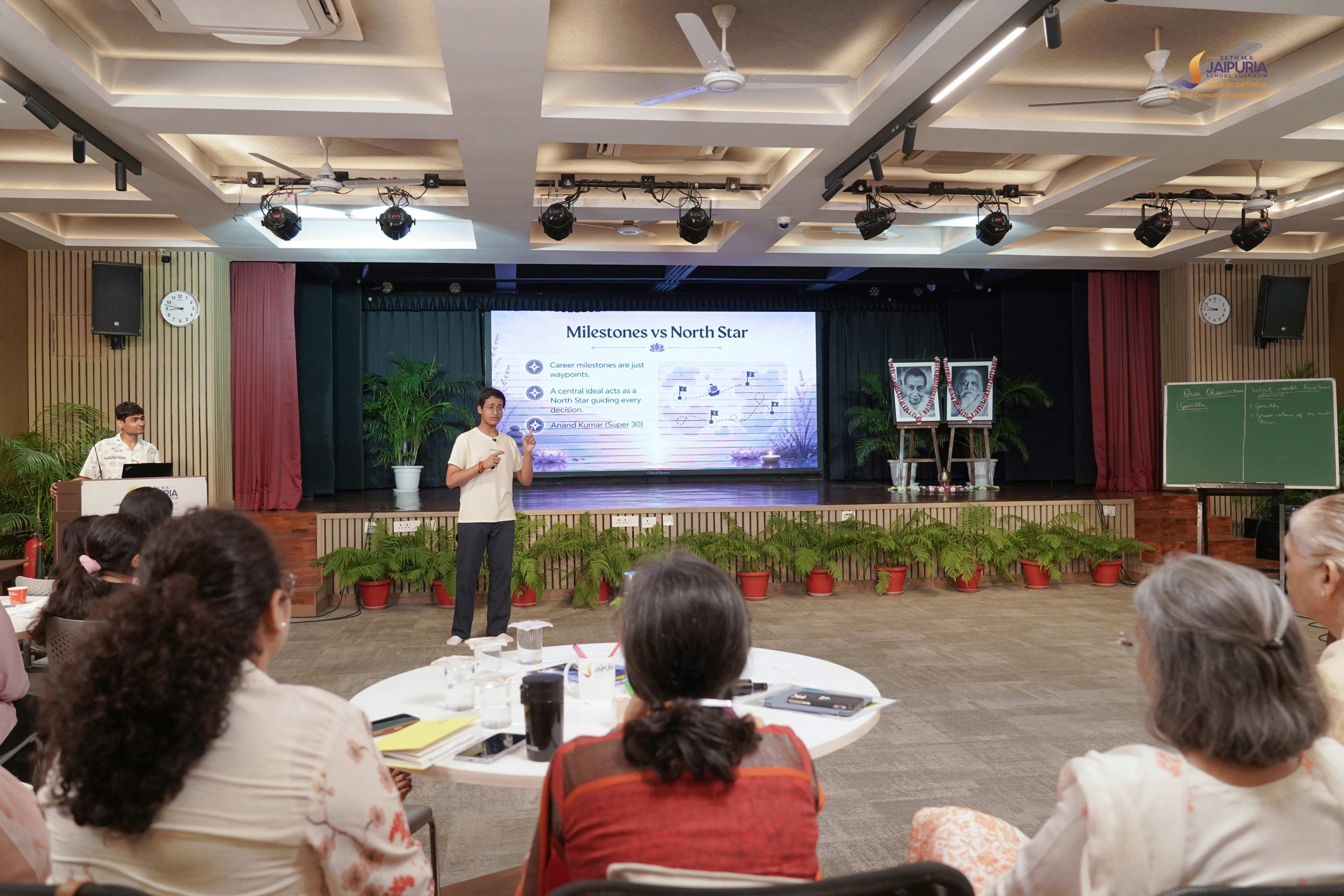
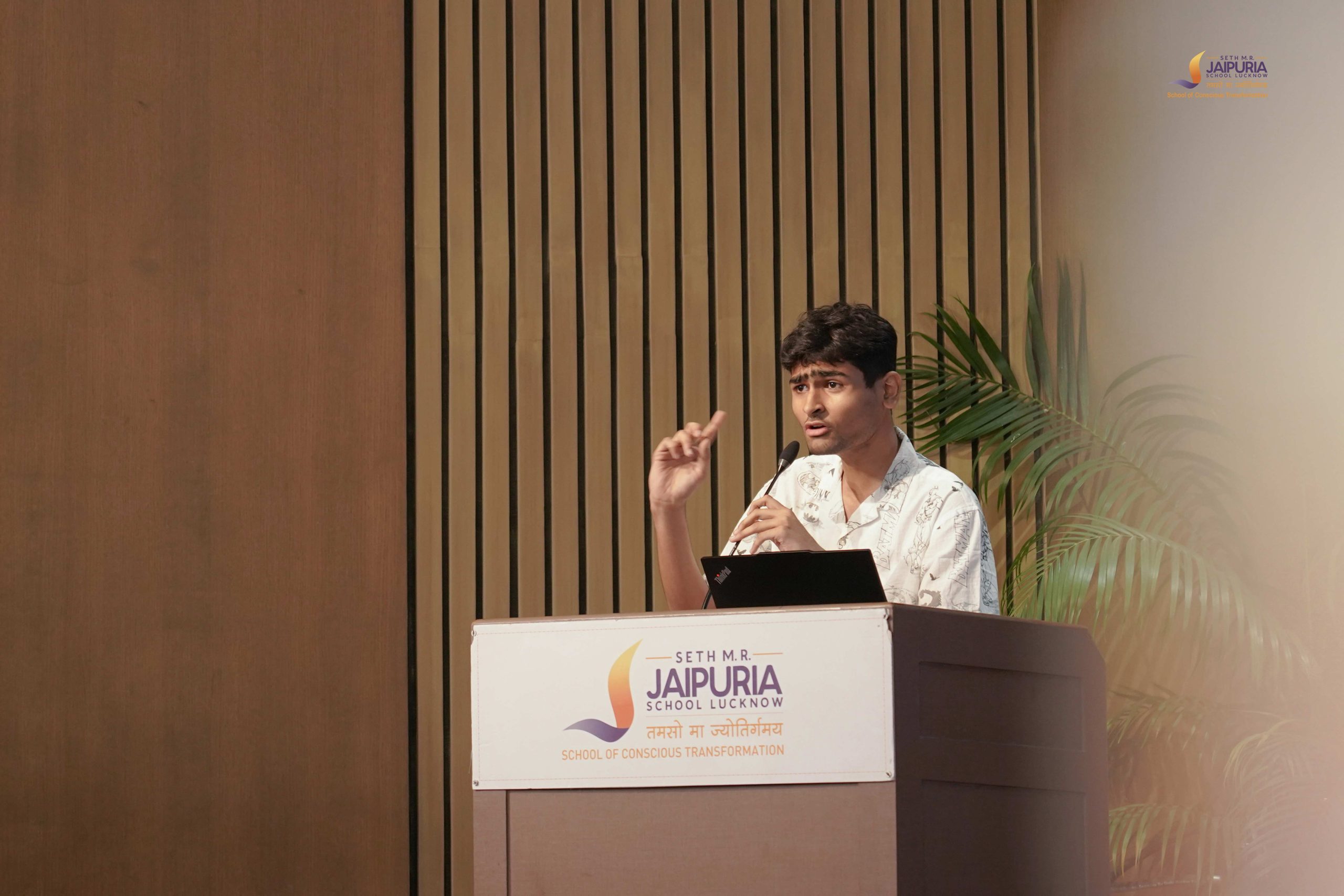
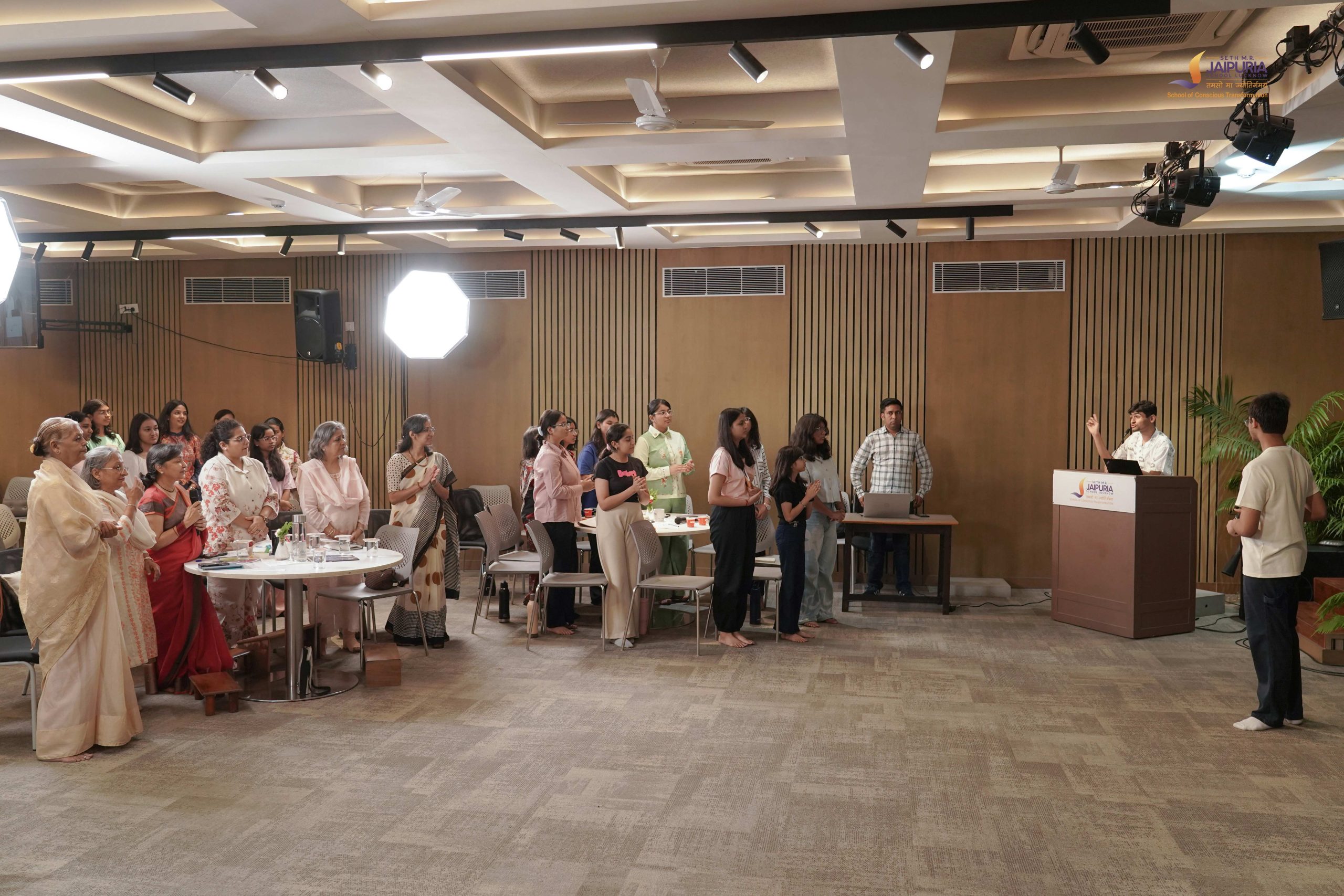
The fourth day of the retreat shifted the focus to the Manomaya Satta (Mental Being), guided by the theme, “The Fivefold Ascent of the Mind.” The session opened with a student-led presentation by Prakarsh Kapoor and Arjun Mishra, who challenged the students to rethink the very purpose of their education.
Arjun opened the day by urging the students to look beyond the classroom walls, highlighting the massive gap between simple schooling and true mental alertness. He used a vivid demonstration to show how easily people miss the obvious when their attention is scattered.
“If we couldn’t focus for a two-minute video on a huge screen, imagine what happens in a complex two-hour lecture. We are missing massive pieces of information. To stop missing that, we have to master mental education.”
Following this, Prakarsh urged the students to move past superficial observation. Using the simple leaf placed on the tables, he explained how a truly trained mind should not just identify an object, but also interrogate it.
“Where can my mind go from this small leaf? If it produces food, does a smaller leaf produce less? How does a cactus survive without leaves? These questions are what widen the mind and help you apply concepts to complex, unfamiliar situations.”
As the session drew to a close, the duo left the students with a powerful maxim to carry home, a reminder that the effort of refining one’s character is never wasted, even when the results are not immediately visible.
“Patanjali spoke of the ‘Maxim of Digging a Well.’ The man who digs a well is fully covered in mud by the time he reaches the water. But when that first bit of water oozes out, he bathes in it and cleans himself completely. Similarly, just one single drop of true refinement has the power to wash away a massive amount of unrefined character.”
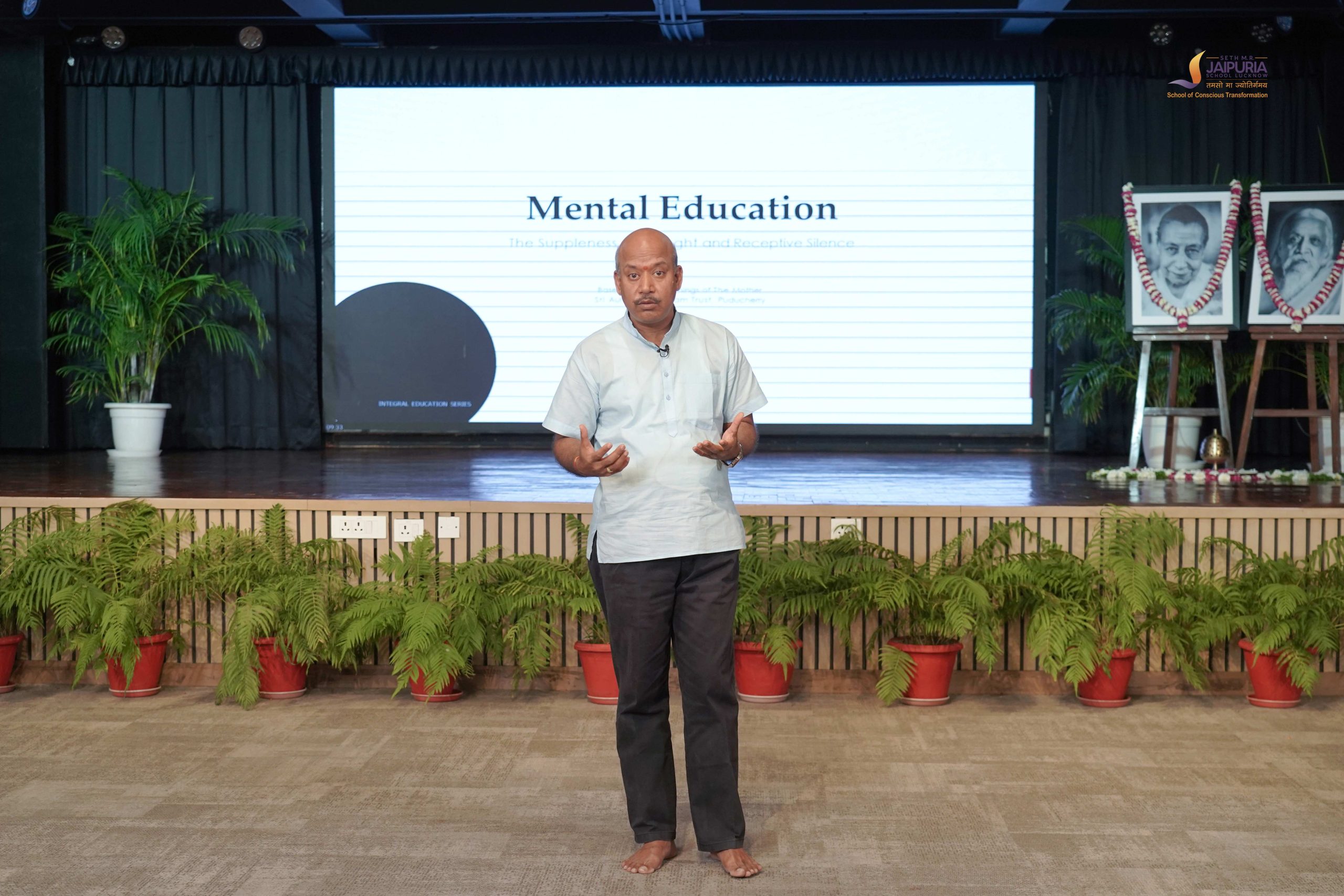
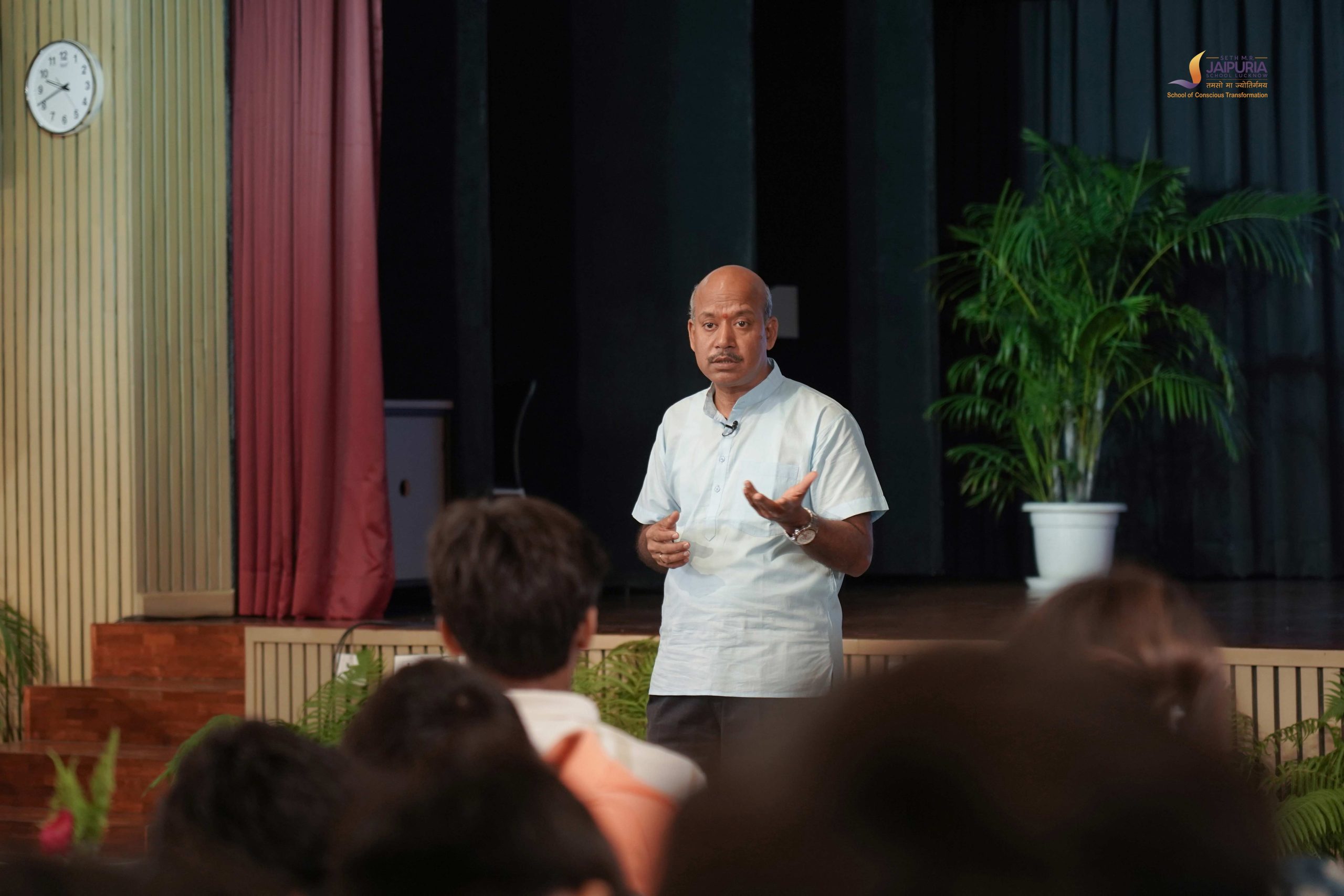
Following the student-led presentation on mental education, Prof. Sampadananda Mishra took the floor to ground the students in the ancient psychological foundations of Indian civilisation. He urged them to view consciousness not as a single block, but as a vast landscape of seven distinct layers, divided between a lower hemisphere representing ordinary existence and a higher hemisphere of pure consciousness.
The Mantra of Concentration
Highlighting the absolute necessity of focus, Prof. Mishra called for a shift in how students approach their daily tasks. He emphasised that greatness in any field, whether science, athletics, or spirituality, is rooted in a single, unwavering capability.
“You want to become the best athlete? The only key is the power of concentration. You want to become a great scientist? Power of concentration. Make it a mantra. If your mind is not focused, you cannot achieve anything.”
Prof. Mishra also urged students to accept the truth about the nature of the mind and the path forward. He argued that the true strength of a person is not measured by grades, but by the ability to cultivate stillness.
“A mind that has chaos, is veiled, and is dispersed is a weak mind. It lacks strength. In mental education, the most important thing is to bring as much silence as we can to the mind. Only then does it become calm, tranquil, and peaceful, and only then can we see the light glimmering at the depth of our heart.”
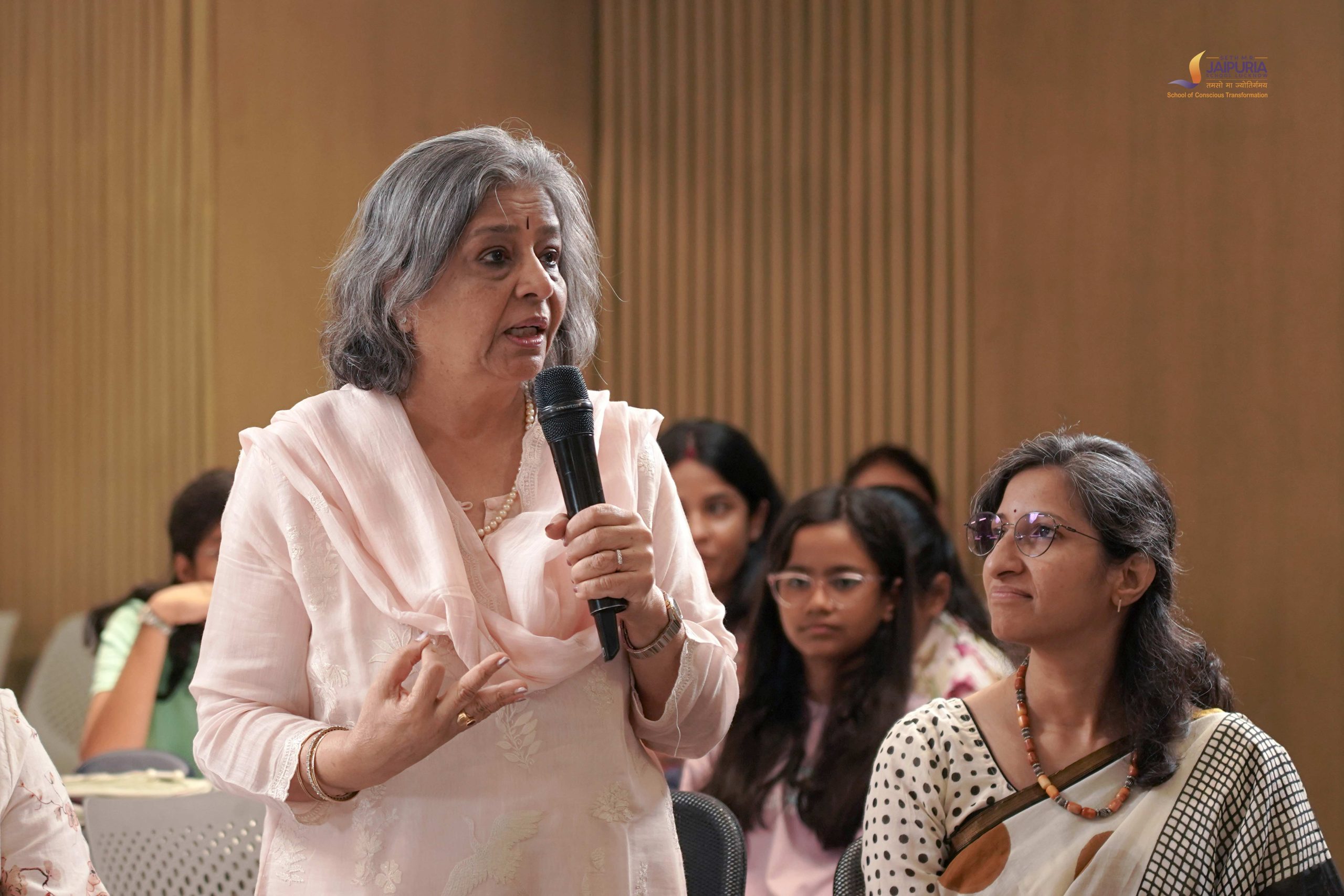
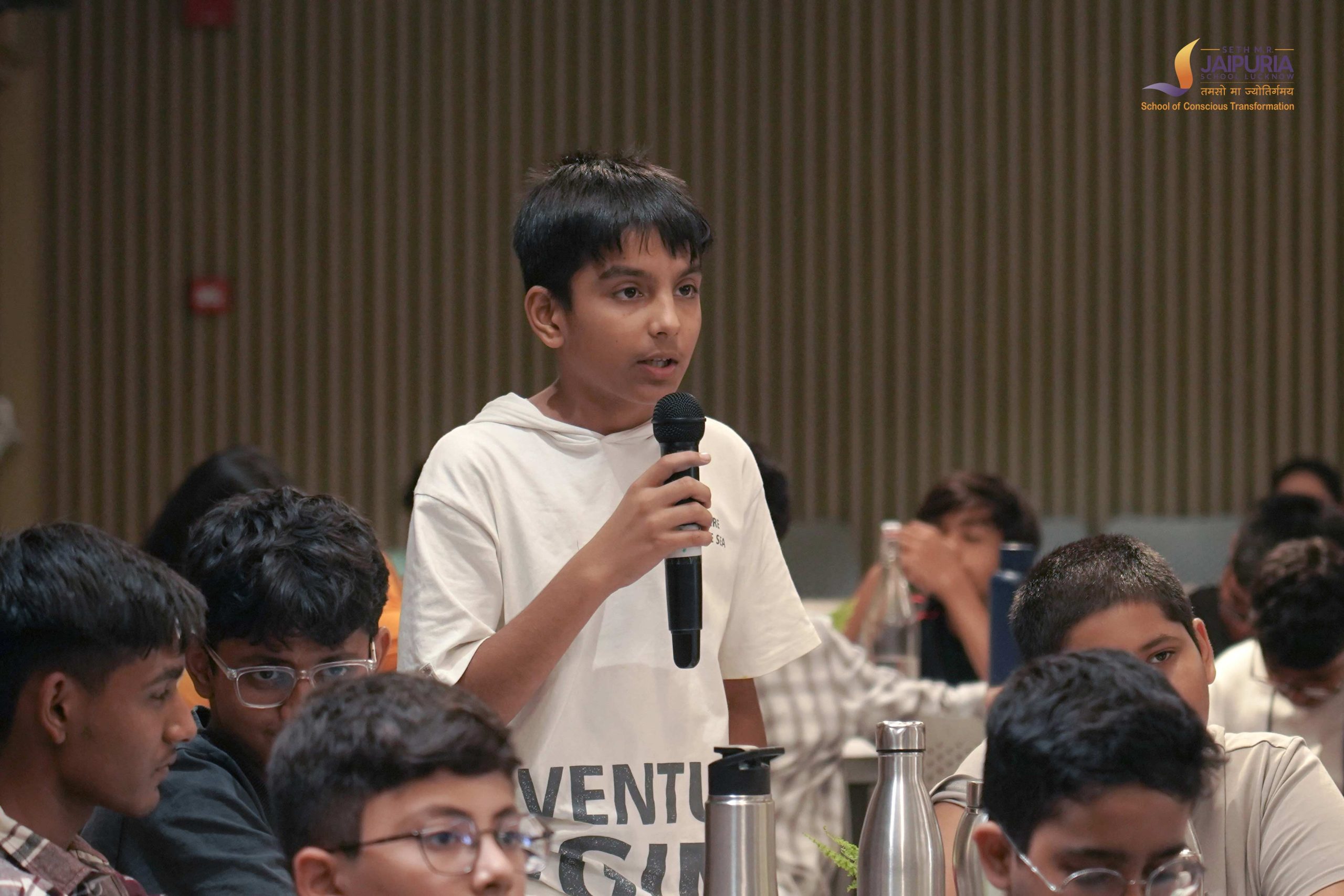
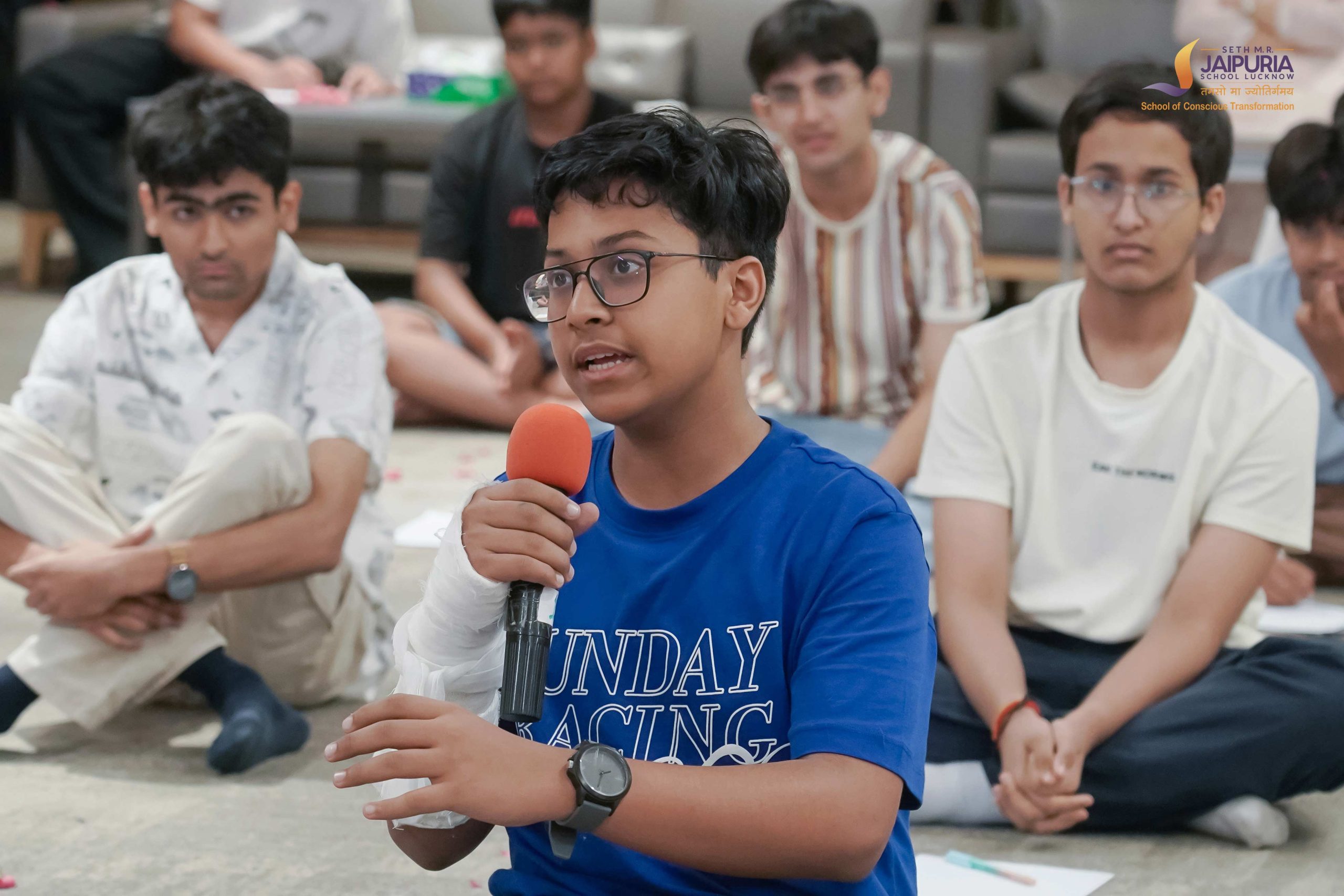
When a student asked about the difference between attention and concentration, the auditorium turned into a collaborative classroom. Students rose to explain that while attention is a state of alertness and receptivity, concentration is the focused application of that energy, much like a magnifying glass gathering scattered sunbeams to burn a piece of paper.
Putting it in simple words, Prof. Mishra said, “Attention is a state of awareness, a sudden vigilance. But when you gather those dispersed thoughts and focus them onto one single point, that is concentration. You don’t say you have ‘attended energy,’ you say you have ‘concentrated energy.'”
Addressing a student’s question about how free will interacts with the Divine Will, Prof. Mishra explained that individual choices are the instruments through which the Divine seeks to manifest.
“Most of the time, we try to impose our own will on the Divine. We say, ‘God, make this happen.’ We do not wait to see what the Divine Will actually is. When your individual will aligns with the Divine, that is the best choice you can make.”
Following the final academic sessions, the students transitioned to the “Love Bath,” a closing exercise led by the Principal, Mrs. Promini Chopra. They sat in absolute silence with their eyes closed, each holding a small battery-operated candle.

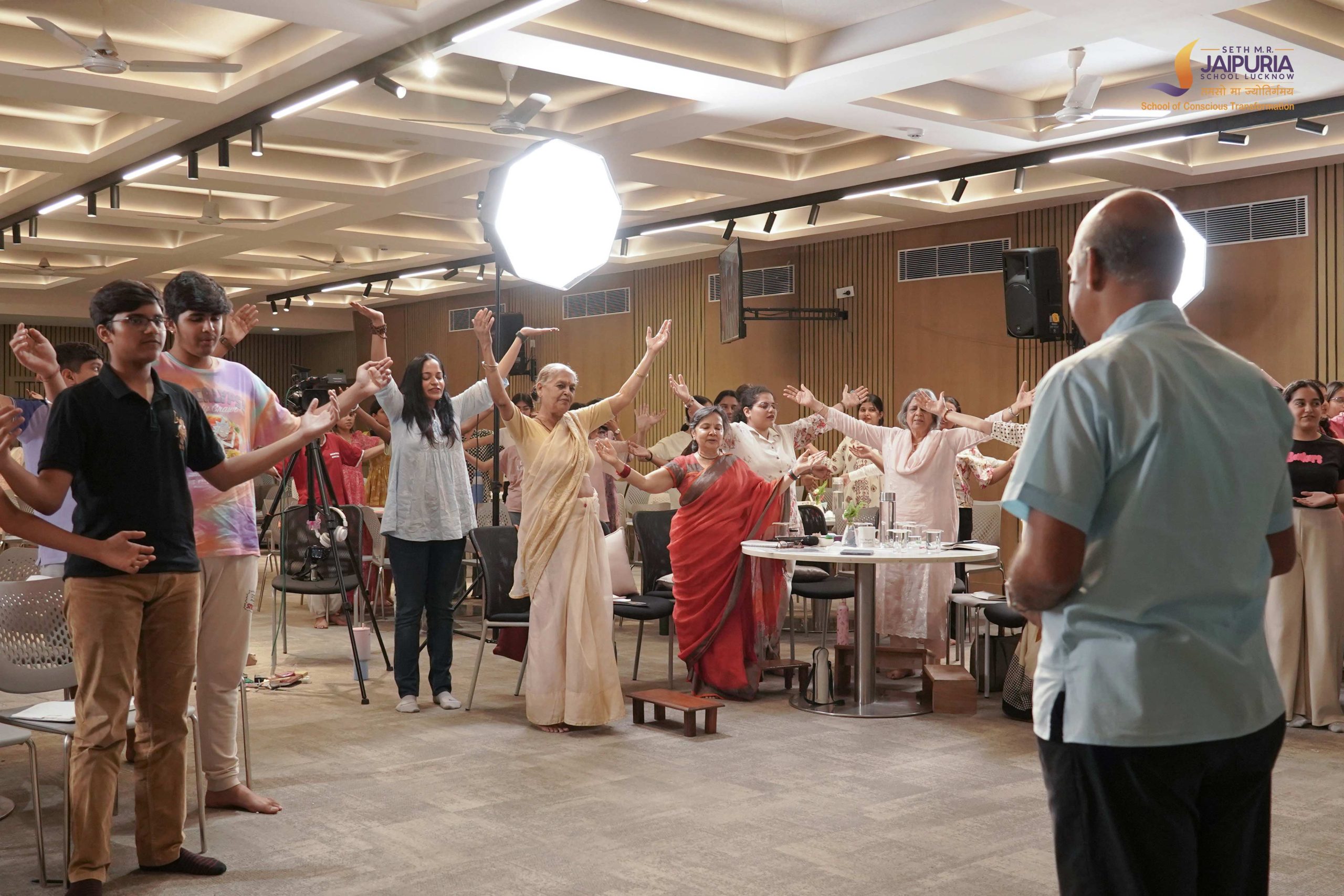
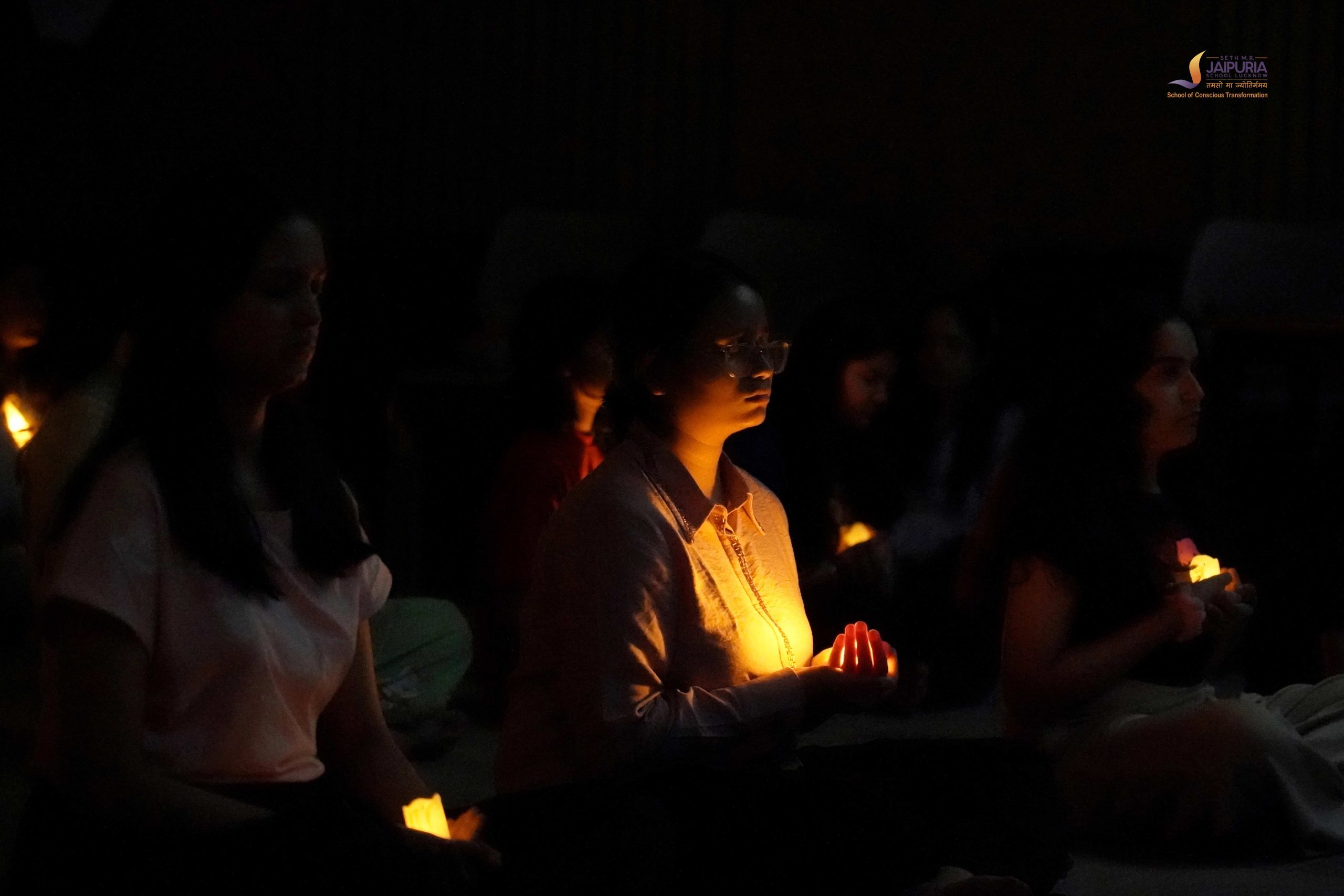
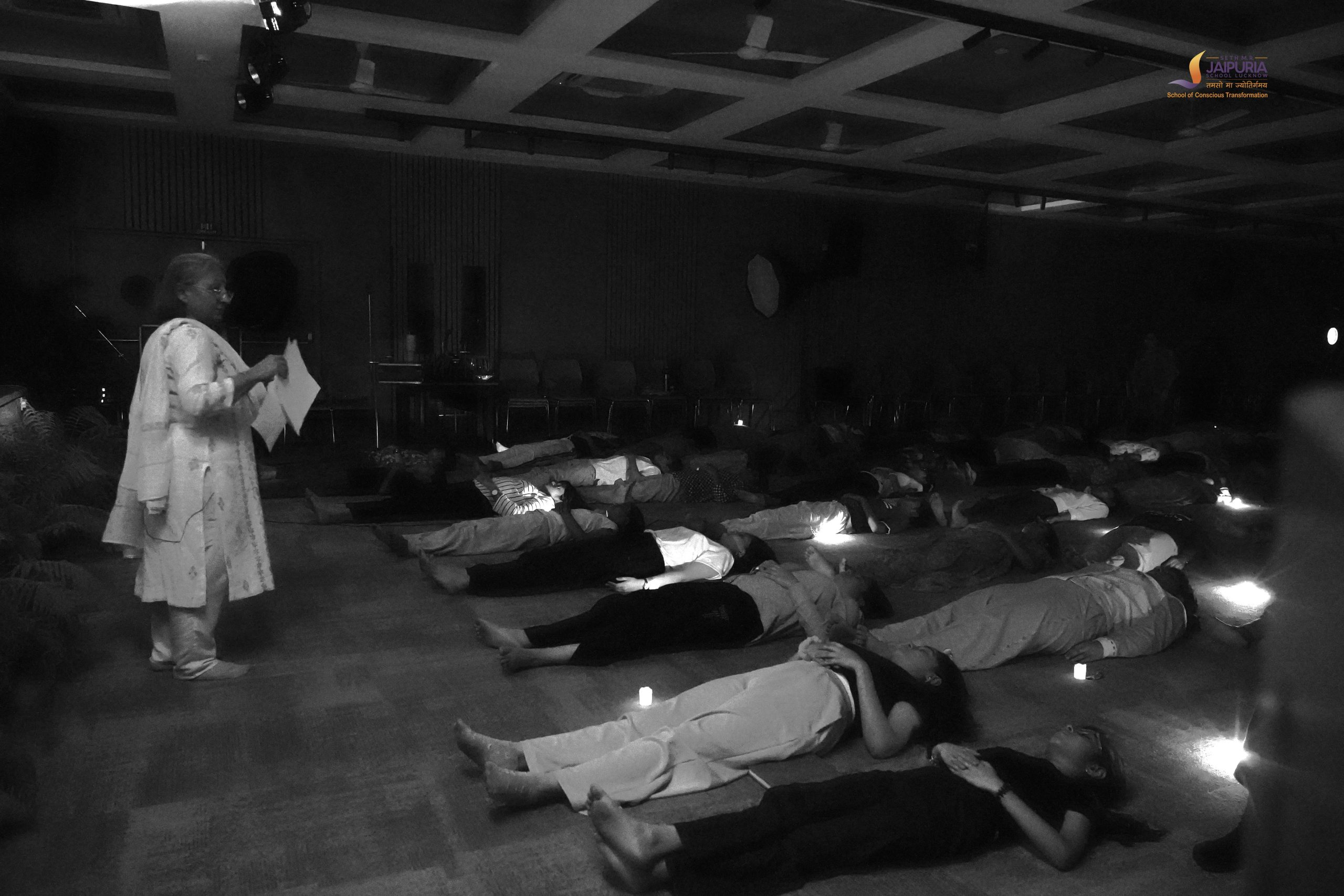
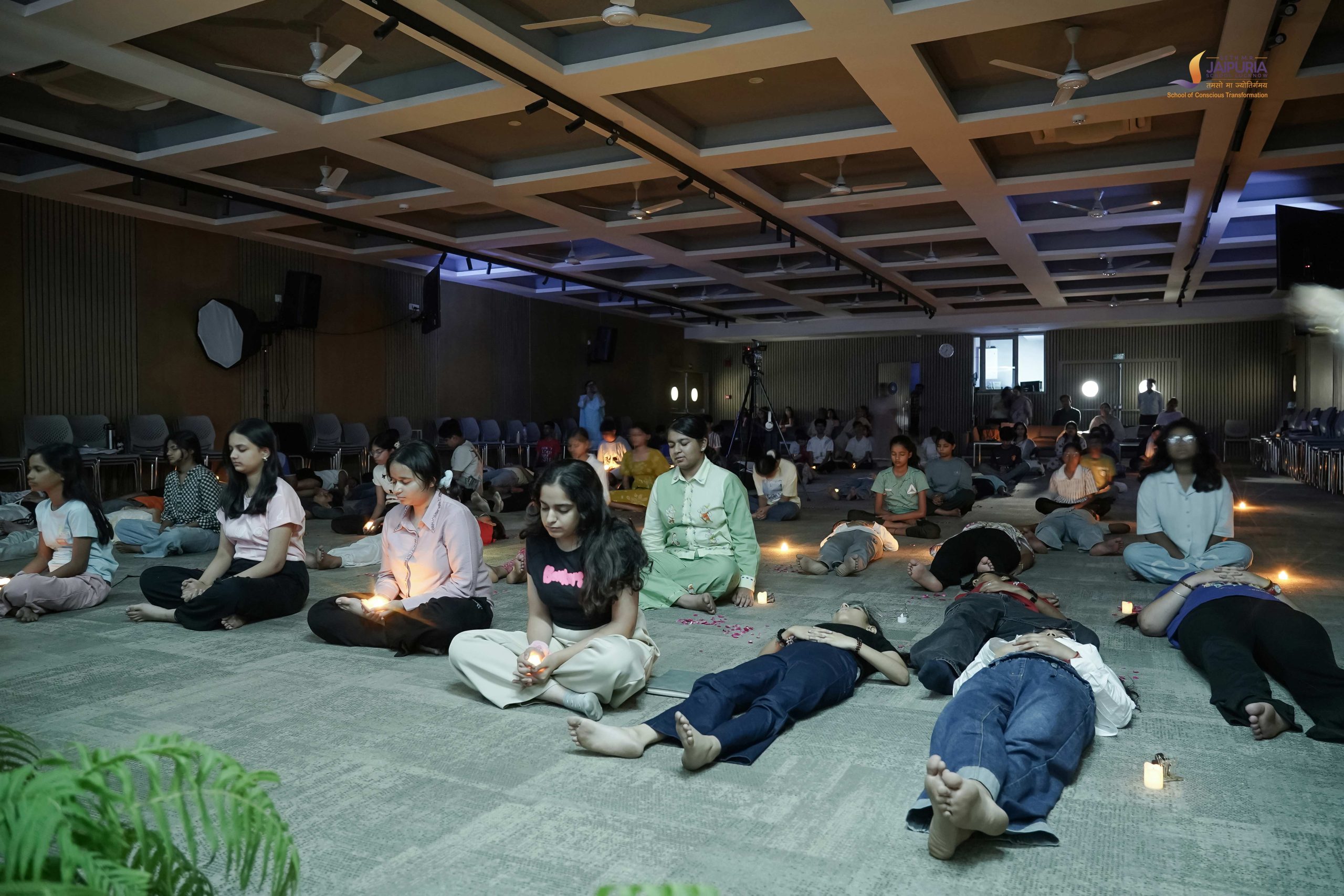
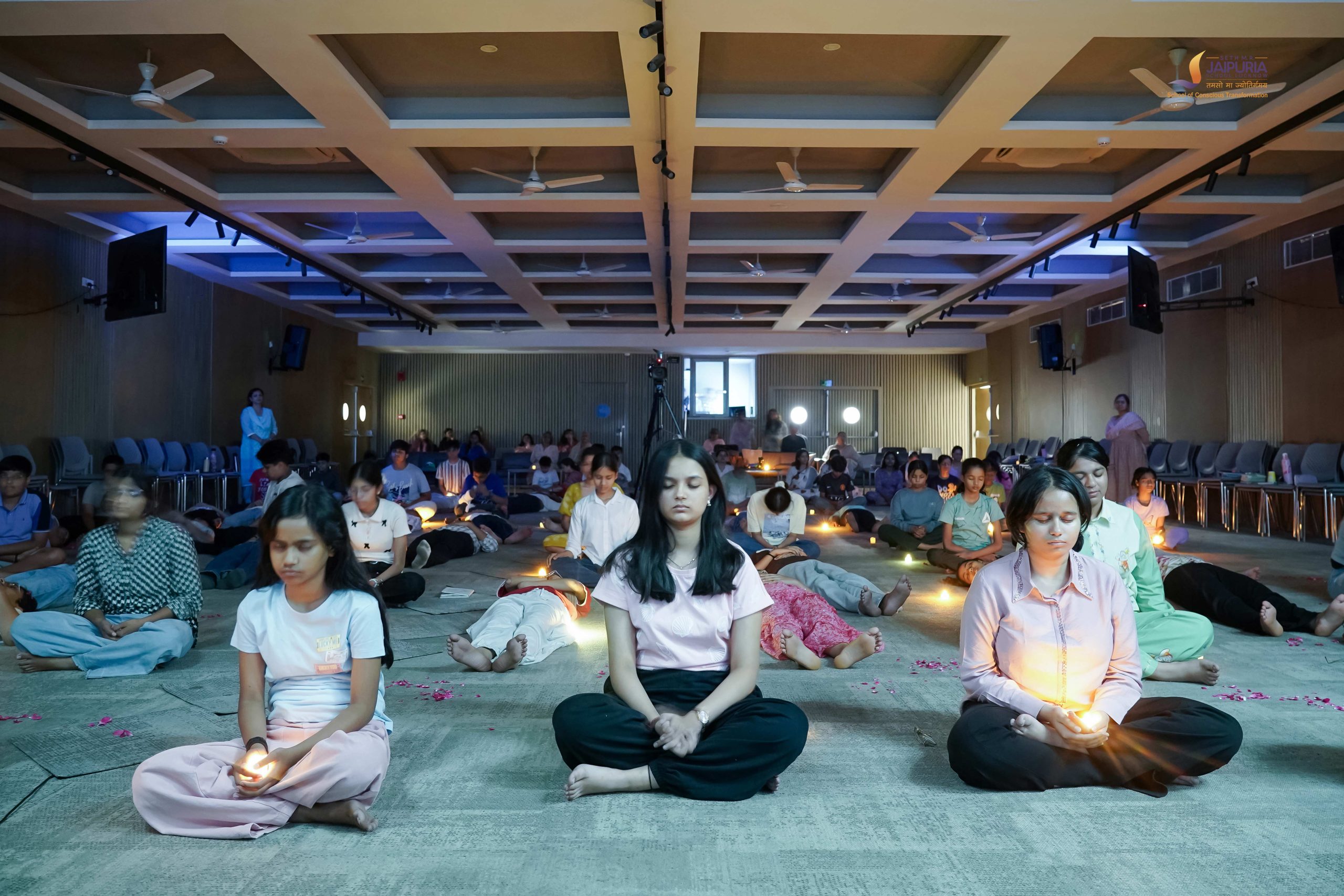
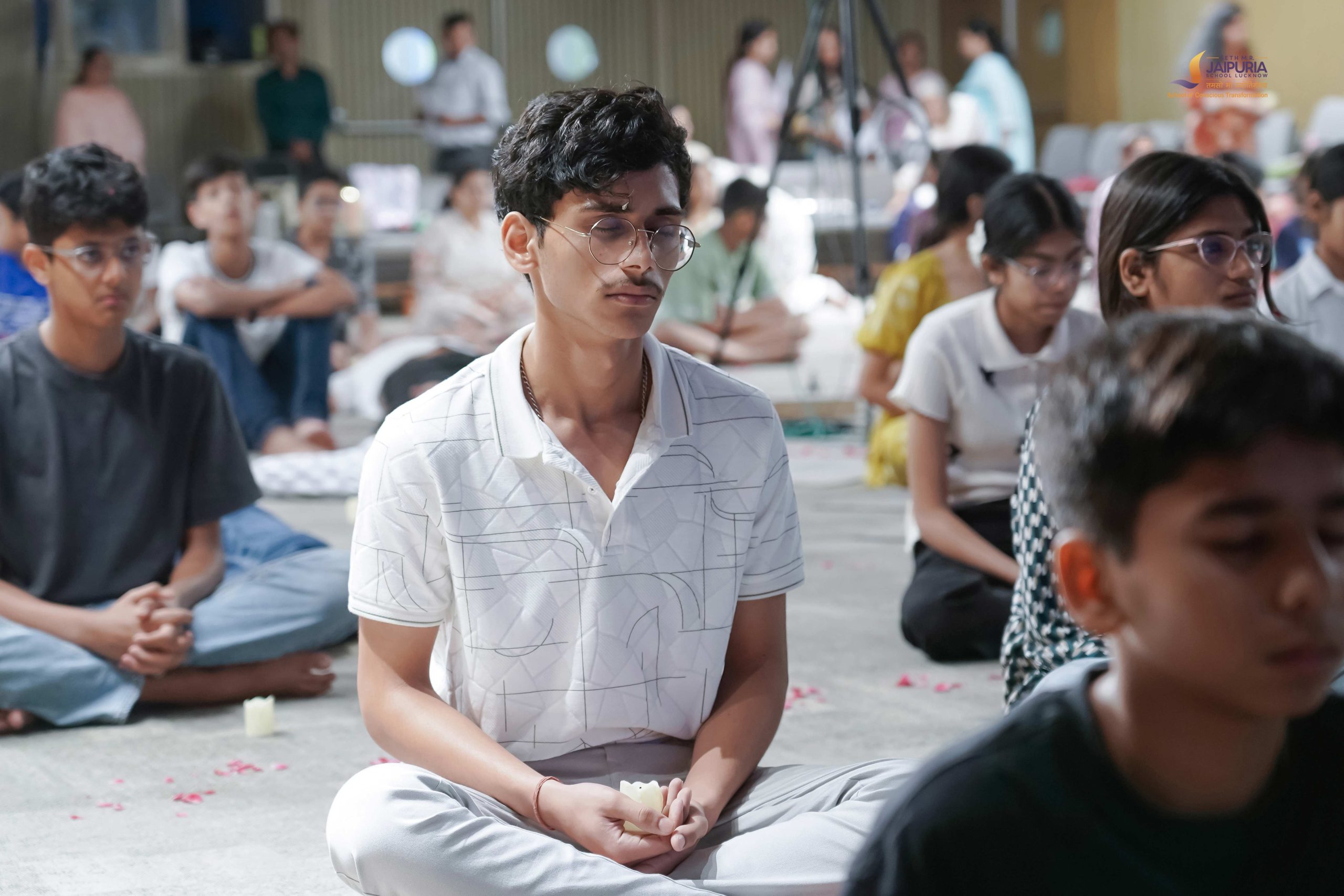
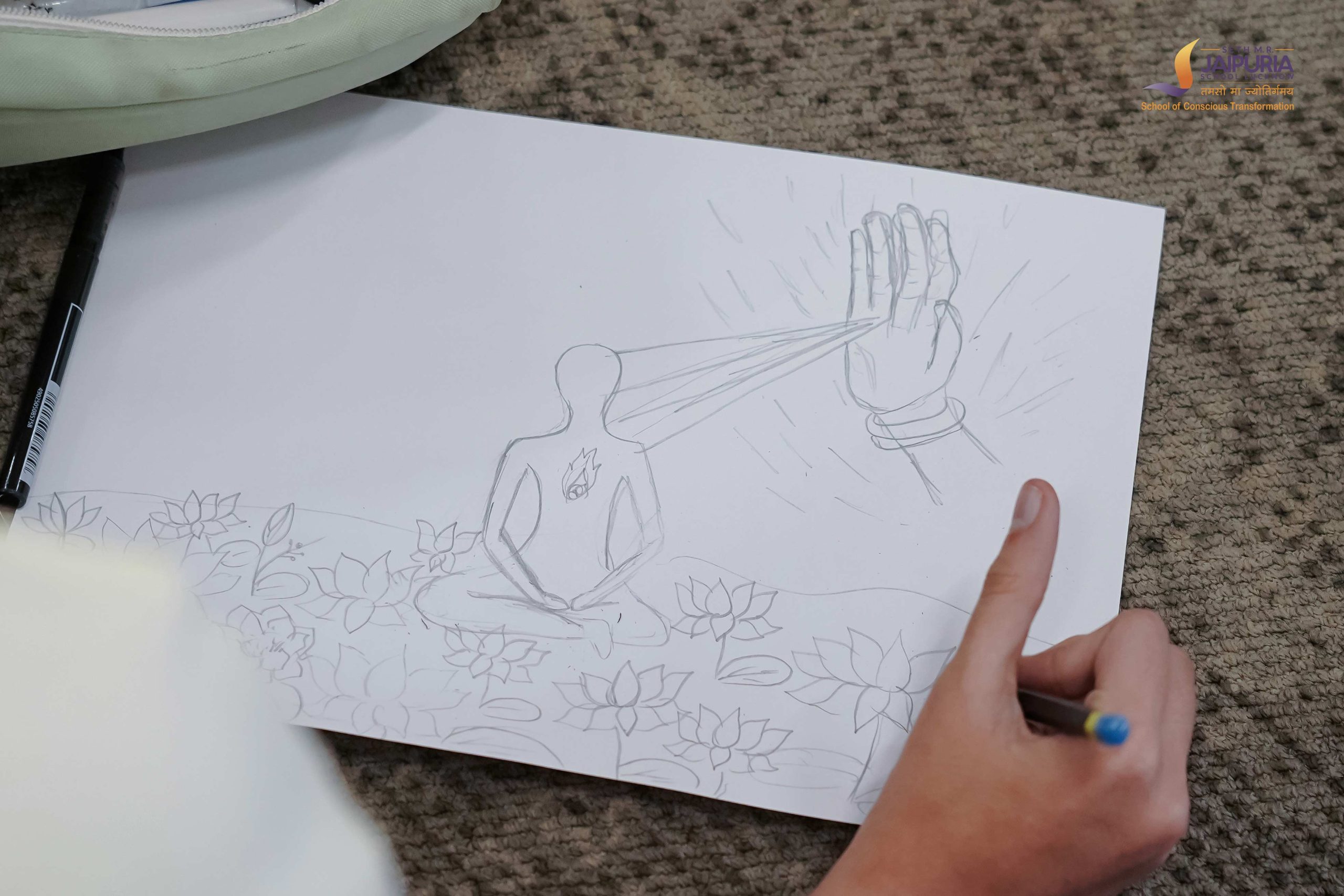
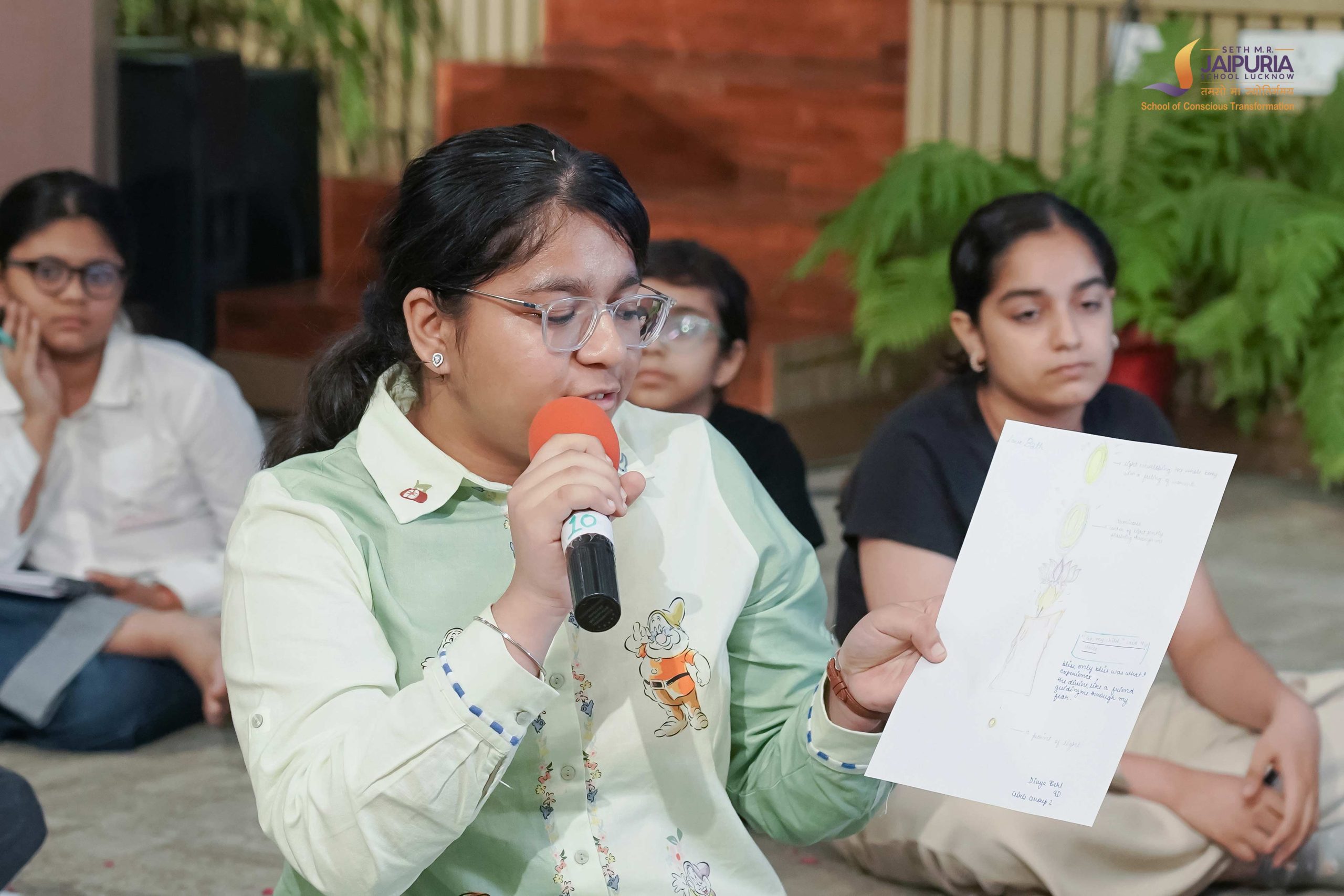
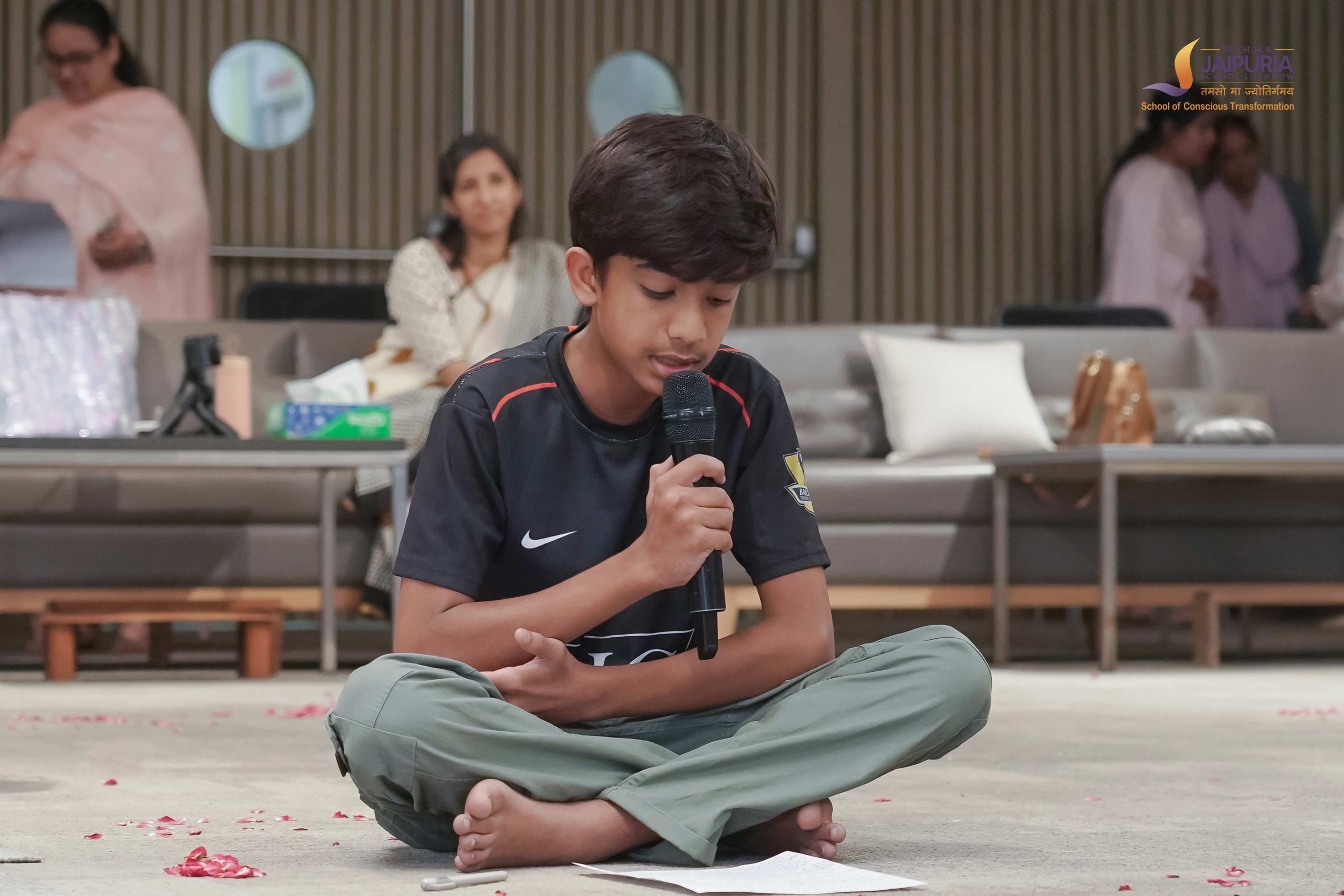
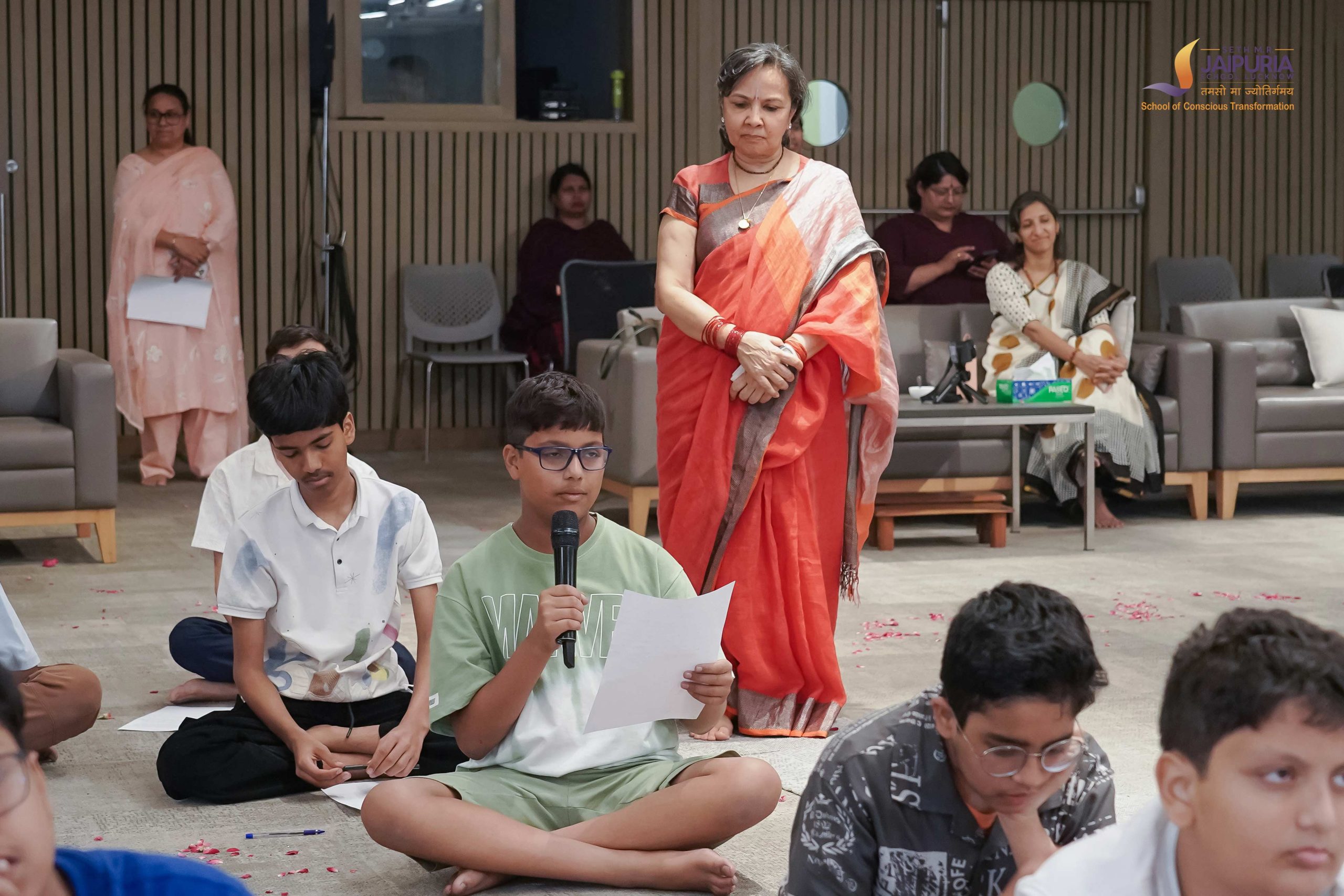
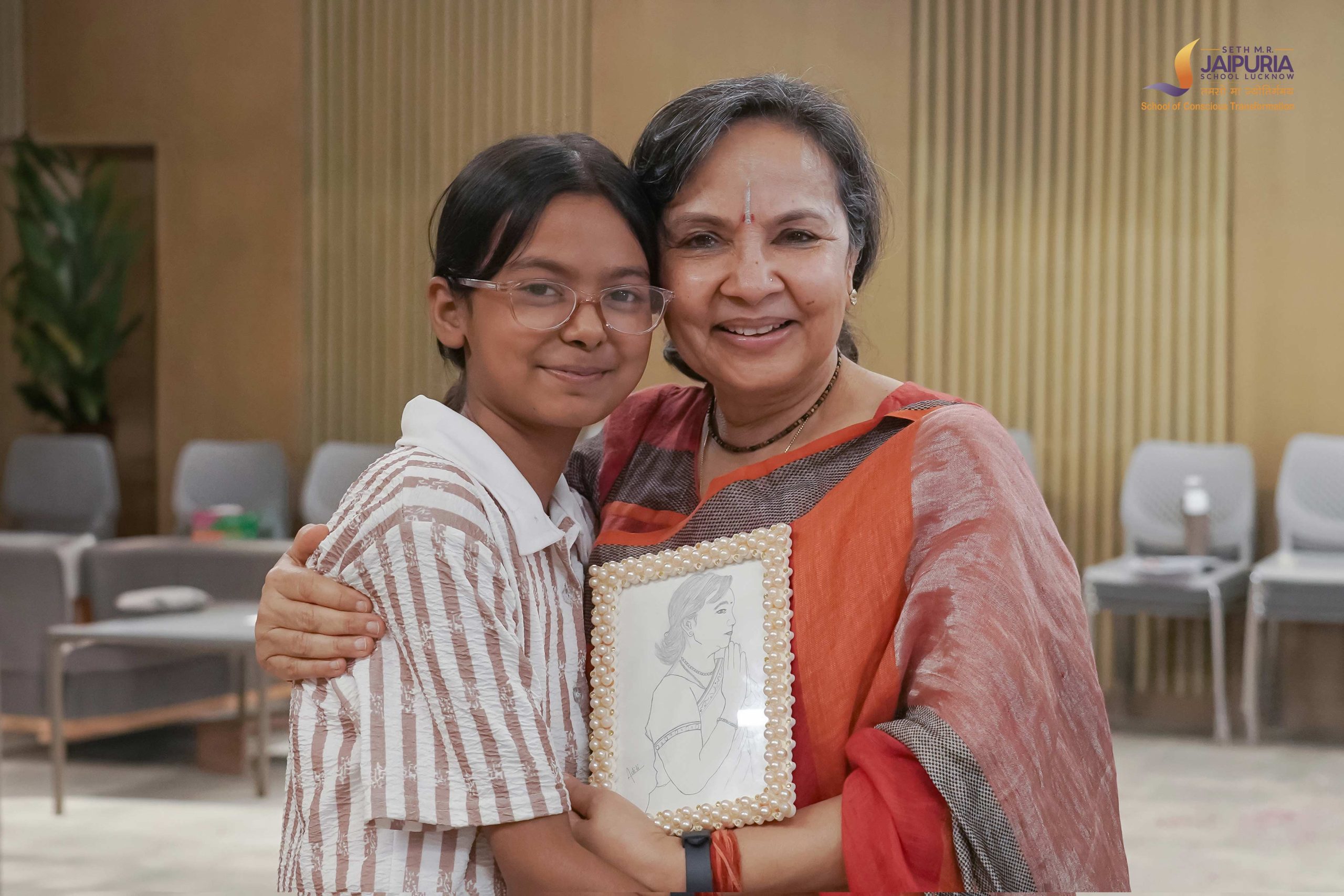
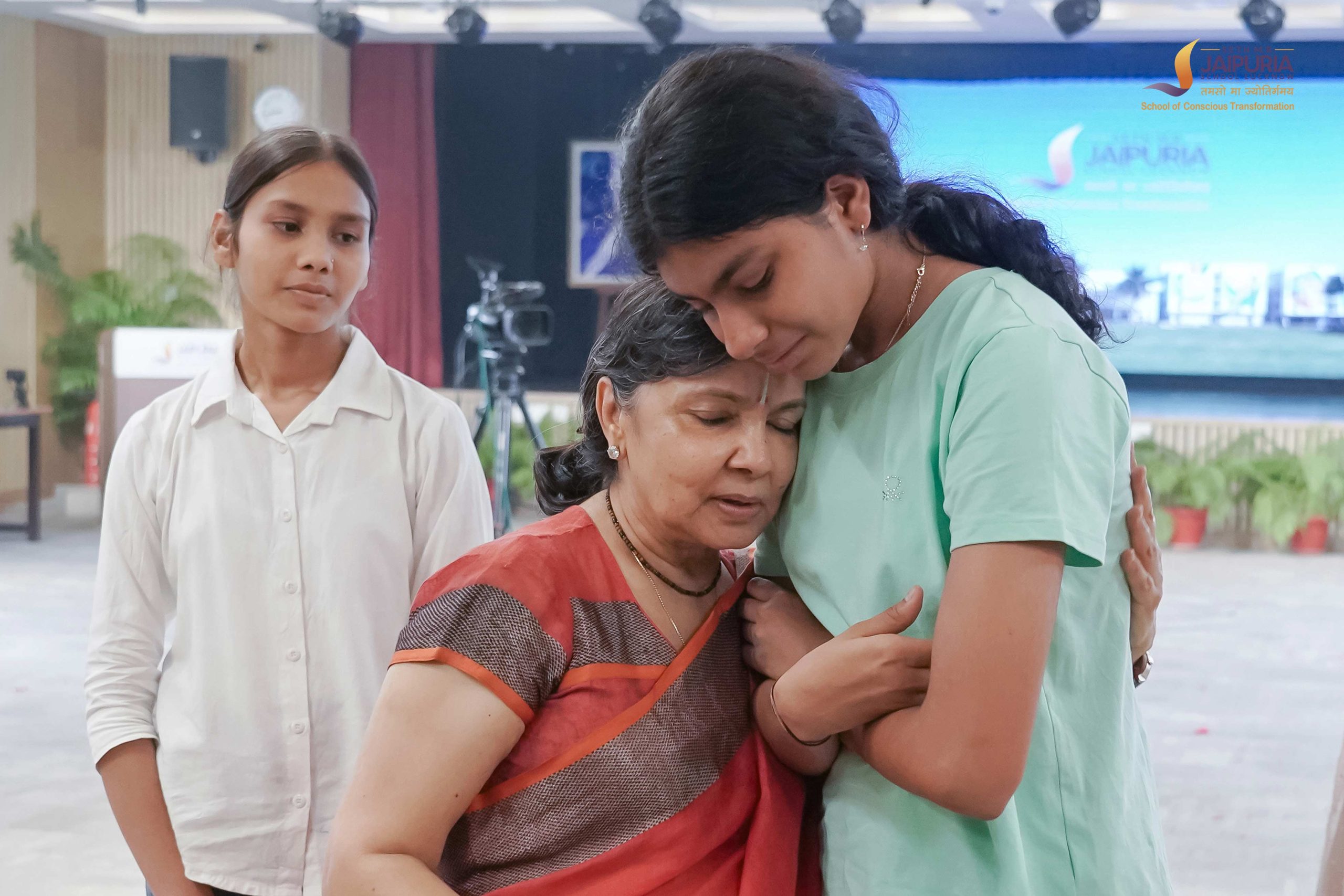
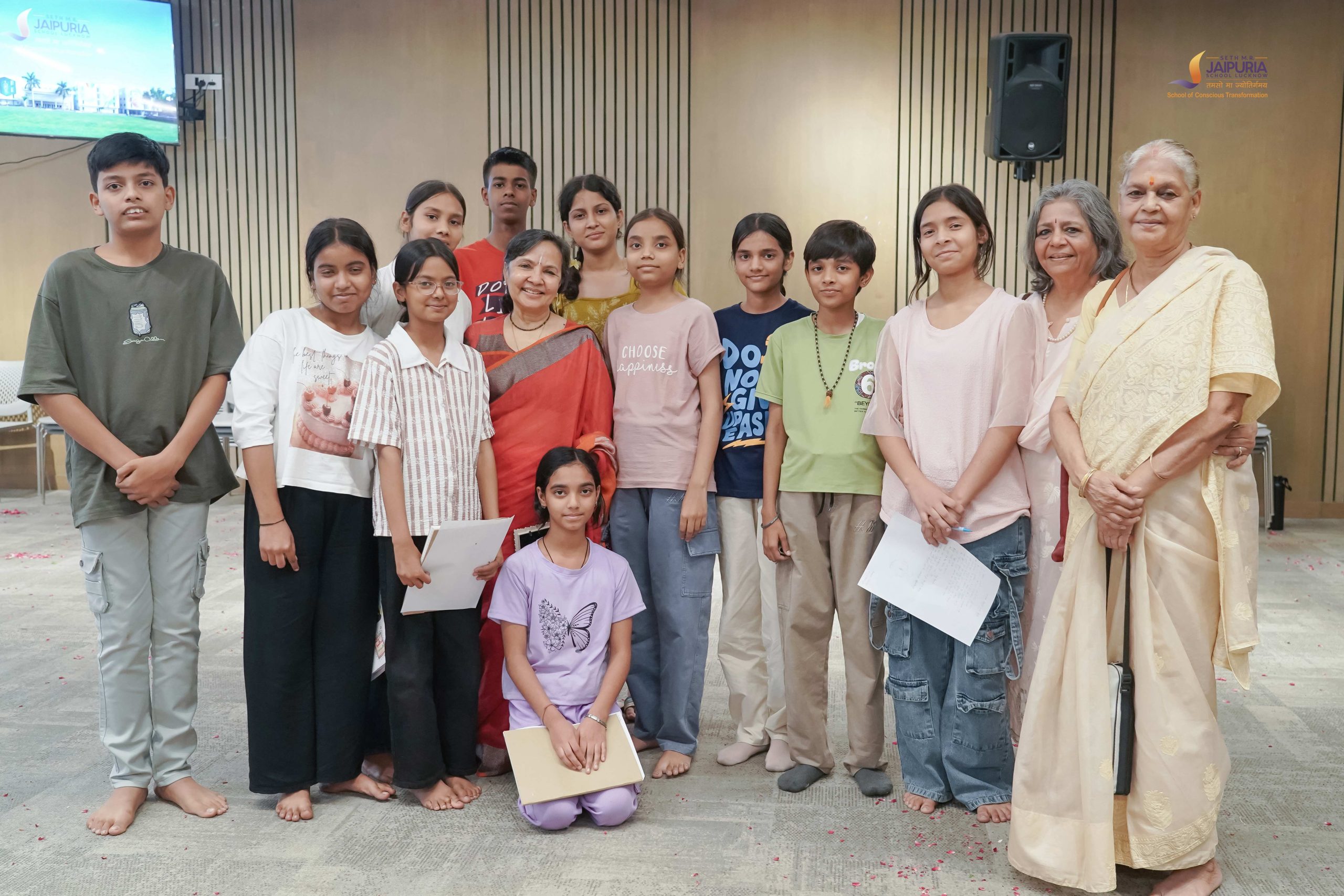
The practice focused on centring the mind and stilling the body through breath awareness. Guided by the gentle music of a flute, the students brought their flames close to their heart centres, visualising a “little cave” within, the seat of the psychic presence. Mrs. Chopra encouraged them not to forcefully push away their thoughts, but instead to let deep concentration naturally quiet the mind. The session gently reminded them that the ultimate aim of life is to discover this inner divine presence and surrender to it.
Remaining in that state of stillness, the students were then invited to pour their emotions onto paper. Some expressed their reflections through poems, while others translated their experiences into drawings. A few chose to journal their thoughts, while some shaped their emotions into short stories, each expression becoming a personal reflection of their inner journey during the session.
The day concluded with the students relaxing in profound stillness, anchoring this inner connection before heading out to prepare for their final presentations.