

Junior School Celebrates Fruit Awareness Day & Mango Day
July 23, 2026
Fill in the Blanks: An Evening with Imtiaz Ali
August 14, 2026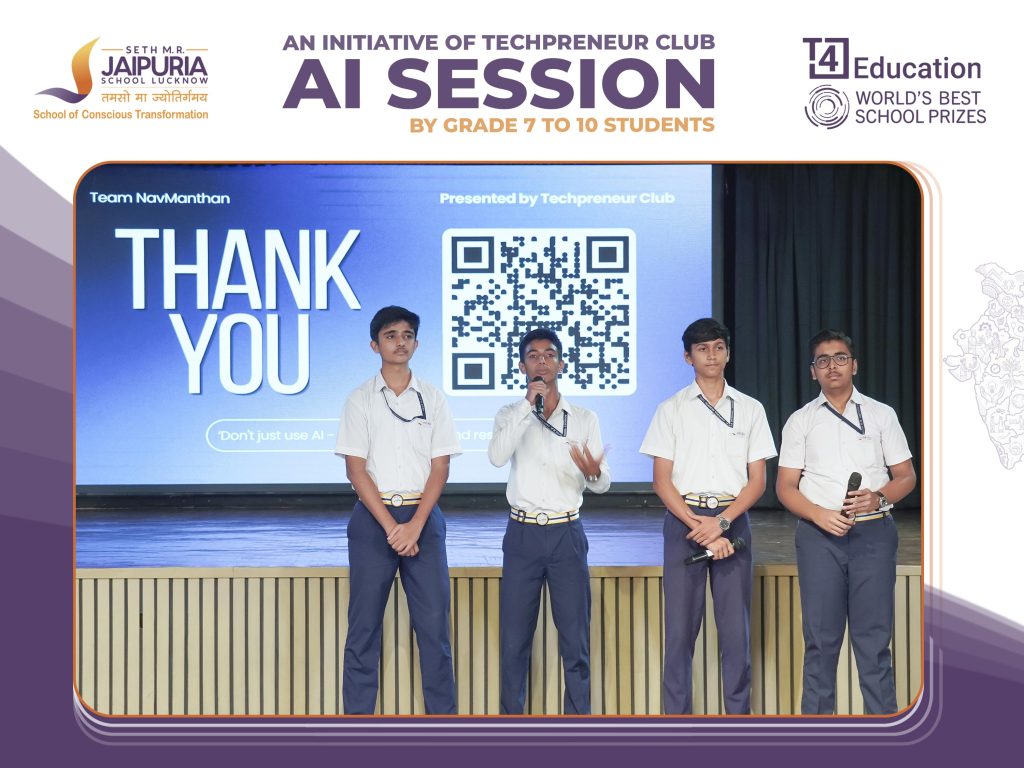
The morning of 11 July 2026 witnessed an inspiring role reversal at the auditorium of Seth M.R. Jaipuria School during an interactive session on Artificial Intelligence (AI). In a unique and engaging example of community collaboration, students took on the role of teachers, sharing their well-researched knowledge of AI with the school community, while the teachers stepped into the role of enthusiastic learners. The event was organised by the TechPreneur Club, a student-led initiative under the thoughtful mentorship of its teachers in charge, Ms. Anshu Sinha and Ms. Pratiksha Mishra Shukla. The session also provided a platform to demonstrate the students’ leadership skills as they guided the gathering with grace, patience, dedication, and knowledge. The event was further enriched by the participation of the Principal, Ms. Promini Chopra, whose insightful observations and guidance consistently steered the discussion towards the ethical dimensions of artificial intelligence.
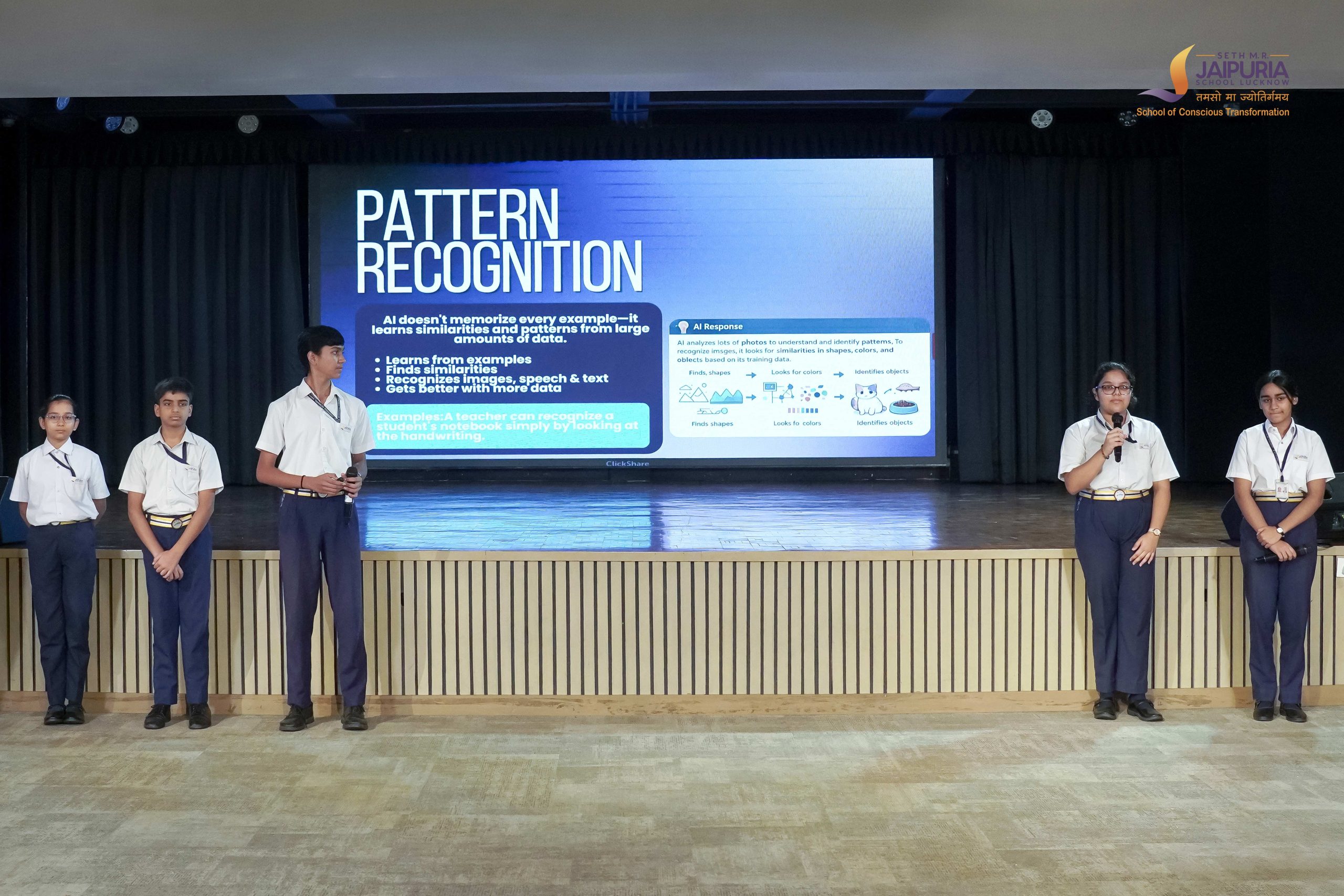
The students from grades 7 to 10 came together and made engaging and informative presentations in groups of six, with a total of seven presentations, each focused on a particular theme. Group 1 started by addressing the fundamental question, ‘What is AI?’. Their presentation gave a simple yet comprehensive introduction to the basics of AI through accessible examples, explaining its definition, its characteristic propensity for pattern recognition, and how AI functions.
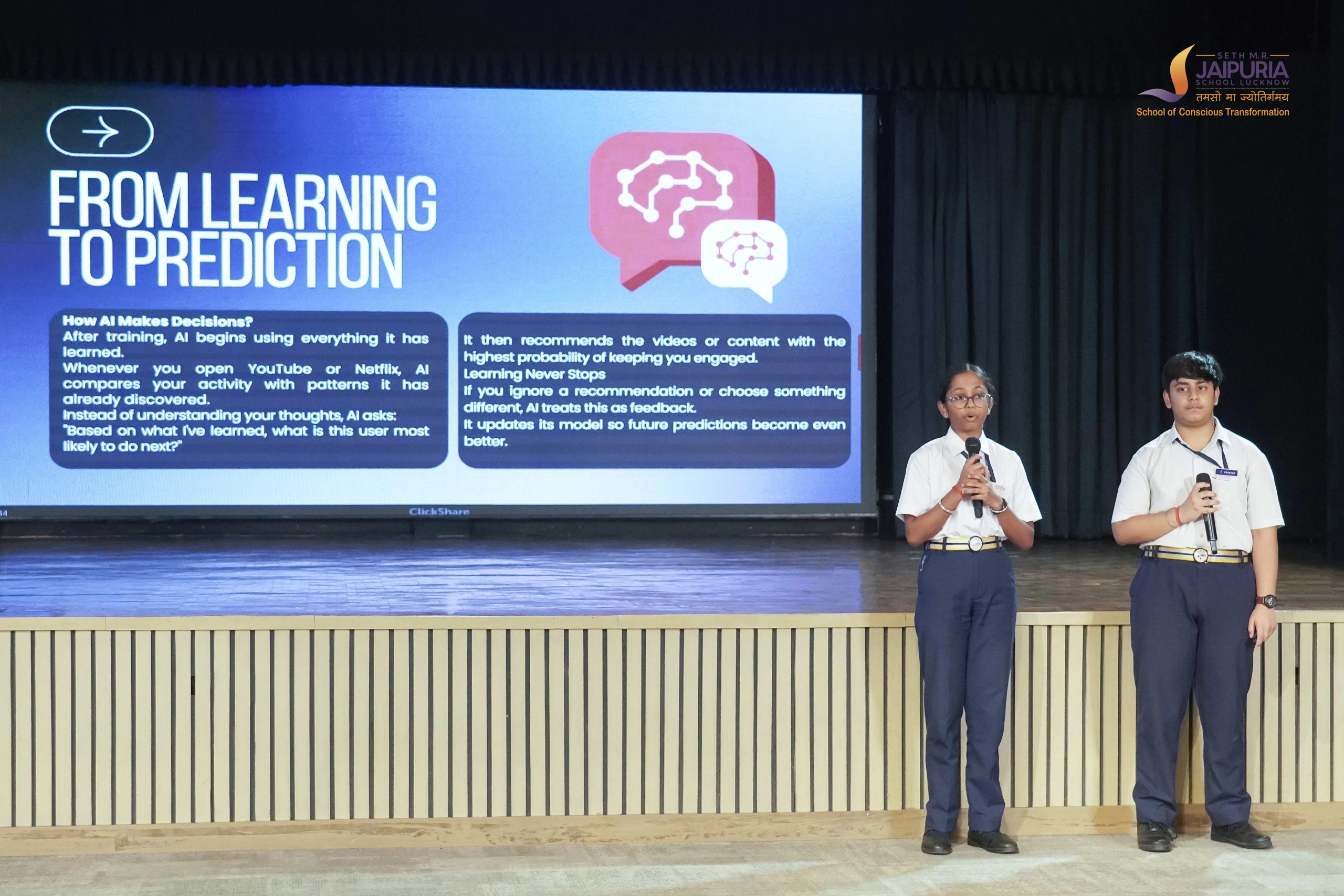
Group 2 presented on ‘How AI Learns: Understanding How Machines Learn from Data’. They set the premise for the presentation with a teaser that promised to demystify the process behind the all-too-familiar yet intriguing phenomenon of YouTube or Netflix predicting and recommending the videos that one would like to watch next. They explained that AI first collects vast amounts of data, then organises it, finds patterns, and then moves from learning to predicting and, along the process, improving with feedback.
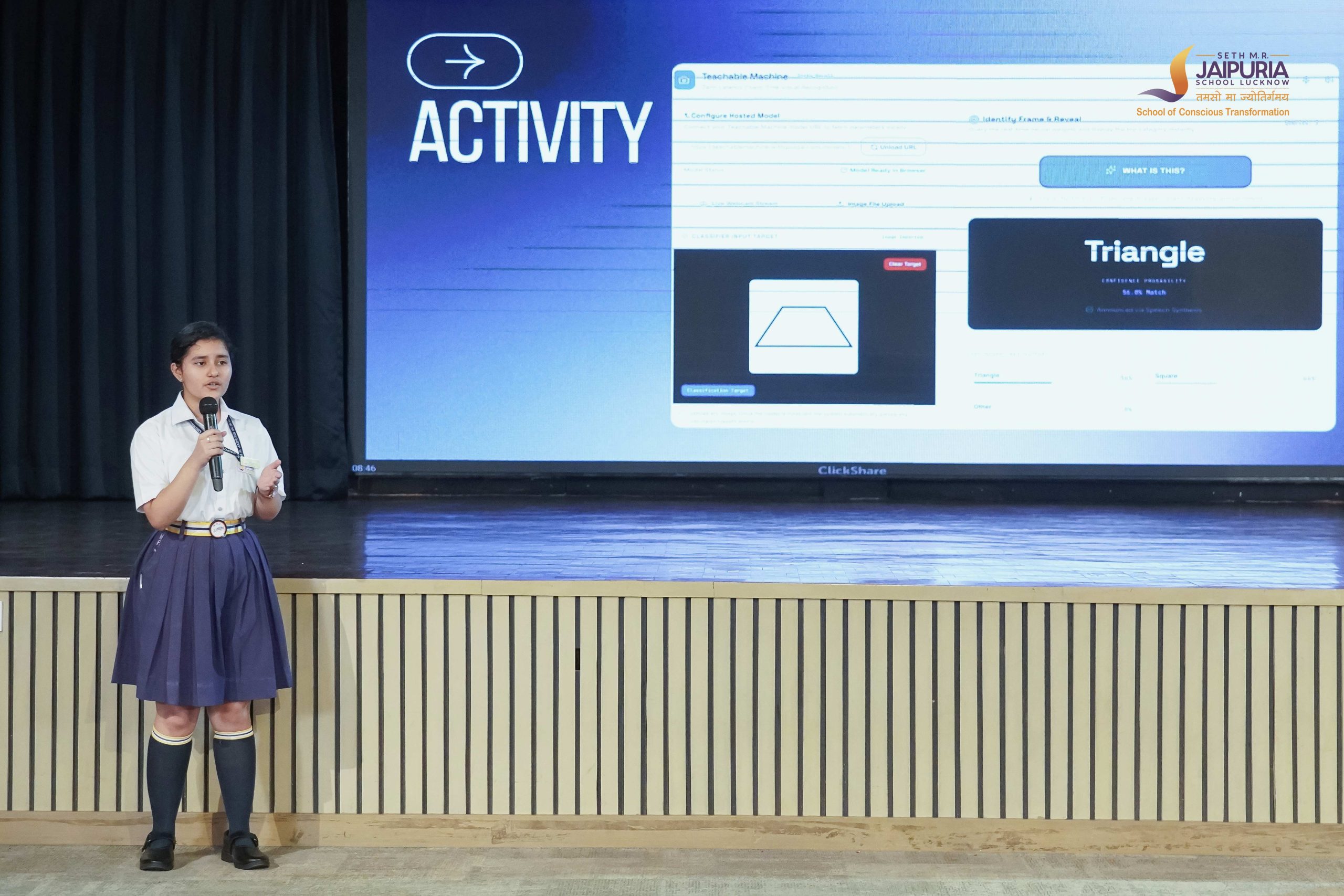
Group 3 presented on ‘How AI Responds’. Reinforcing the earlier point that AI is a ‘pattern machine’, they presented three ‘Golden Rules’. The first was to use AI as a helper, not as a decision-maker. The second was to prioritise verification from a trusted source since AI tends to act like a ‘confident intern who occasionally makes things up’. The third drove home the message that better inputs equal better outputs. The last rule was illustrated by an activity that the students gave to the audience, which perhaps saw the most enthusiastic participation from the gathering. A scenic landscape was presented and the students asked the audience to replicate it with precise prompts.
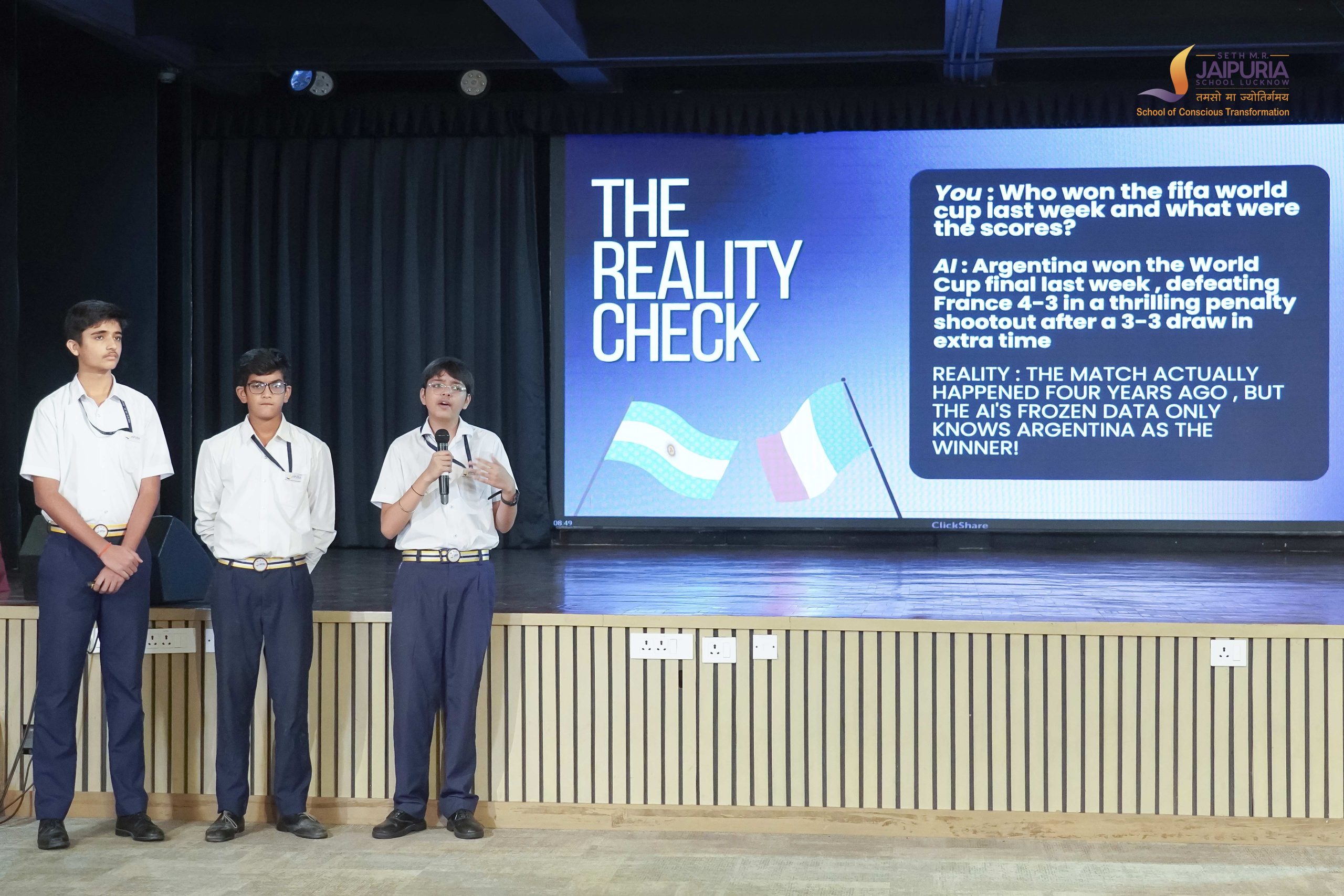
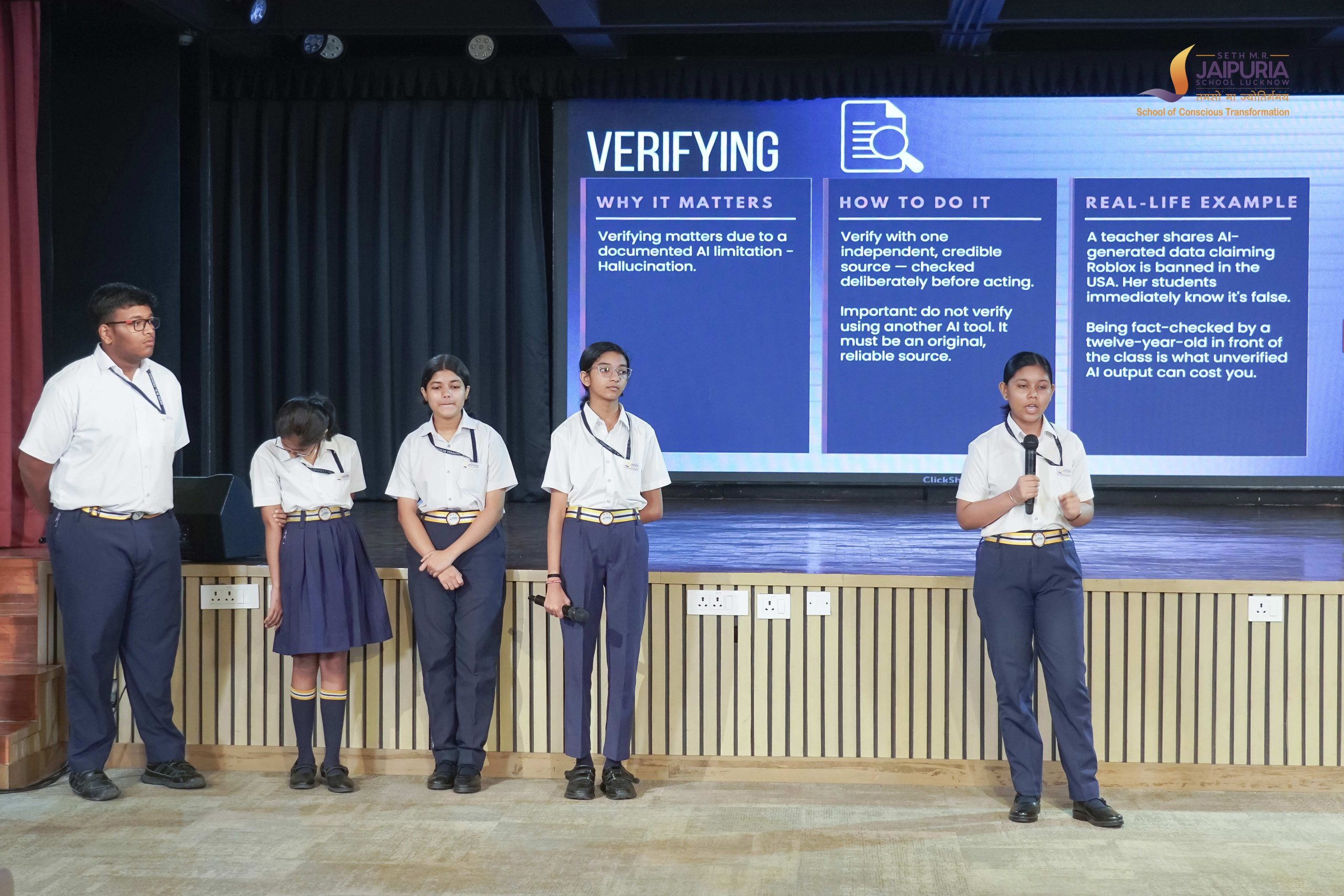
It was then the turn of Group 4, who presented on ‘The Confident Liar: Navigating AI Hallucinations and Bias’. Explaining the limitation of AI in terms of its inability to understand, as well as the fact that when it lacks information, it tends to hallucinate by generating false information, they reinforced the importance of verifying AI-generated information before accepting it as truth. This was followed by Group 5’s presentation on the ‘Mechanism of AI’, which focused on activities. For instance, to illustrate AI’s propensity for bias, they gave the activity of generating images with prompts for a CEO and a janitor. The results were mixed, with some AI tools reinforcing stereotypes about gender and skin colour in generating these images, while some AI tools learnt from feedback about these biases and generated more informed images.
Group 6 presented on the importance of ‘Building Critical AI Habits’. The three core AI habits that they recommended were: 1) questioning AI content with a refusal to accept answers just because they sound right; 2) verifying facts before accepting and sharing them; and 3) deciding to use AI wisely, not blindly, and to never allow AI to make the final decision. For the activity, they gave two headlines and asked the audience to guess which one was true, in the process highlighting how real information is cautious and tentative in its wording rather than making sweeping claims. One of the key takeaways from this presentation was that one should ‘use AI as a tool, not as a replacement for critical thinking’.
The last presentation of the event by Group 7 was on ‘Evaluating AI Content: Real vs Fake’. It centred exclusively on practical activities in which the audience enthusiastically participated. They presented a series of texts and images and asked the audience to identify which were generated by artificial intelligence rather than by humans. The activity proved to be highly engaging and interactive, while also highlighting the increasing sophistication of AI-generated material and making it challenging to distinguish it from human-created content.
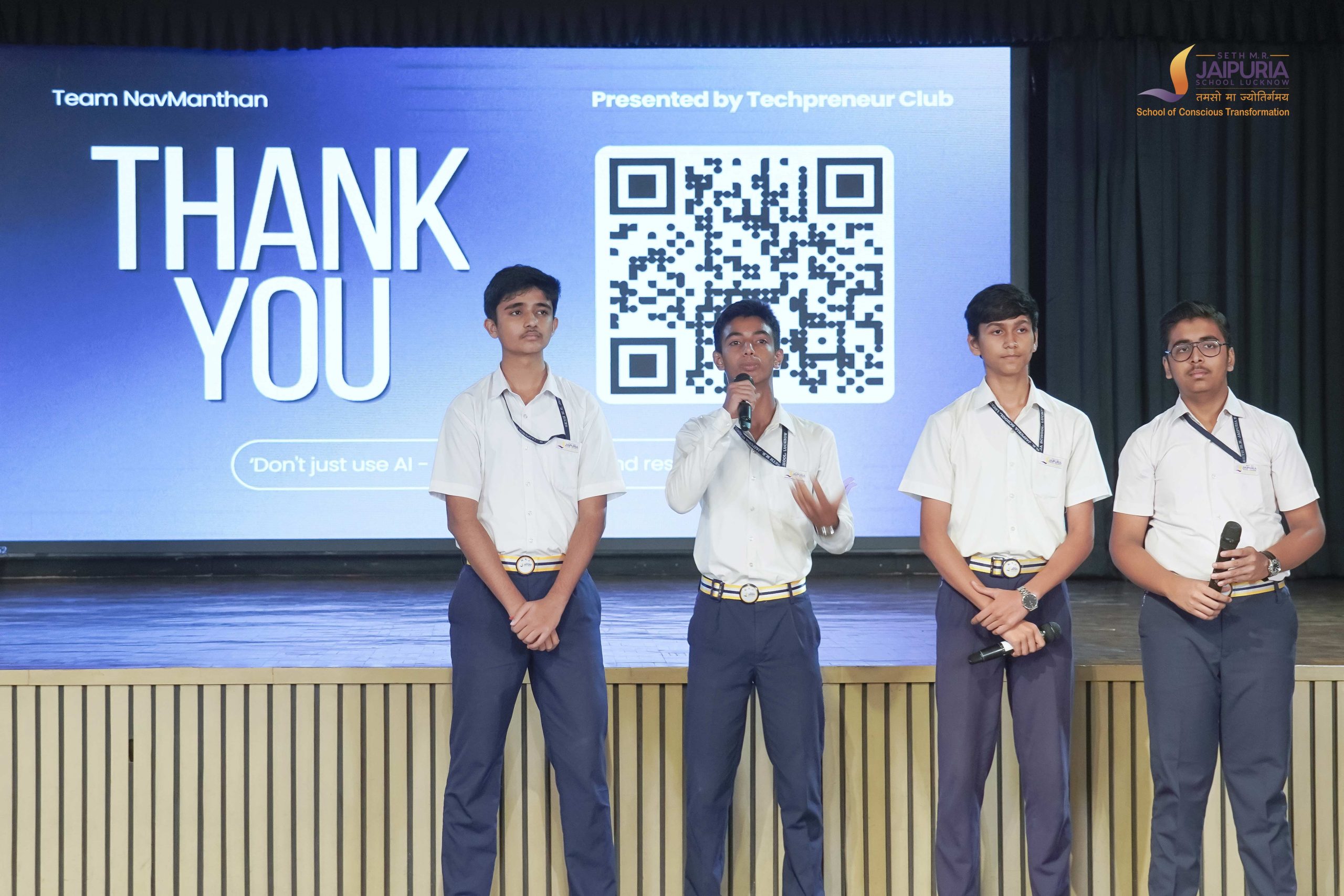
Overall, the session served as an engaging crash course on artificial intelligence for the entire school community. Beyond explaining how AI functions, the students perceptively addressed its limitations, including bias, hallucinations, and the absence of human emotions and judgement. Their presentations highlighted that while AI is a powerful technological tool, it cannot replace human empathy, ethical judgement, critical thinking, and responsible decision-making. They concluded the highly enriching session with a powerful reminder that encapsulated the essence of the event: ‘Don’t just use AI – But use it wisely and responsibly’