

Earth Week 2026 at Jaipuria: Learning Through Action
May 8, 2026
A Rainbow of Fun: Colour Week Celebrated in the Nursery Wing
May 13, 2026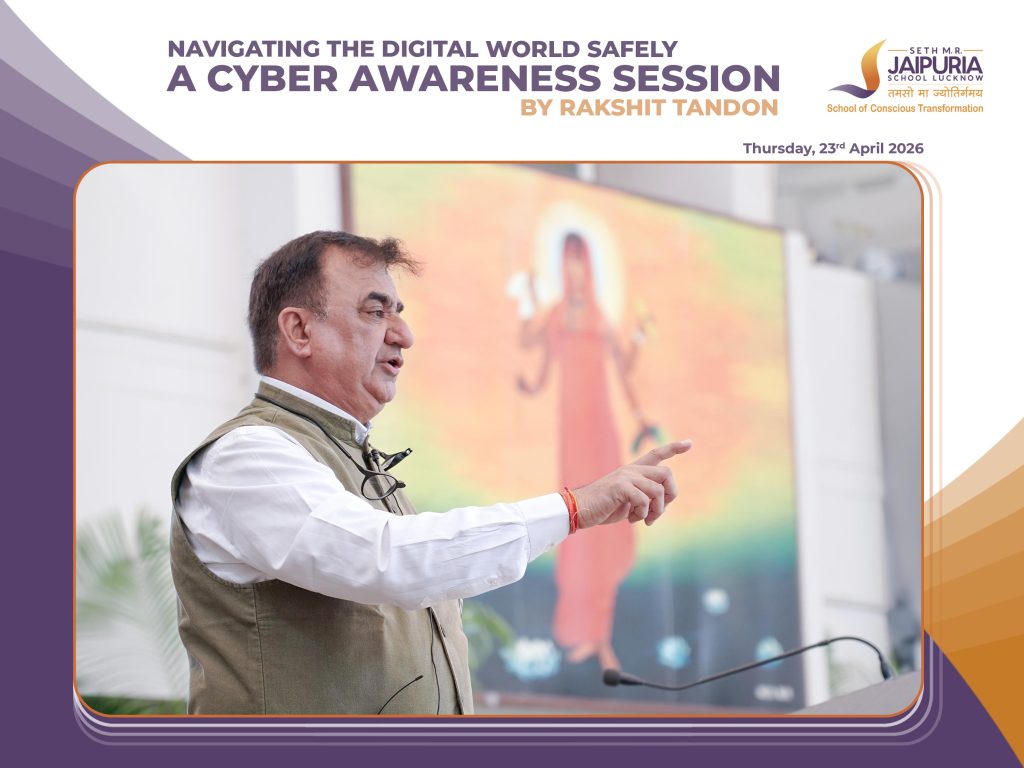
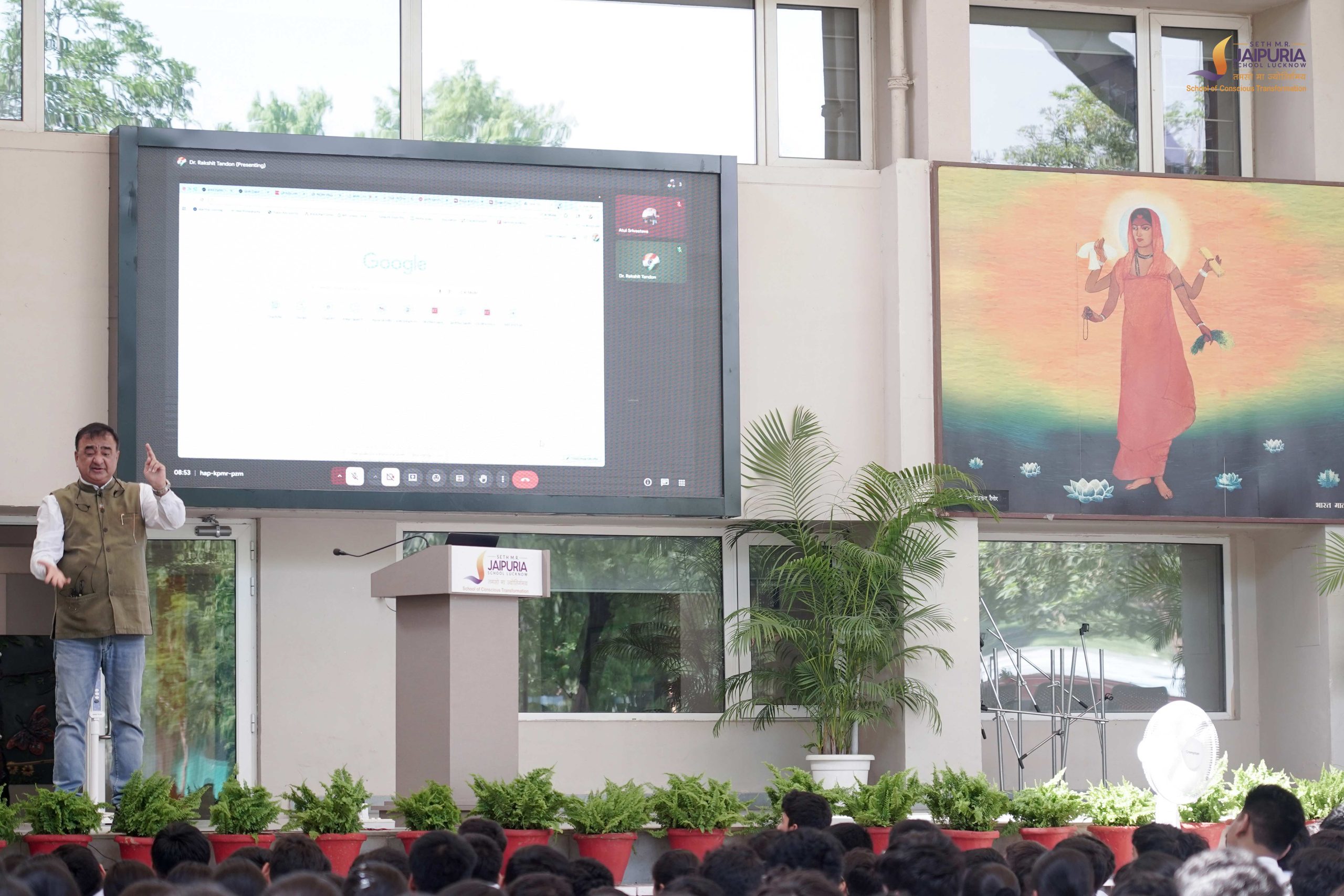
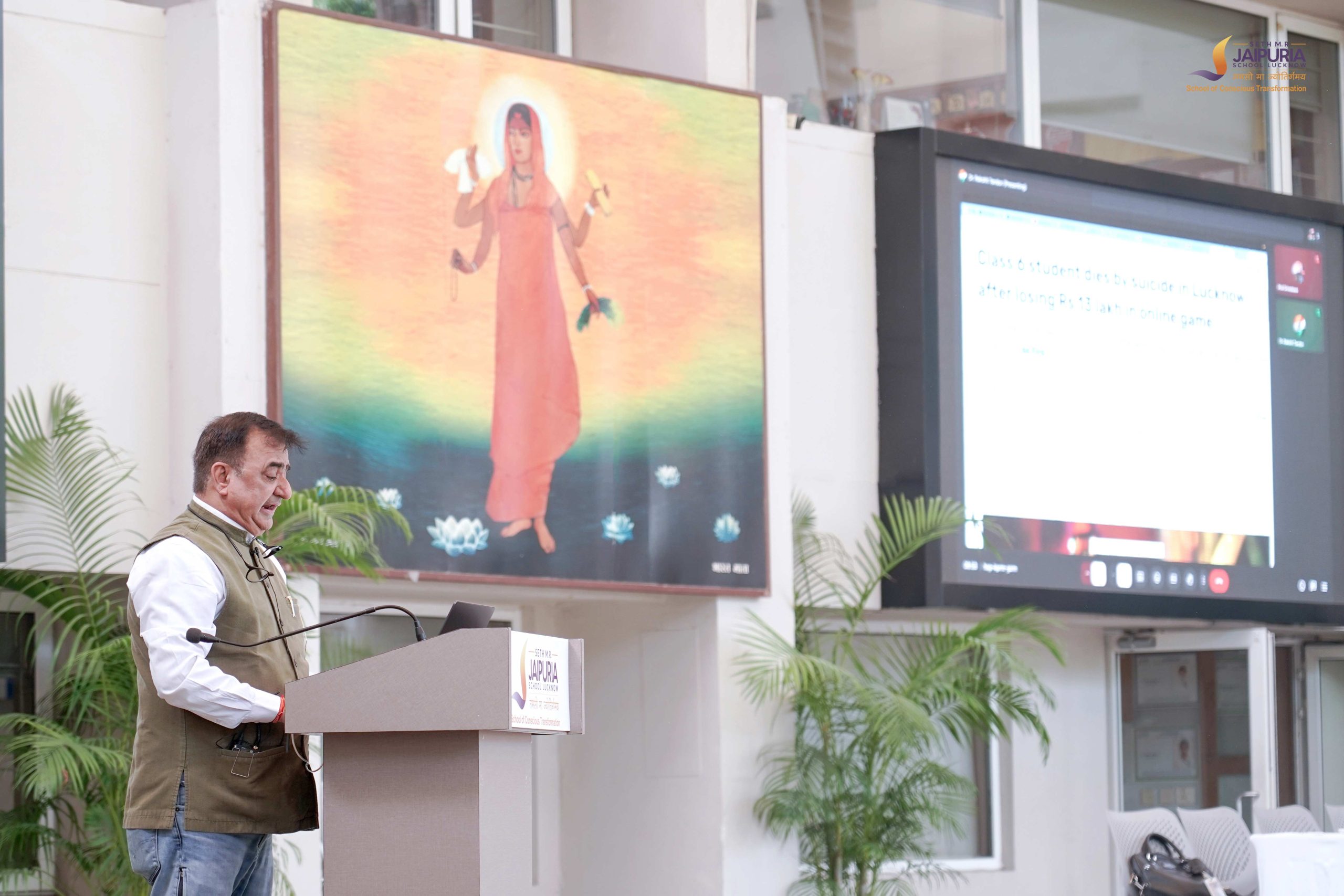
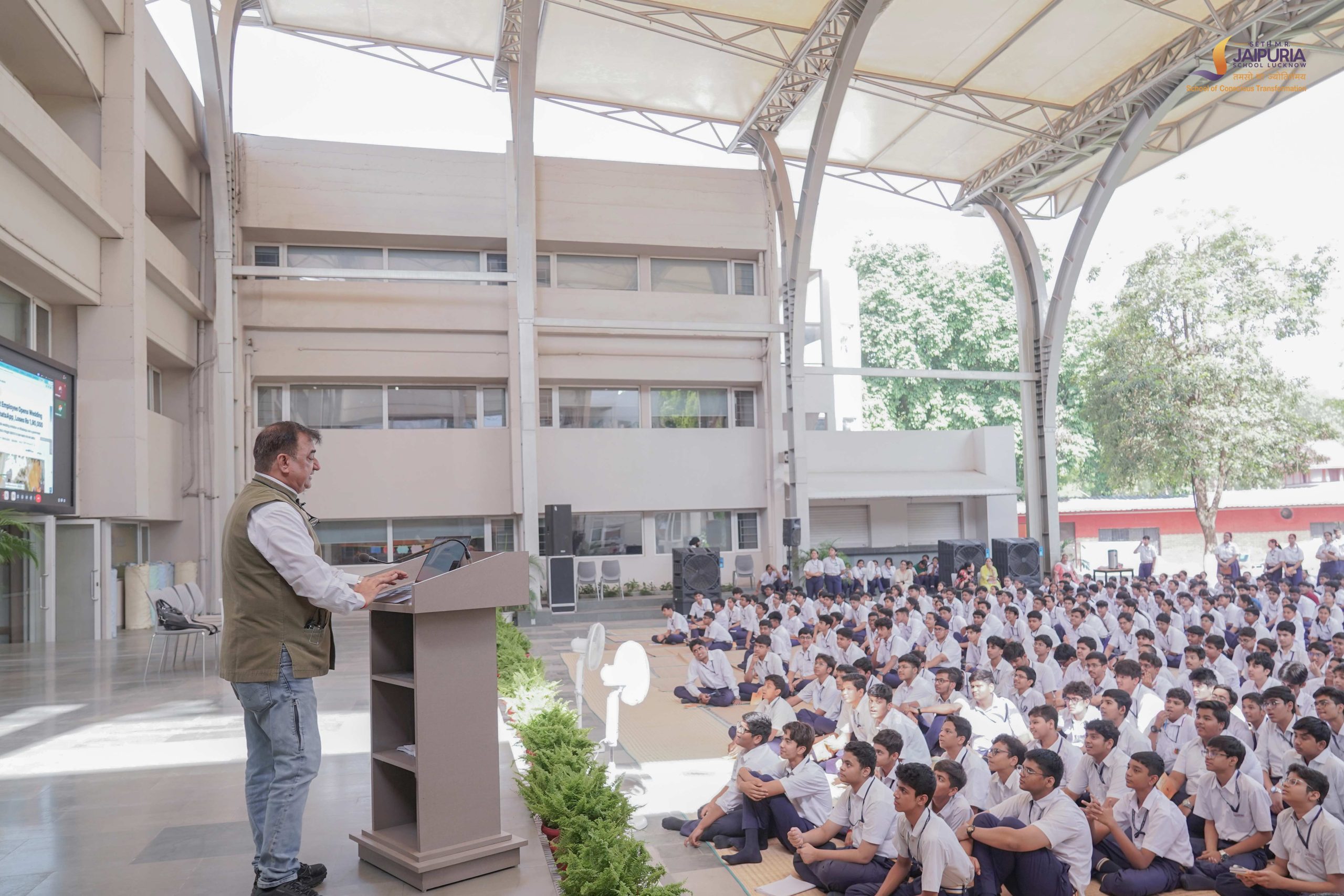
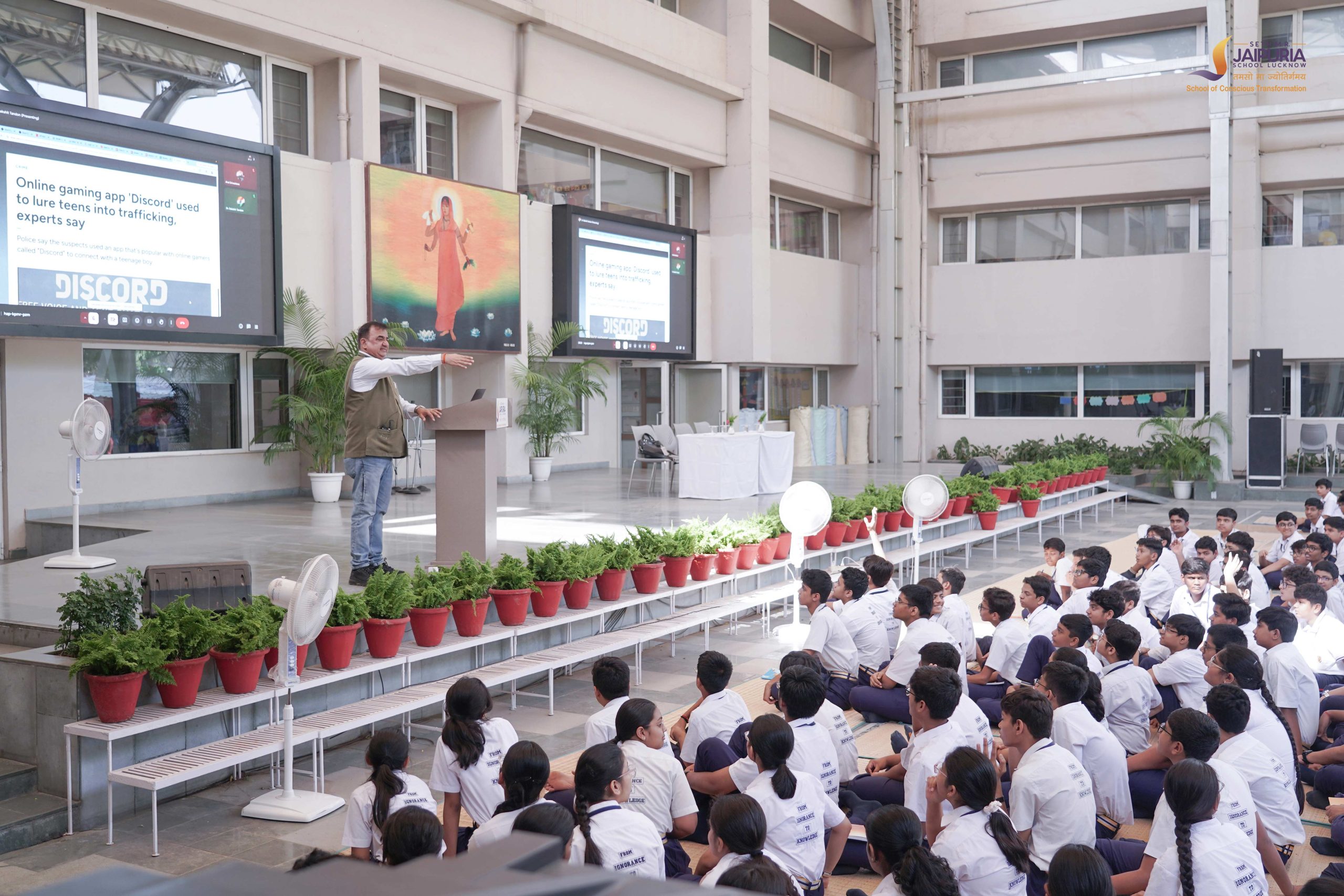
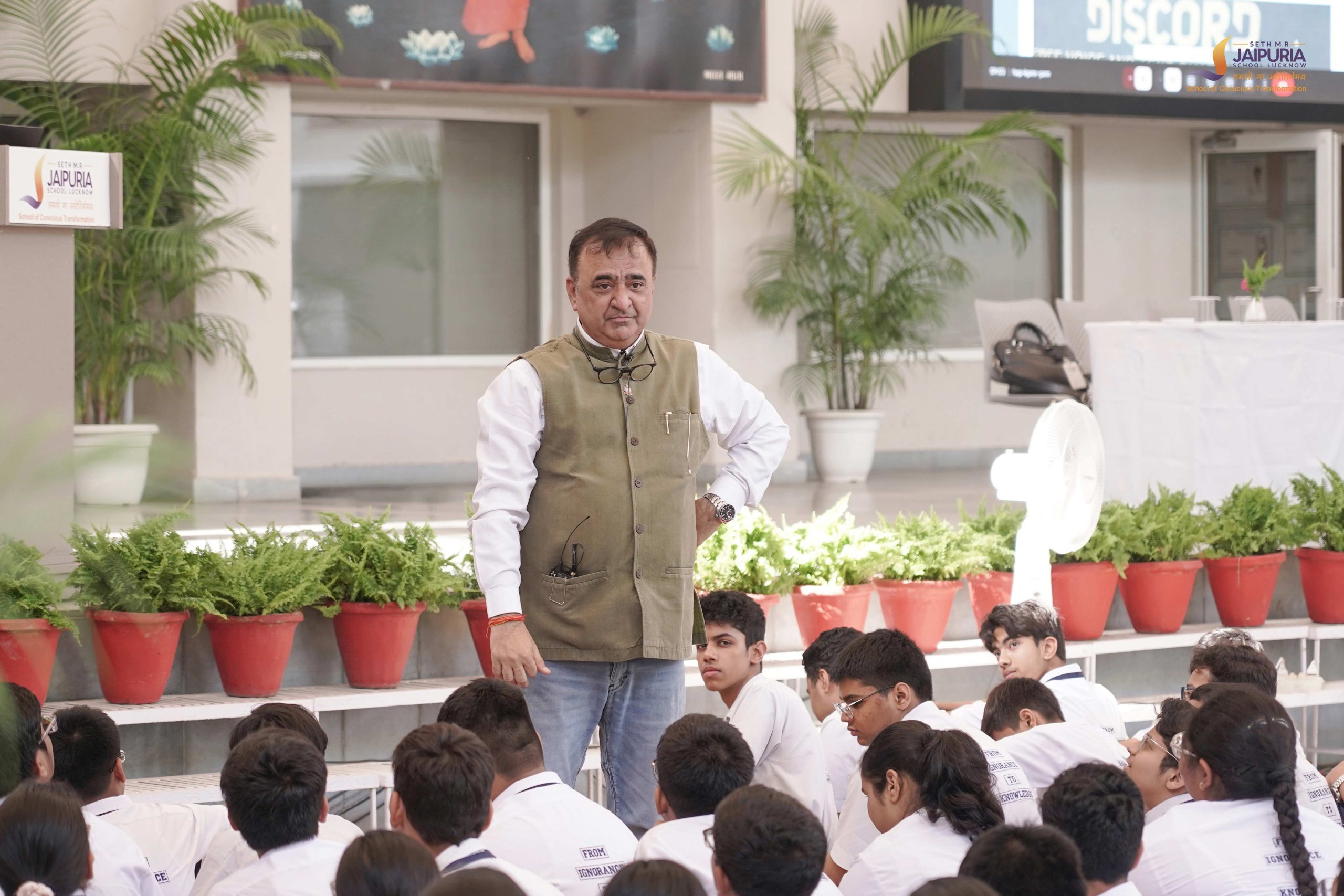
As part of its continued effort to build aware and responsible digital citizens, Seth M. R. Jaipuria School, Gomti Nagar, hosted a Cyber Security Awareness Session on April 21 and 22 with noted cyber expert Mr. Rakshit Tandon. Over the two days, students from the Middle School and Senior School attended the interactive sessions, which revolved around online safety, cyber discipline, and the hidden risks young users often overlook while using the internet and social media platforms.
Interacting directly with students, Mr. Tandon spoke about how easily children and teenagers can become targets of online scams through games, unknown links, fake apps, and social media platforms. Through real-life case studies, he explained how something as simple as downloading the wrong file or sharing personal information online can have serious consequences.
One incident that particularly caught the students’ attention was a scam involving a fake wedding invitation sent as an APK file. Students learnt how downloading such files can secretly install malware into phones and compromise personal data. Another discussion revolved around online gaming platforms and how strangers often misuse them to gain children’s trust.
Addressing this concern, Mr. Tandon shared a disturbing case where a child unknowingly revealed personal family details to someone through an online game, eventually leading to a kidnapping attempt. The example left students thinking deeply about how casually information is often shared online without understanding the risks attached to it.




The session also explored the idea of “digital dementia”, a term used to describe how excessive screen time and dependence on digital platforms can affect memory, focus, and attention span among children. Students were encouraged to reflect on how constant scrolling and overexposure to online content can slowly disconnect them from real-life experiences and affect both academics and mental well-being.
Another important part of the discussion focused on social media discipline. Mr. Tandon spoke about how platforms like Instagram, Facebook, and several online games expose children to age-inappropriate content and influences at a very early stage. He stressed that social media and mobile phones should not be used freely without parental supervision, adding that many of these platforms are not truly meant for children. Students were encouraged to be mindful of what they consume online and to understand how easily digital platforms can influence behaviour, attention span, and emotional well-being.
He also reminded students that cyber bullying, trolling, meme pages targeting individuals, and online defamation are serious issues and can even become legal offences. Urging students to think before posting or sharing anything online, he emphasised that responsible digital behaviour begins with awareness and self-discipline.
The interactive nature of the session made it especially engaging. Students actively participated and raised questions around artificial intelligence, social media algorithms, online scams, and content regulation. One student questioned why AI tools are not used more strictly to control harmful online content, leading to an interesting discussion on how social media platforms prioritise engagement and visibility.
Students were also introduced to tools such as VirusTotal, an application, which can help users identify suspicious files, malware, and unsafe applications before downloading them.
More than fear, the session focused on awareness and responsibility. It encouraged students to become smarter digital users, to question what they click on, and to understand that cyber safety today is just as important as safety in the real world.