

Jaipuria Career Fair 2026: Student Interact with Leading Universities
May 8, 2026
Navigating the Digital World Safely: A Cyber Awareness Session by Rakshit Tandon
May 13, 2026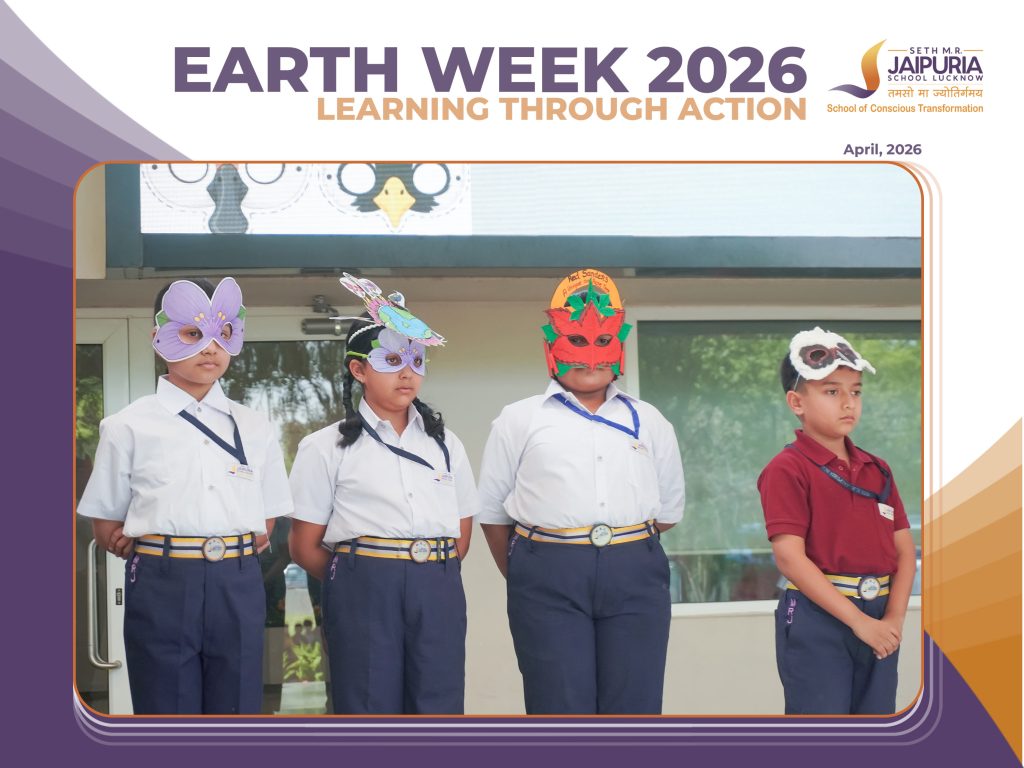
At Seth M. R. Jaipuria School, Gomti Nagar, Earth Day was marked through an Earth Week from 15 April to 22 April 2026. The idea was to keep things practical, so students could see how small choices in daily life affect the environment and where they can make a difference.
Earth Day, observed on 22 April each year, began in 1970 after a major oil spill in California raised serious concern about the damage caused by human activity. What started as a protest against pollution and environmental neglect has since grown into a global reminder that the planet needs consistent care and responsibility.
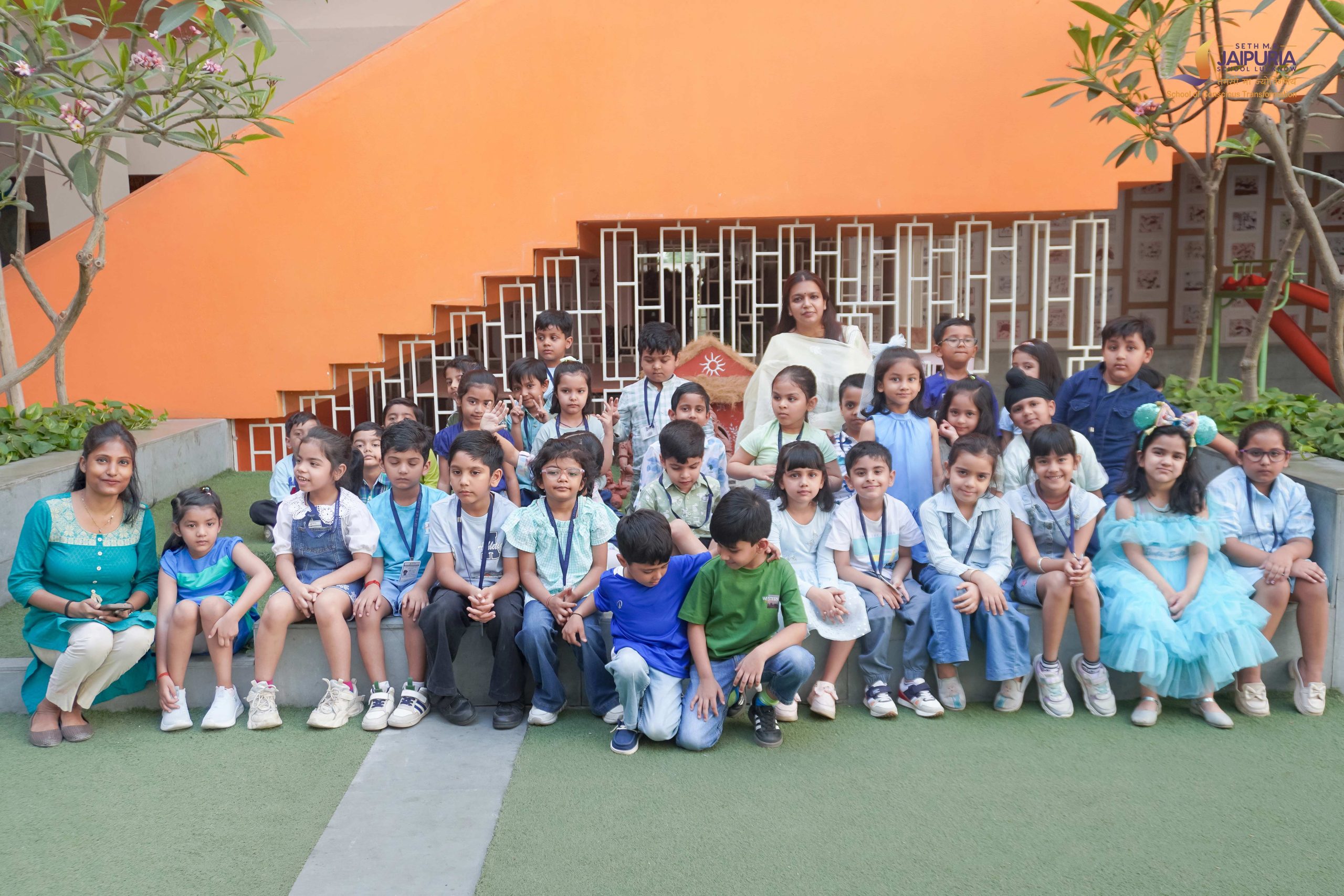
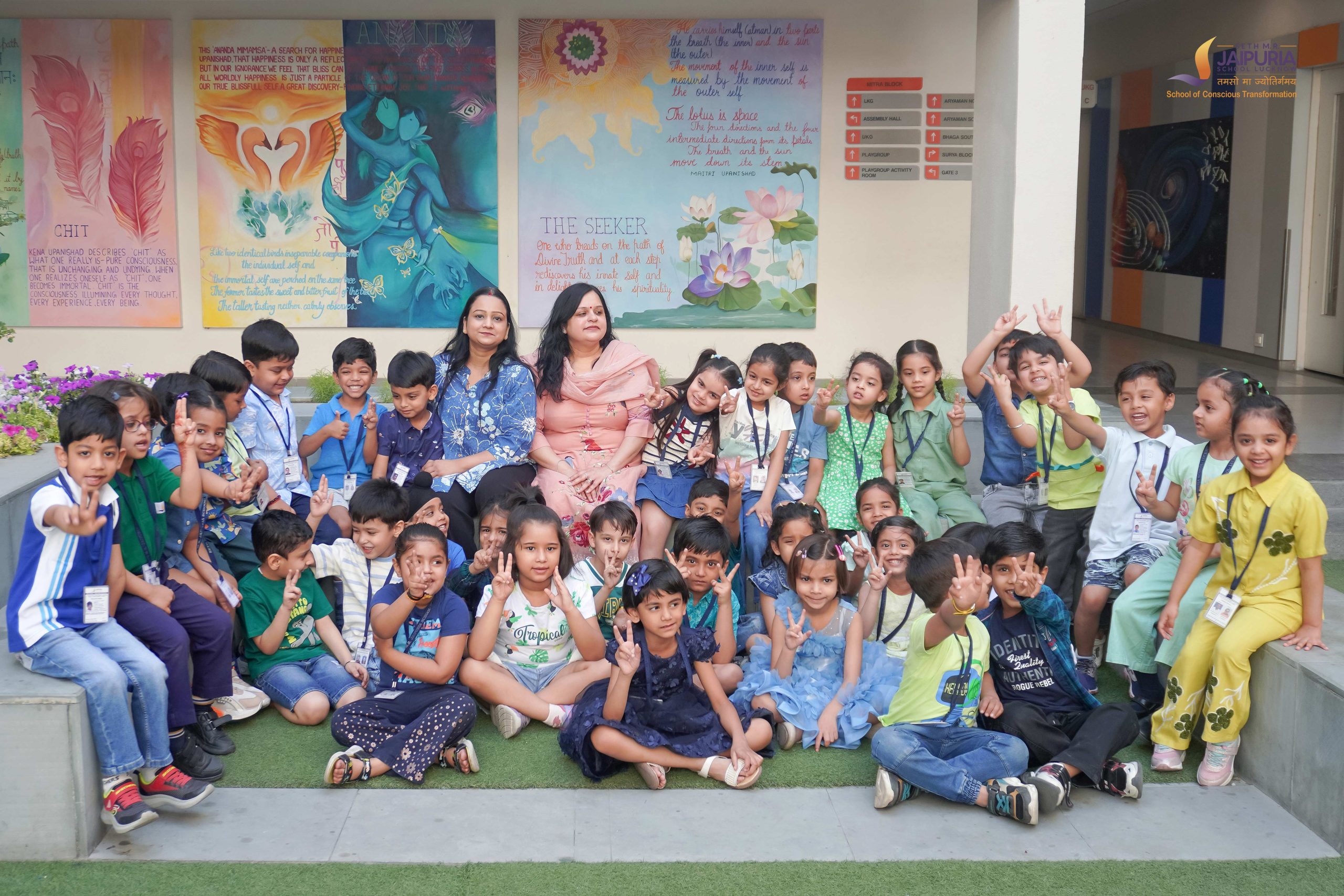
In the Pre-Primary section, the concept was introduced through simple, visual activities that young children could easily relate to. Children came dressed in green and blue to represent the Earth. During discussions, teachers spoke about the planet as our shared home using pictures and a globe. Activities included making small placards with short messages such as “Save Earth” and “Plant more trees.”
In another activity, they coloured and painted the Earth as they imagined it. A Zero Waste Lunch was followed through the week, where students brought their food in steel or glass containers and avoided plastic packaging.
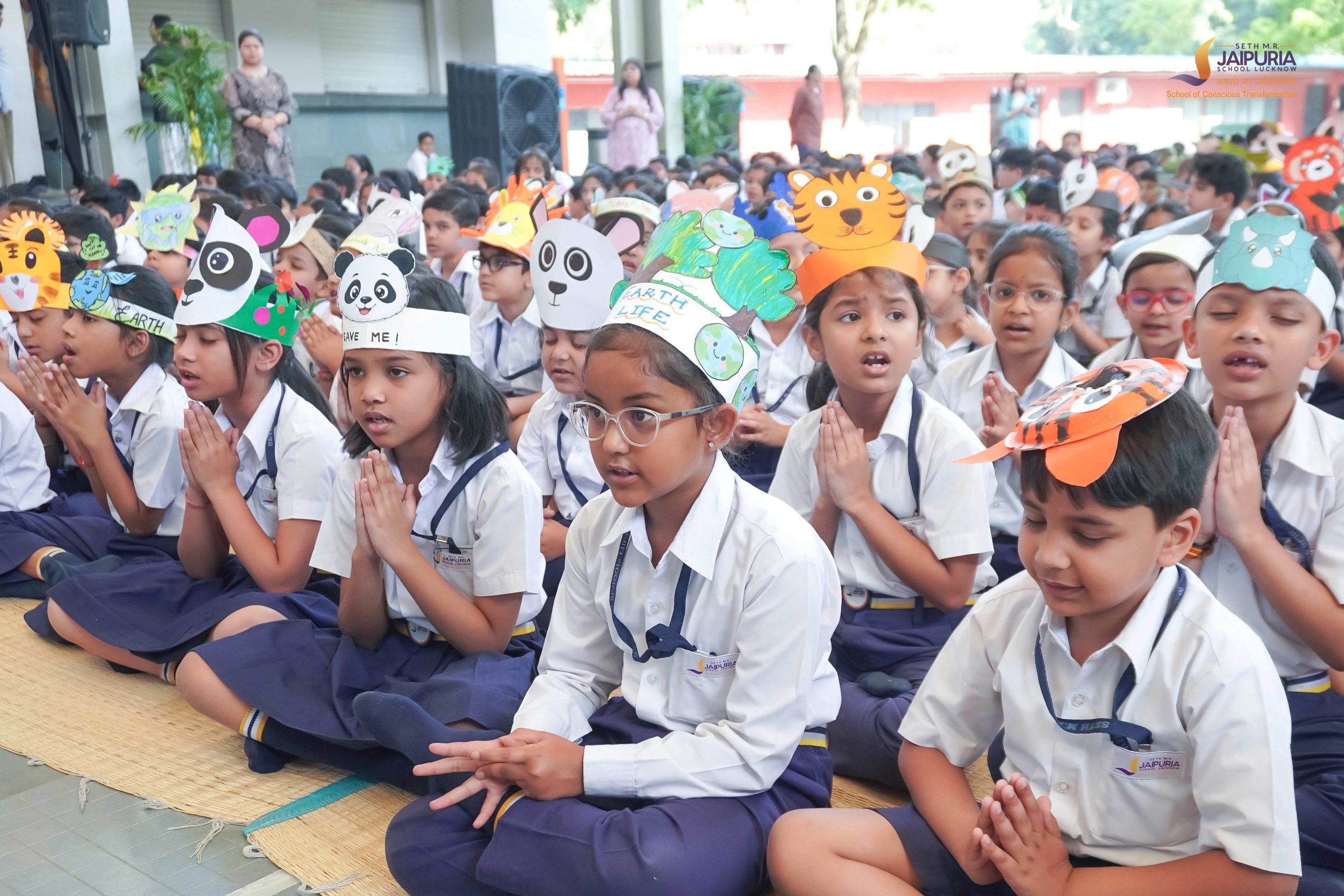
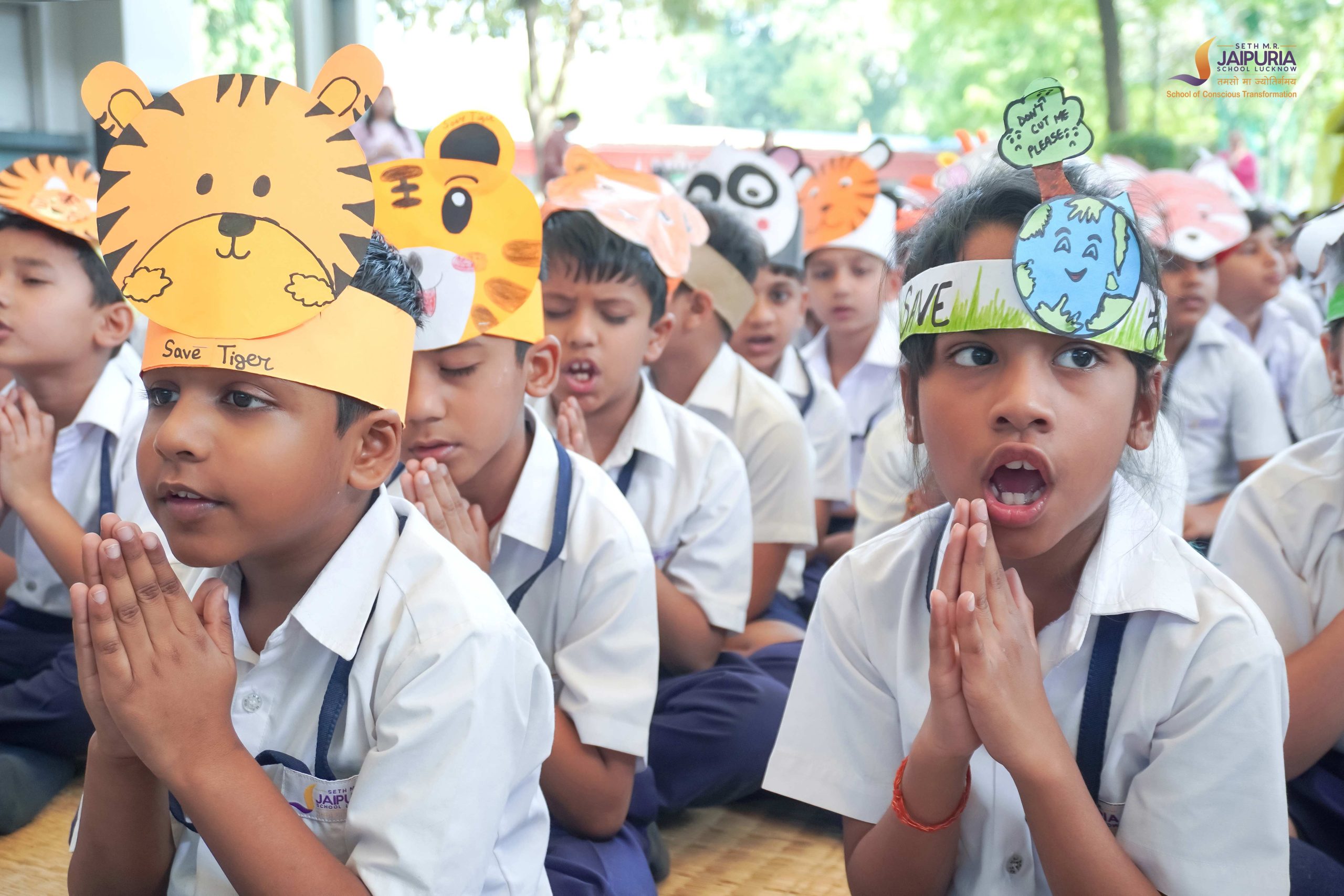
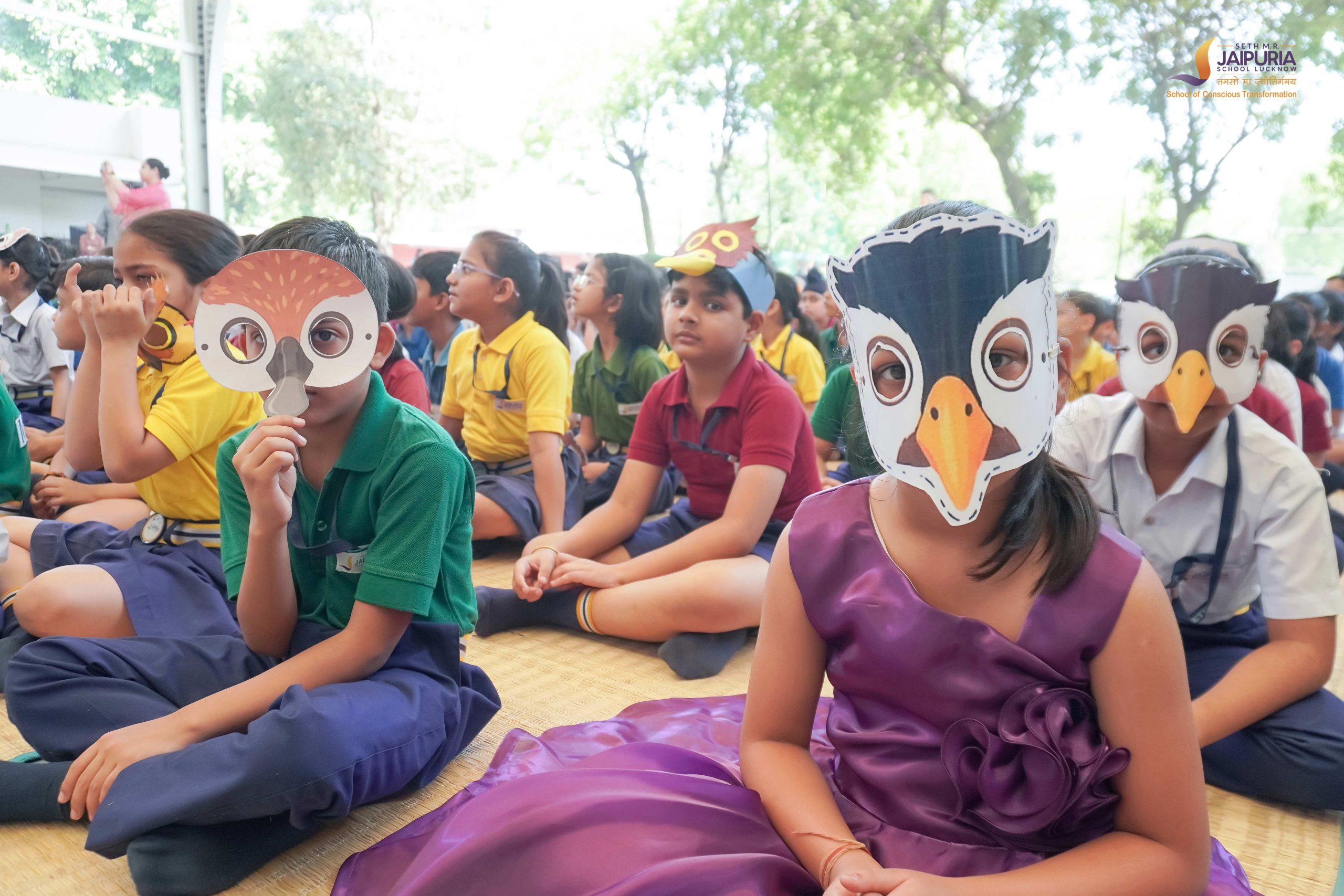
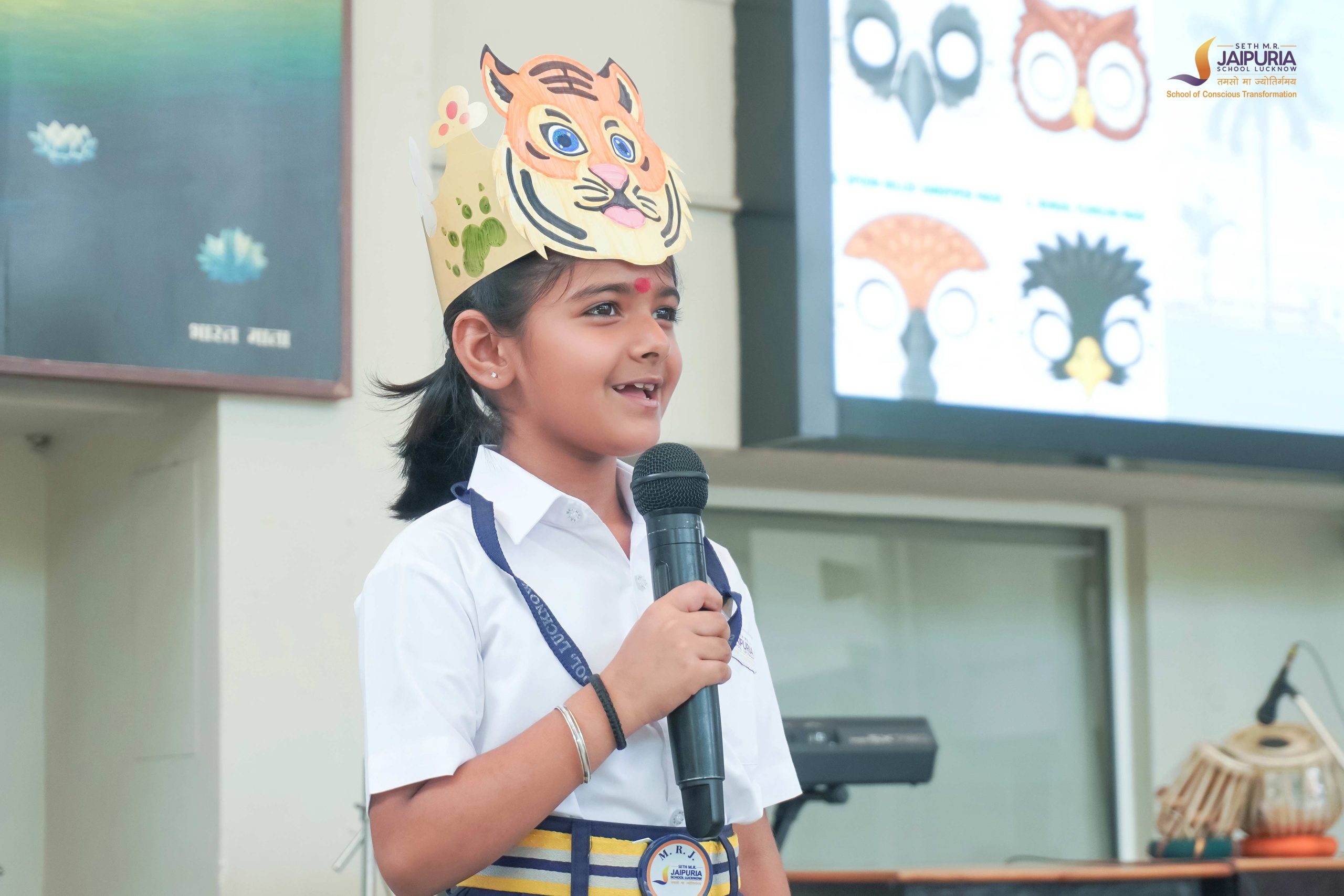
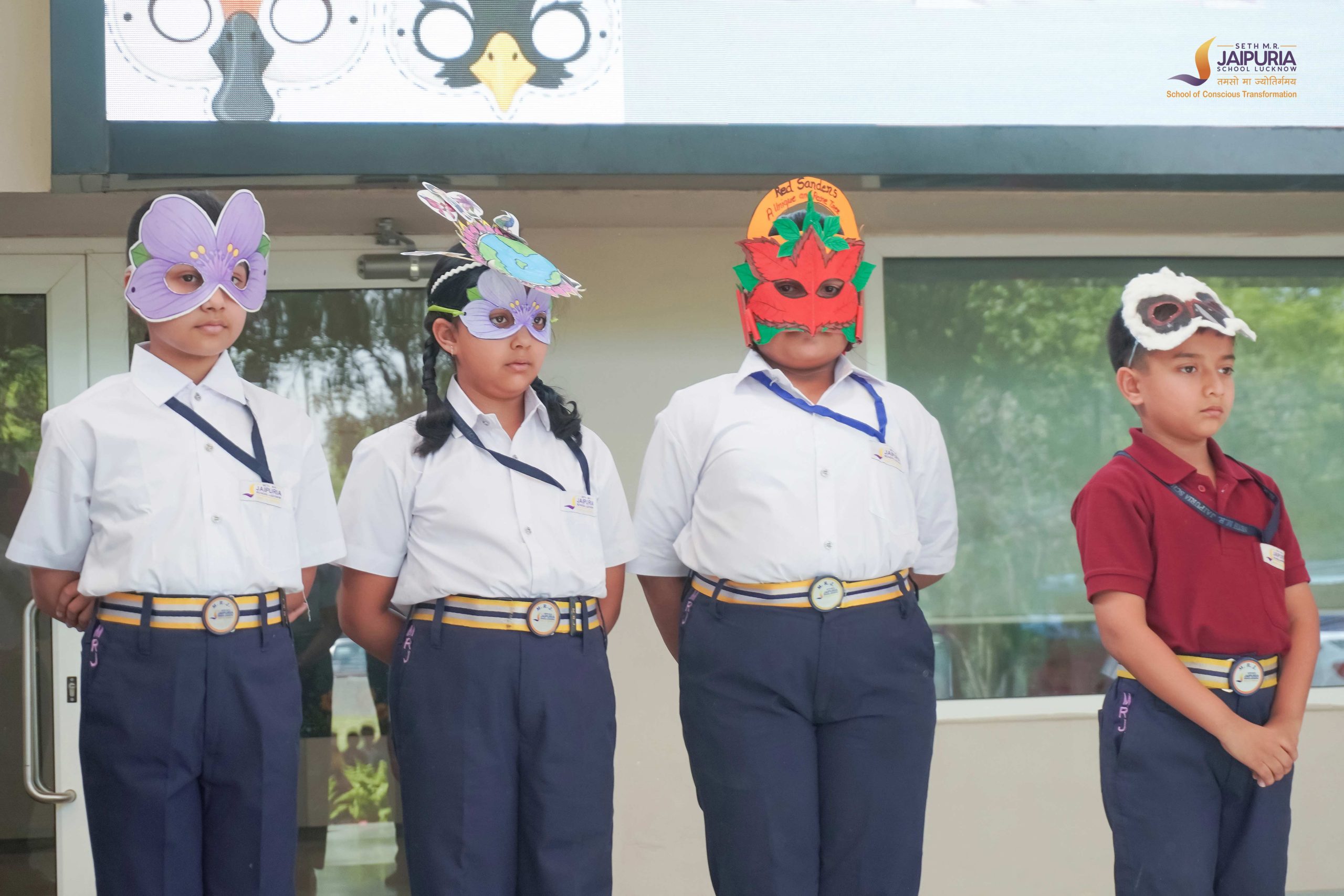
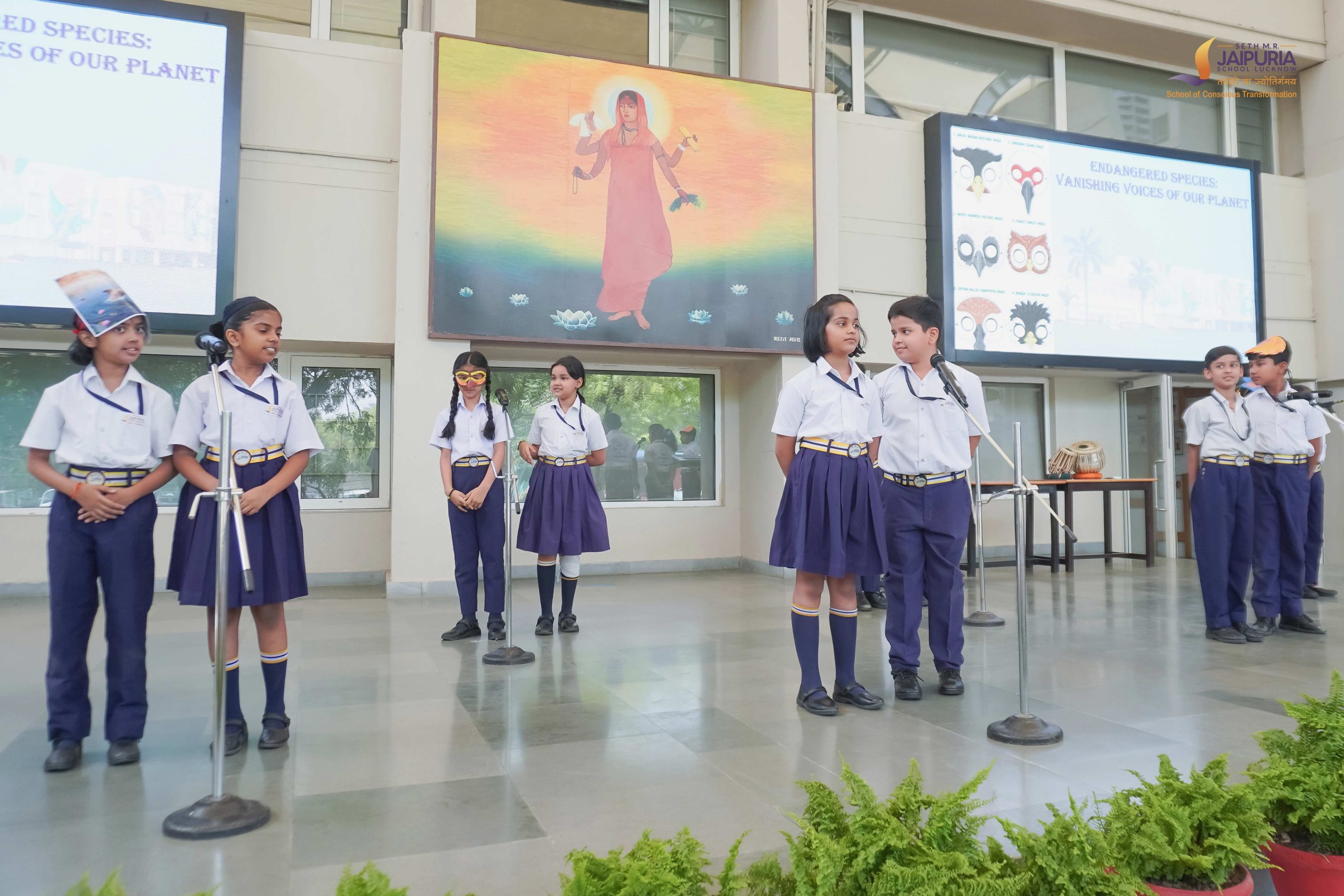
In the Junior School, students worked more closely with ideas of responsibility and awareness. Using old or waste paper, they created drawings based on nature and wrote short promises beginning with “I will…”, such as saving water or keeping their surroundings clean. These were displayed in classrooms. Another set of activities focused on endangered species. Students chose an animal or plant, researched about it, and created masks or headgear based on their research. They prepared a few lines and spoke about their chosen species.
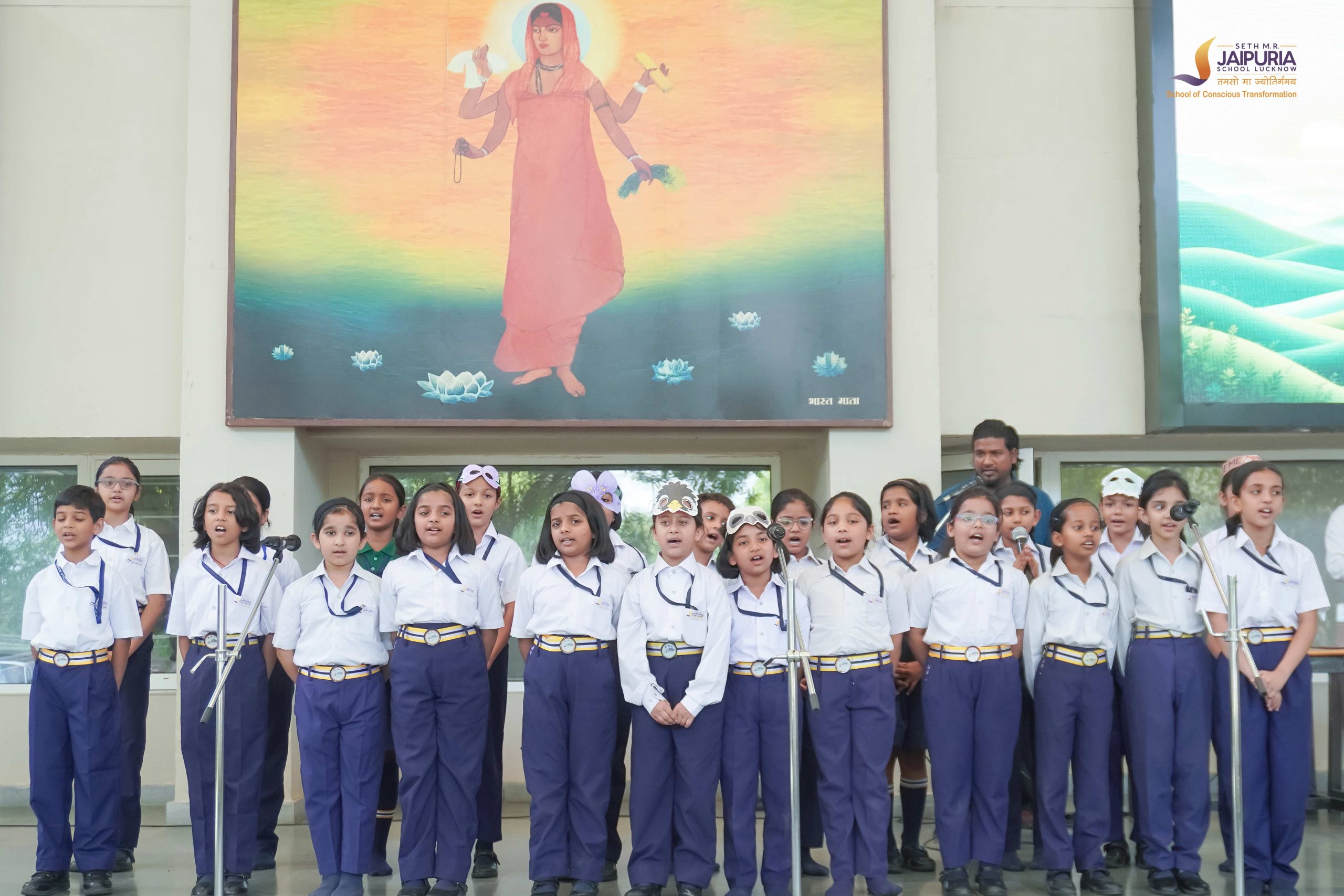
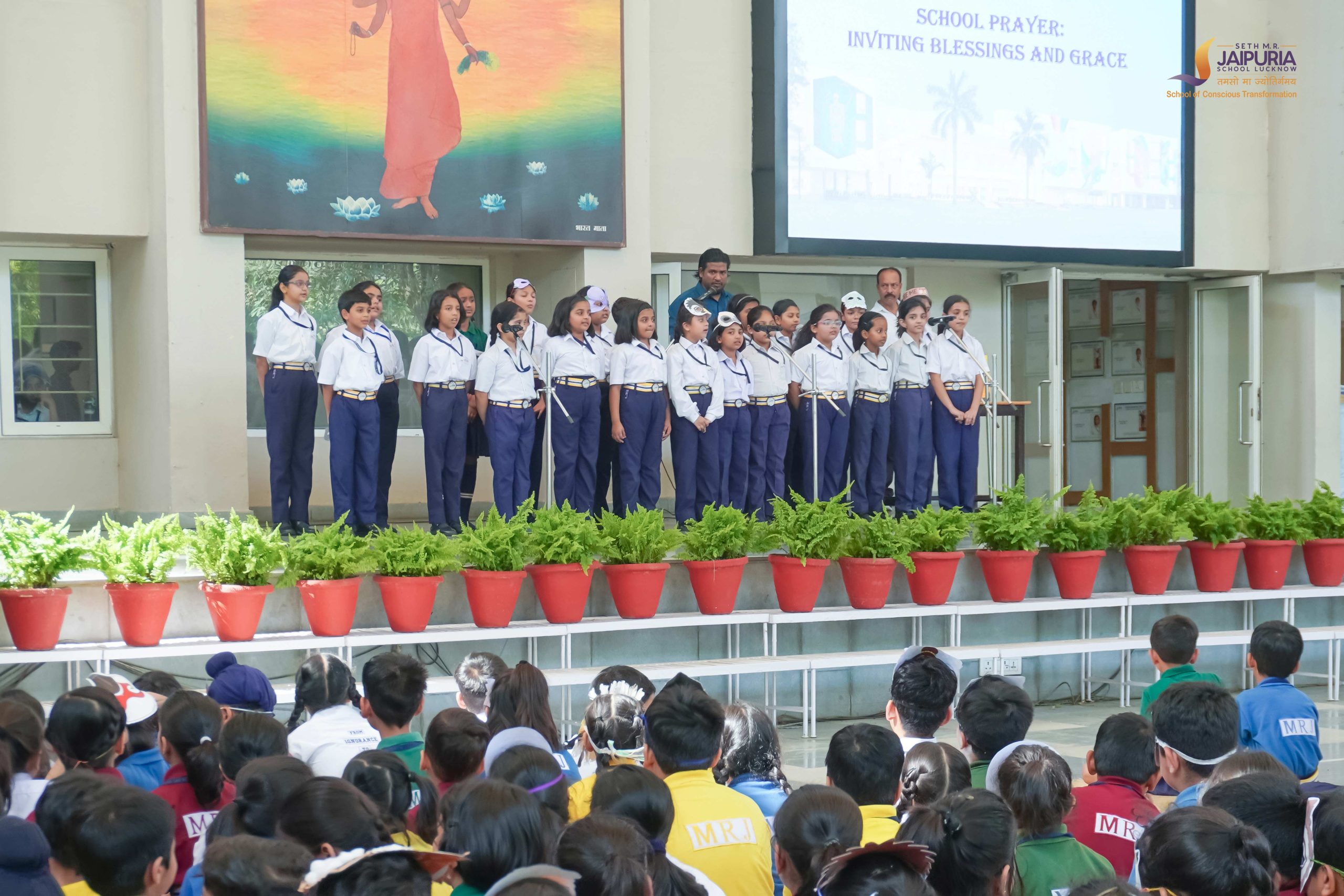
These activities came together in a special assembly. Students wore their headgear and shared facts they had gathered. A Hindi skit titled Jungle ka Dard was presented, showing how human actions like deforestation and pollution directly affect animals and their habitat. Students received thunderous applause for their effort and performance.
During the assembly, Jyoti Mishra Ma’am addressed the students and quoted Robert Swan, saying, “The greatest threat to our planet is the belief that someone else will save it.” She encouraged students to carry green habits forward in their daily lives.
For Classes 5 and 6, the activities encouraged observation and creativity. Students suggested ways to make different areas of the school more eco-friendly, such as reducing waste in common spaces or improving green areas. In a creative writing task, they imagined themselves as the Earth and expressed how it feels when cared for or harmed. The Best Out of Waste activity saw students making useful items like planters, bags, and organisers using discarded materials.
One grade 6 student remarked, “Through the activity, I realised we can actually reuse so many things at home instead of throwing them away. It made me think more about what I use every day.”
Students of Classes 7 and 8 worked on either creating posters using reused paper with the theme of reducing, reusing, and recycling, or designing useful objects from waste materials. The idea was to move from thought to action.
For Classes 9 and 10, the focus shifted to writing. Students wrote letters addressing environmental concerns, either speaking to their own generation about protecting the Earth or addressing issues like air quality in cities and suggesting practical solutions.
Senior students of Classes 11 and 12 took part in making eco-friendly bags using old cloth such as T-shirts and dupattas. The activity was linked to reducing plastic use and was assessed as part of their SUPW work.
The Senior School assembly, conducted by the students of Class 12, was based on the theme “Our Power, Our Planet.” Students presented speeches and presentations focused on everyday environmental responsibility and the importance of conscious choices.
An interactive quiz on environmental awareness kept the students actively involved, followed by a dance performance centred around the theme of Earth Day. The assembly ended with an Earth Day pledge, where students collectively promised to adopt more mindful and sustainable habits in their daily lives.
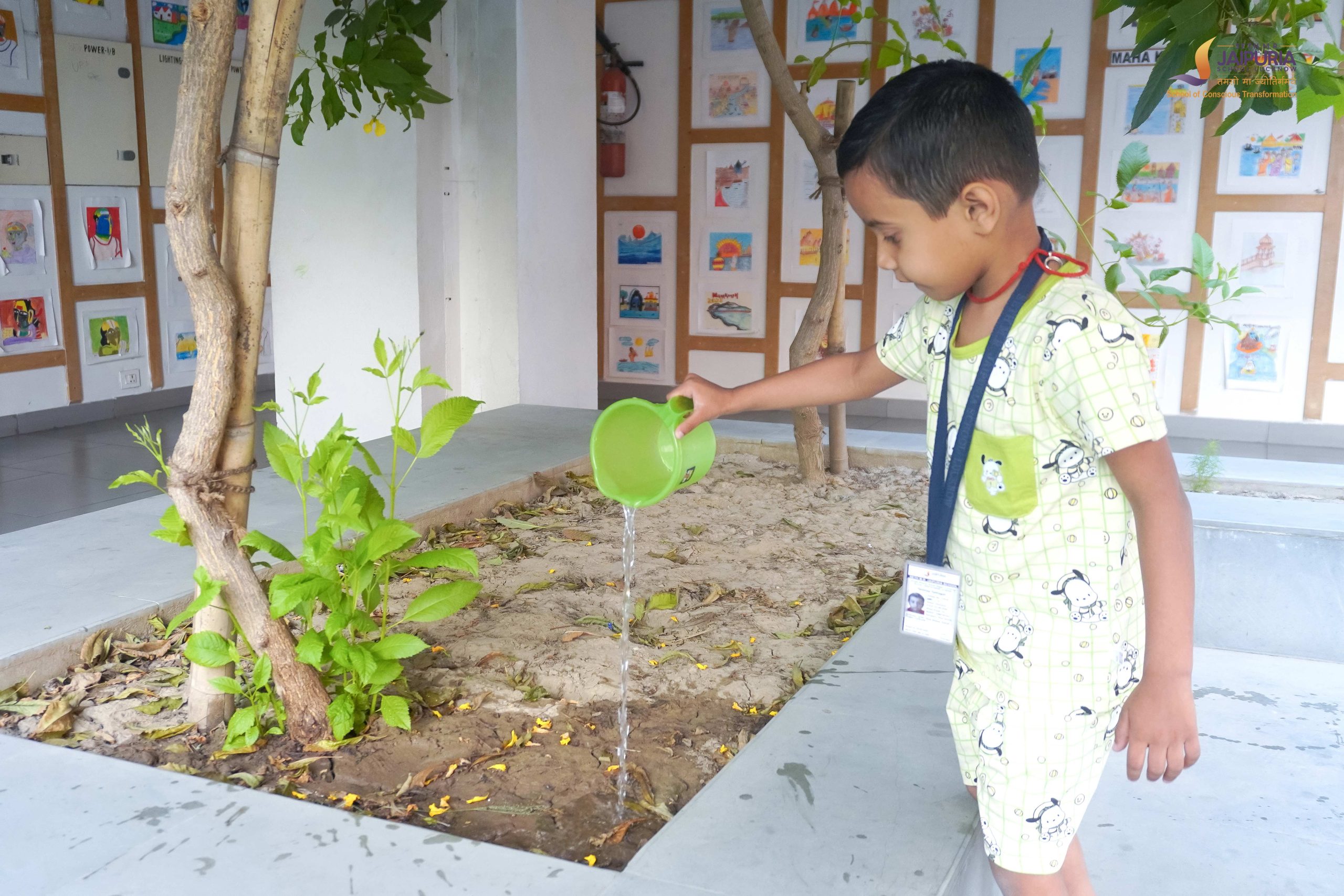
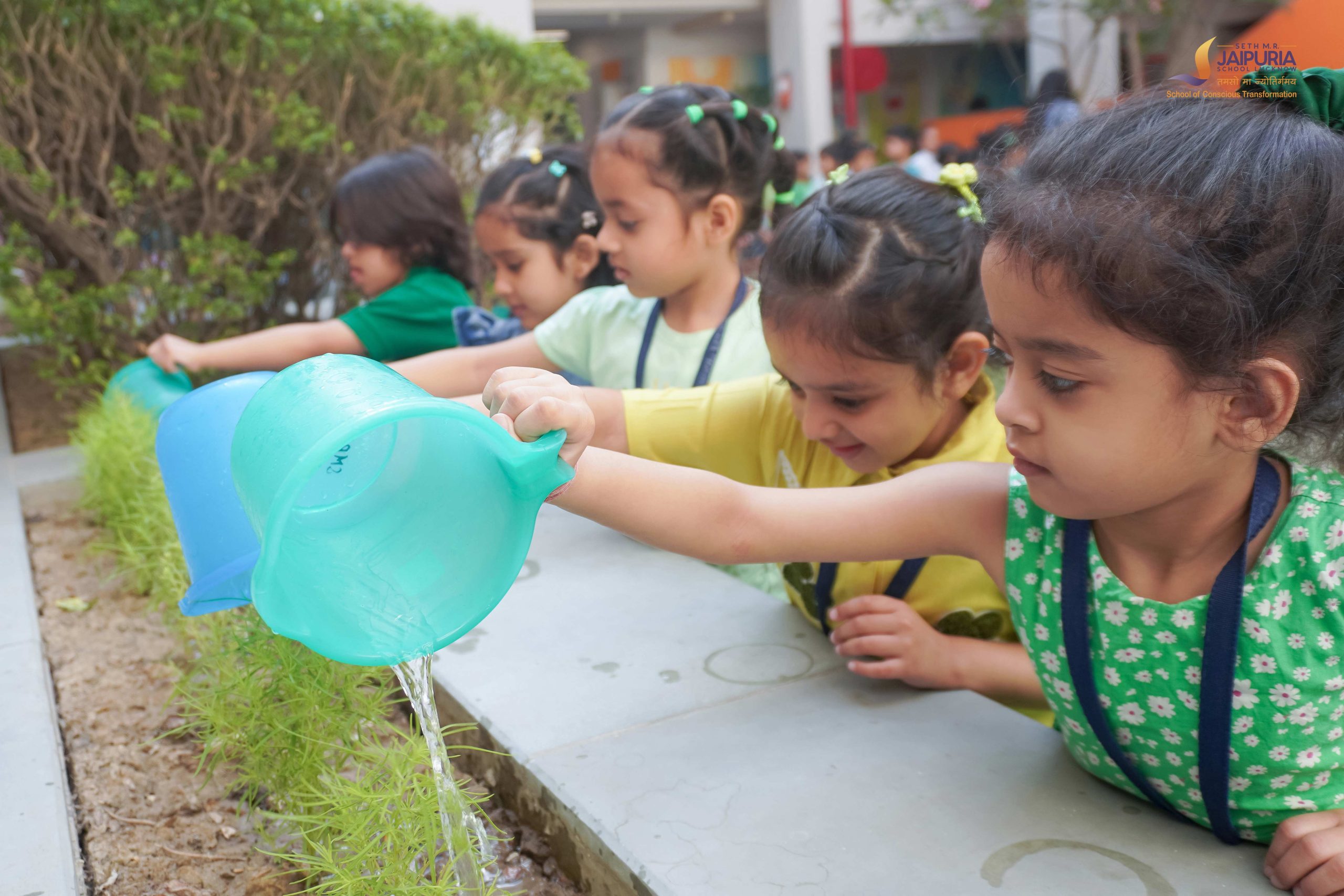
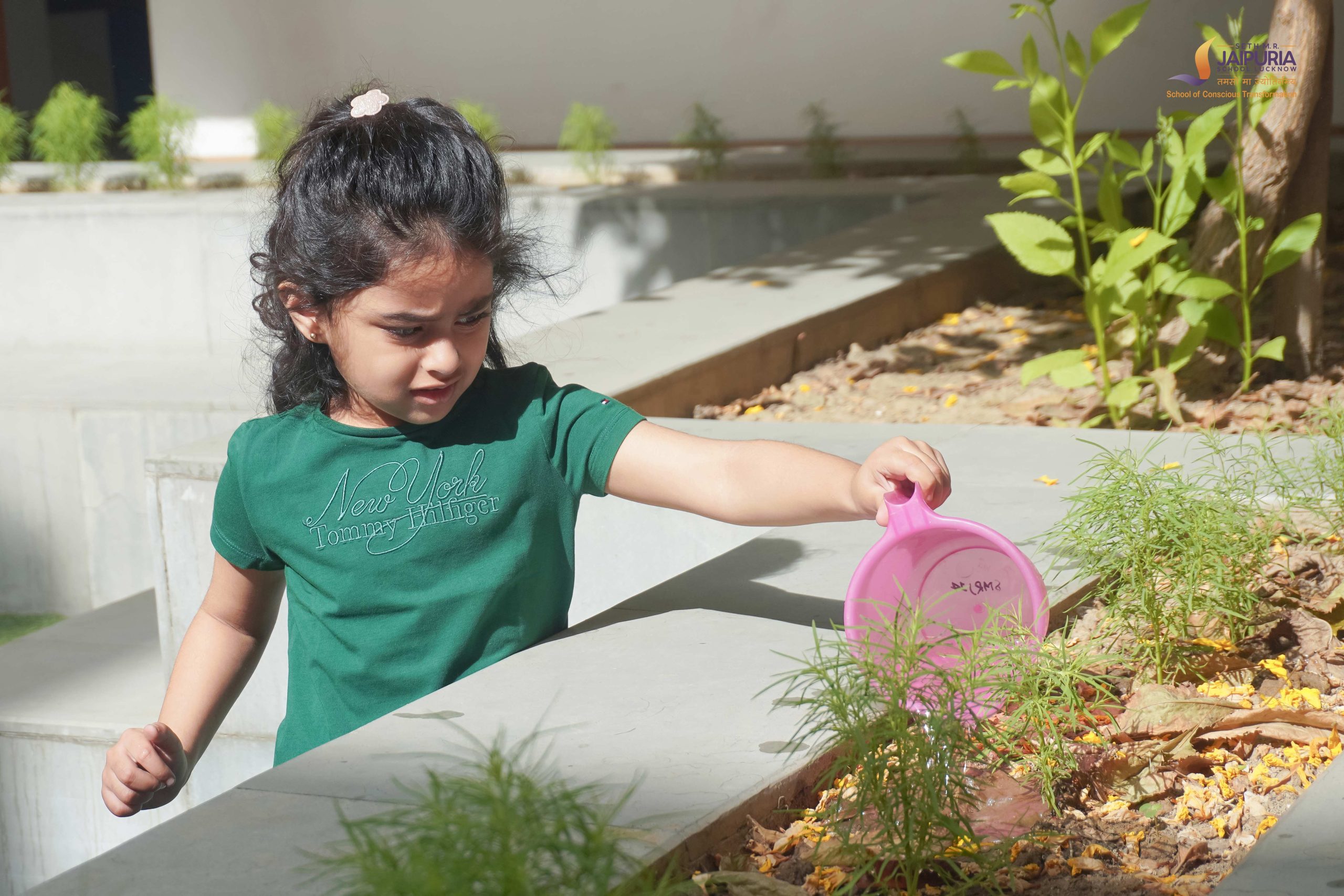
Throughout the week, assemblies and daily practices reinforced the same idea. Tree planting, watering plants, and small changes in routine became part of the experience.
The week stayed rooted in practical steps. Students were not just told what to do, they were asked to try it, build it, and think about it in their own way.