

CISCE Zonal Shooting Competition
July 2, 2025
Day 5: Spiritual Retreat – Edition 8 | From Insight to Expression – The Student Presentations | Seth M.R. Jaipuria School
July 4, 2025
The Divine words of Savitri imbued the atmosphere of Seth M.R. Jaipuria on the fourth day of the retreat. It felt as if Sri Aurobindo’s epic had descended into every corner of the school, inviting each student and teacher into deeper stillness. Throughout the day, Savitri’s passages guided every session, weaving a tapestry of aspiration for a Divine journey.
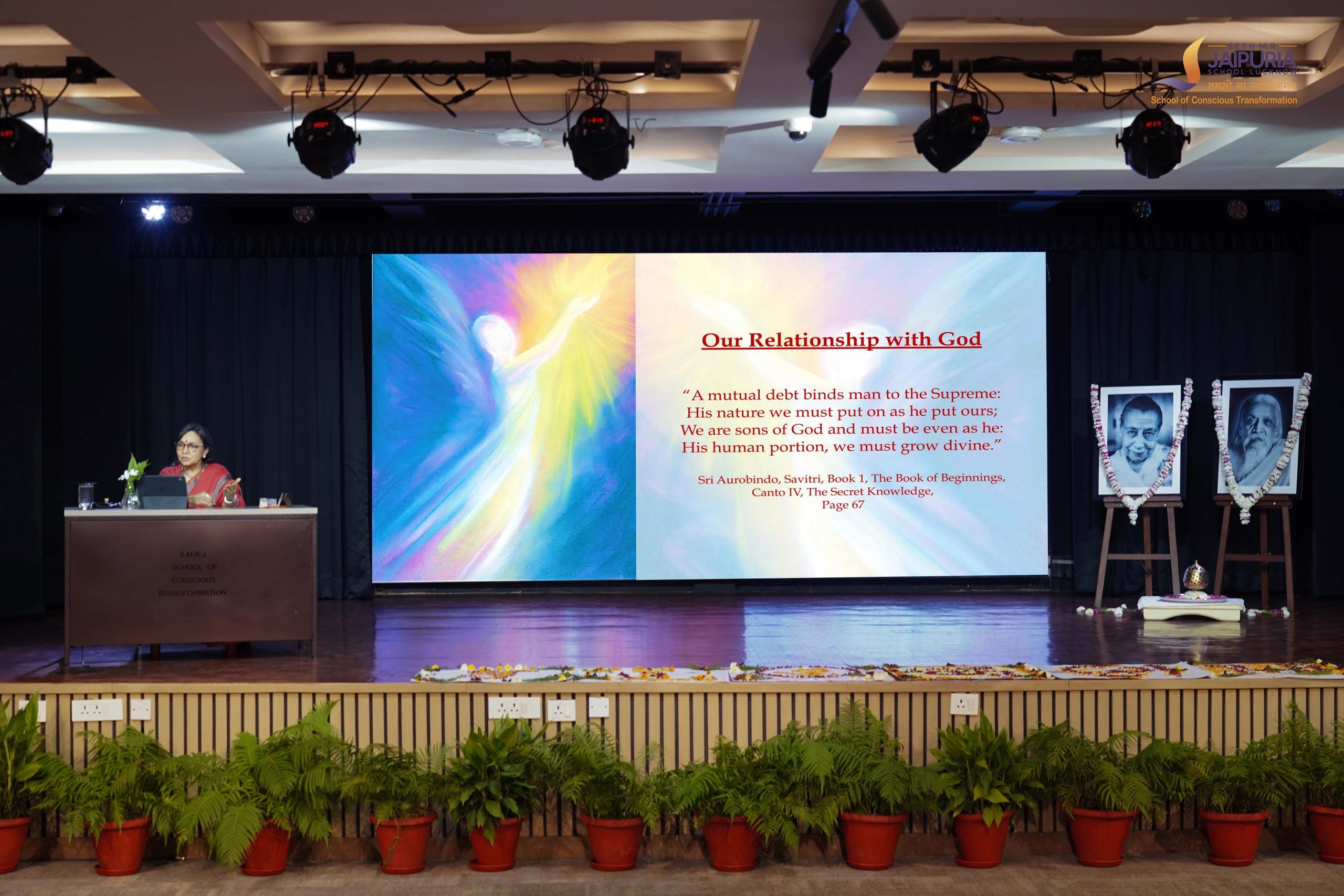
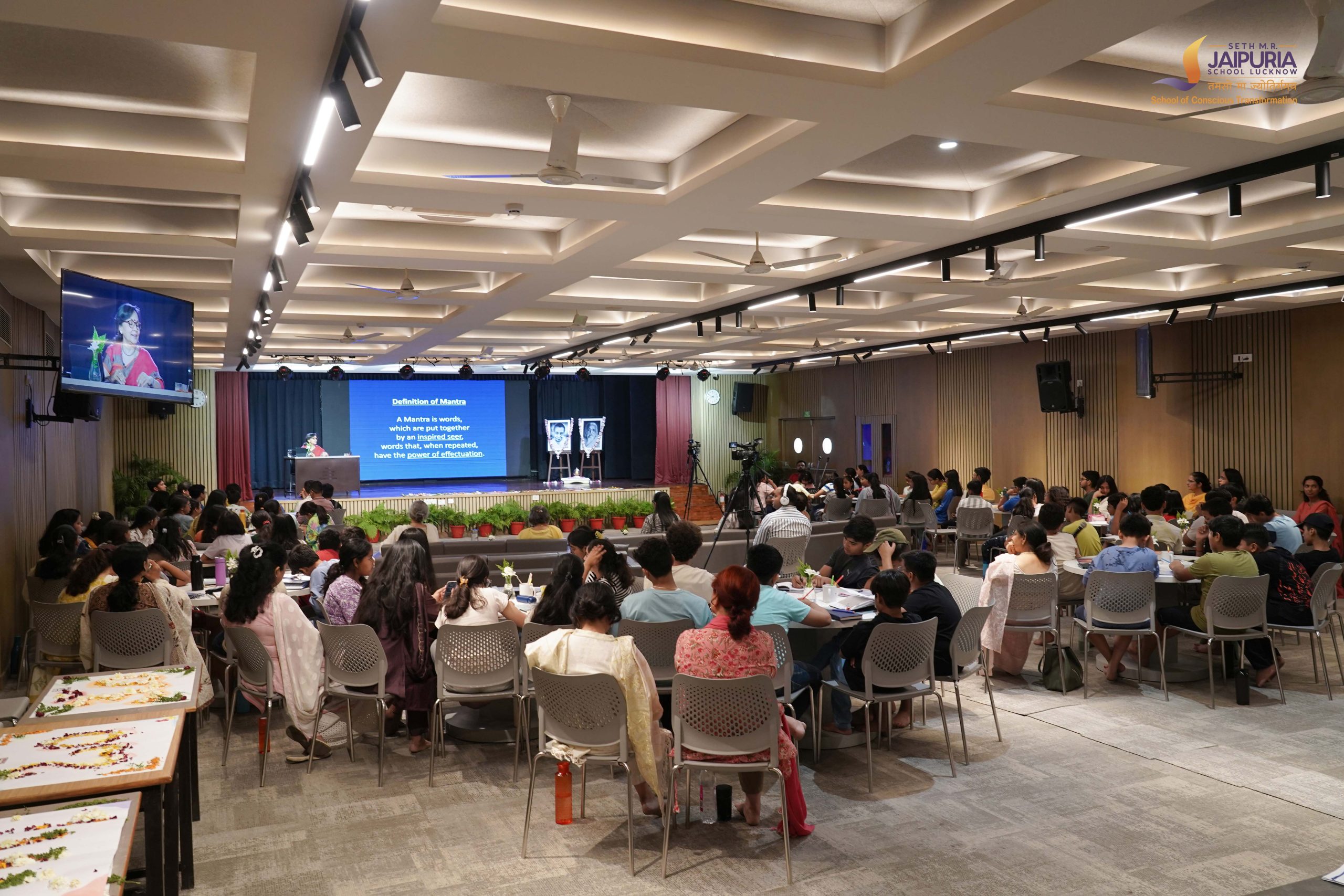
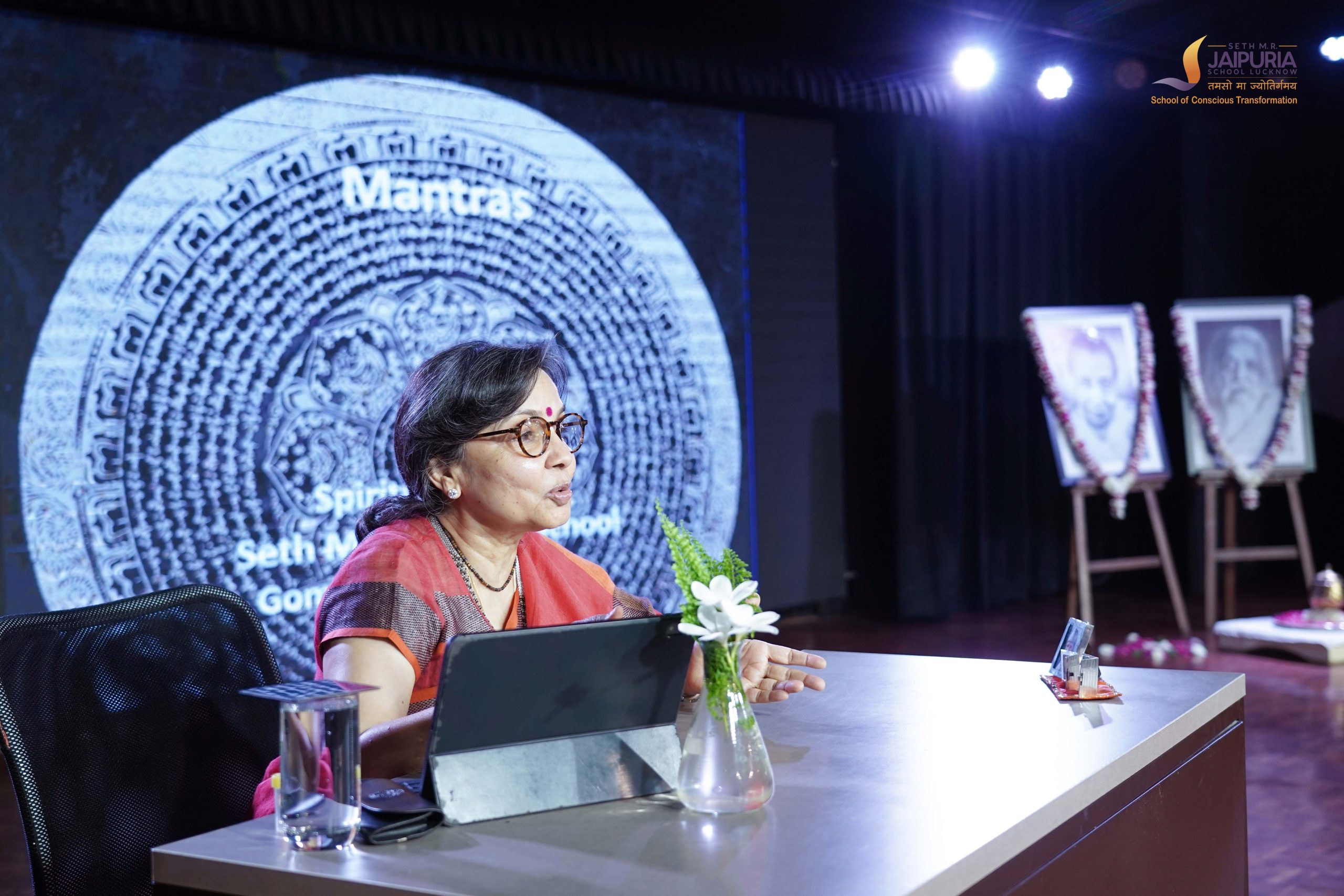
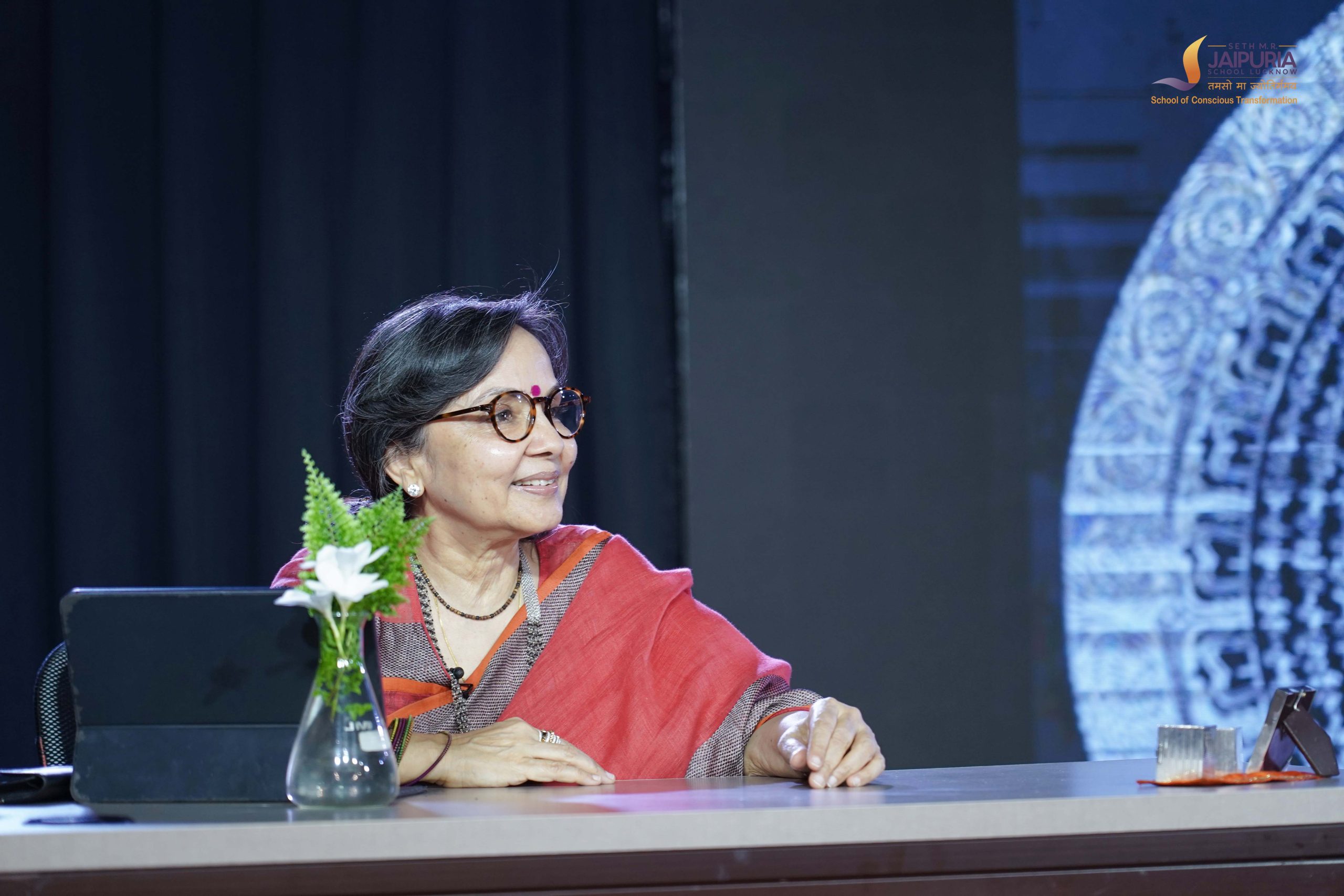
An Exploration into the Magic World of Mantras by Mrs. Anjali Jaipuria
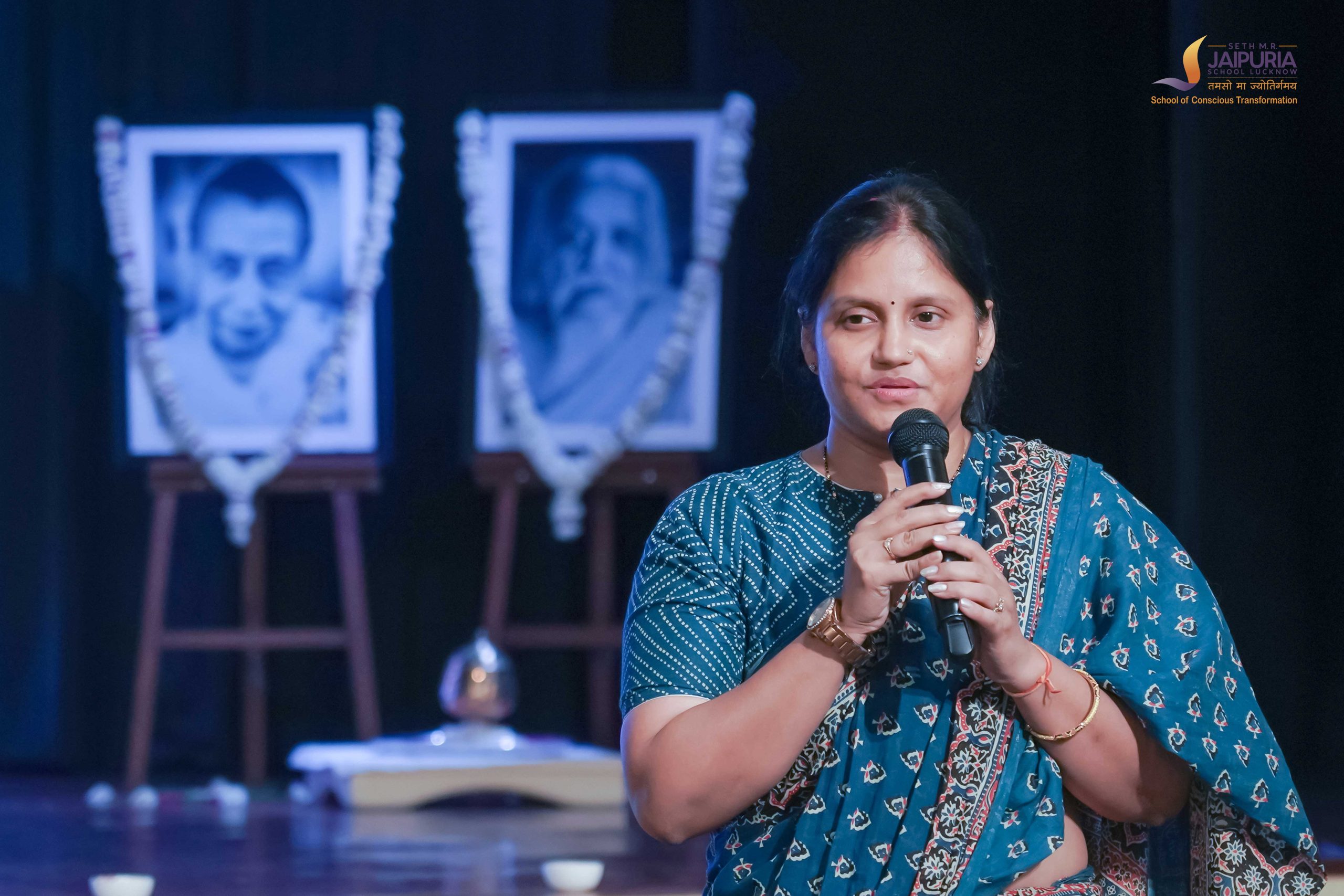
Mrs. Anjali Jaipuria opened the day with a gentle yet powerful invitation into the realm of mantras. She emphasised that one must identify and chant the mantra they feel drawn to. “The number is not important; what is crucial is the sincerity with which we do it,” she elaborated. Mrs. Jaipuria shared an inspiring insight — “Sometimes, as we progress in our spiritual journey, a new mantra may spontaneously emerge from within us, replacing or supplementing the previous ones.”
Throughout the session, she narrated numerous stories that beautifully illustrated the transformative power of mantras. One poignant story which brought out the power of Mantras was about Sonam, a young woman who, during an adventurous trek in the Himalayas, was caught in a perilous situation with a menacing bear. In her moment of fear, Sonam spontaneously started chanting “ॐ,” a universal sound of Divine consciousness. Miraculously, the bear, hearing the sacred sound, was startled and retreated, sparing her life. She explained, “Because she had the habit of chanting ‘ॐ,’ it emerged from her in that critical moment and saved her.”
Mrs. Jaipuria also spoke about the significance of understanding the meaning behind mantras. She illustrated this with the example of a boy who read Savitri every day as a personal mantra, which boosted his confidence and helped him excel in his exams. Furthermore, she recounted how the famous epic Ramayan showcases the power of chanting “राम” to float stones across the ocean — symbolising the mantra’s potential to uplift and support us in challenging times.
She emphasised that the true power of a mantra was in its sincerity and faith. She explained how ancient Vedic seers, credited as कवयः सत्यश्रुताः, received Divine mantras through inspired vision and hearing, which came from their deep spiritual insight. She underlined that today, in meditation and daily practice, we connect with this tradition by reciting words that resonate with our inner higher self.
She also spoke about the significance of Vande Mataram, saying, “At Jaipuria, we’ve consciously chosen to greet each other with ‘वन्दे मातरम्’ instead of the usual ‘Good Morning’ or ‘Good Evening’,” said Mrs. Jaipuria, addressing the students. “Each time you say it to a teacher or to your friend, you’re not just offering a greeting—you’re chanting a powerful mantra. Born during India’s freedom struggle, वन्दे मातरम् stirred a nation into action and unity, showing us how even a simple sound can spark a movement.”
She further added, “In the same spirit, the first mantra of the Rig Veda — ‘ॐ अग्निमीळे पुरोहितं यज्ञस्य देवमृत्विजम्’ — is a seed of Divine energy. Every mantra carries power. And when you chant with awareness, you invite that power into your life.”
As the session drew to a close, she urged everyone to choose or allow a mantra to come to them spontaneously and to practise with complete sincerity. She concluded with a gentle reminder: “ Repeat your mantra without disturbance at all times. When in danger, you can see its wonders.”
After the talk, the session opened for Q&A. A student asked ,” How can we ensure that our practice of mantras remains sincere and effective over time?” Mrs Jaipuria responded thoughtfully, “Sincerity grows when we understand the meaning and connect emotionally with the sound.”
Another student inquired, “Can the power of a mantra be affected if we are distracted while chanting?” She explained, “Distraction does weaken the effect, but with consistent practice, concentration naturally deepens.”
A student asked about the necessity of comprehending the meaning of a mantra for it to work; she clarified, “While understanding enhances the inner experience of the chanting, even the pure sound vibration holds great power in itself.”
Introduction to Savitri, a Legend and a Symbol by Prof Vinod Solanki
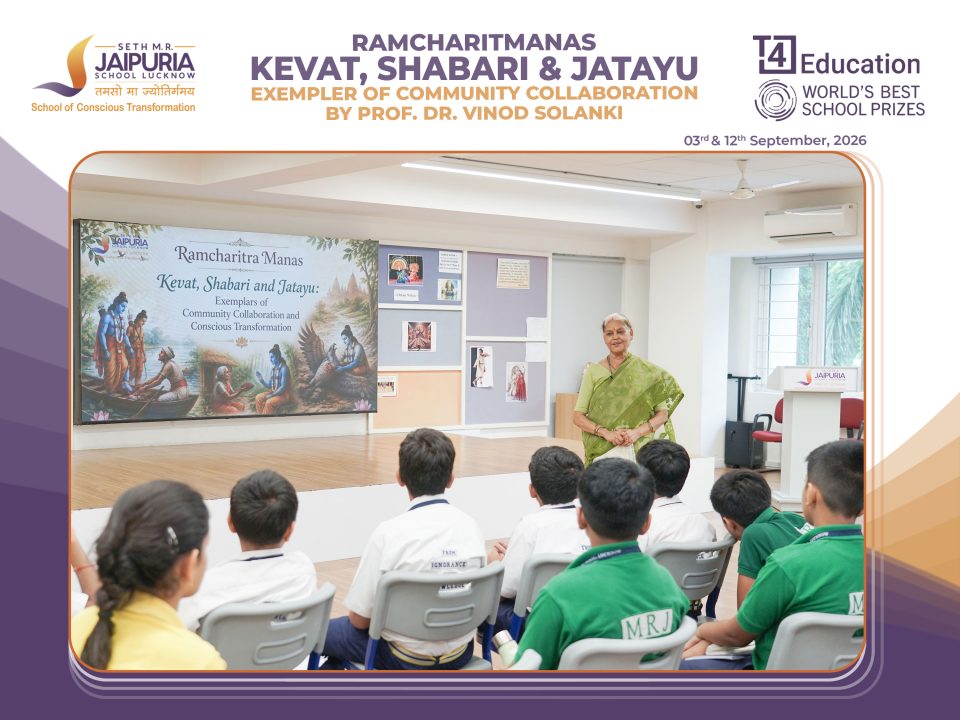
After a fruit break, students joined Professor Vinod Solanki, retired Head of the Department of English at Deen Dayal Upadhyaya University, Gorakhpur. Prof Solanki led a luminous exploration of Savitri as both an epic poem and a living symbol in the session, “Introduction to Savitri, a Legend and a Symbol”.
With grace and depth, she illuminated how Savitri is not merely a mythological story, but a powerful symbol of Divine energy that beckons humanity to rise beyond limitations and embrace higher consciousness.
She explained that the name Savitri originates from Sanskrit, meaning “daughter of the sun,” symbolising Divine illumination and awakening. Sri Aurobindo, the epic’s visionary author, called Savitri his “magnum opus” — a masterpiece born from years of spiritual aspiration and poetic mastery. “This work reveals the supreme truth, the Divine word,” she emphasised, “offering every seeker a pathway to Divine realisation.”
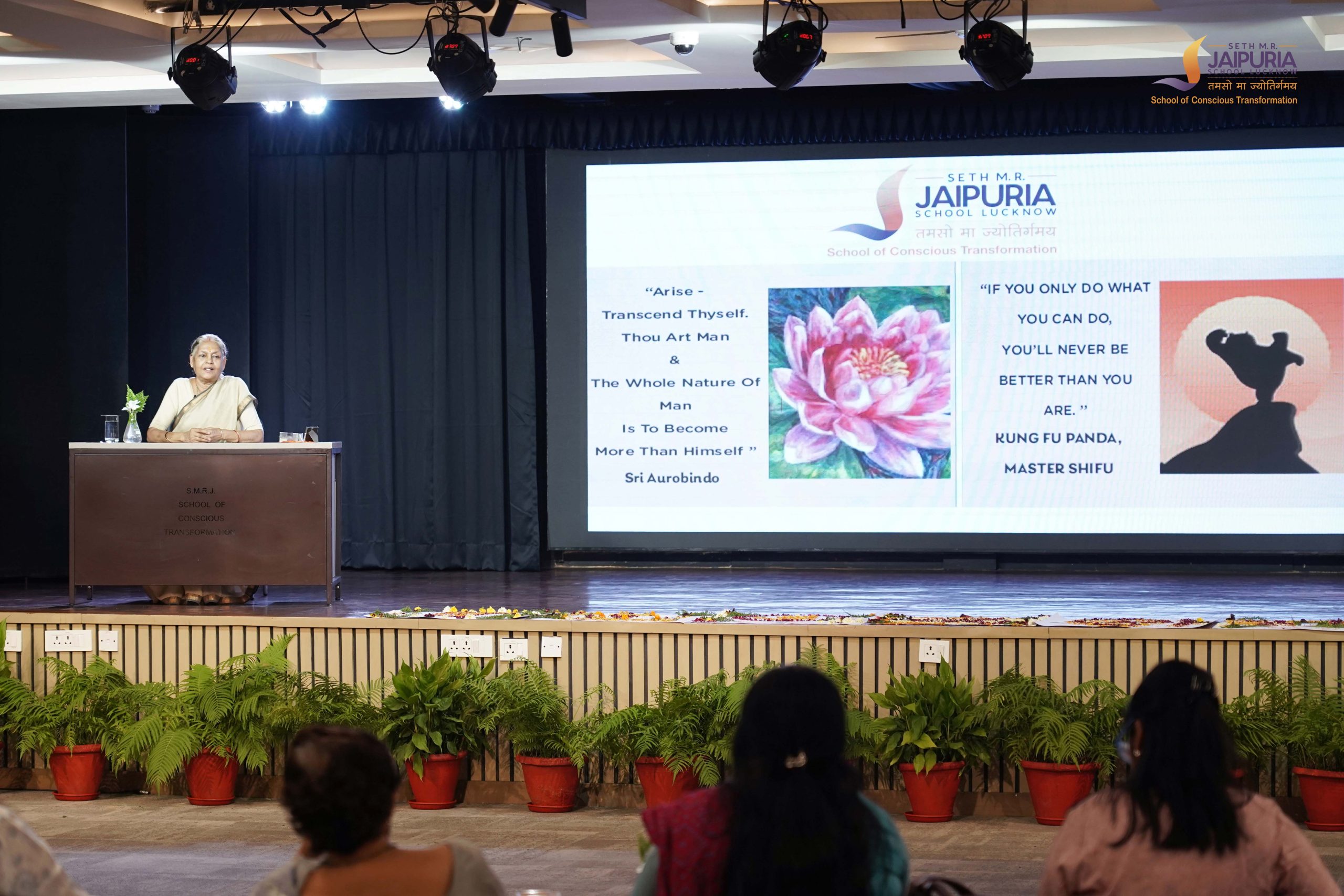
She exhorted the students with a powerful quote from the epic: “Never can the mighty traveller rest, and never can the mystic voyage seize a greater world.” She explained that this is the call to explorers — both outer explorers of the world and inner voyagers of the soul — urging us to pursue continual growth and spiritual discovery. “Savitri is not just poetry — it is a mantra, a spiritual guide to inner transformation,” said Professor Solanki. “Just as Sri Aurobindo’s epic leads the seeker toward the evolution of consciousness, your school, Seth M.R. Jaipuria, too, is committed to the conscious transformation of every student — not just nurturing the intellect, but awakening the spiritual within.”
When one of the students in the audience asked, “Why choose English for this Divine epic?” Prof Solanki replied, “Because within the universal language of English lies a door open to the entire world — making the Divine message accessible to all, regardless of borders or backgrounds.”
She explained the symbolic journey of Savitri during her 12 months of spiritual practice, engaging in inner dialogue with Divine forms — Maheshwari, Mahakali, Mahalakshmi, and Saraswati — to awaken higher faculties within herself. This ascent represents the inner evolution of the human soul, moving from wisdom to power, and finally to Divine love and harmony.
Prof Solanki shared how Savitri’s story inspires not only spiritual seekers but also educators and students. “This is the core message,” she said, “that exploration and inner voyage are ongoing and endless.”
Contemplation on Mantric Passages from Savitri by Mrs. Anjali Jaipuria
After a healthy and scrumptious lunch, Mrs. Anjali Jaipuria invited students into silent reflection, reminding them that “this light does not come by struggle or by thought — it comes through inner stillness. In the mind’s silence, the transcendent acts.”
In the session, “Contemplation on Mantric Passages from Savitri,” she guided the children in reading aloud selected passages from Sri Aurobindo’s Savitri.
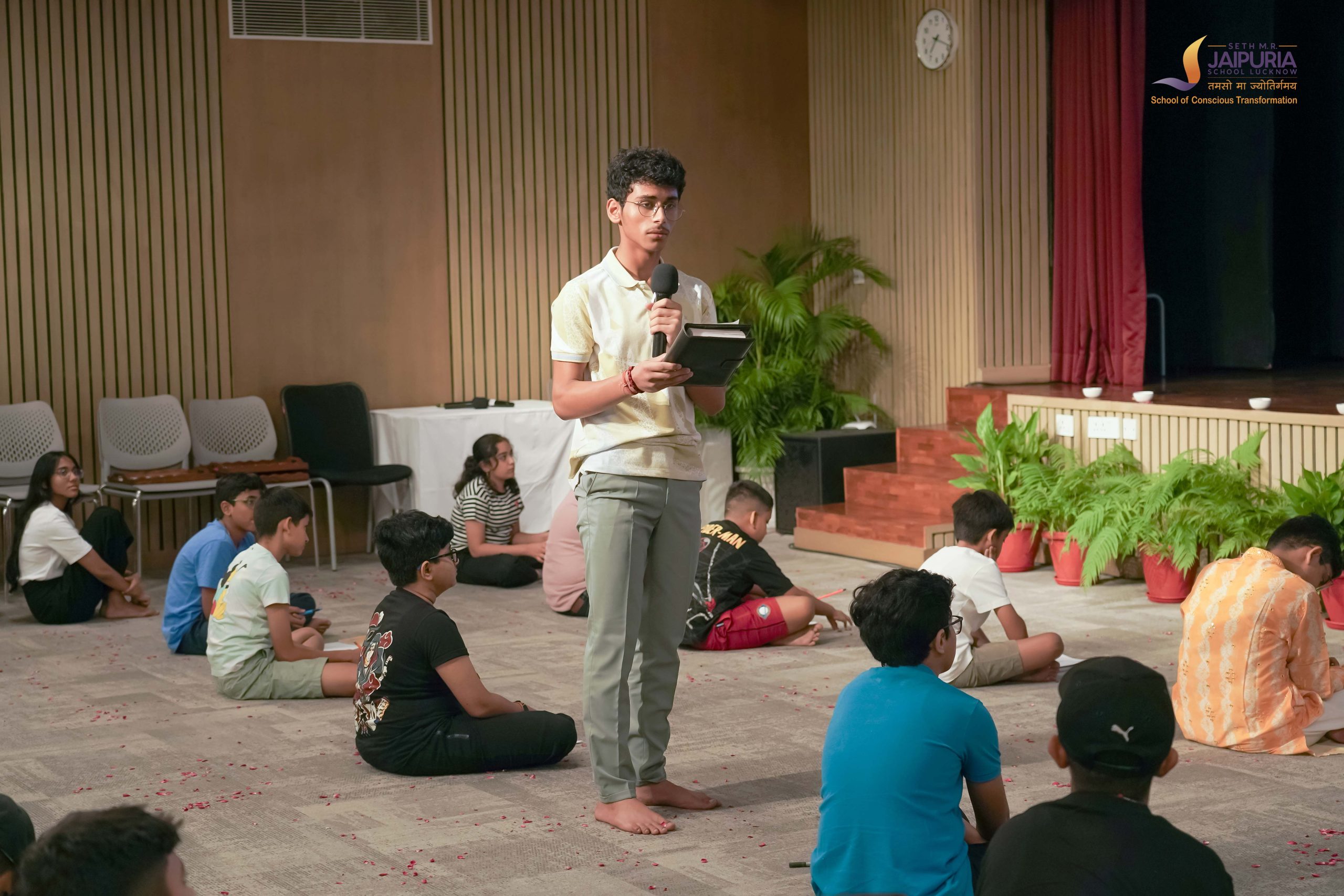
When a student read the lines, “In moments when the inner lamps are lit… our spirits sit alone and speak to their gods,” Mrs. Jaipuria paused to explain: “Savitri is meant to unfold itself from within us. When inner lamps are lit, Divine energies flow.” She encouraged everyone to revisit these sacred words regularly and reflect deeply on their meanings.
She reminded the children of their Divine potential: “God became man, so man may become God.” Quoting the line from Savitri, “His human portion we must grow Divine,” she urged them to recognise their own spiritual journey as part of a greater Divine unfolding.
She also spoke of the collective strength that comes from aligning with the light: “We are the heroes and soldiers of the army of light. Our faith is the sword, and only he who keeps God in his heart is safe.” Drawing from Savitri, she reminded the students that “Earth is the battlefield where God is shaping His works,” and that each of us has a part to play in that sacred work.
Throughout the session, Mrs. Jaipuria returned to the essential themes of sincerity, silence, and surrender. “The Divine force shall run through every limb,” she quoted from Savitri, “but for that, we must unite our will with God’s will.” This, she explained, is what transforms personal effort into Divine grace.
She encouraged everyone to make reading spiritual texts a part of their daily practice: “God’s word is not spoken, but given. Through sincere listening and inner stillness, we can receive it.”
With a collective moment of gratitude, the session ended on a note of quiet illumination. “What hides within us, we must reveal,” she said, “and in doing so, with sincerity, we open ourselves to Divine realisation.”
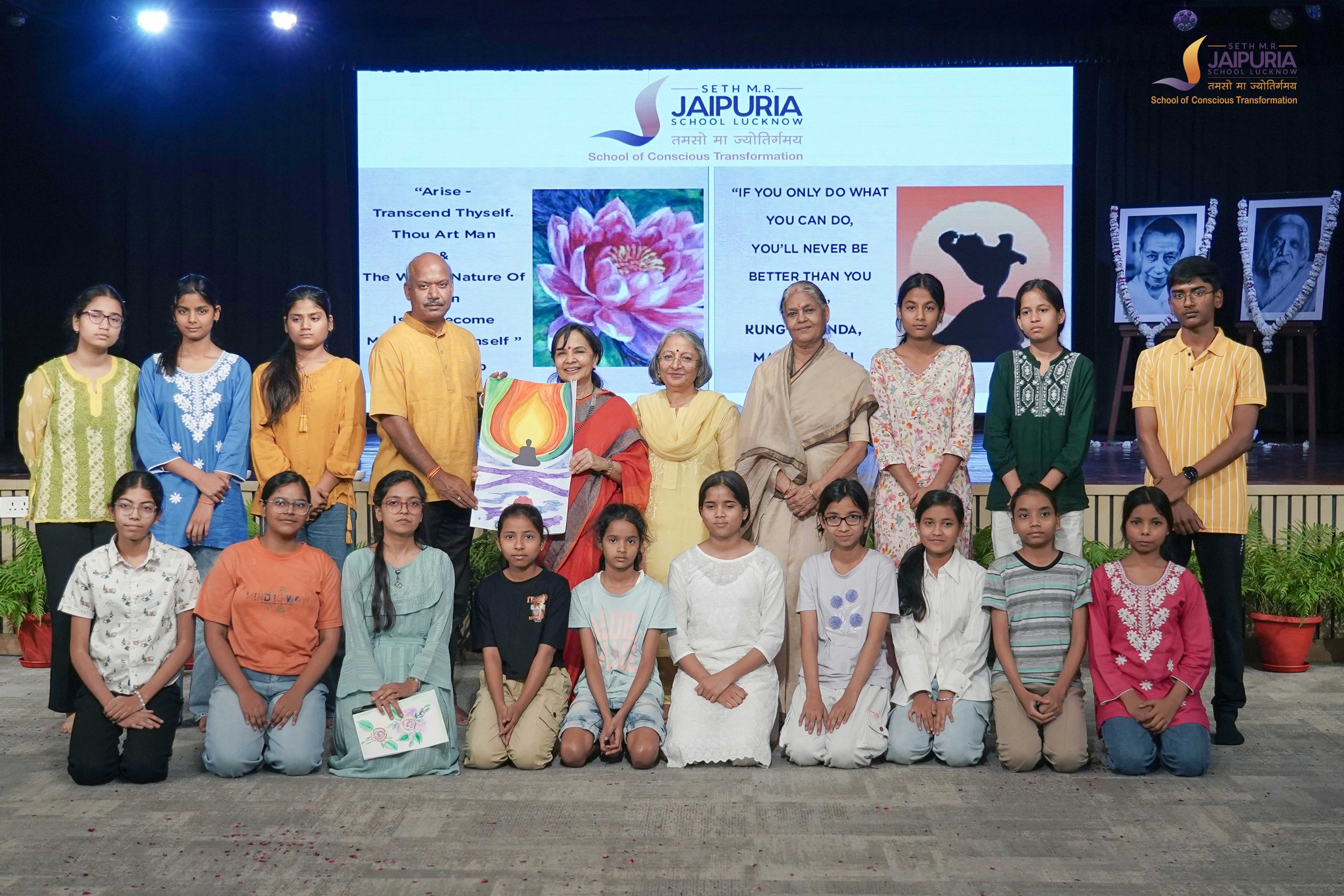
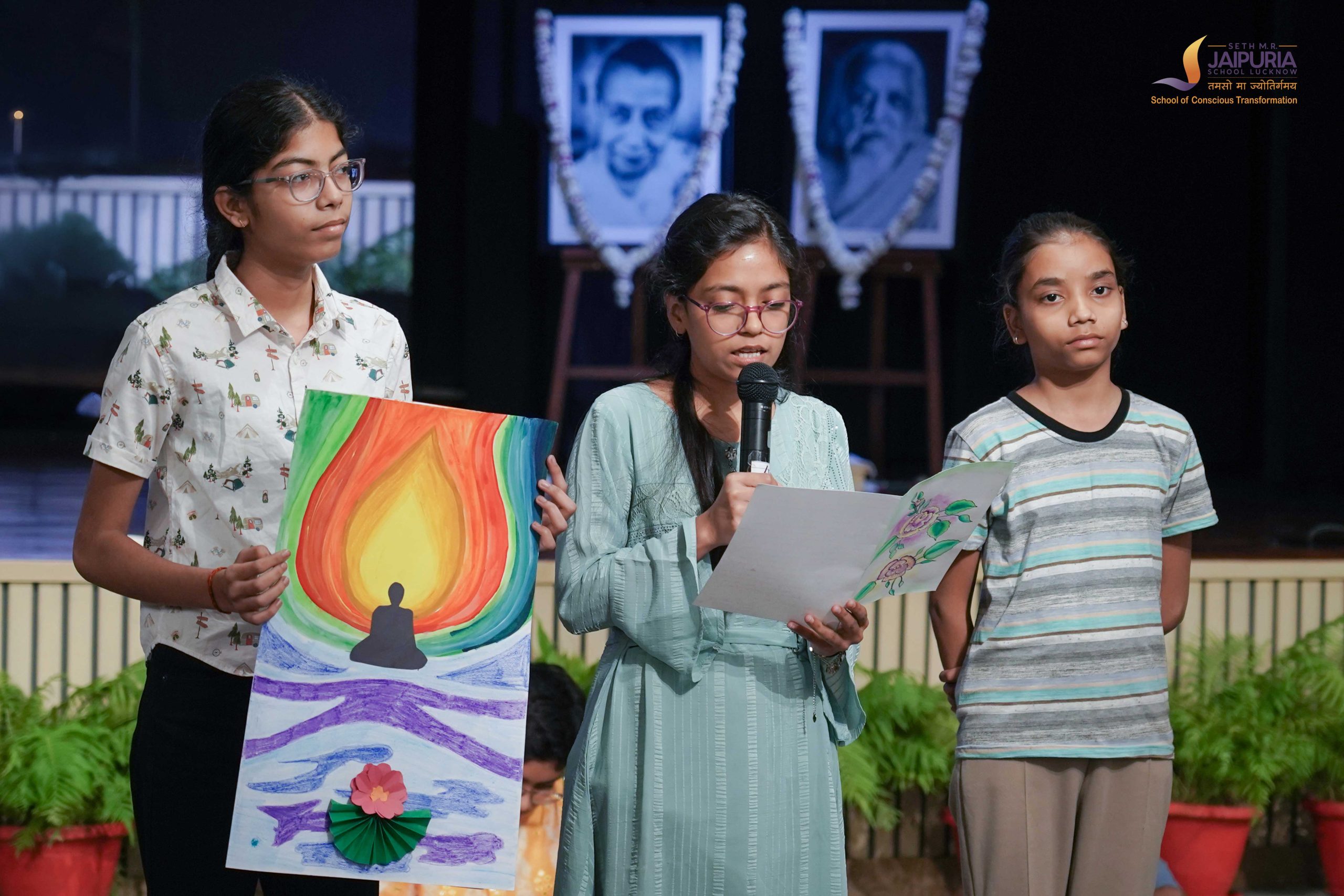
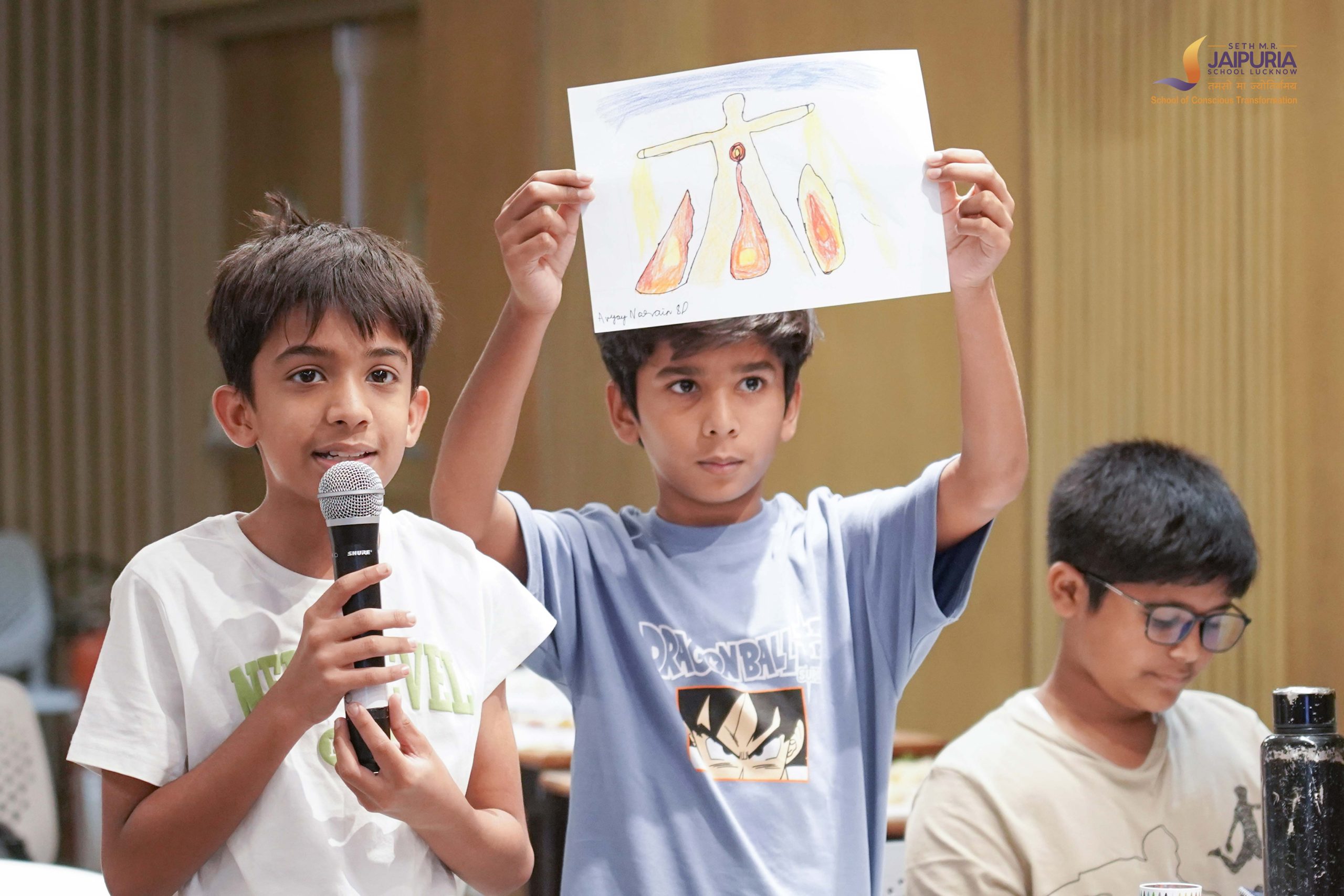
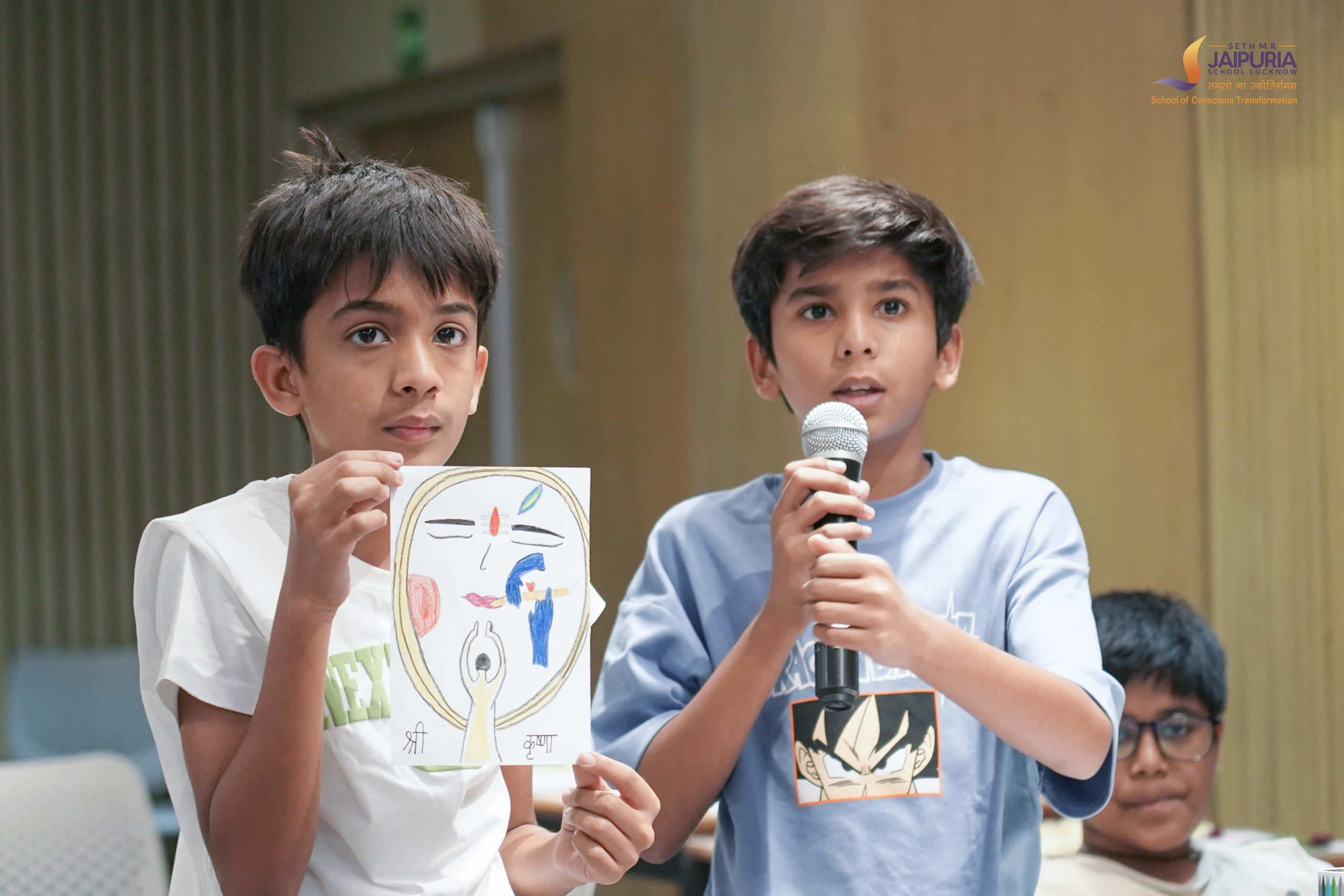
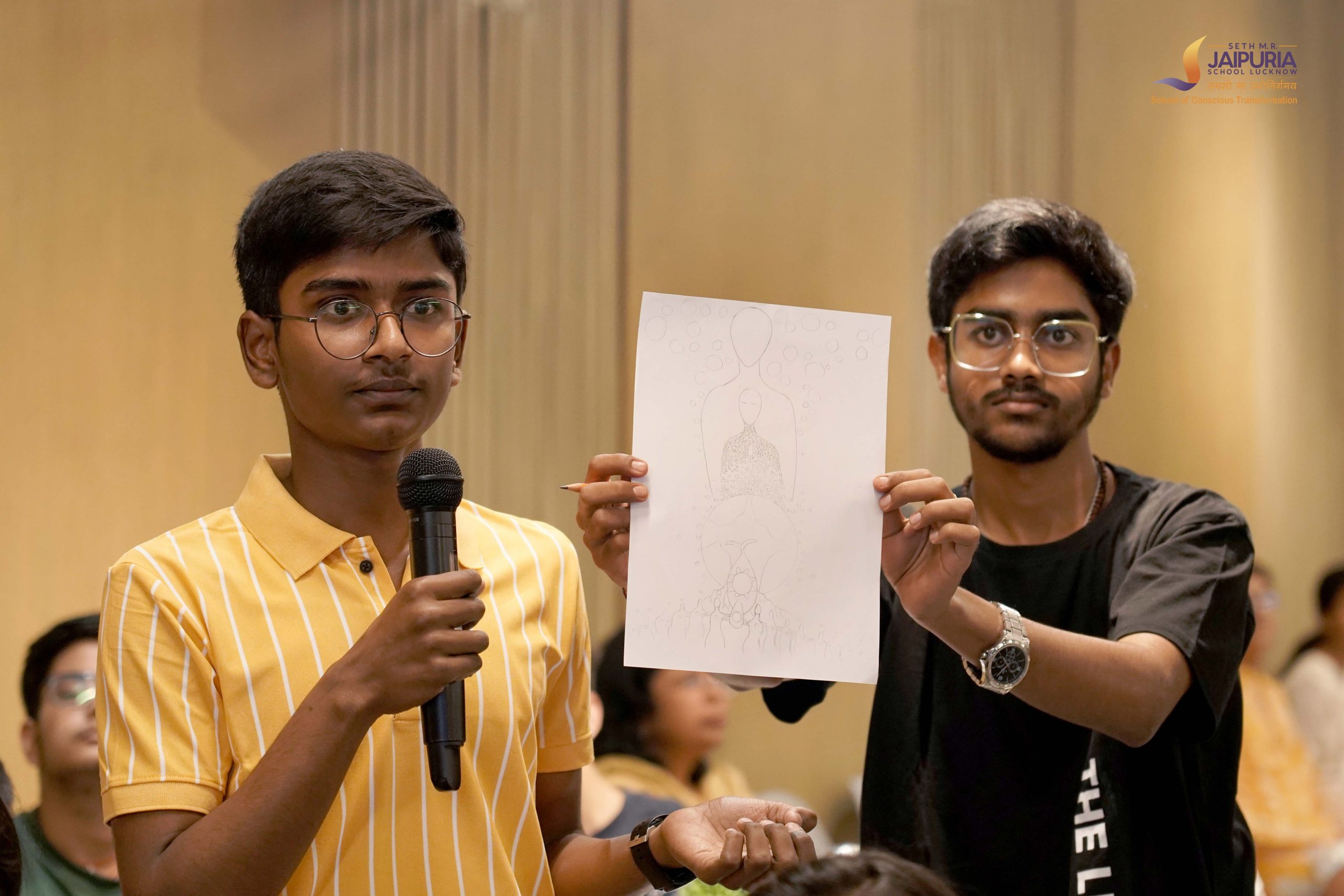
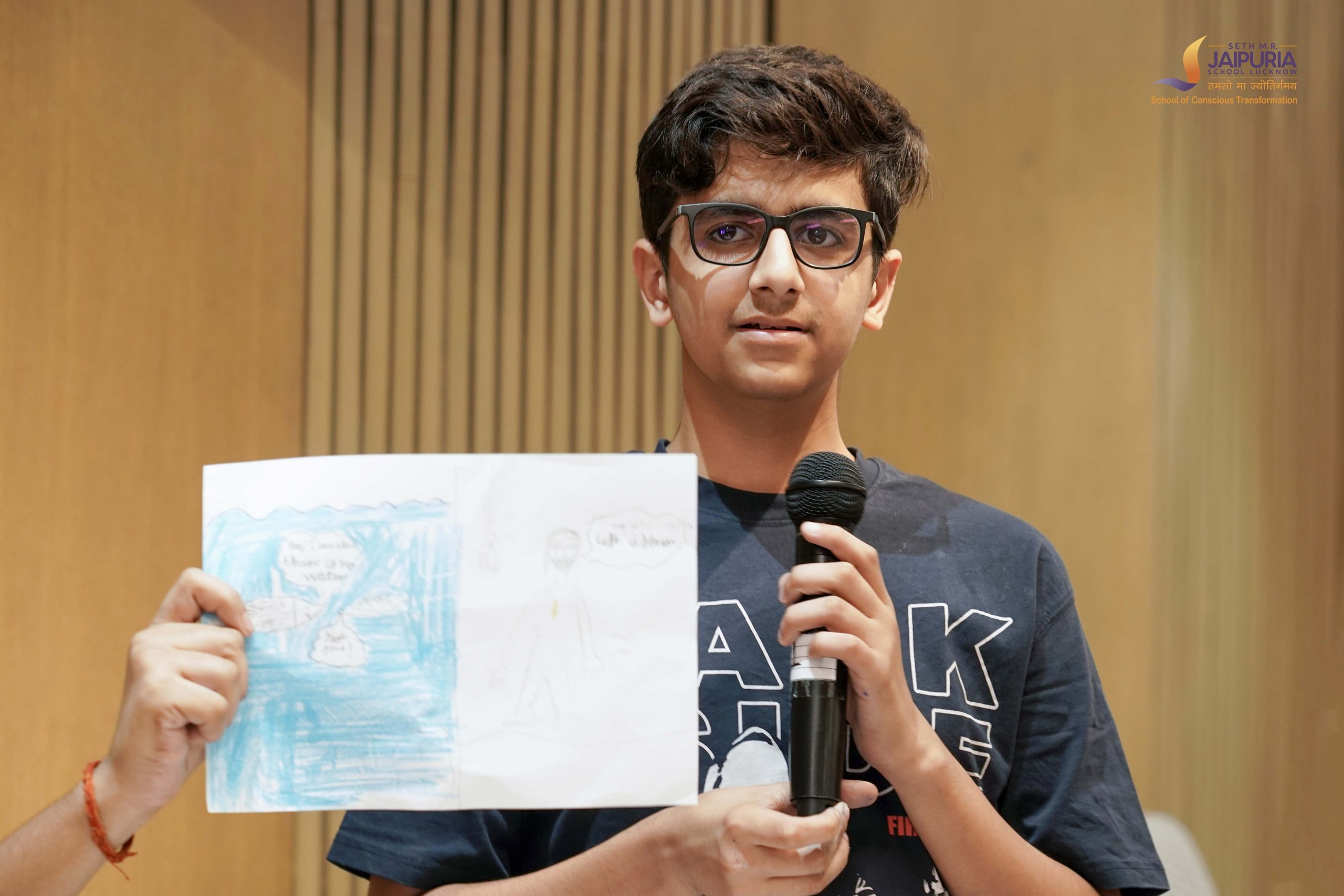
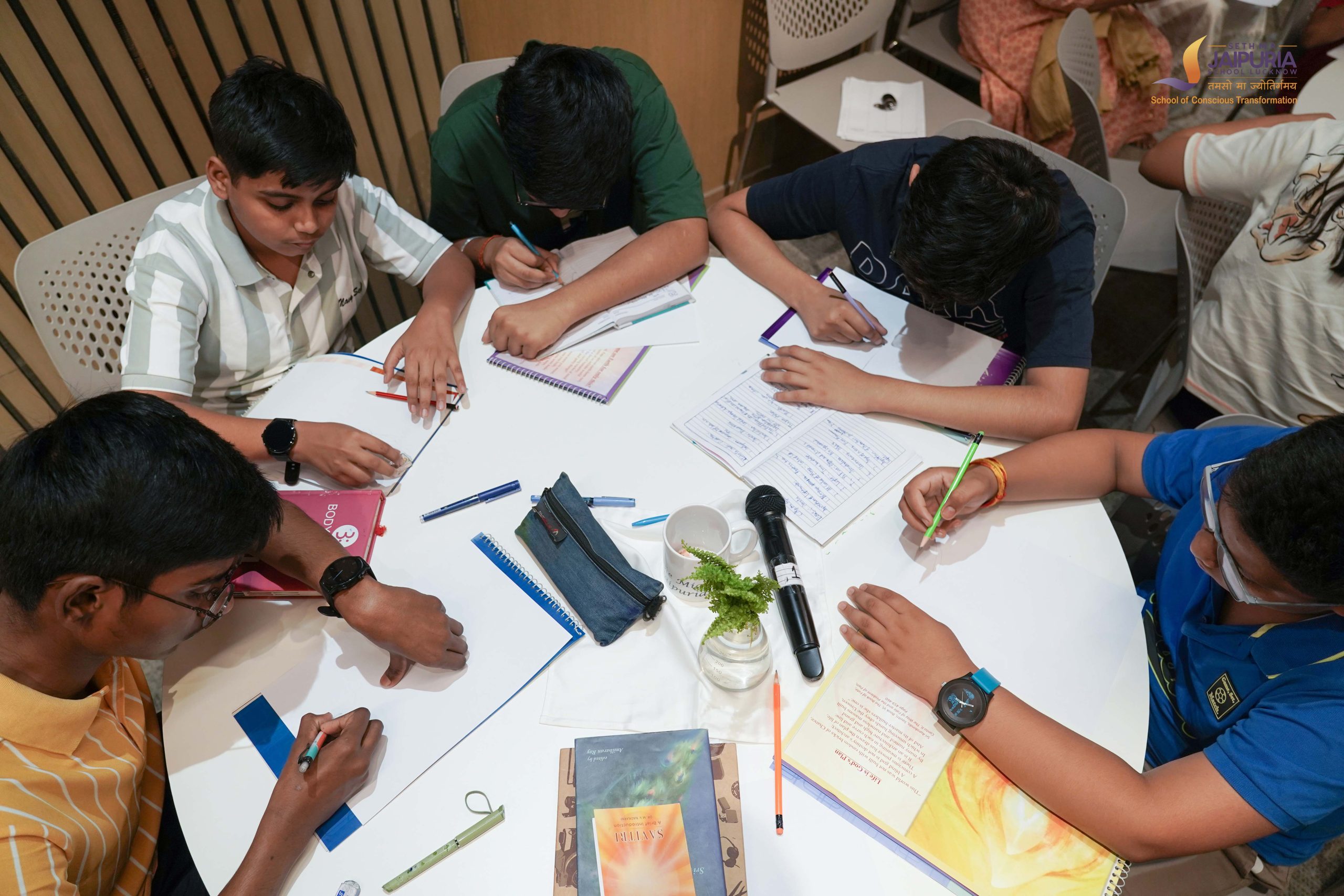
Later, Mrs. Anjali Jaipuria reflected on the children’s artworks and writings created while they were hearing the Divine passages of Savitri. She was deeply moved by how their expressions revealed inner realisations. One child had drawn a meditating figure, with the message “Silence is beautiful,” showing a heartfelt understanding of meditation as a path to Divine consciousness. “All these artworks with their write-ups are very important,” Mrs. Anjali Jaipuria Ma’am said, “because they reflect the soul’s inner journey.”
Dance Movements Inspired by Passages from Savitri by Deepali Ma’am & Richa Ma’am
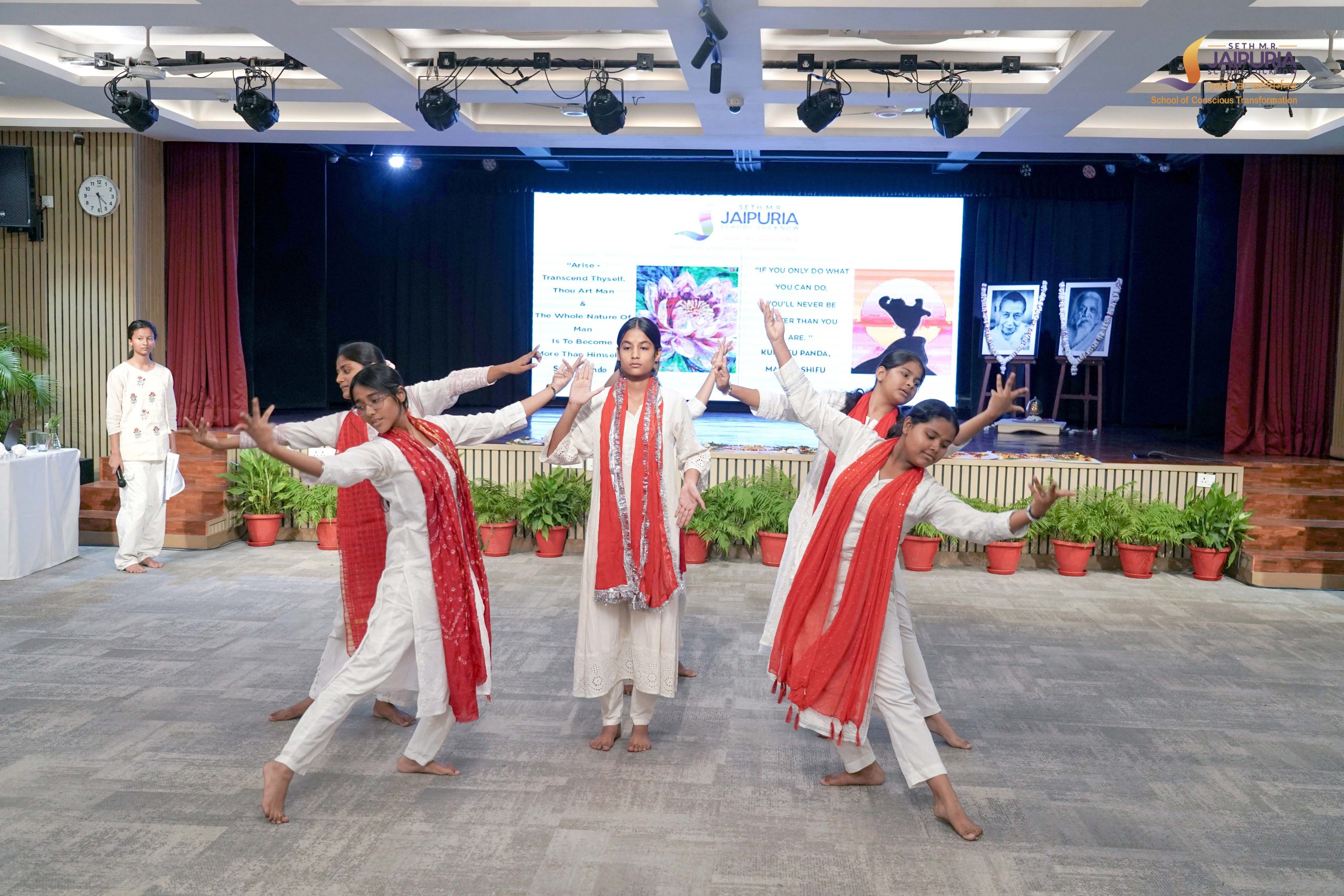
In the afternoon, dance teachers Deepali Ma’am and Richa Ma’am guided students to translate Savitri’s mantric energy into movement. With soft narration of the passages in the background along with music and mindful breathing, each child offered their dance as a devotional offering — letting words of the epic flow through their bodies. As students moved, their limbs became instruments of prayer, and every step became a dance of devotion, embodying Savitri’s call to raising consciousness.
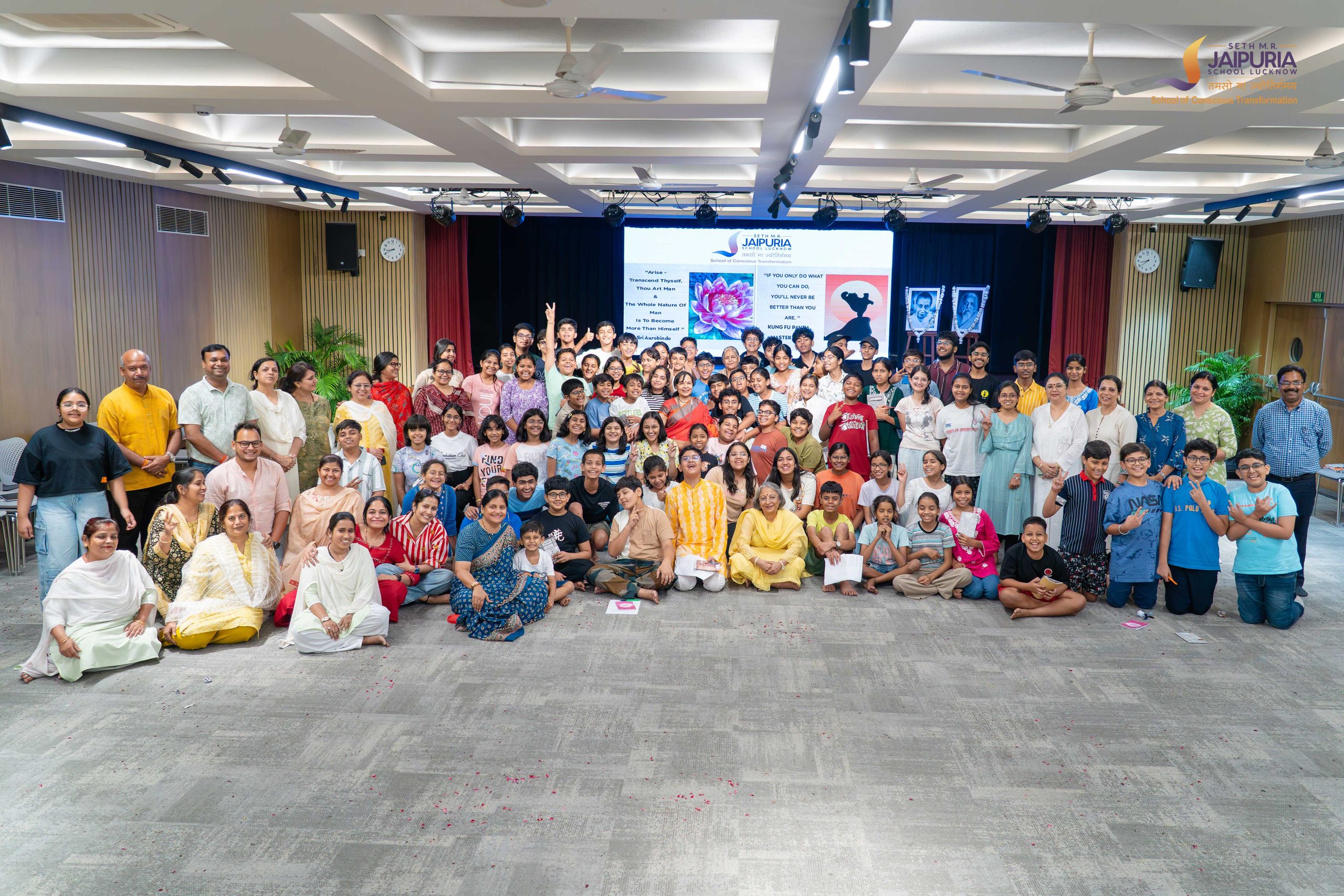
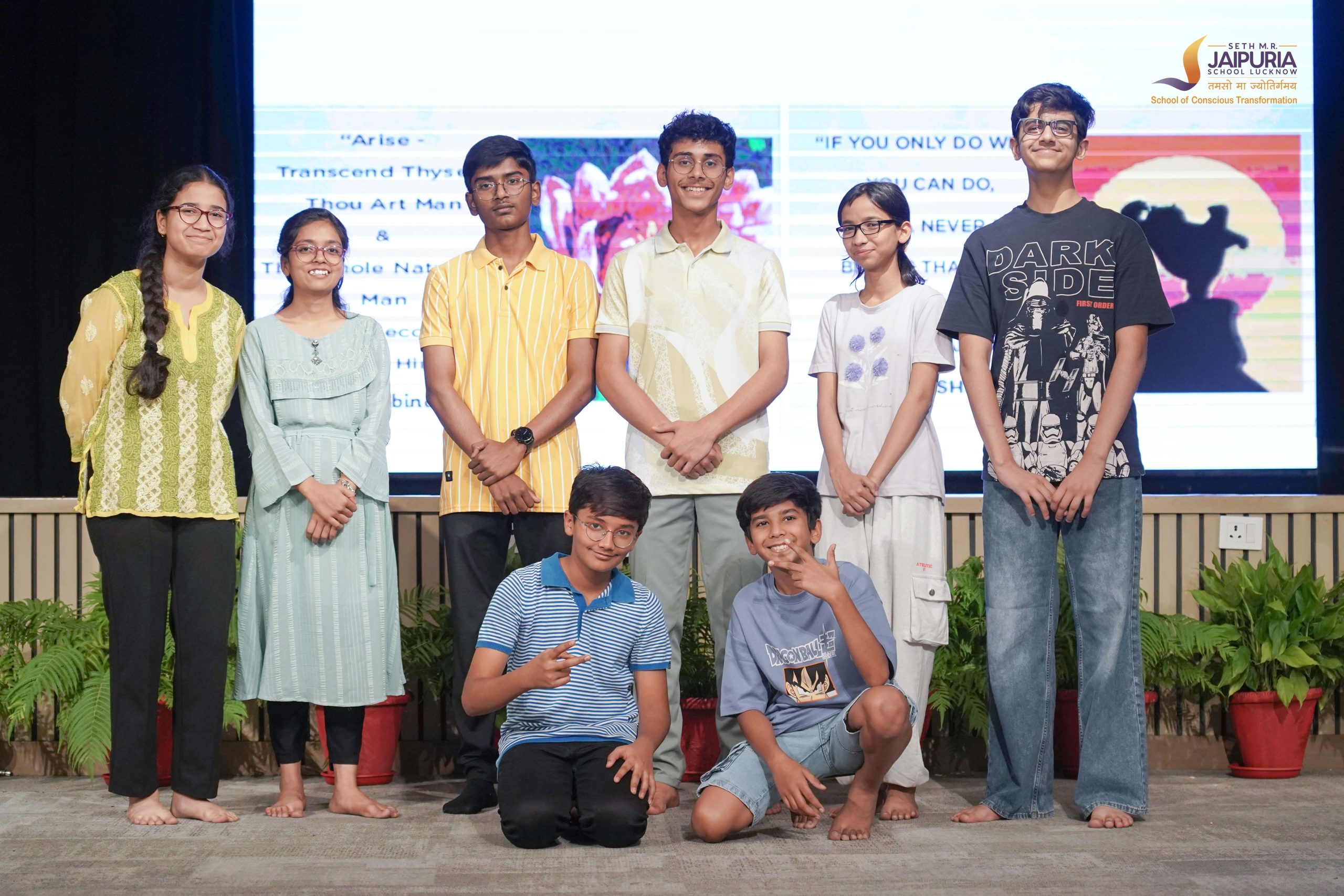
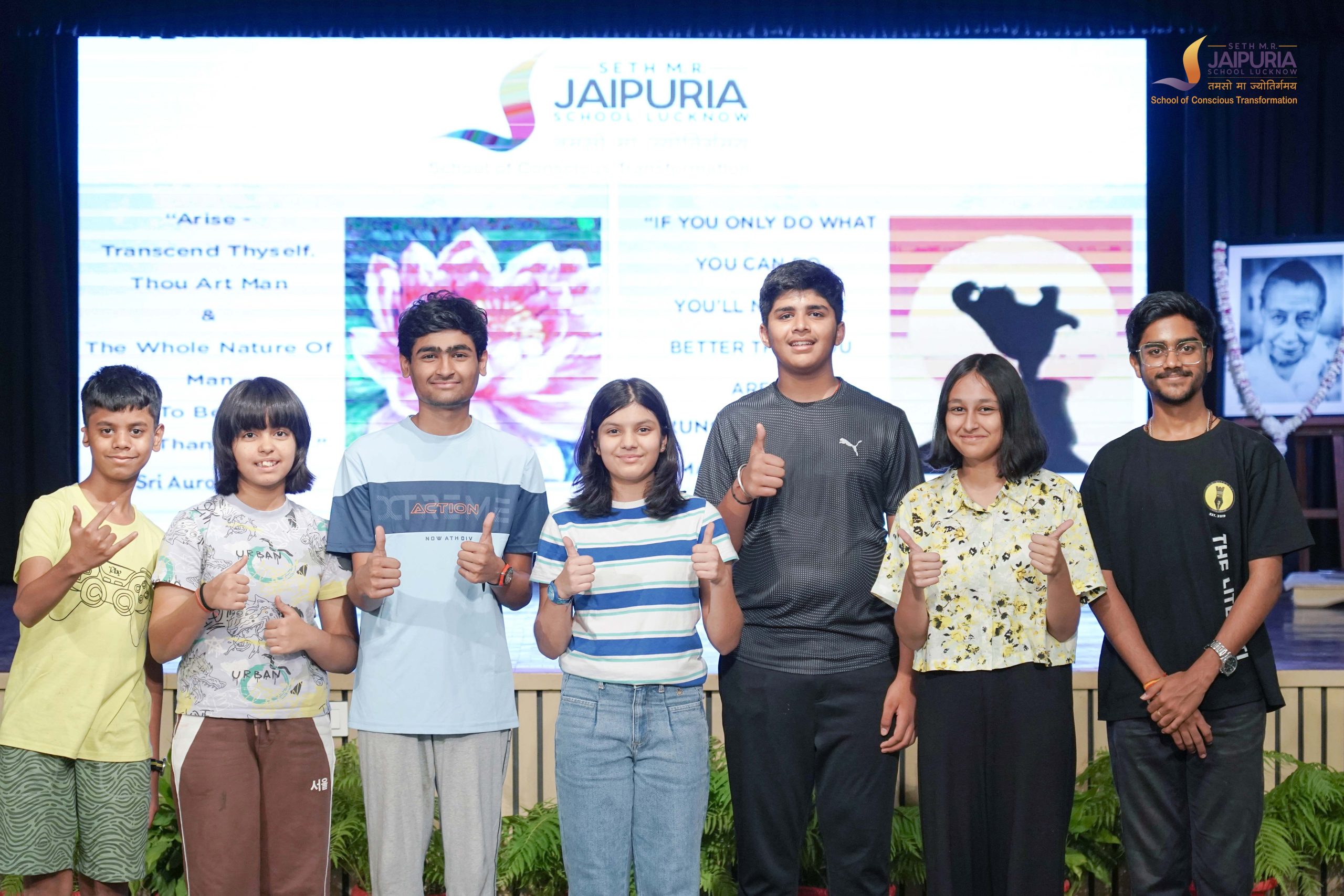
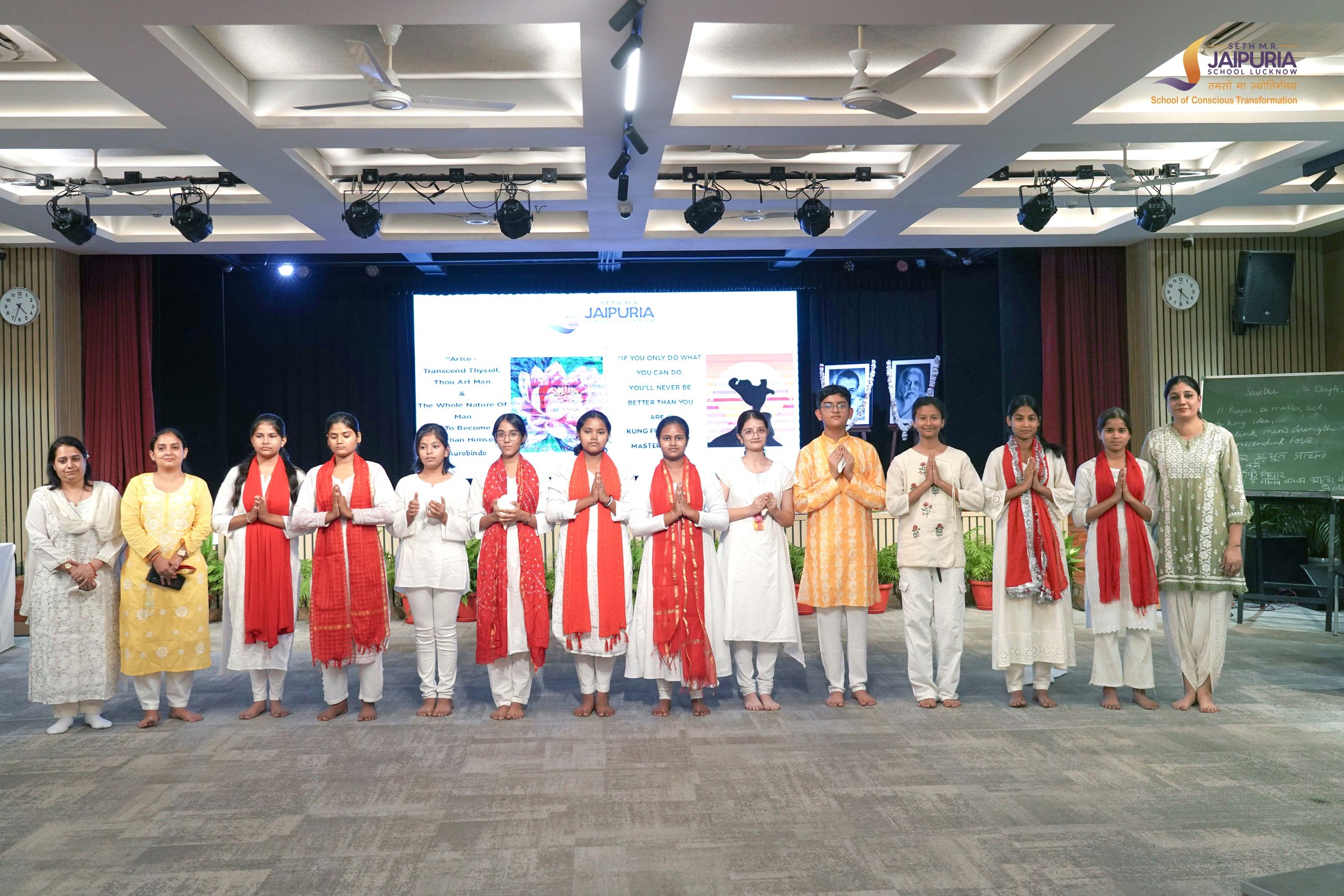
Later, students collaborated to choreograph a dance performance — rooted in Savitri’s mantric passages — which they will present on the retreat’s final day, alongside their presentations.

Love Bath: Poetry and Reflection
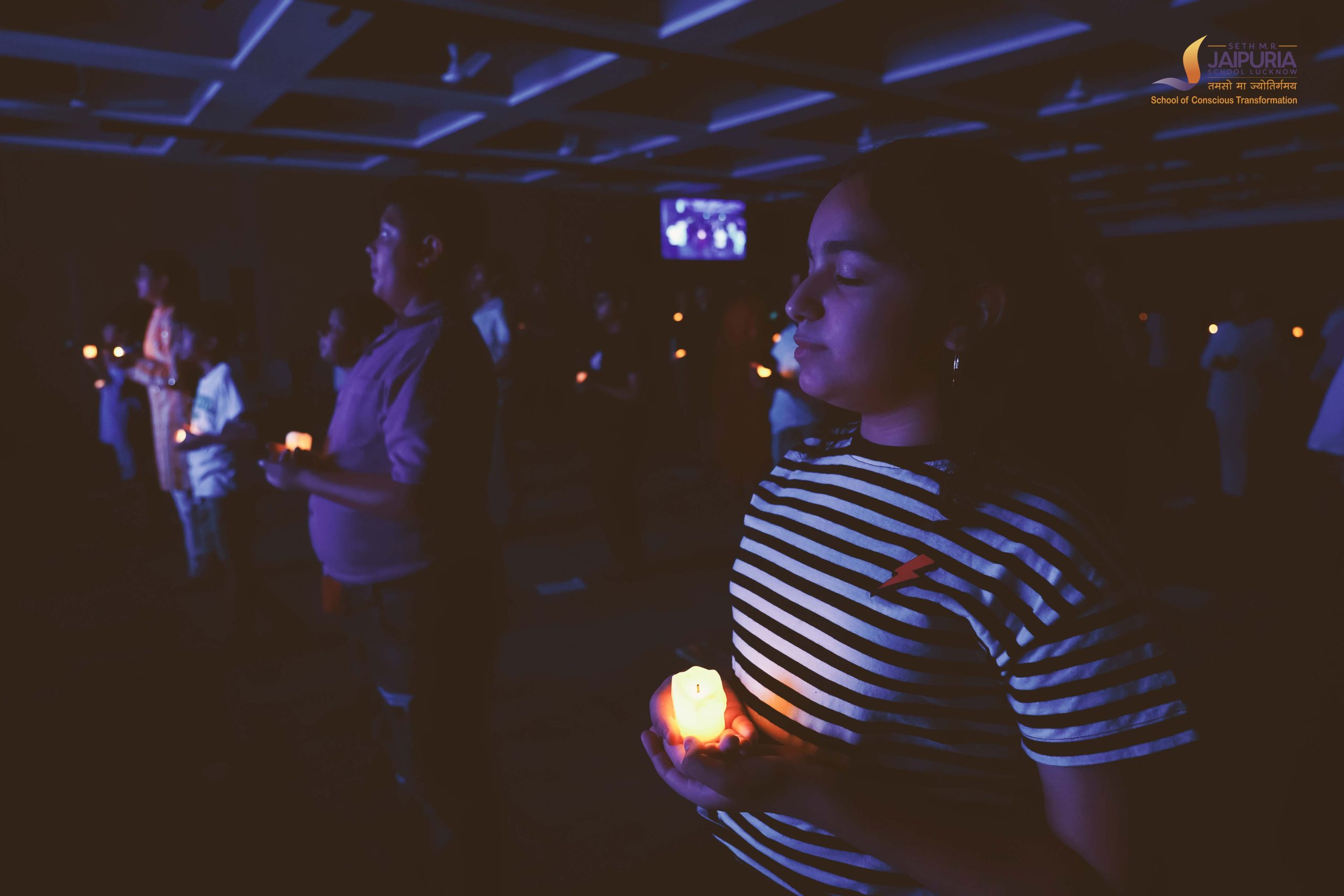
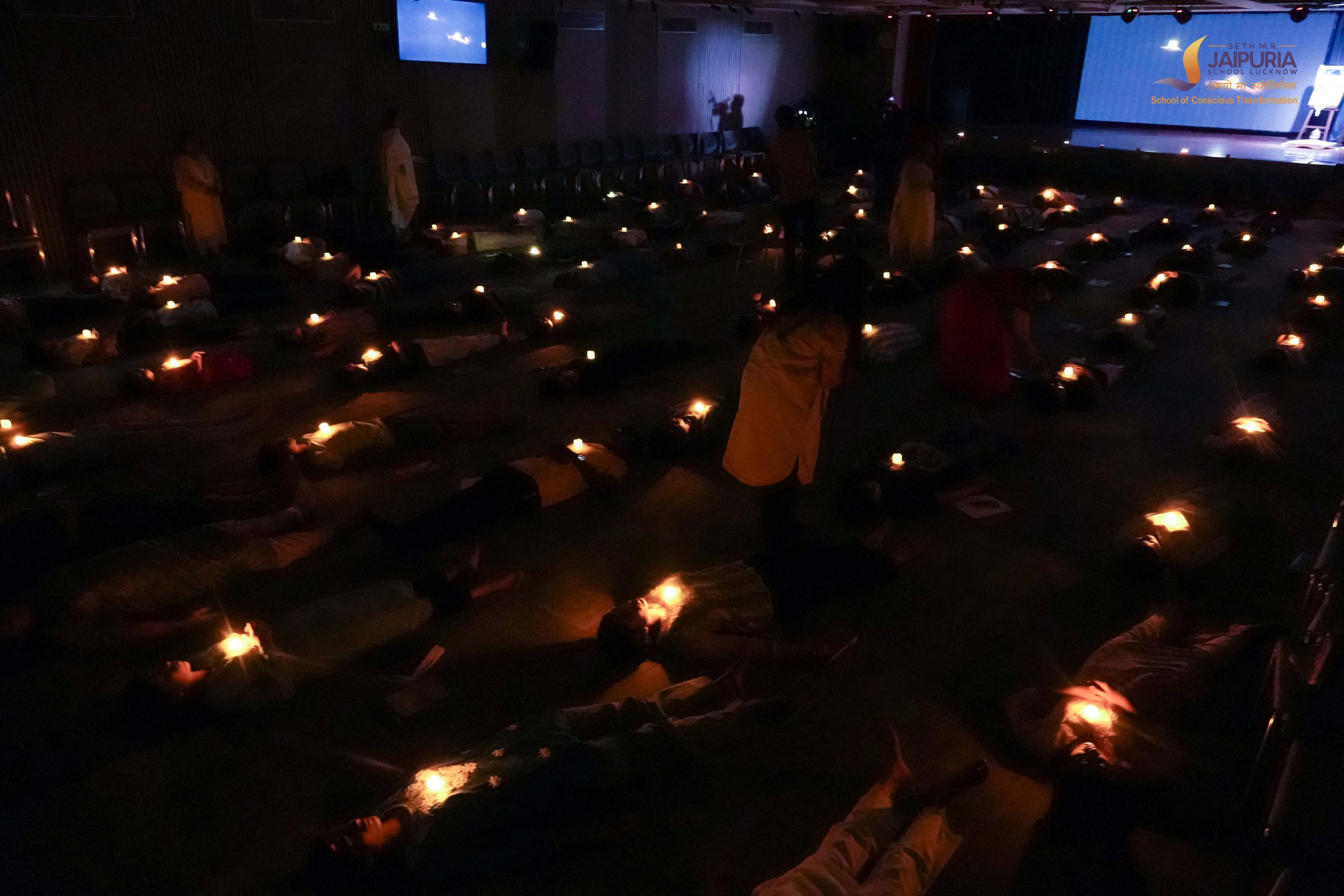
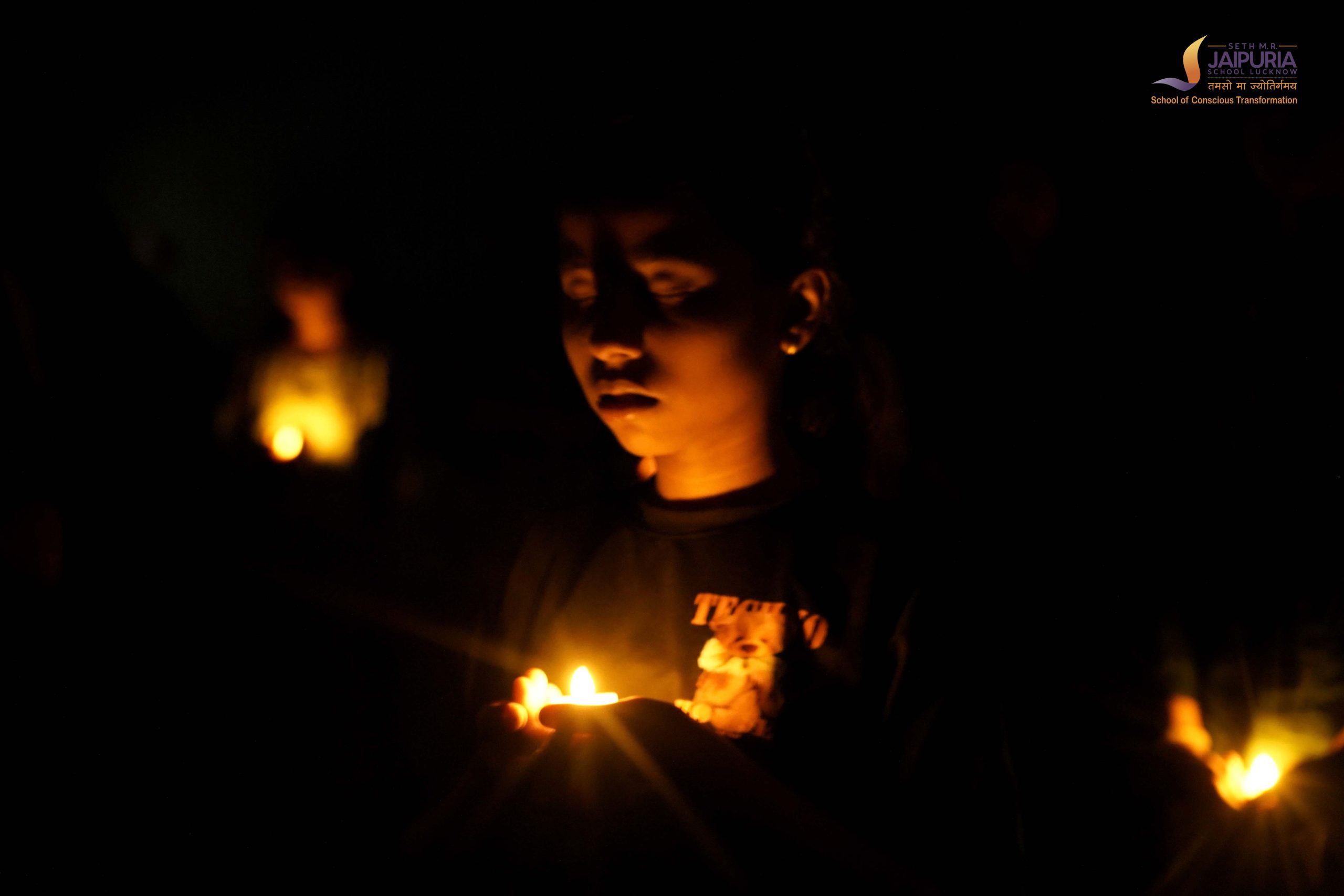
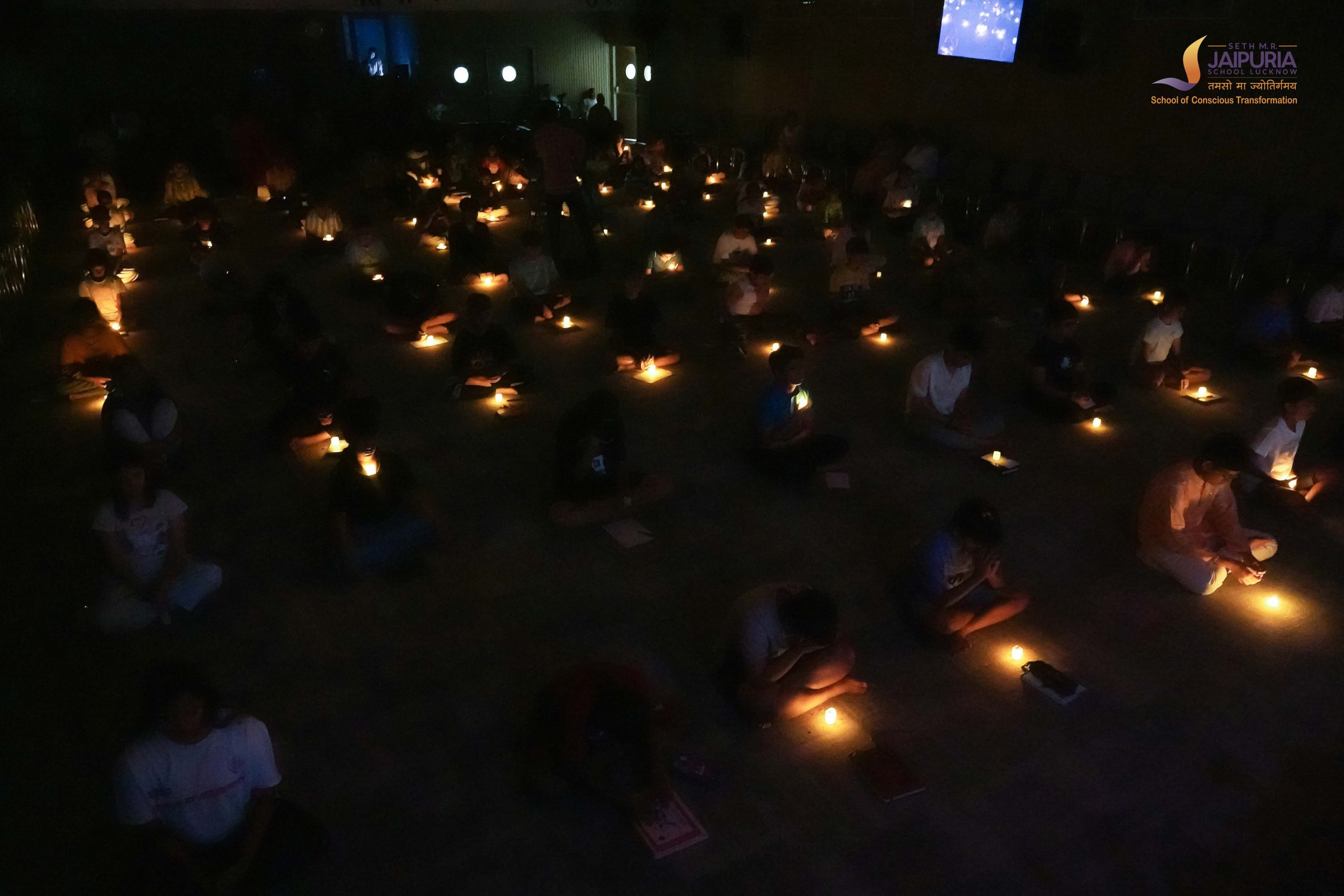
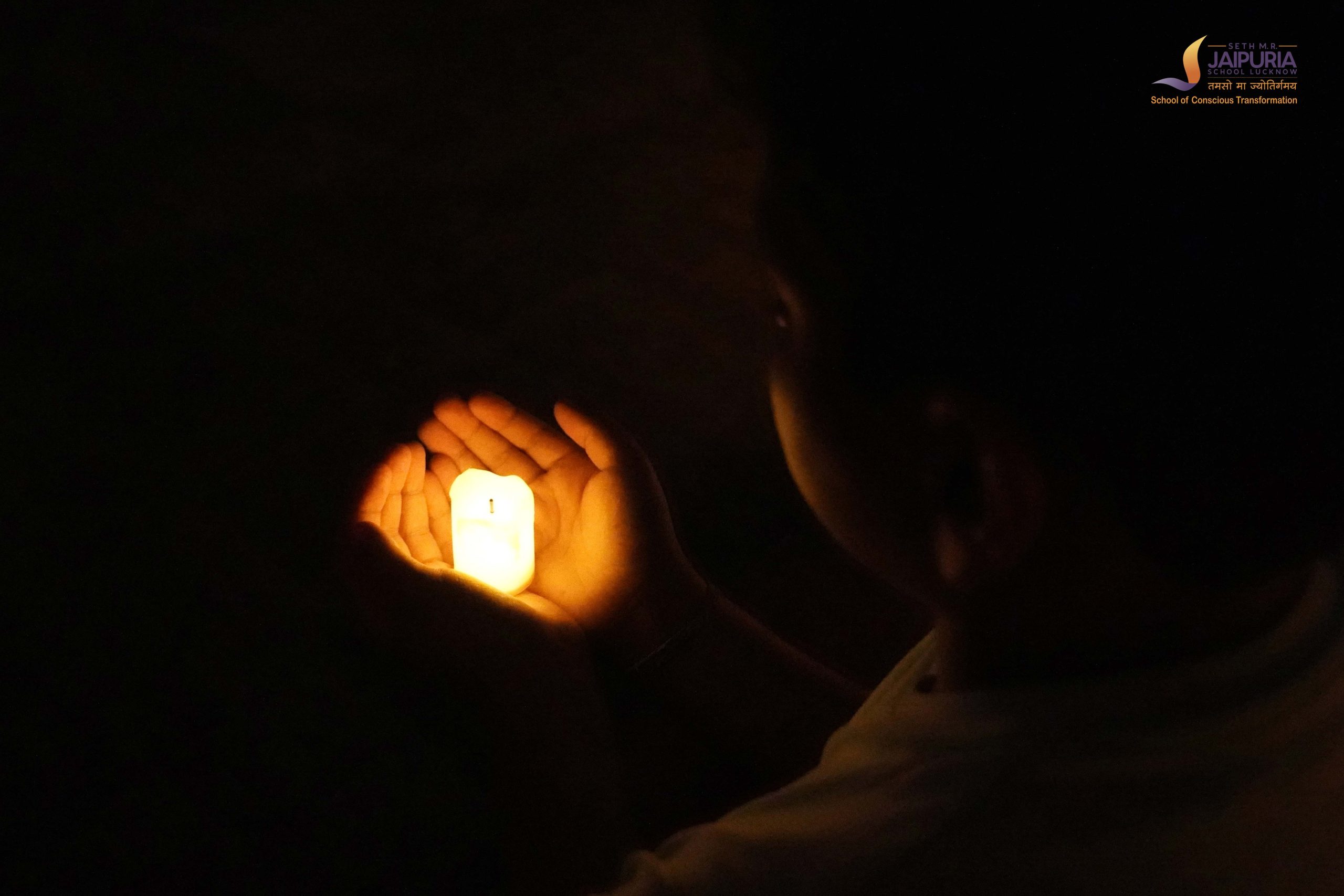
As the evening neared, the “Love Bath,” a guided meditation session led by Principal Promini Chopra Ma’am and teachers, began. Soft strains of The Mother’s music filled the air while rose petals gently drifted down, their fragrance enveloping the auditorium. Each seated before a single candle, the students first focused on its flame, allowing the light to anchor their attention. Then, with eyes closed, they sank into stillness.
After a few minutes, everyone stood and meditated on a chosen passage from Savitri, internalising its mantric resonance. Then they closed their eyes and lay down on the floor. As they rested in silence, petals continued to fall upon them, as if the flowers themselves were blessing each student in their surrender. When the signal to rise was given, they sat at their writing mats and poured their hearts onto paper.
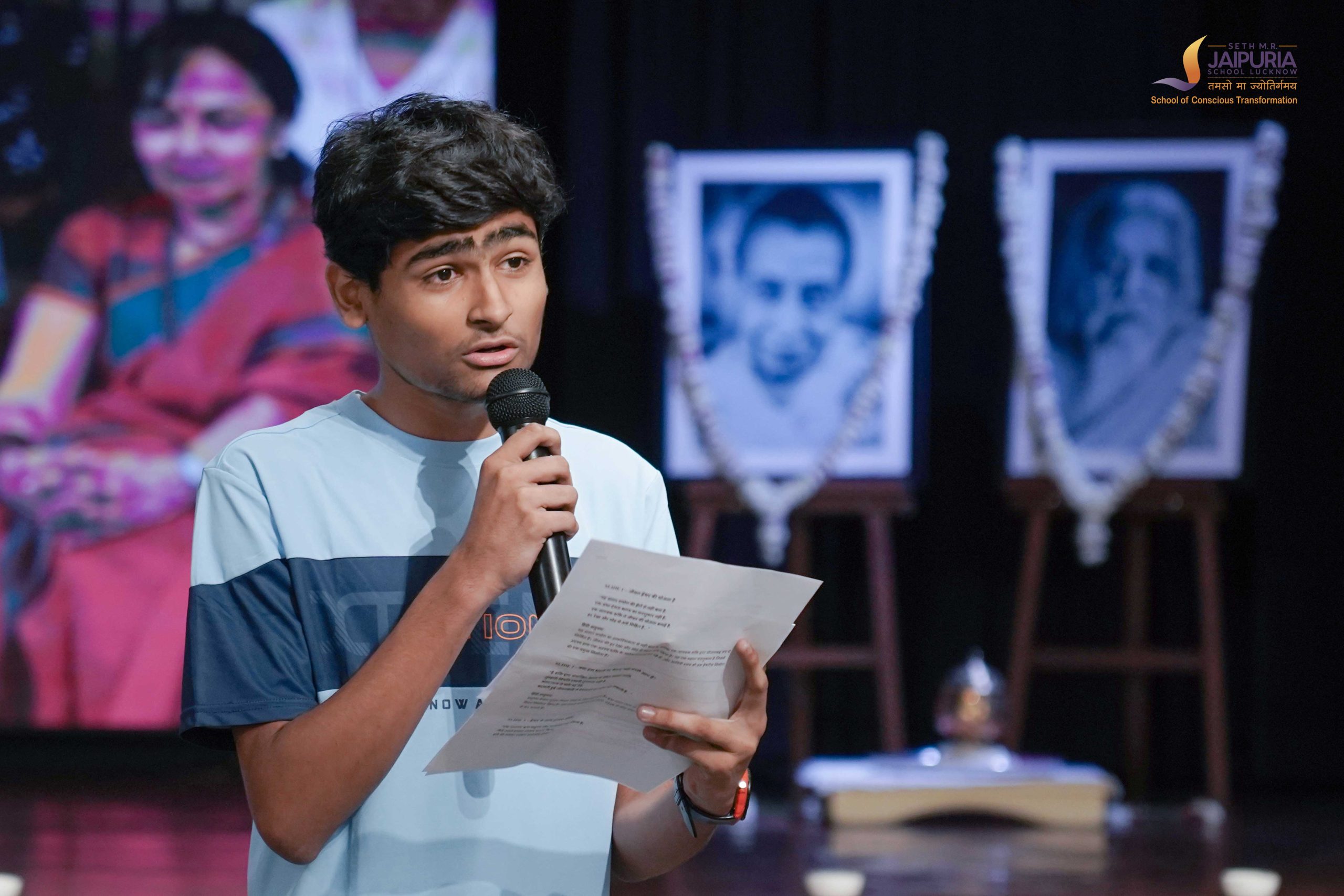
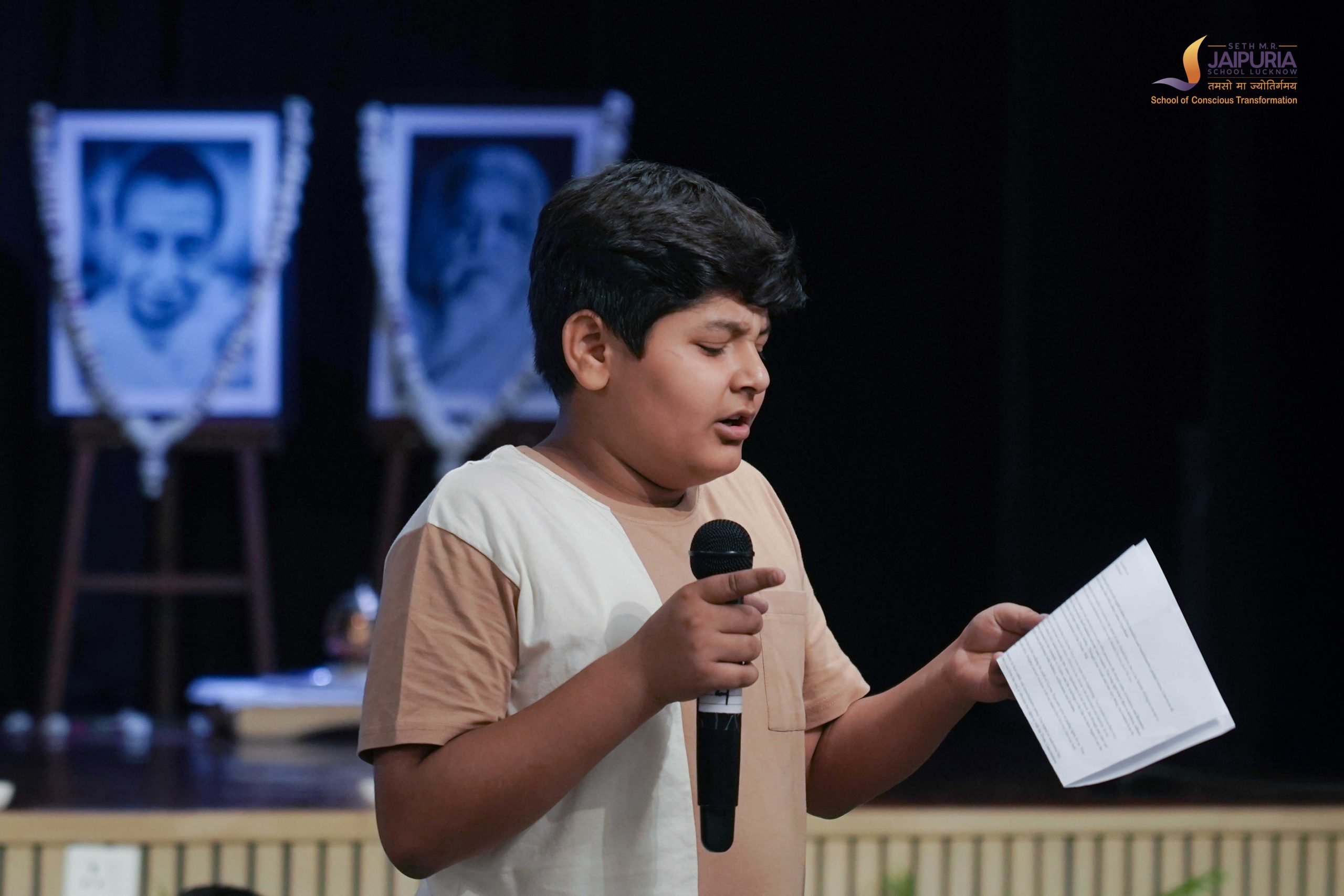
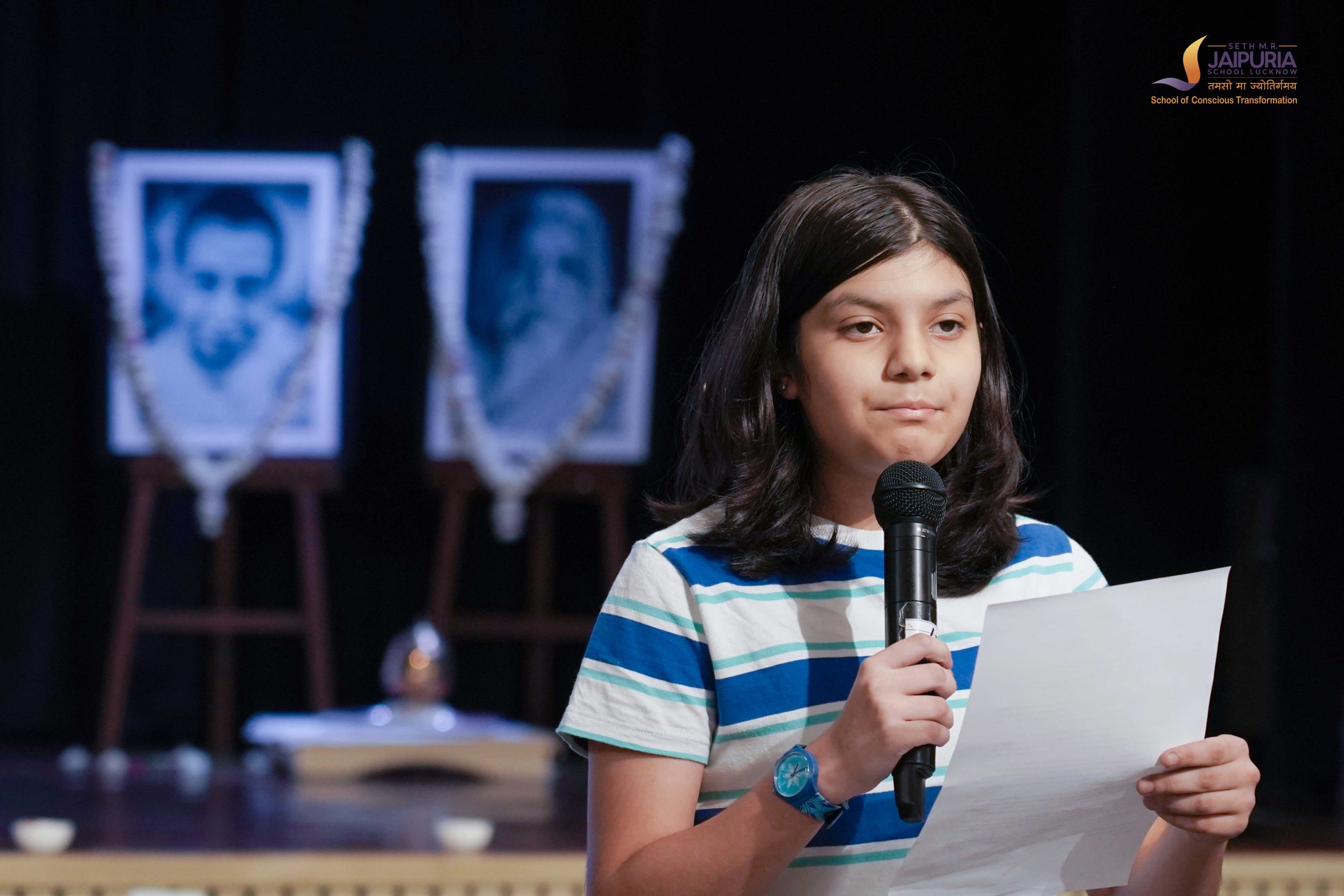
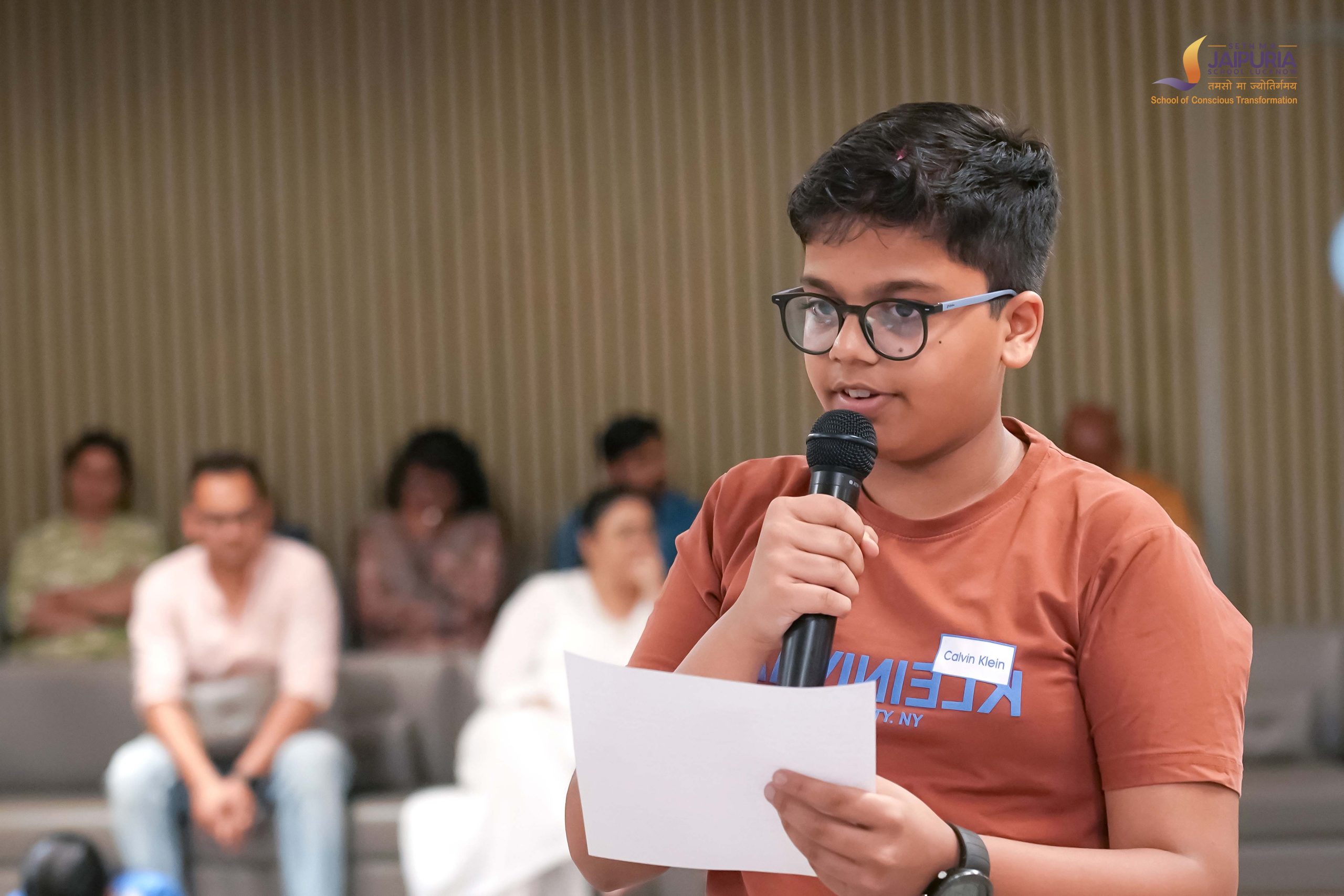
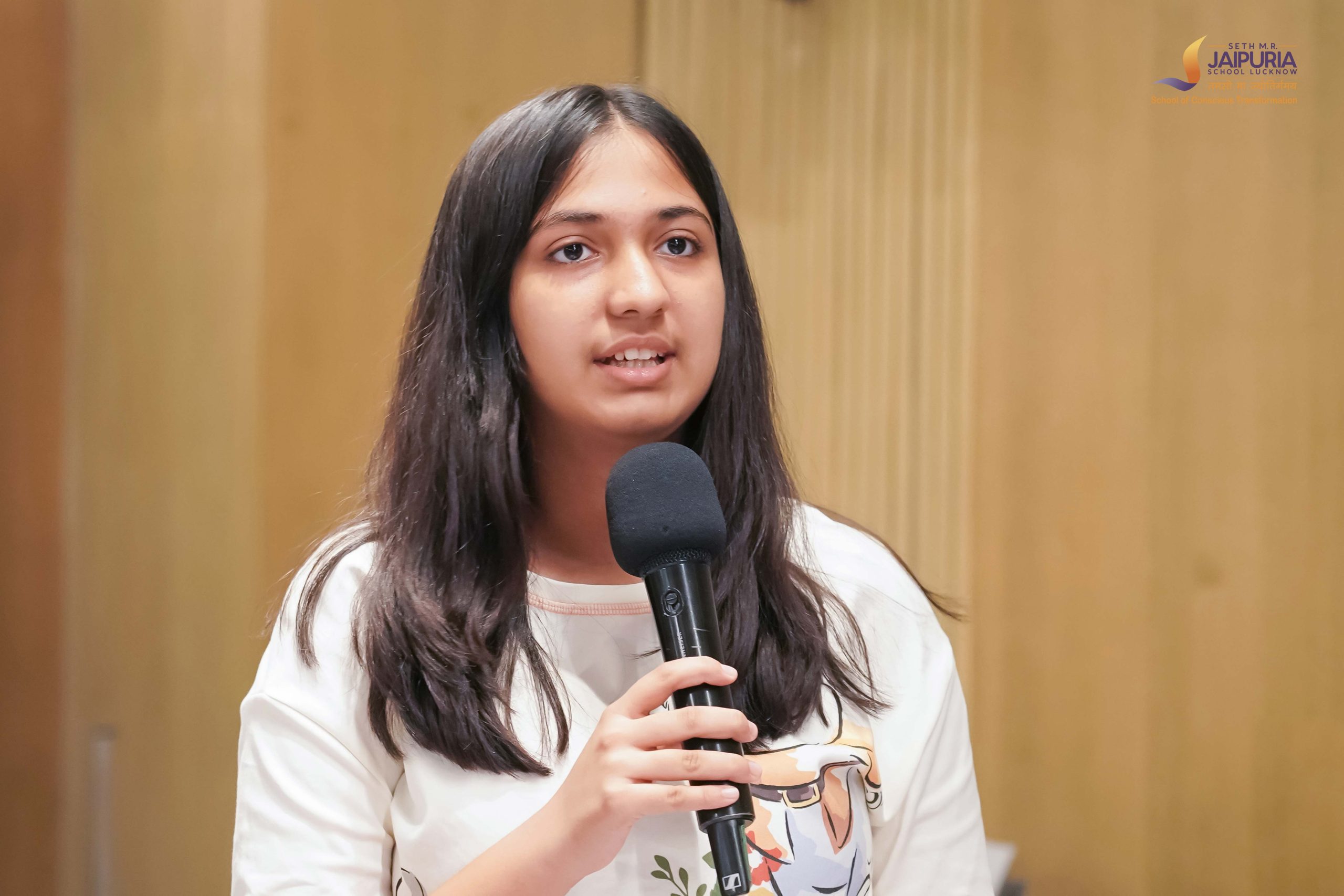
After the meditation, the students composed poems and personal reflections. One child wrote of a dawn-like golden flame awakening in his soul as petals fell around him, capturing the essence of his inner illumination. Another described herself as a lost wanderer who, through Savitri’s words, went on a quest to find a guiding light; her poem was so poignant that it moved everyone to silent admiration.
Following is the poem that she wrote:
Dear lost wanderer,
Have you thought of exploring that cave
Where, covered with darkness,
Alone burns a little white flame?
Have your ears ever heard that flute
Which tickles the core of your closed heart,
Which sings a song sweeter than honey,
Tells you to open that door of silence
And to kick out the tiring thoughts?
Oh, lost wanderer!
Have you ever sunk your head in those
Divine arms of the eternal, arms of that Sachidananda,
Who always welcomes you in raptures which
resides in you — that little spark?
Dear, lost wanderer,
Who walks on the path of being found
like that flame in the dark,
Who expects nothing, offers his all
And is the slave, friend and companion
of that blissful wearer of a peacock’s feather,
Who resides in his heart —
– Sonakshi of Class–10th | Navsrijan
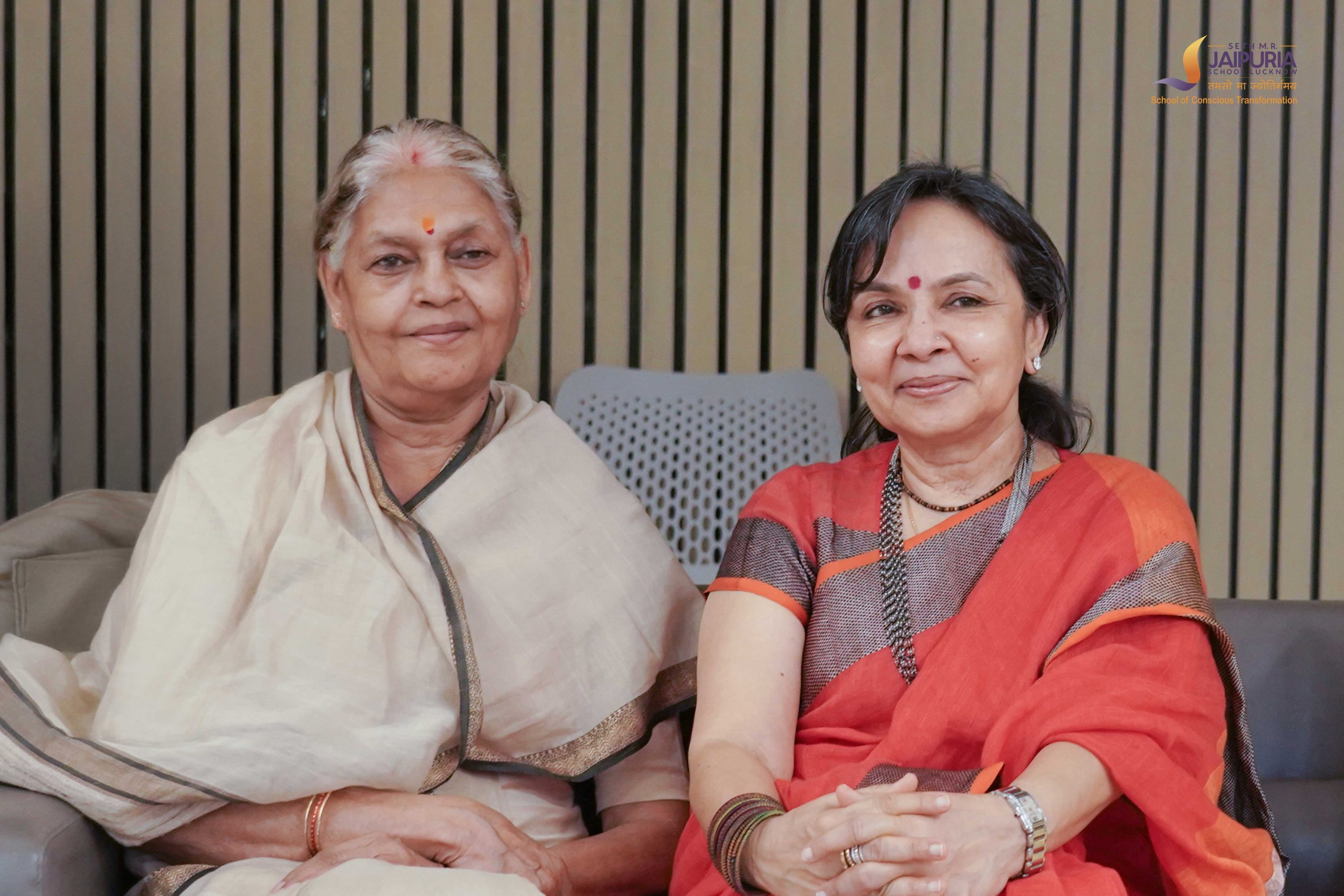
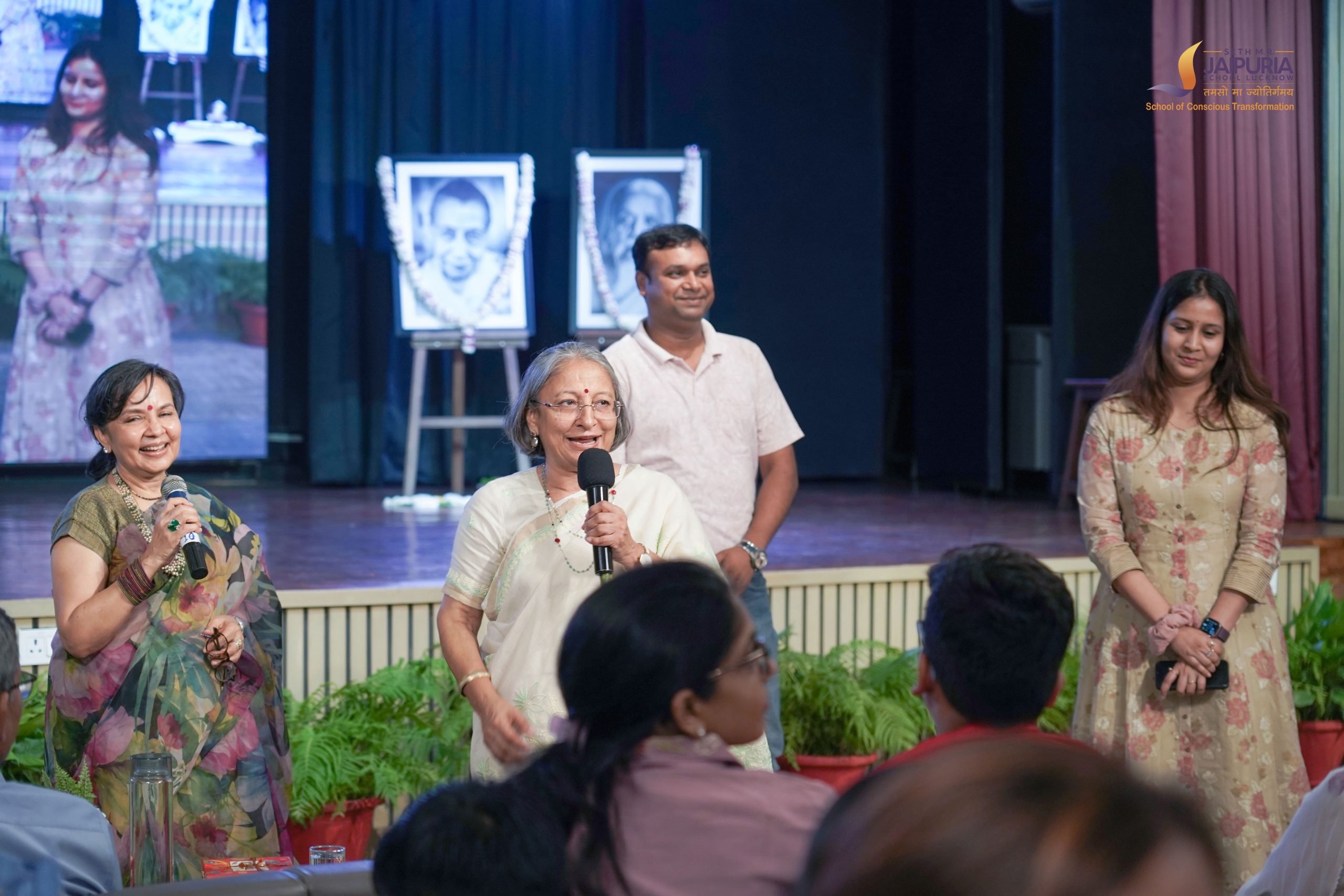
The day closed with a gratitude session where Mrs. Anjali Jaipuria Ma’am, Prof Sampadananda Mishra, Prof Vinod Solanki, Principal Mrs Promini Chopra, and teachers and students offered heartfelt gratitude for the blissful four days of the Spiritual Retreat. As a token of gratitude, each student and teacher received a book by The Mother, titled ‘The Sunlit Path.’
After a day filled with enchanting sessions, the students returned to their rooms and began working on their presentations for the next day.