

Vrikshabandhan Surakshabandhan: A Bond of Care
September 11, 2026
‘Akela chana bhaad nahin phod sakta’: A Conversation about Community Collaboration with Team Hanuman Ansh
September 17, 2026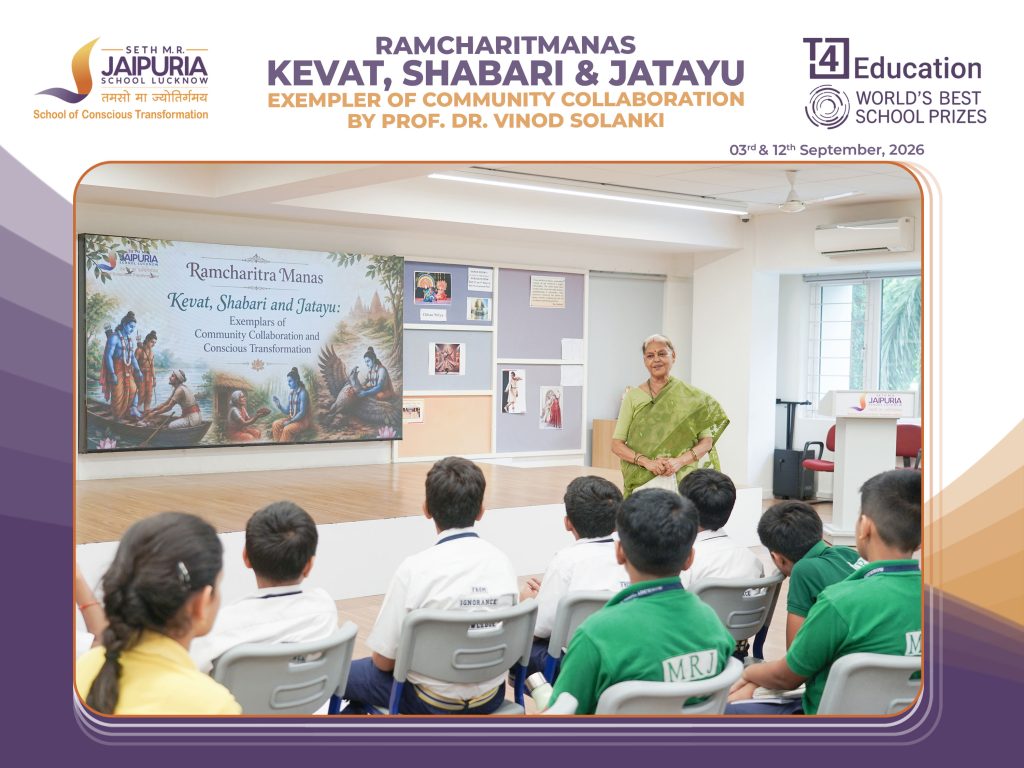
As part of its continued legacy of promoting traditional Indian wisdom and culture, Seth M. R. Jaipuria School organised seminars on Tulsidas’s Ramcharitmanas on 3 September 2026 and 10 September 2026. Prof. Vinod Solanki, former Head of the Department of English, Deen Dayal Upadhyay Gorakhpur University, shared her immense knowledge and insights with a group of young enthusiastic learners. The characters she chose to focus on in these sessions were Kevat, Jatayu, and Shabari from Ramcharitmanas. Kevat and Jatayu were discussed on 3 September 2026, while Shabari was taken up on 10 September 2026. The themes she explored through these characters were community collaboration and conscious transformation. This choice of themes to study follows the School’s recognition by T4 Education among the Top 10 World’s Best School Prizes under the ‘Community Collaboration’ category.
Kevat is a boatman who ferries Lord Ram, Sita, and Lakshmana across the Ganga in Ayodhyakand. Apprehensive about the Lord’s feet touching the boat given his special powers, he requests that he be allowed to first wash Lord Ram’s feet, to which Lord Ram agrees. So Kevat washes Lord Ram’s feet with water filled from Ganga in a vessel. He drinks the water and then calls his entire family and washes Lord Ram’s feet again until everyone drinks the water, which is believed to purify them. Then Kevat requests the opportunity to wash Lord Ram’s feet yet again, which puzzles the Lord since he has already washed his feet thrice. When Lakshman asks the rationale behind it, Kevat replies that this time it will be for the benefit of the entire village. Prof. Solanki underscored Kevat’s commitment to community collaboration through this thoughtful gesture. Not content with taking care of his family and community, Kevat washes the feet of Lord Ram once again in the name of all the ancestors who have not attained liberation, but can achieve it with Lord Ram’s Charanamrita, for such was his goodwill for his broader community in this mortal world and beyond.
Next, Prof. Solanki recounted the story of Jatayu from Aranyakanda and highlighted his devotion and act of selfless sacrifice for a higher cause. As Ravan abducts Sita, unable to bear the mistreatment meted out to a woman, Jatayu intervenes and attacks Ravan repeatedly, wounding him in the process. In order to eliminate the threat of Jatayu, Ravan takes out his chandrahas, a special sword, and cuts off Jatayu’s wings, causing the bird to fall to the ground. But Jatayu’s life purpose is not served yet. Through great determination, he held on to his life and waited until Lord Ram appeared and gave him the message that Ravan had abducted Sita and went in the southern direction. Lord Ram performs Jatayu’s last rites as if he were his own father, symbolising the Hindu tradition’s respect for all living beings, which is beyond an anthropocentric view.
Finally, Prof. Solanki recounted the fascinating story of Shabari, a young tribal girl who grew up in the forest in the Aranyakanda. On learning that the several goats that she lovingly played with were to be sacrificed on her wedding day, she decides to forgo marriage in order to save the lives of the goats. She sets the goats free, after which she herself runs away into the forest. She reaches the Ashram of Rishi Matanga. As Shabari grows older, Rishi Matanga retreats into seclusion and instructs her to wait for Lord Ram, also asking her to tell him to go to Pampa Sarovar. Shabari waits for years devotedly to have the darshan of Lord Ram, and when the day finally arrives, she is an old woman. Lord Ram addresses Shabari as bhamini and praises her for the distinction of possessing the nine forms of devotion.
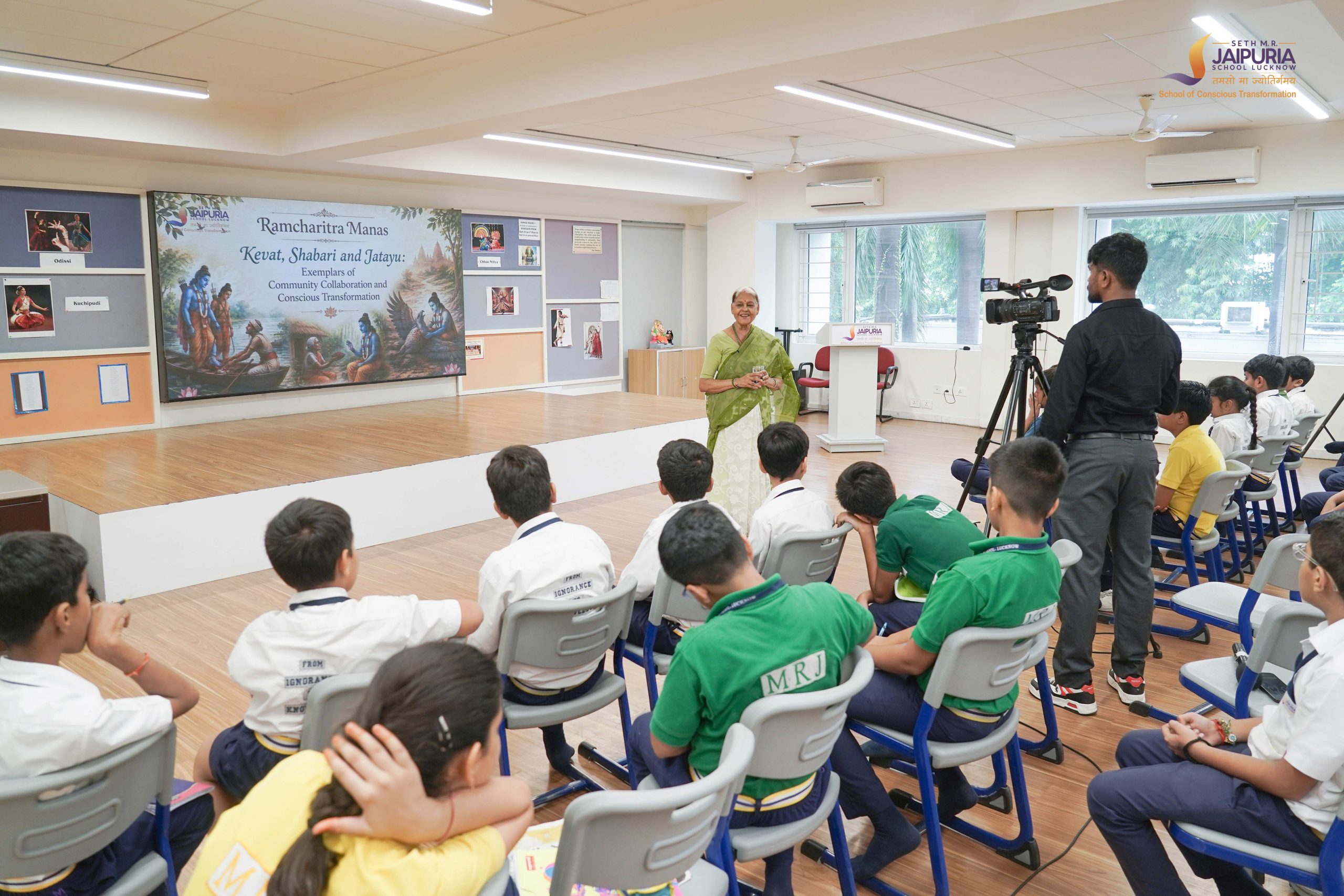
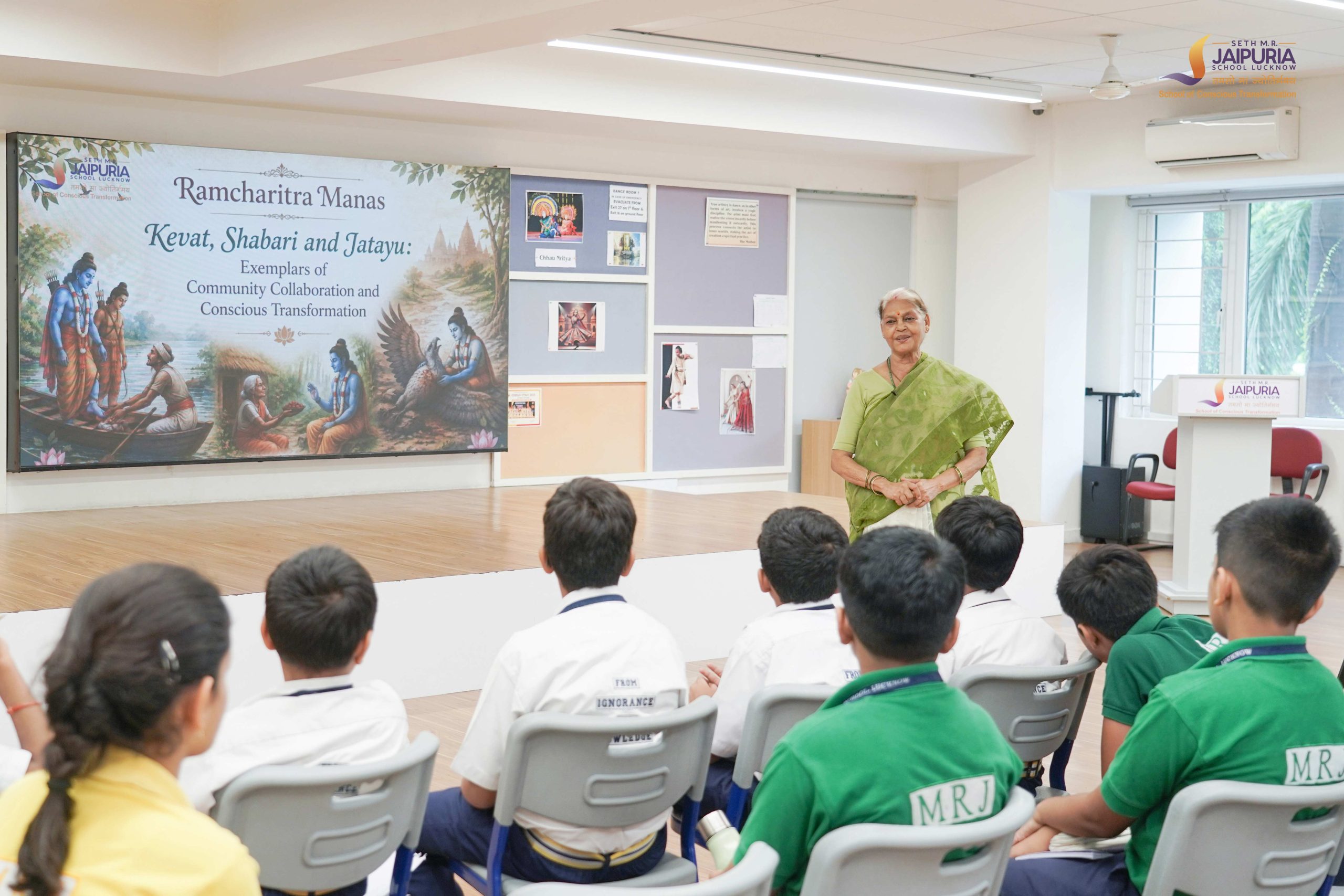
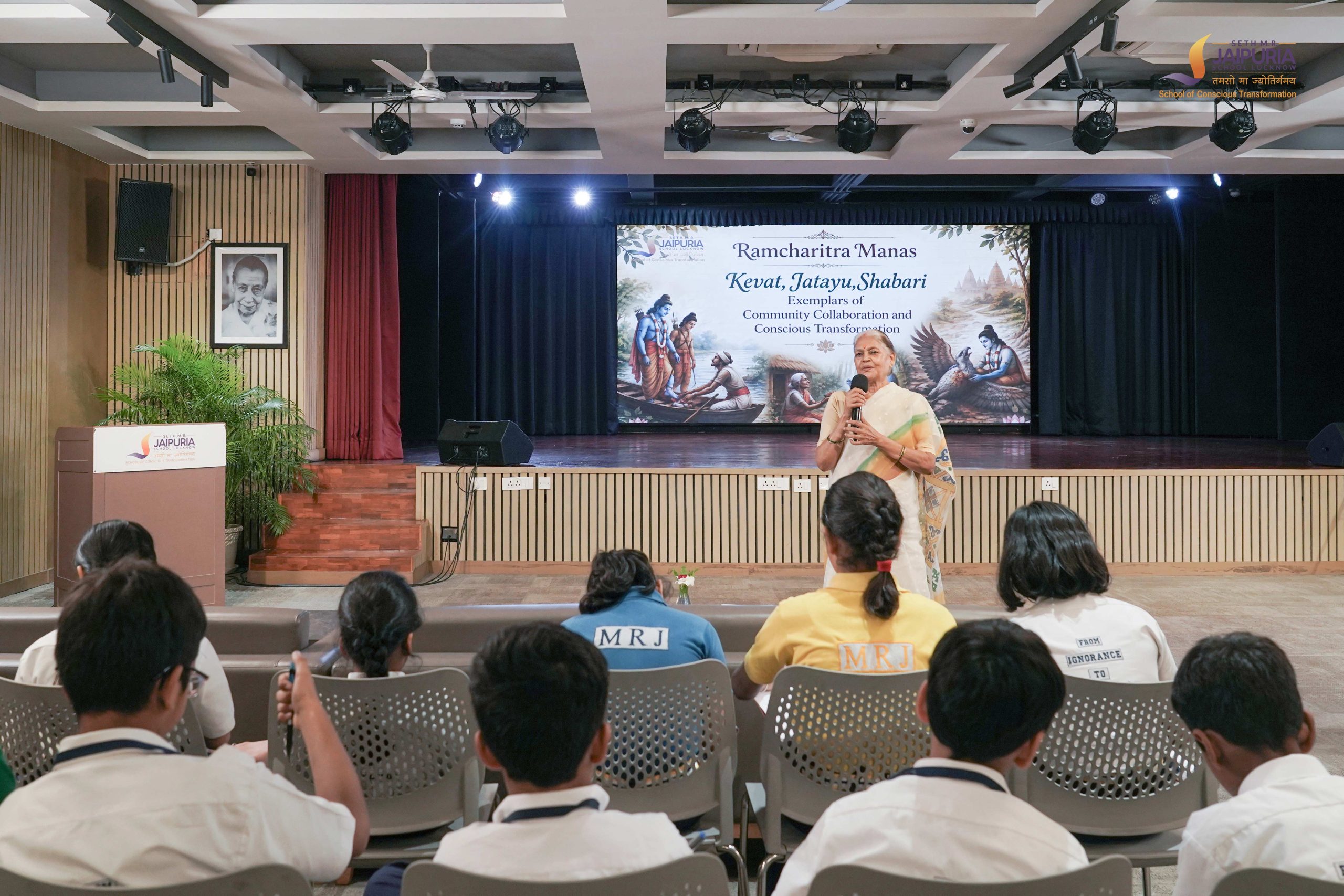
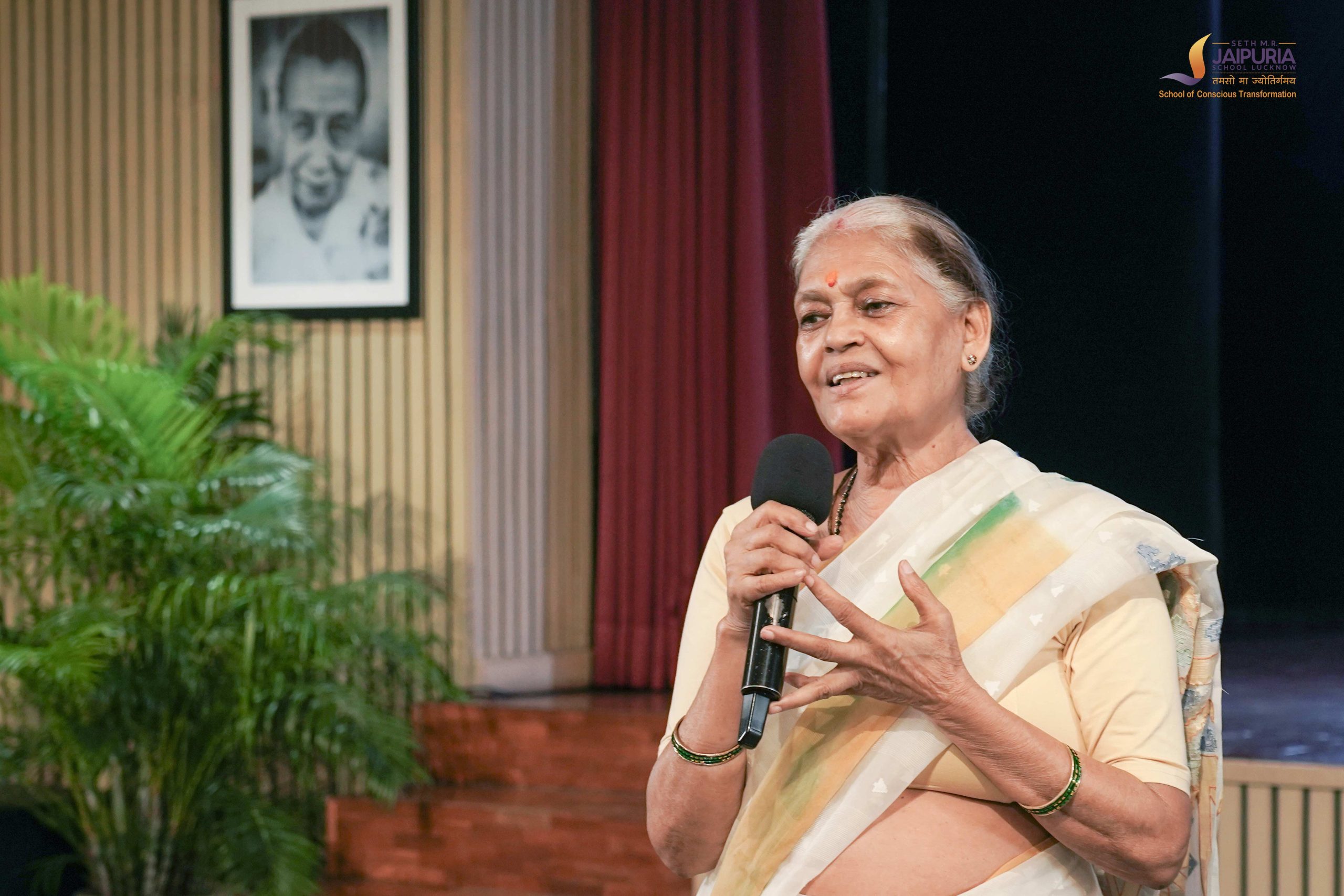
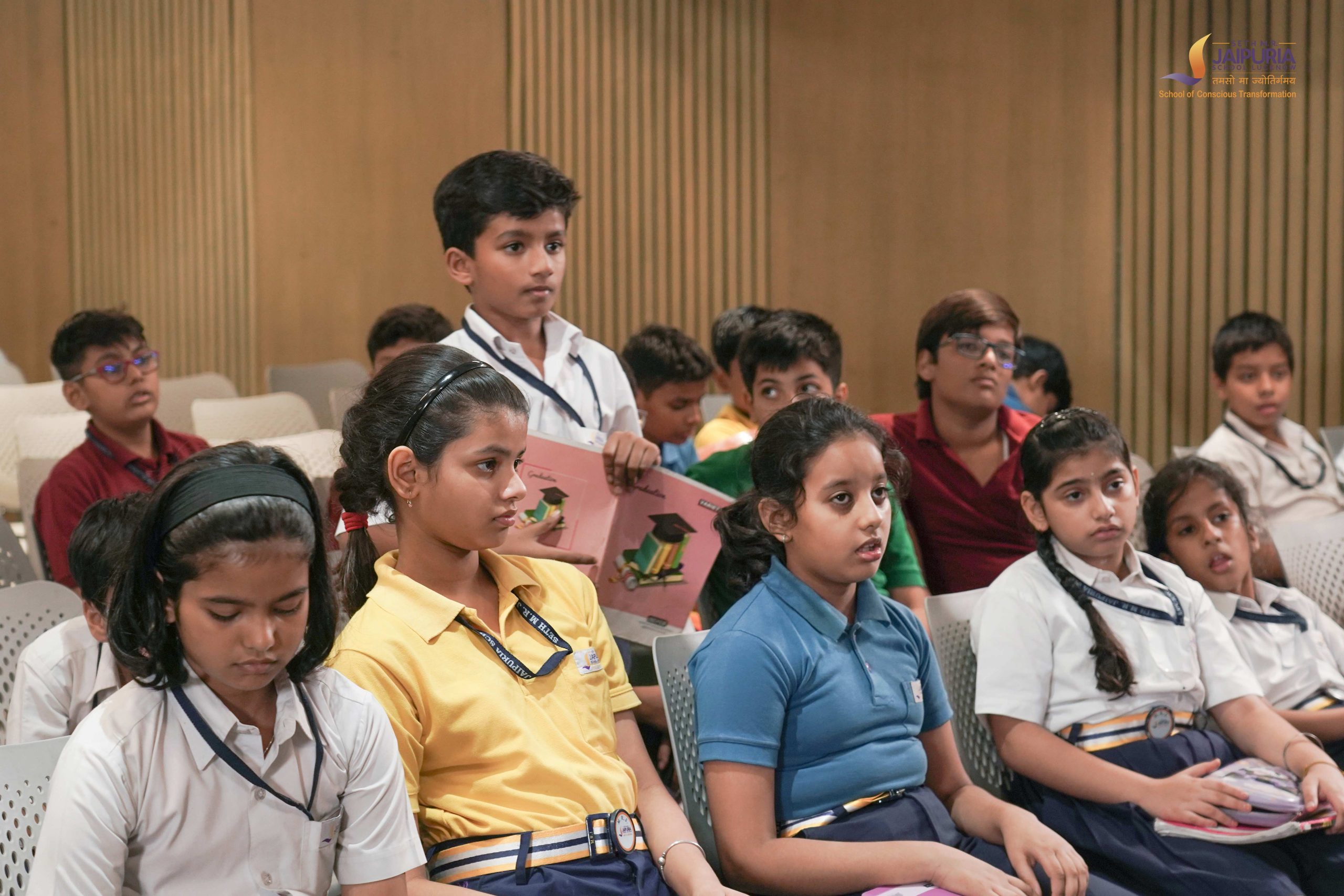
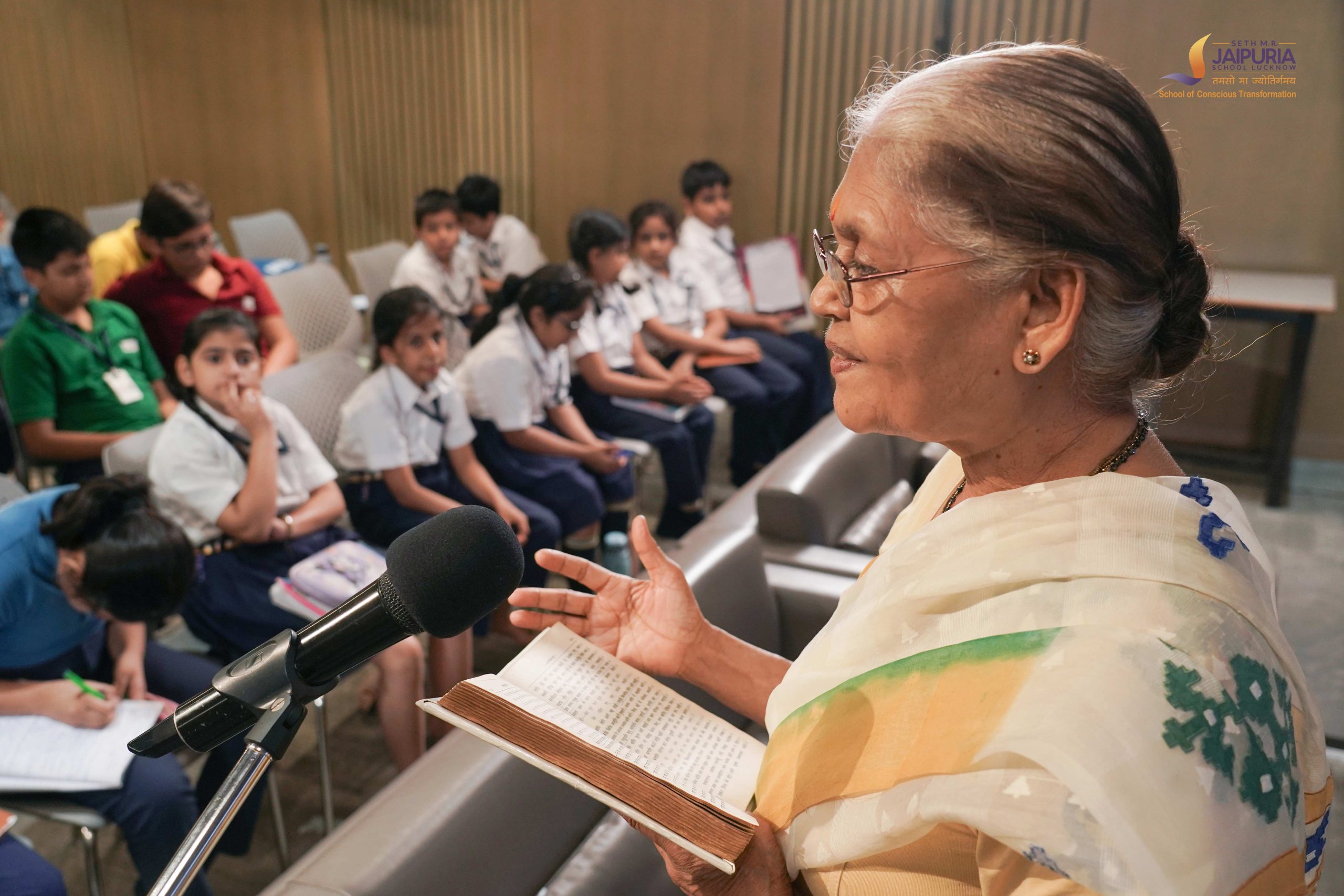
As Prof. Solanki unravelled the stories and its symbolism with her masterful storytelling prowess, the children listened to the stories with rapt attention and asked several illuminating questions. In response to a particularly intelligent question from a student about Ravan fighting the Divine power despite worshipping Lord Shiva devoutly, Prof. Solanki recounted the back story of Ravan and the curse of Sanat Kumara, which deemed that he be born a demon. She explained how Ravan willingly faced his fate of being killed by Lord Ram as a result of the curse so as to liberate himself and undergo transformation. In addition to highlighting Kevat, Jatayu, and Shabari as exemplars of community collaboration and conscious transformation, Prof. Solanki also underscored through the example of these characters the importance of the message of the Mother’s emphasis on having an aim in life that is ‘high and wide, generous and disinterested’. As the session came to an end, so enamoured were they of the stories and the messages they learnt that the eager young learners were left wanting more.