


A Year of Learning and Growth: Senior School Bids Farewell to Session 2025–26
March 17, 2026
A Morning of Rain and Calm at Seth M.R. Jaipuria School
March 23, 2026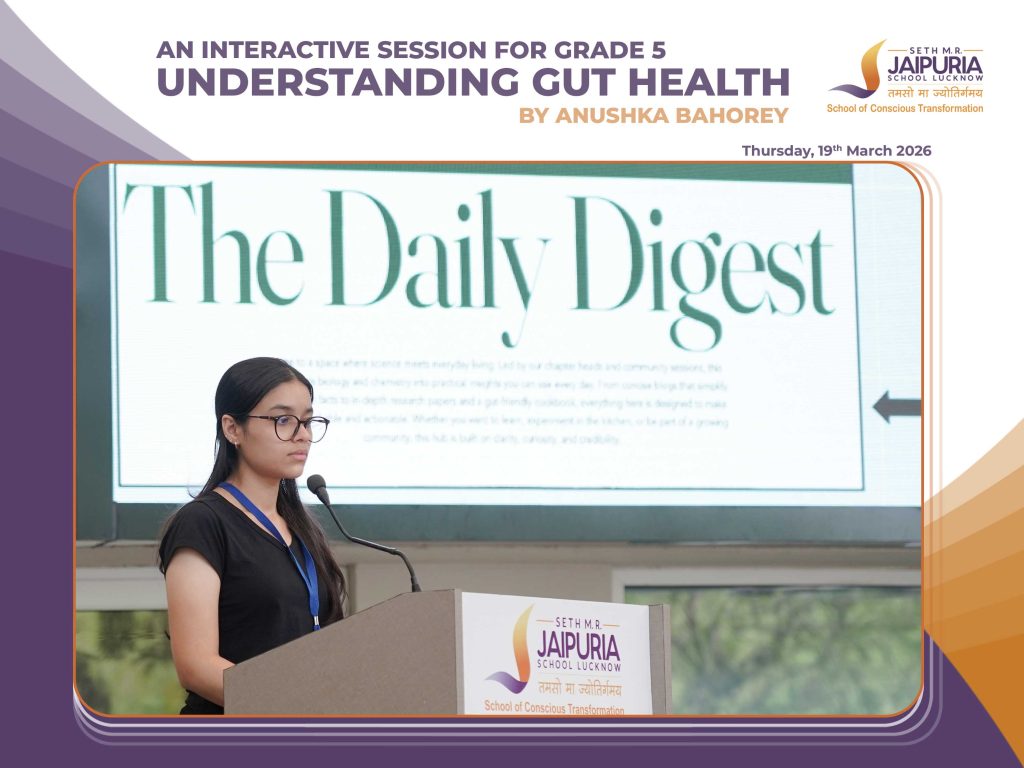
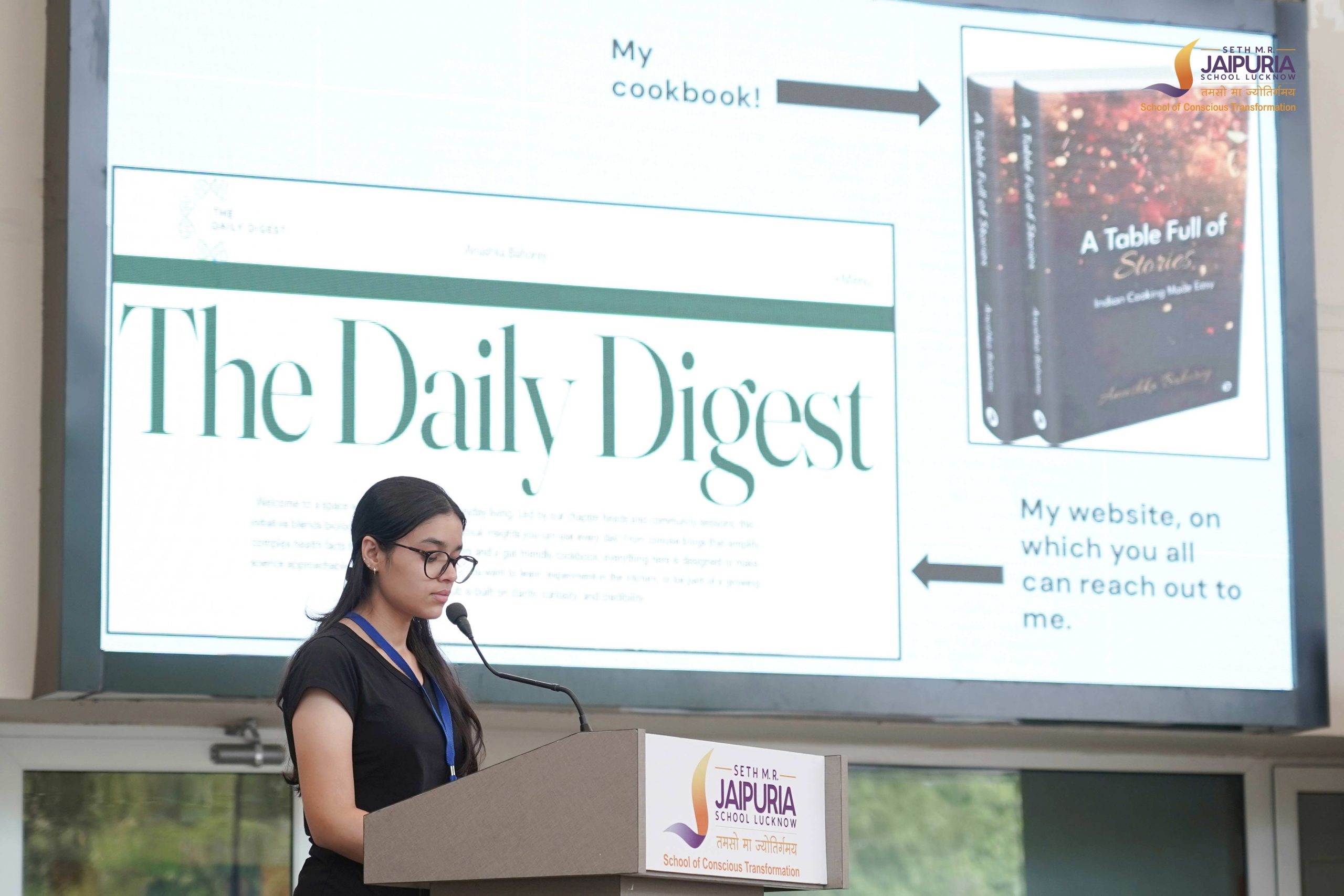
An engaging session on gut health and nutrition was conducted for Grade 5 students, where familiar classroom concepts were connected to everyday habits. Led by Anushka Bahorey, a Grade 11 student from Singapore International School, Mumbai, the session helped students understand how small choices around food and lifestyle play an important role in their overall health.
Anuksha introduced the concept of gut health in simple terms, explaining, “Gut health refers to how your digestive system functions, especially your stomach, intestines and the microorganisms that live inside it.”
Addressing a common misconception about good bacteria, she clarified, “When we hear the word bacteria, we often think it is harmful. But in reality, many bacteria in our gut are essential. They help in digestion, absorbing nutrients and even supporting our immune system.”
One of the key highlights of the session was the introduction of probiotics and prebiotics. Explaining them in a simple way, she said, “Probiotics are the good bacteria found in foods like curd, yogurt and buttermilk, while prebiotics are the foods that feed these bacteria, like bananas, onions, garlic and apples.”






Through a series of questions about food preferences, including fast food, fruits and vegetables, the session encouraged students to reflect on their own choices. She explained, “Healthy food does not have to be boring. Many Indian ingredients and spices like jeera, ginger and turmeric are both tasty and beneficial for digestion,”
She also highlighted that health is not limited to food alone. “It does not only depend on what you eat, but it also depends on how much you sleep, how you feel and your daily habits. All of this affects how your body functions.”
To make the session more reflective, students were given a short survey to fill out. The questionnaire included simple prompts about their eating habits, such as how often they eat fruits and vegetables, consume sugary drinks, or eat fast food during the week. This activity encouraged students to observe their own patterns and become more conscious of their daily choices.
Additionally, students were introduced to a gut health tracker, where they could record their meals and note how they felt after eating. Explaining its purpose, she said, “You can write what you ate, whether it was healthy or junk food, and how your stomach felt after eating it. This will help you understand your habits and make better choices.”
Through interactive discussion, relatable examples and practical activities, the session helped students understand the importance of gut health in a way that was both engaging and easy to apply in their daily lives.