

International Day Against Drug Abuse: Raising Collective Consciousness Through Informed Youth Action
June 30, 2025
CISCE Zonal Handball Tournament
July 1, 2025
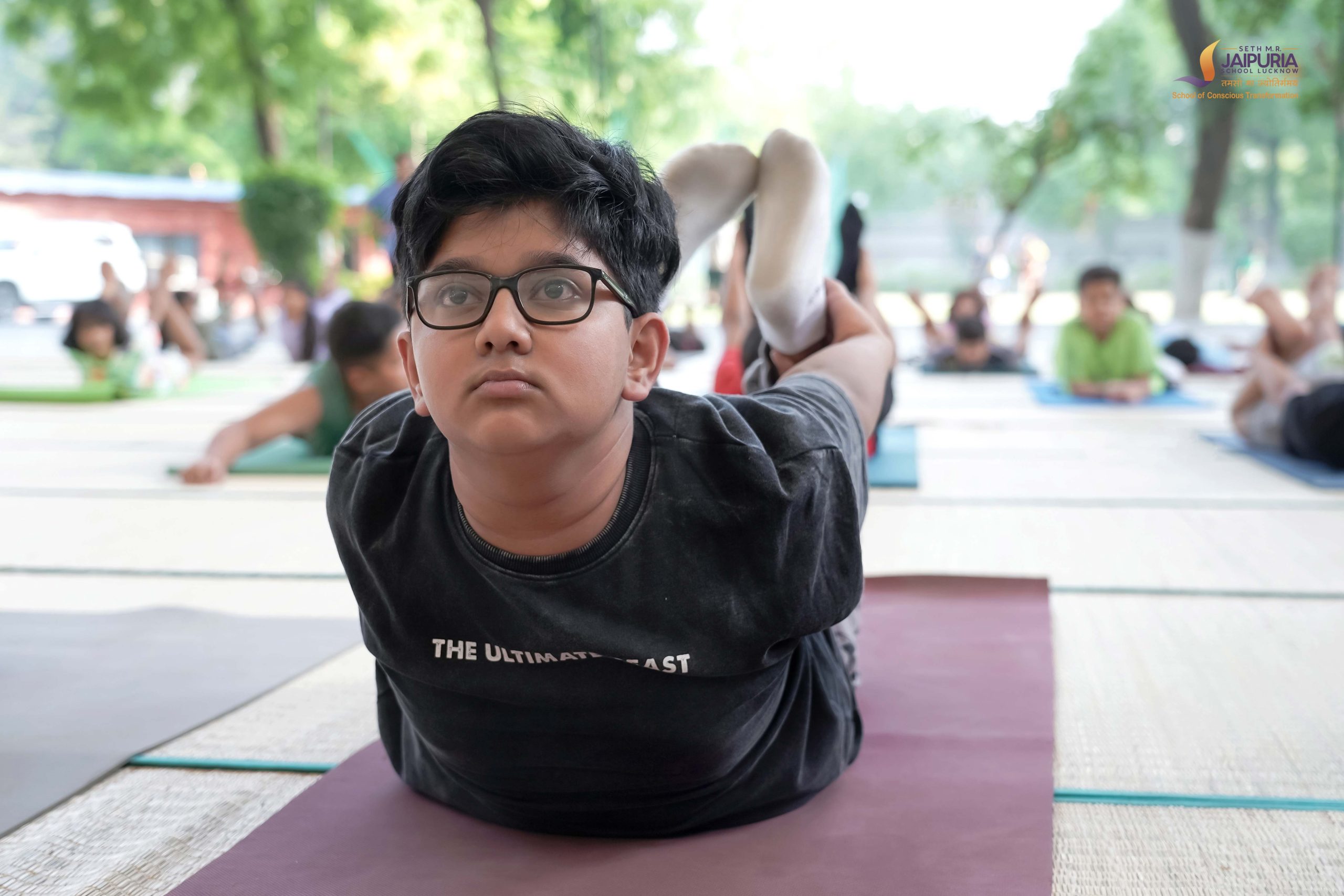
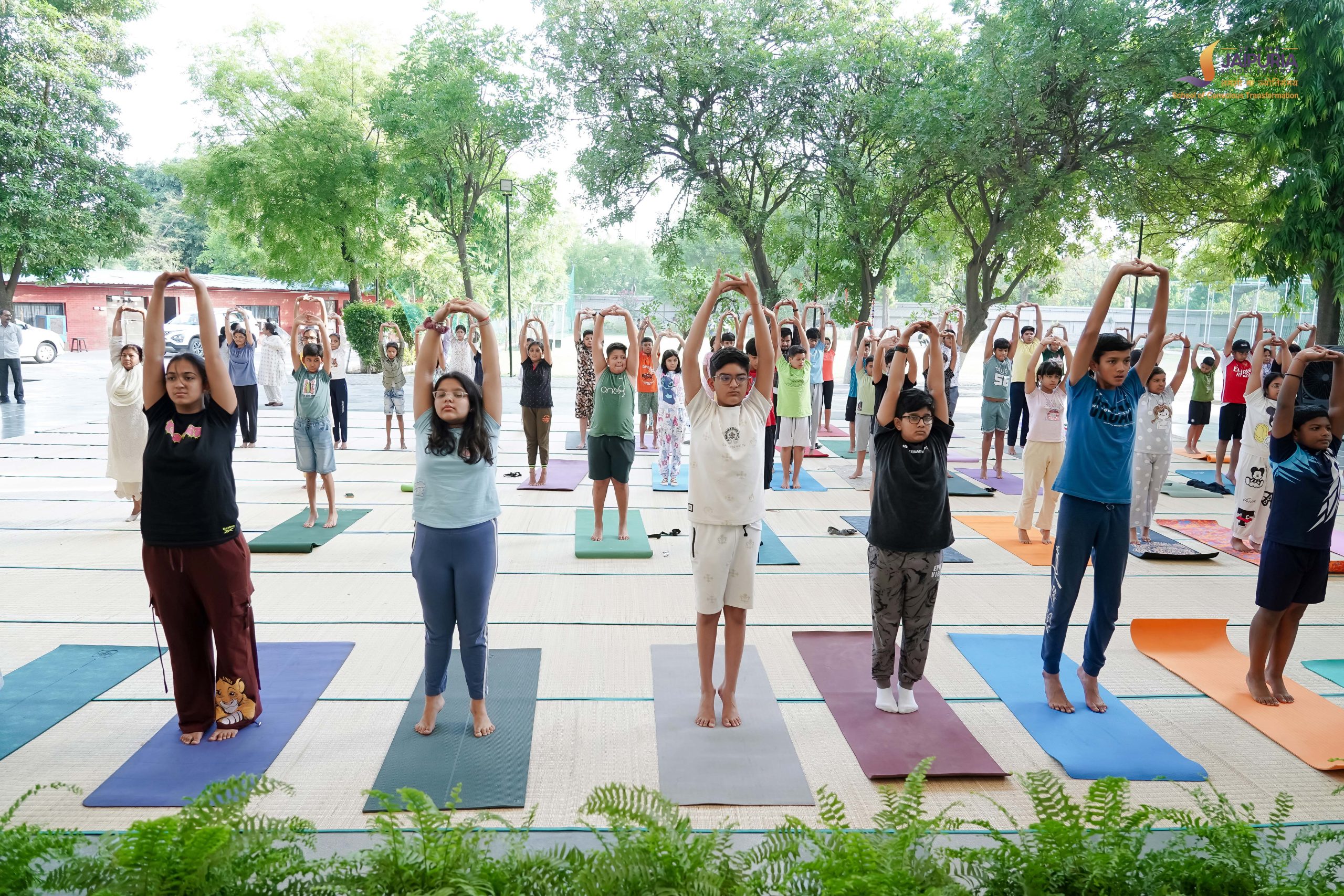
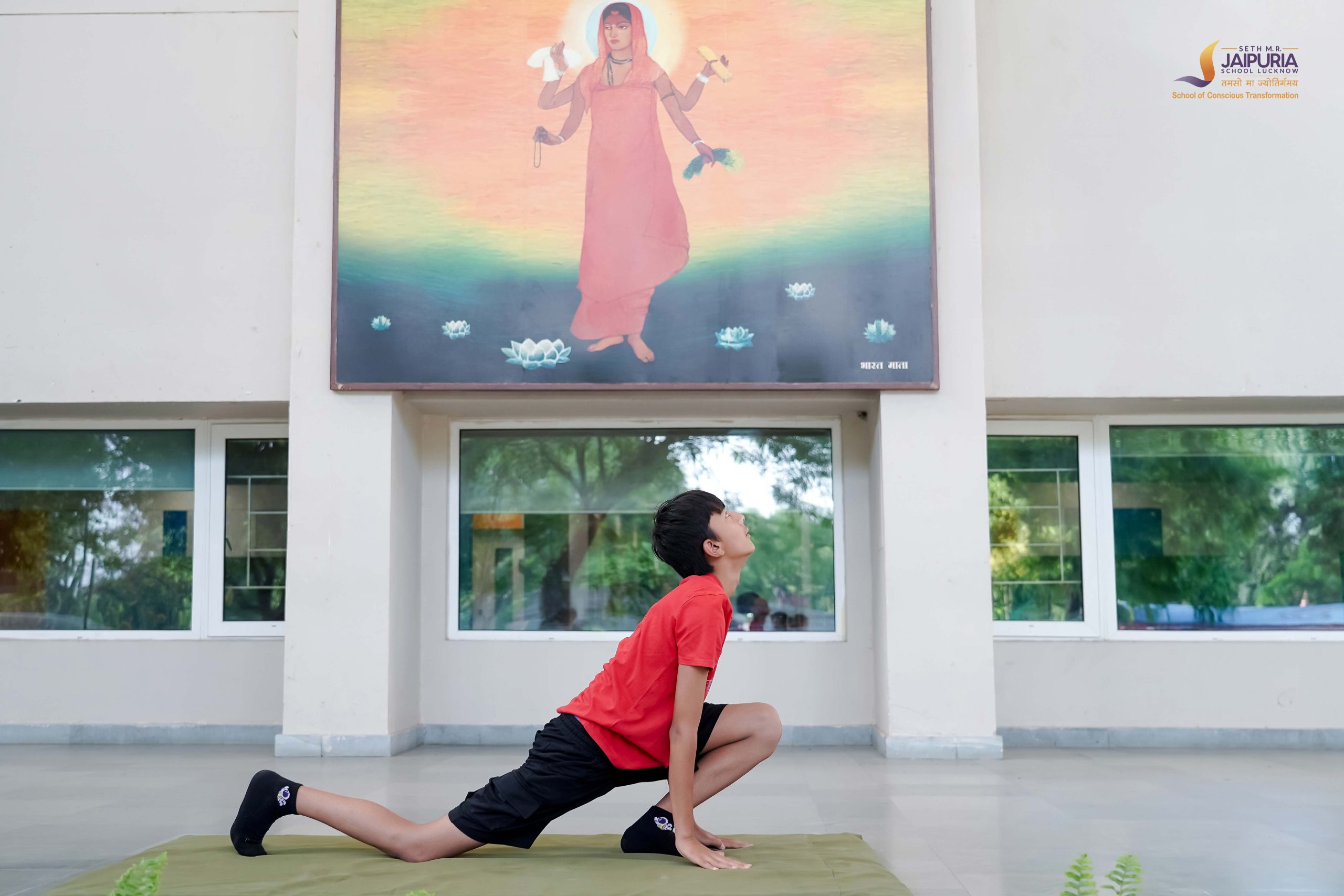
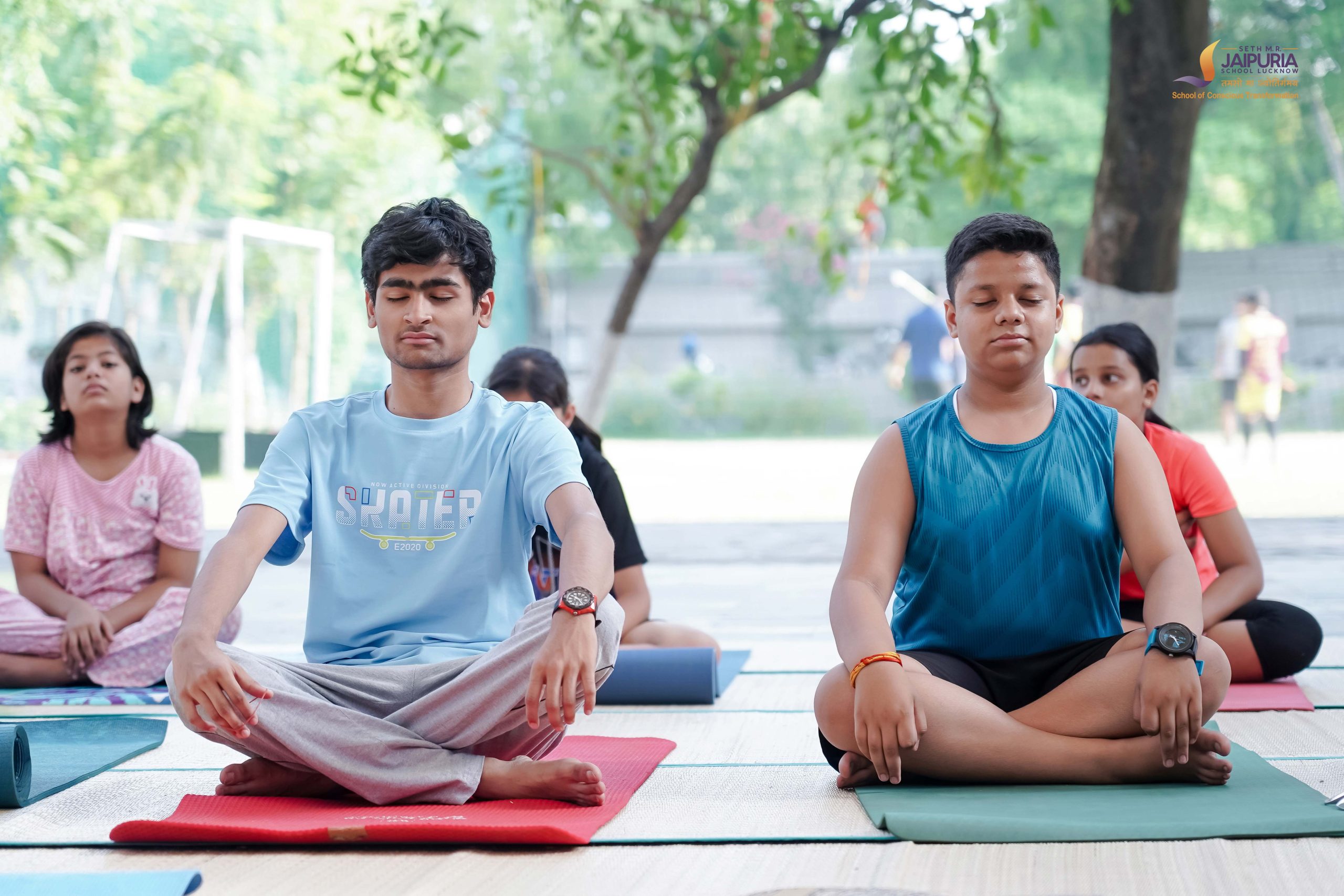
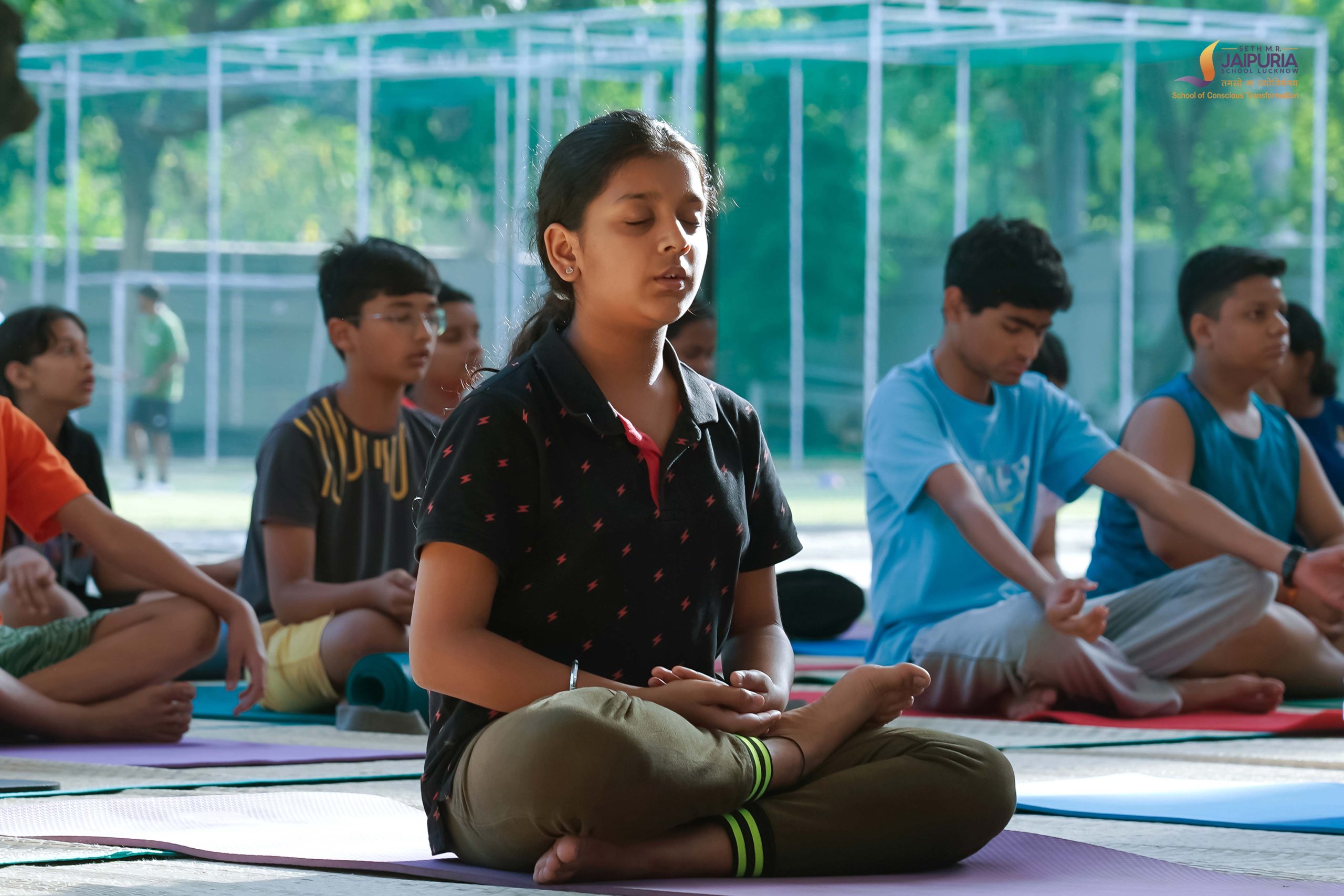
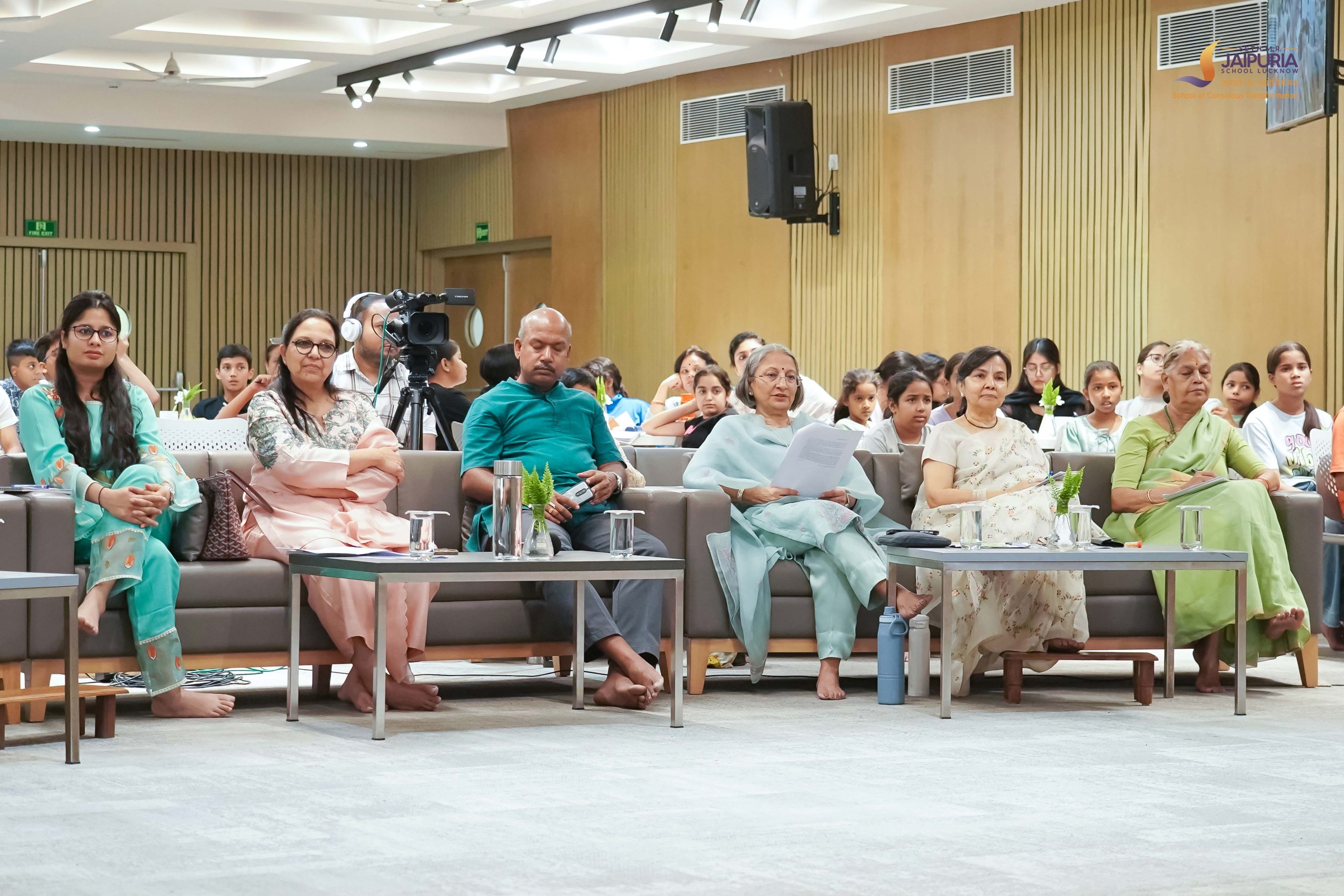
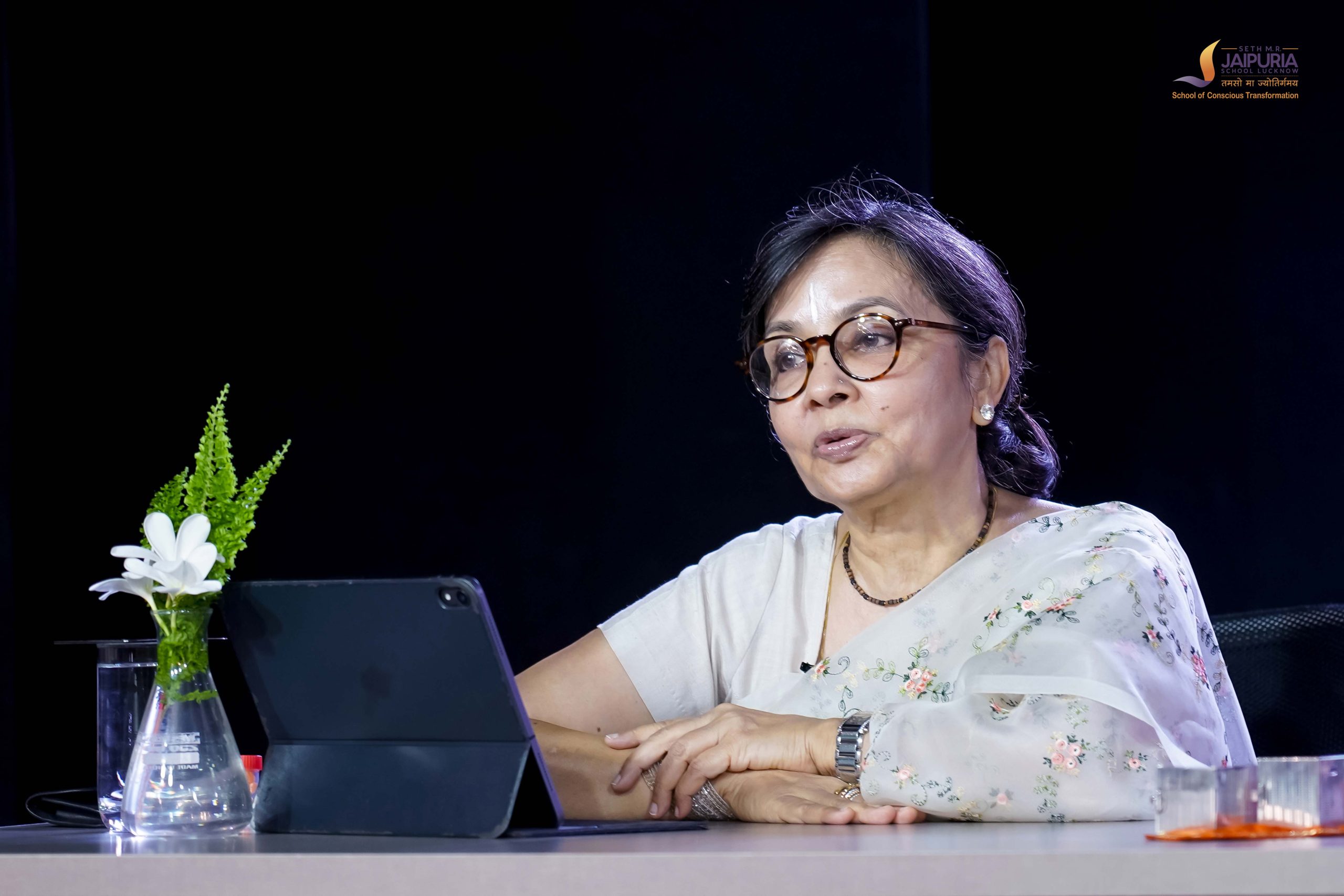
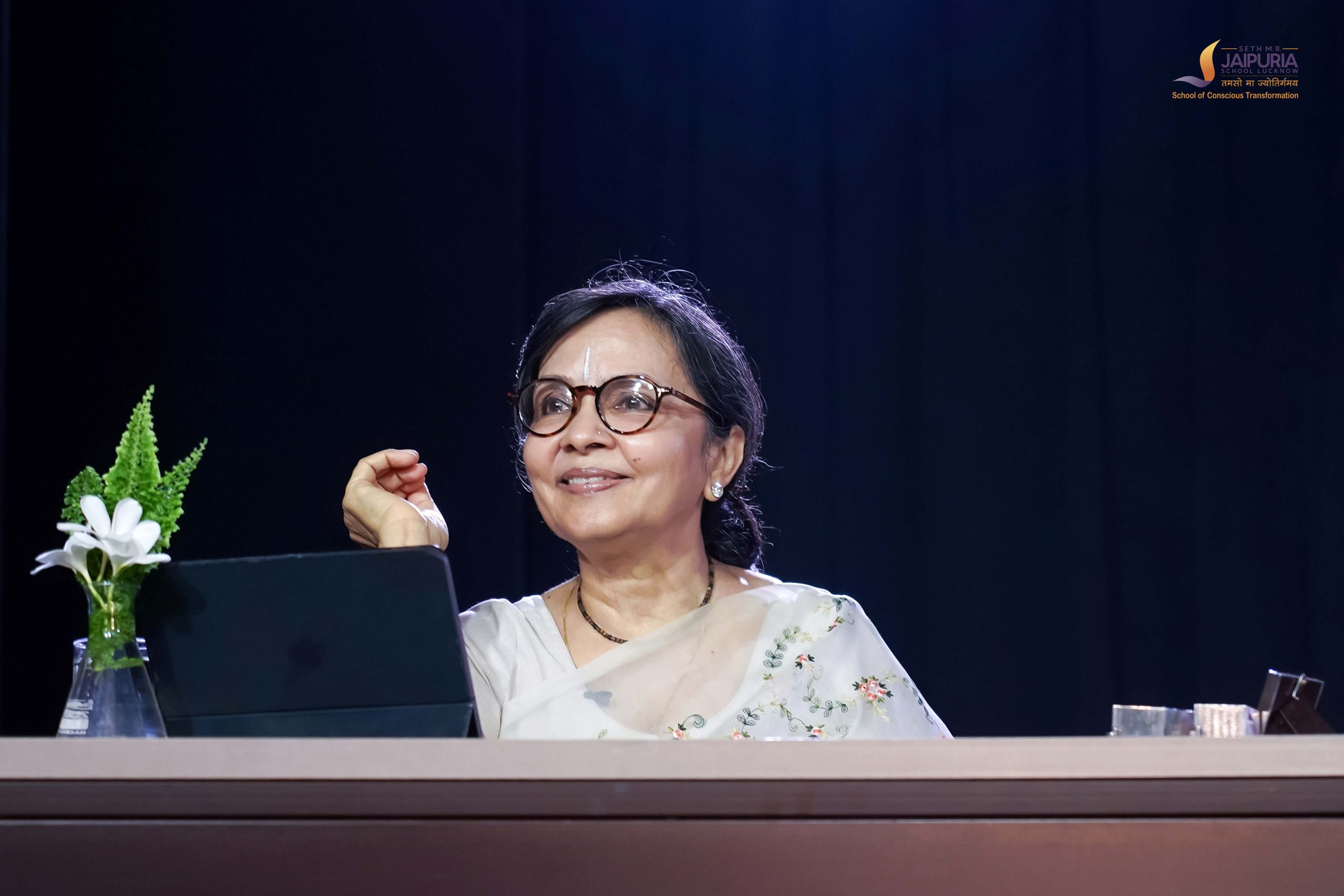
The third day of the Spiritual Retreat centred on the sacred text of the Bhagavad Gita. After an enriching Hatha Yoga session and meditation at the School Temple, students sought the blessings of the Divine. Following a healthy breakfast, they gathered for an insightful session titled ‘A Journey from Karma to Karma Yoga,’ conducted by our esteemed Vice Chairperson, Mrs Anjali Jaipuria.
Mrs Jaipuria began her enlightening session by drawing the audience into the timeless journey from Karma to Karma Yoga—a path that transforms ordinary actions into spiritual practice. With a warm tone, she explained that the essence of this journey lies in understanding the nature of Karma—our actions—and learning how to elevate them through the principles of Yoga, specifically Karma Yoga, which emphasises selfless service, pure intention, and Divine surrender.
Welcoming her audience into this profound exploration, she emphasised that understanding the true nature of Karma and how to elevate it through Karma Yoga is essential for spiritual evolution. As she eloquently put it, “Karma Yoga is about turning our actions into a sacred act, a worship, a Divine offering.”
Drawing from the Bhagavad Gita, Mrs Jaipuria explained that Lord Krishna’s counsel to Arjuna was not merely about warfare but about reorienting our approach to life’s duties. She noted, “Even the most seemingly wrongful acts can become Divine, perfect, and sinless if we do them as offerings to the Divine—without ego, desire, or attachment.” In essence, Krishna’s teaching redefines duty as spiritual practice when performed with the right attitude.
She highlighted the key prescription for transforming Karma into Karma Yoga: three simple yet powerful steps she called “Remember, Offer, Invite.” She explained, “Whenever you do something, first remember the Divine within you, then offer your action to Him, and finally invite Him to be present in whatever you are doing. This is the magic that turns an ordinary deed into a Divine act.”
Mrs Jaipuria stressed the importance of preparation before practising Karma Yoga, introducing four essential requisites. “First,” she said, “we must develop constant awareness of the Divine’s presence within us. It’s as if, inside, there’s a Divine altar that we must regularly keep lit.” She continued, “Next, we cultivate equanimity—remaining even-minded through success and failure—because true yoga is in staying balanced amidst the storms of life.”
She added, “Third, we develop skillfulness—doing our duties with full competence and dedication—‘योगः कर्मसु कौशलम्,’ as the sages say.” Finally, she emphasised, “Our mental faculty must be sharp enough to discern right from wrong, good from bad—this is the power of the sattvik mind.”
She beautifully summarised these steps: “Be constantly aware of the Divine’s presence, maintain equanimity, act skilfully, and discriminate wisely. When these are in place, your actions become a worshipful offering—a true Karma Yoga.”
She then shared how offering our every action to the Divine requires humility and surrender. “In all our movements, we must prepare an internal altar of sacrifice,” she said. “With genuine humility, we tell the Divine, ‘My desire is this, but let Your will be done.’” Quoting her own words, she explained, “In that moment, the sense of doership slowly dissolves. When we repeatedly call on the Divine, our actions naturally flow as His Divine will.”
Addressing doubts and practical concerns, Mrs Jaipuria responded to questions with great clarity. When asked, “How do we remember to offer our actions continuously, especially when faced with challenges?” she replied, “It begins with a simple practice—every morning, set an intention: ‘Let my actions today be a Divine sacrifice.’ As you progress, this remembrance becomes natural, like a habit. Also, keep reminding yourself: ‘God resides within me. I am His instrument.’”
On the question of mistakes, she reassured, “We are all learners. The Divine understands our sincerity, errors should be used as lessons for growth.”
When asked about motivation, Mrs Jaipuria replied, “Perform your duties with love for the Divine. When your actions are rooted in Divine love, your motivation remains pure—joyful, selfless, and unwavering. Remember, ‘Yogah karmasu kaushalam’—skillfulness in action is yoga.”
She emphasised that the essence of Karma Yoga is not suppression of desires but their sublimation through Divine consciousness. Her concluding message was: “When we act for the Divine, our karma becomes a path to liberation. Life then becomes a beautiful symphony of love, devotion, and service.”
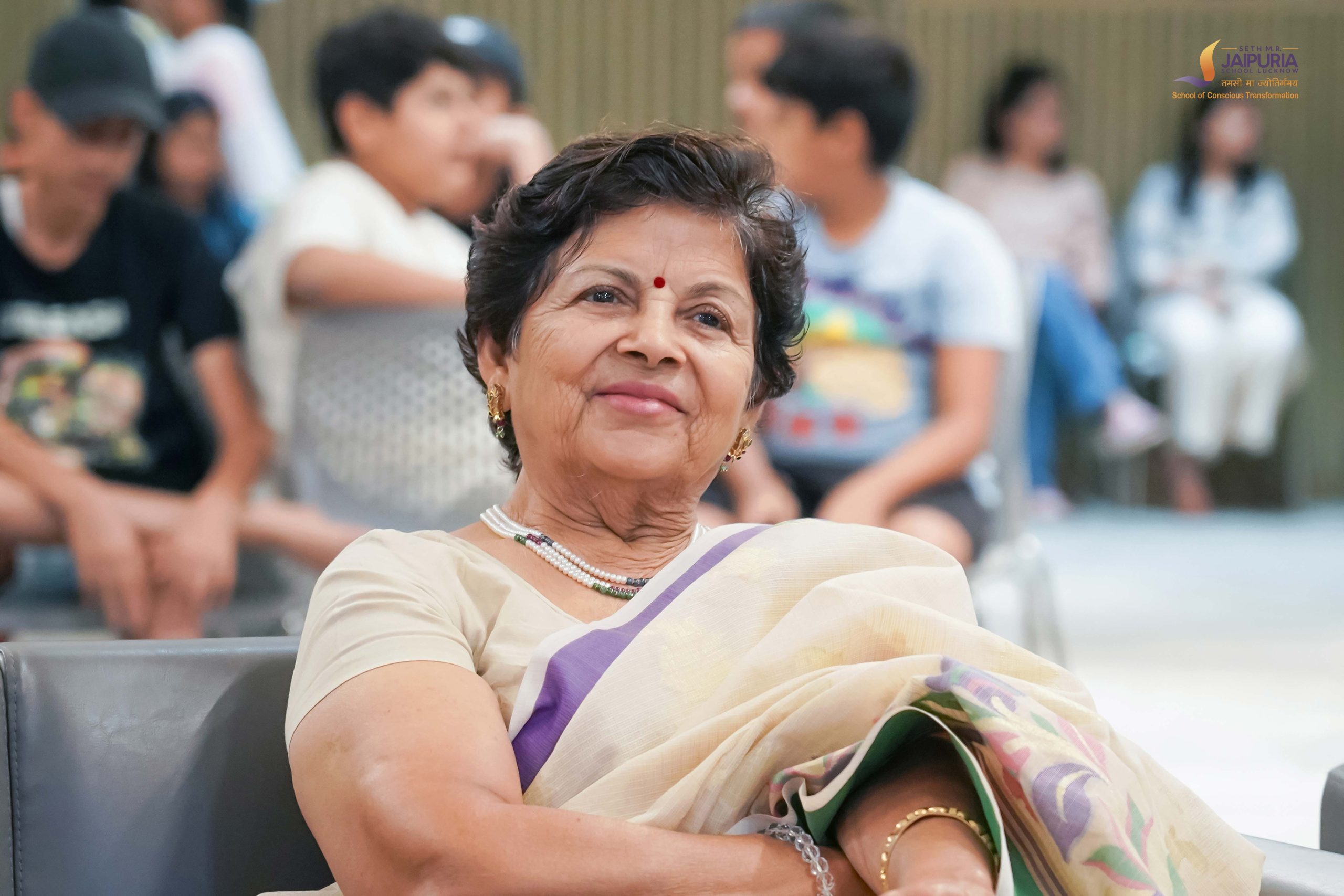
After this enchanting session, students sat silently as they ate their lunch meditatively. After a short break, they once again gathered in the auditorium. The hall was filled with echoes of bliss as Mrs Pragya Mishra, our Music Teacher, along with the Sanskrit teachers, sang the Vishvarupam Darshana Stuti—a song from the Bhagavad Gita. Joining them, Anjali Ma’am and the students sang in harmony.
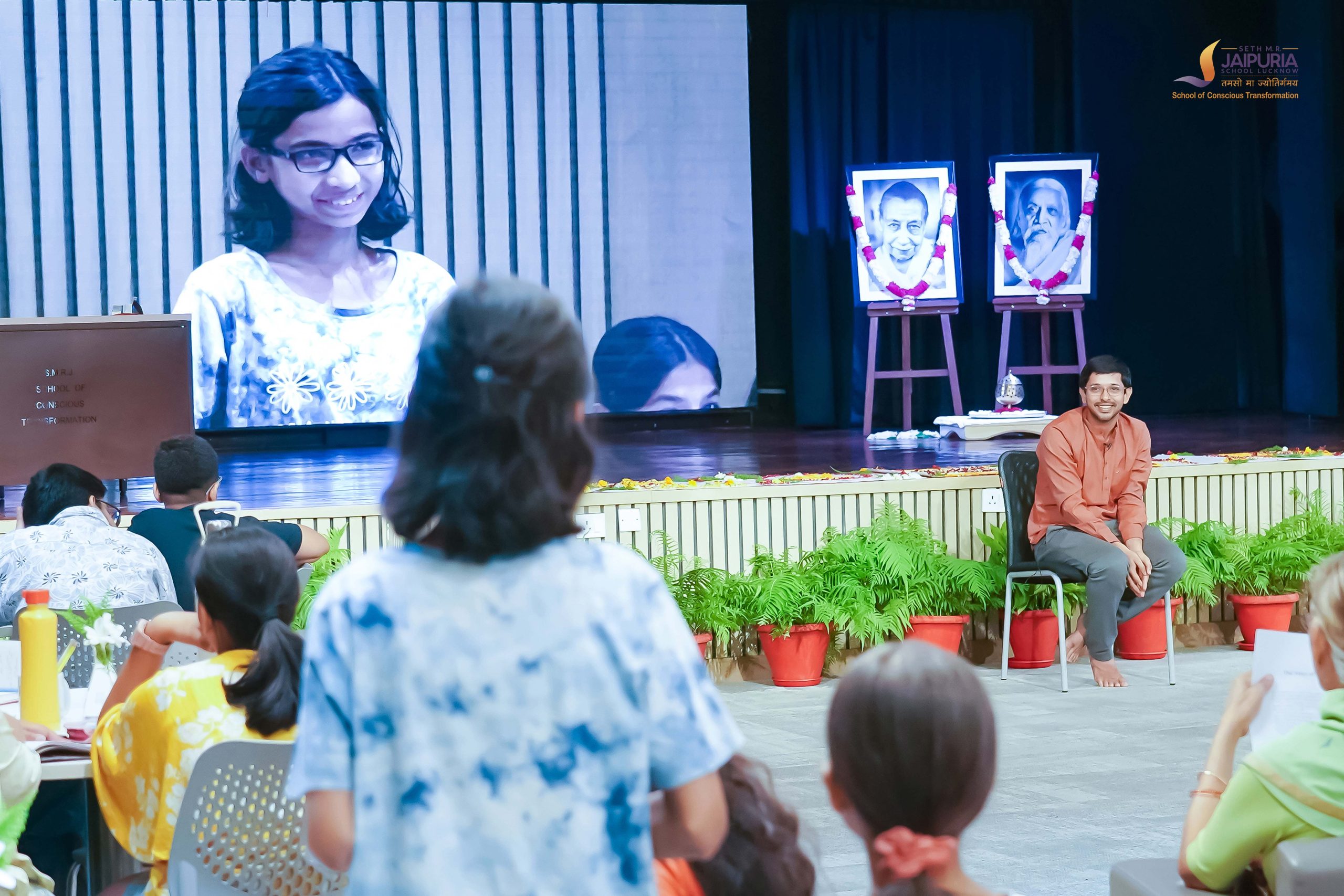
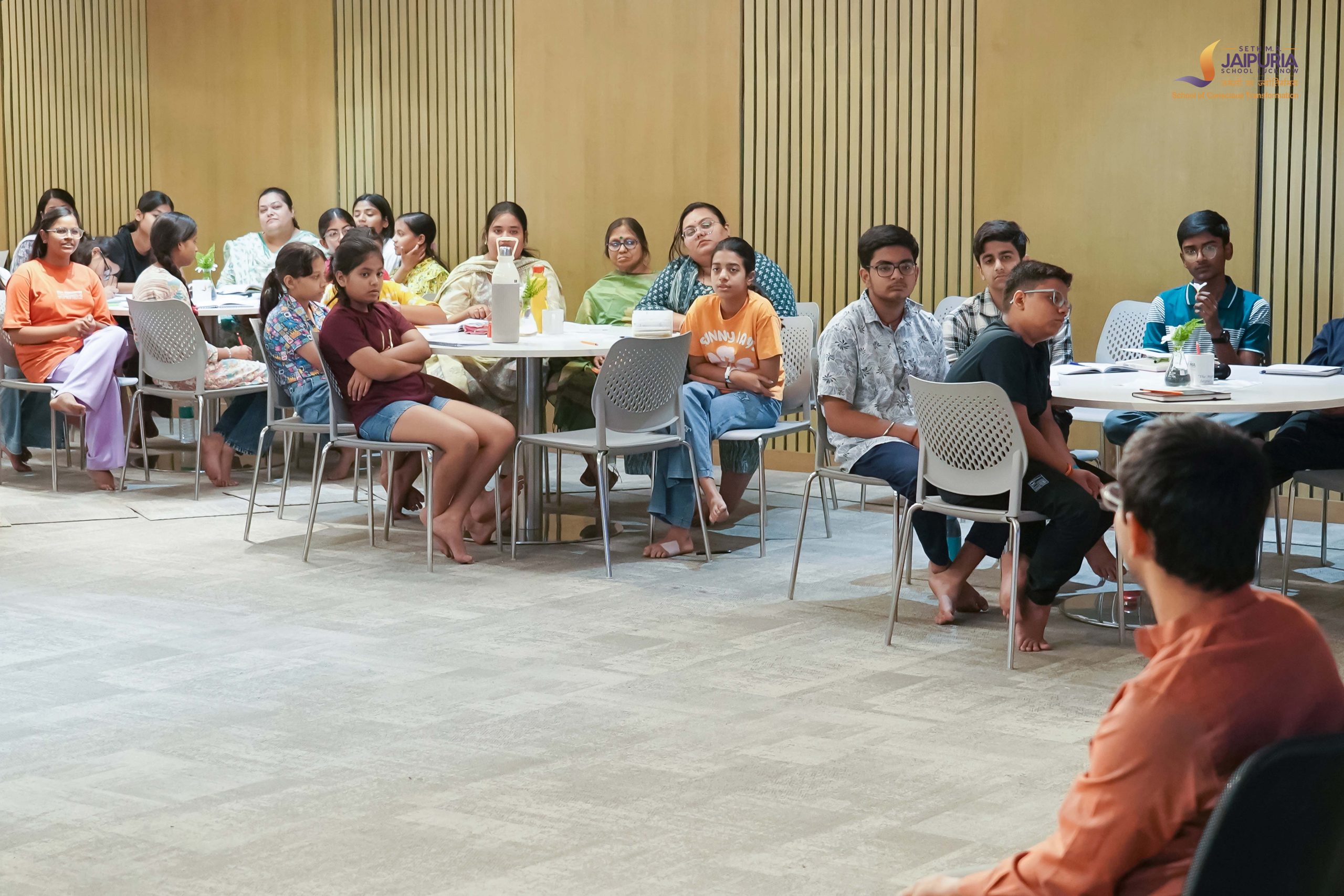
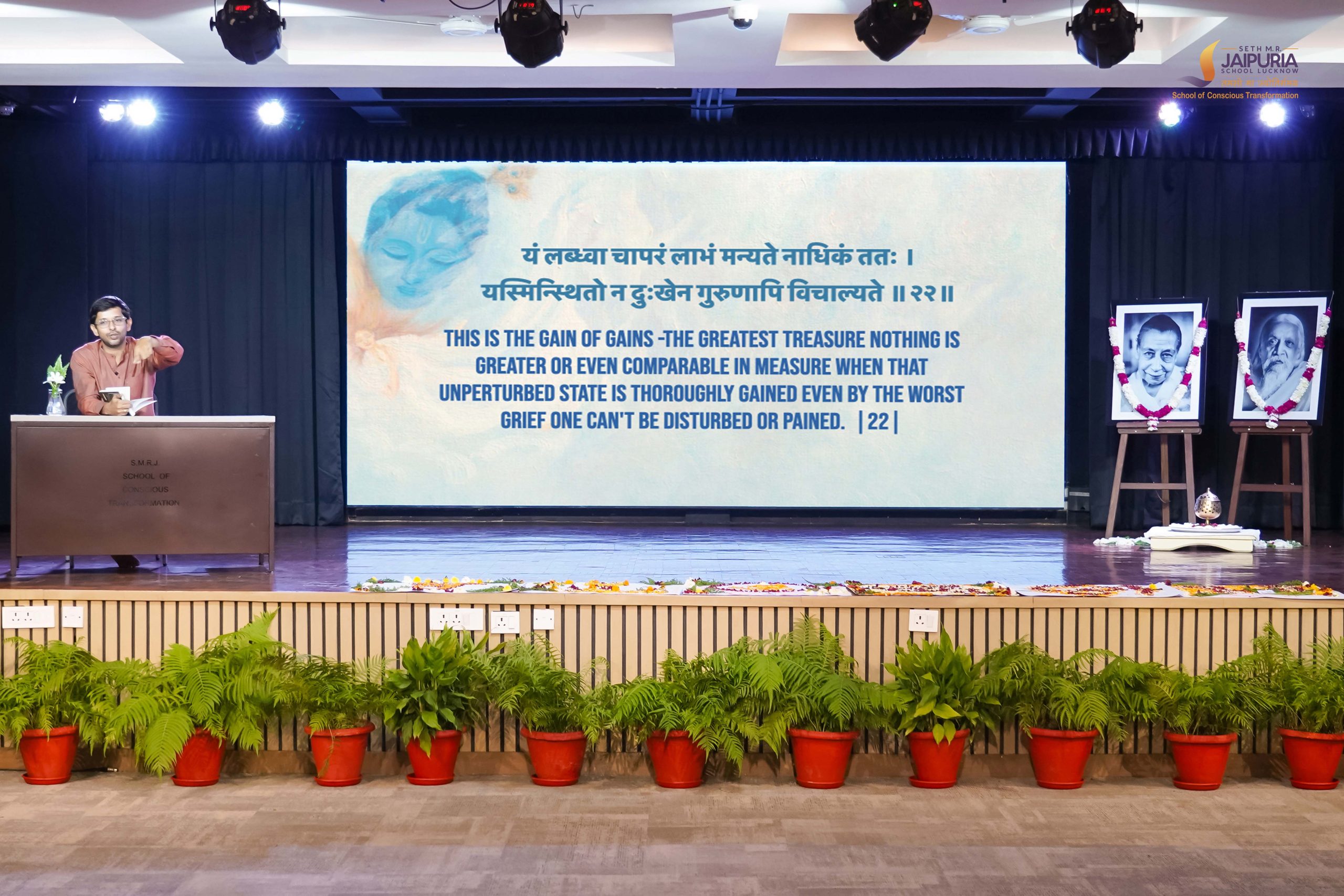
Up next, Sushrut Badhe—an author, researcher of Sanskrit scriptures, and writer who flew in from Puducherry—conducted a session titled “The Gita for Atmasamyamana or Self-Control.”
Sushrut Badhe commenced his session by highlighting that the teachings of the Gita are eternally relevant, transcending time and place. He explained that the battlefield of Kurukshetra, where Lord Krishna imparted His Divine wisdom to Arjuna, symbolises much more than a historical event; it represents the internal struggles that each person faces daily. Badhe articulated, “Today, even amidst our challenging circumstances—whether emotional, social, professional, or spiritual—the Gita continues to shine as a guiding light.”
To illustrate the power of inner resilience and faith, he shared an inspiring story of a young woman who was diagnosed with cancer and given just three months to live. The doctor’s verdict seemed like ‘bad fate,’ yet her unwavering resolve and hope transformed her life within a year. “She worked with unbelievable strength,” Badhe narrated. “She chose not to listen to despair, and within a year, she was cancer-free—with a scholarship to Oxford. This shows that fate can give a comma; it cannot put a full stop to our aspirations.” He explained that “fate has a role, but destiny is shaped by our will and effort,” emphasising that inner strength and persistence are crucial in overcoming seemingly insurmountable obstacles.
When a student asked how the Gita can help in daily challenges, Badhe explained that its teachings provide practical solutions. For instance, in relationships where communication breaks down, Krishna’s advice to remain poised inwardly becomes invaluable. “Krishna says very nicely that the Divine is the best friend,” he elaborated. “When you face rejection or silence from a loved one, you need not panic or get angry. Instead, stay calm inside, and understand that everything is part of life’s play.”
Addressing the profound question of why Krishna chose to deliver the Gita amidst the chaos of a battlefield rather than in peaceful surroundings, Badhe explained, “Krishna wanted to demonstrate that life itself is a battlefield—full of struggles, dilemmas, and conflicts. The battlefield is a symbol of the constant action and decision-making we face every day.” He elaborated that life’s inherent challenges demand practical, direct solutions—not escapism, but active engagement with spiritual discernment.
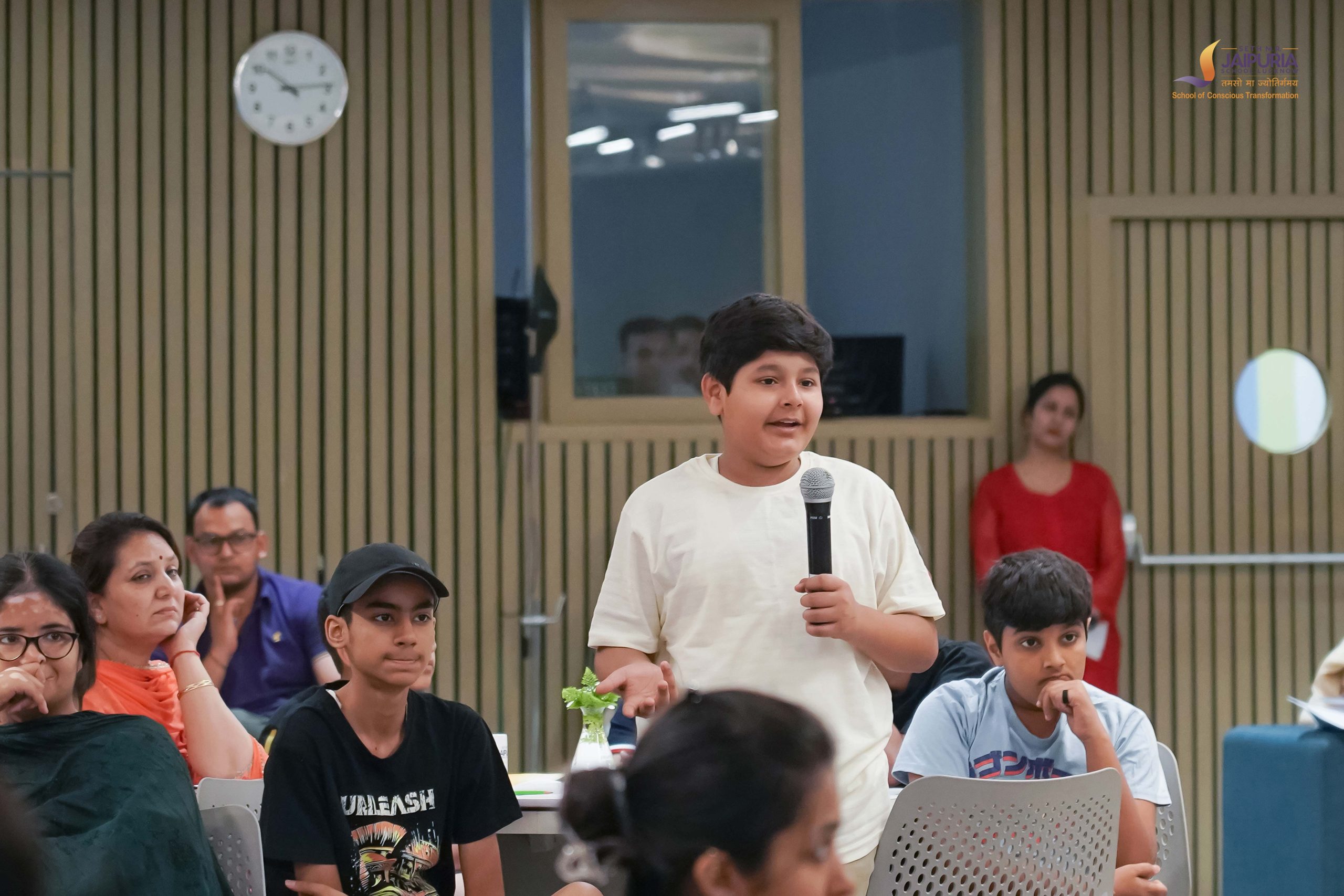
The conversation then opened up for student inquiries. One student asked, “Despite his achievements, why did Arjuna feel overwhelmed and forget his duty?” Badhe replied, “Arjuna’s declaration—‘I am afraid’—does not diminish his courage. Rather, it highlights his sincerity and willingness to seek guidance. His act of surrender is a profound act of humility, which allows Divine wisdom to flow into him. Even the greatest heroes need these moments of surrender, because that’s when true growth begins.”
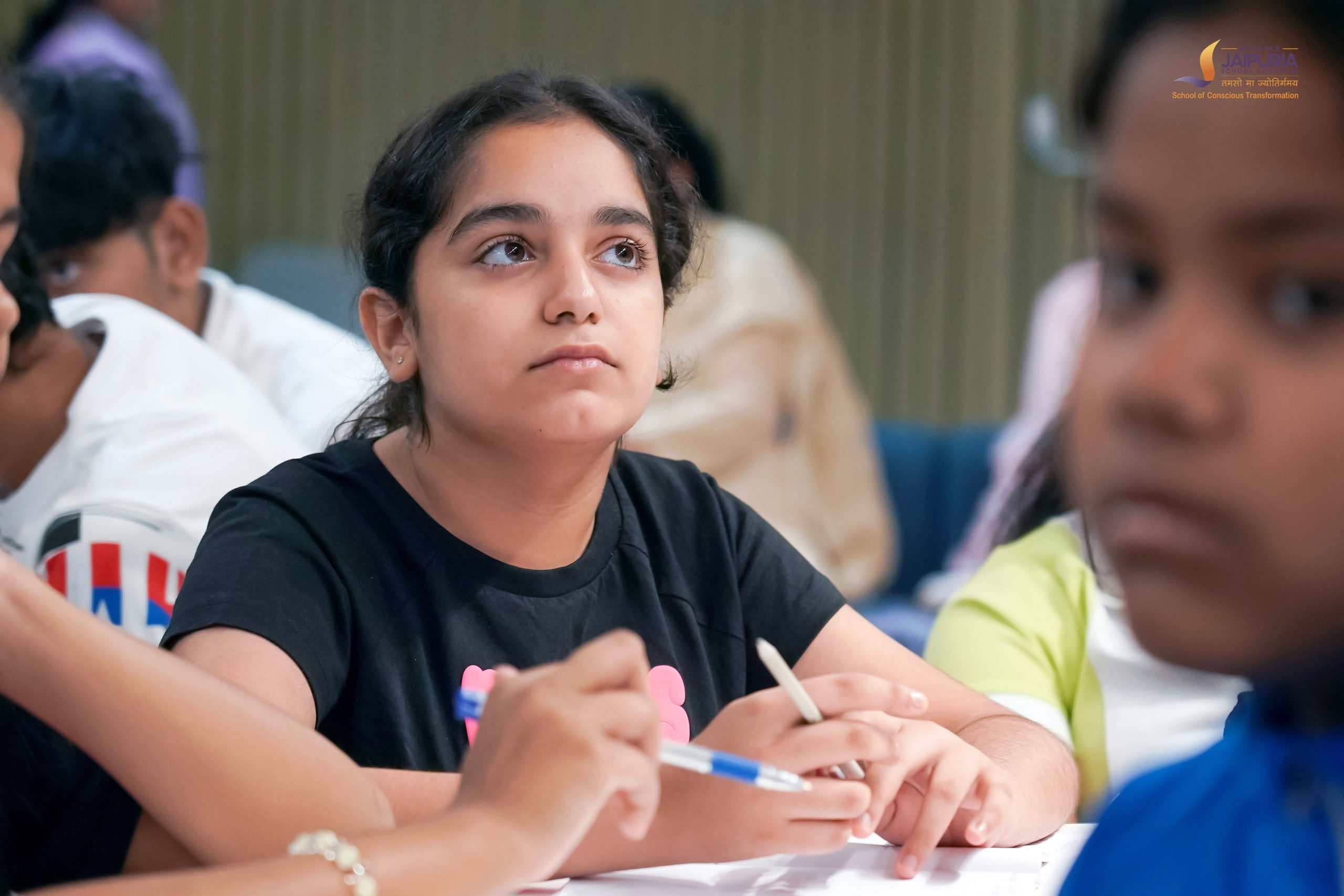
Another student asked about the relevance of studying the Gita at a young age. Badhe responded, “The earlier we start learning these principles, the better equipped we are to face life’s ups and downs.” He stressed that the Gita cultivates inner strength, equanimity, and clarity. “When your mind becomes a friend rather than an enemy during challenges, life becomes smoother.”


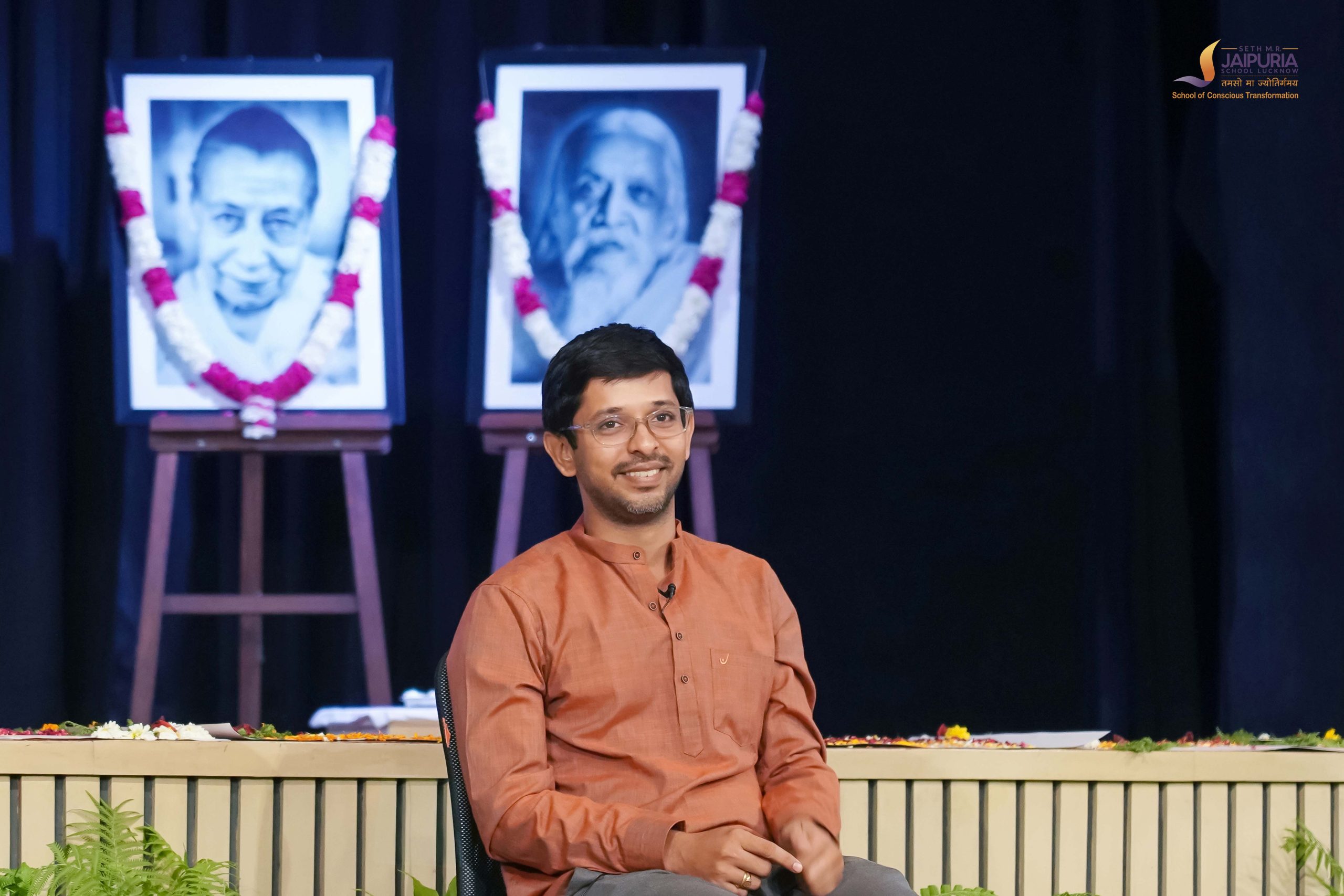
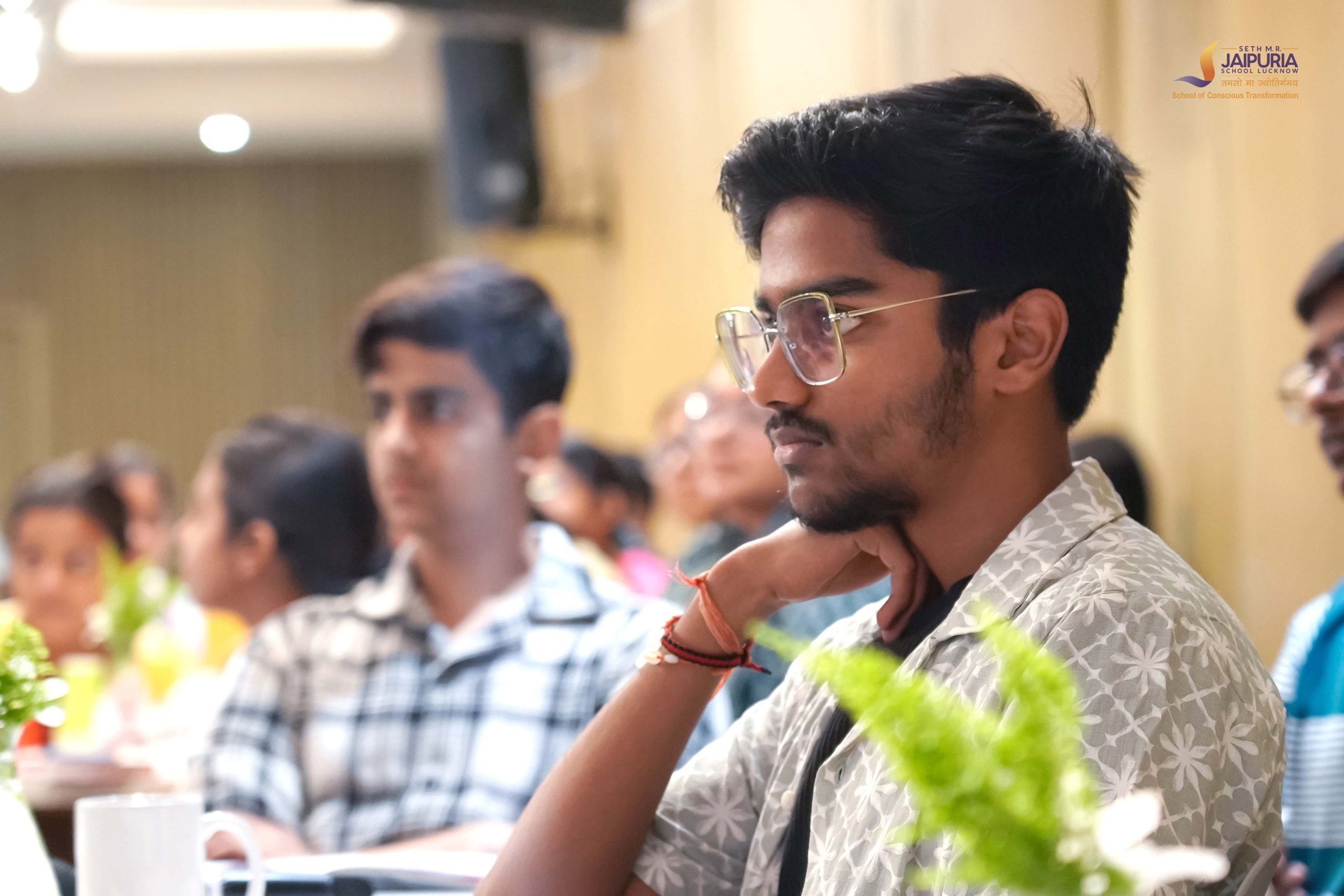



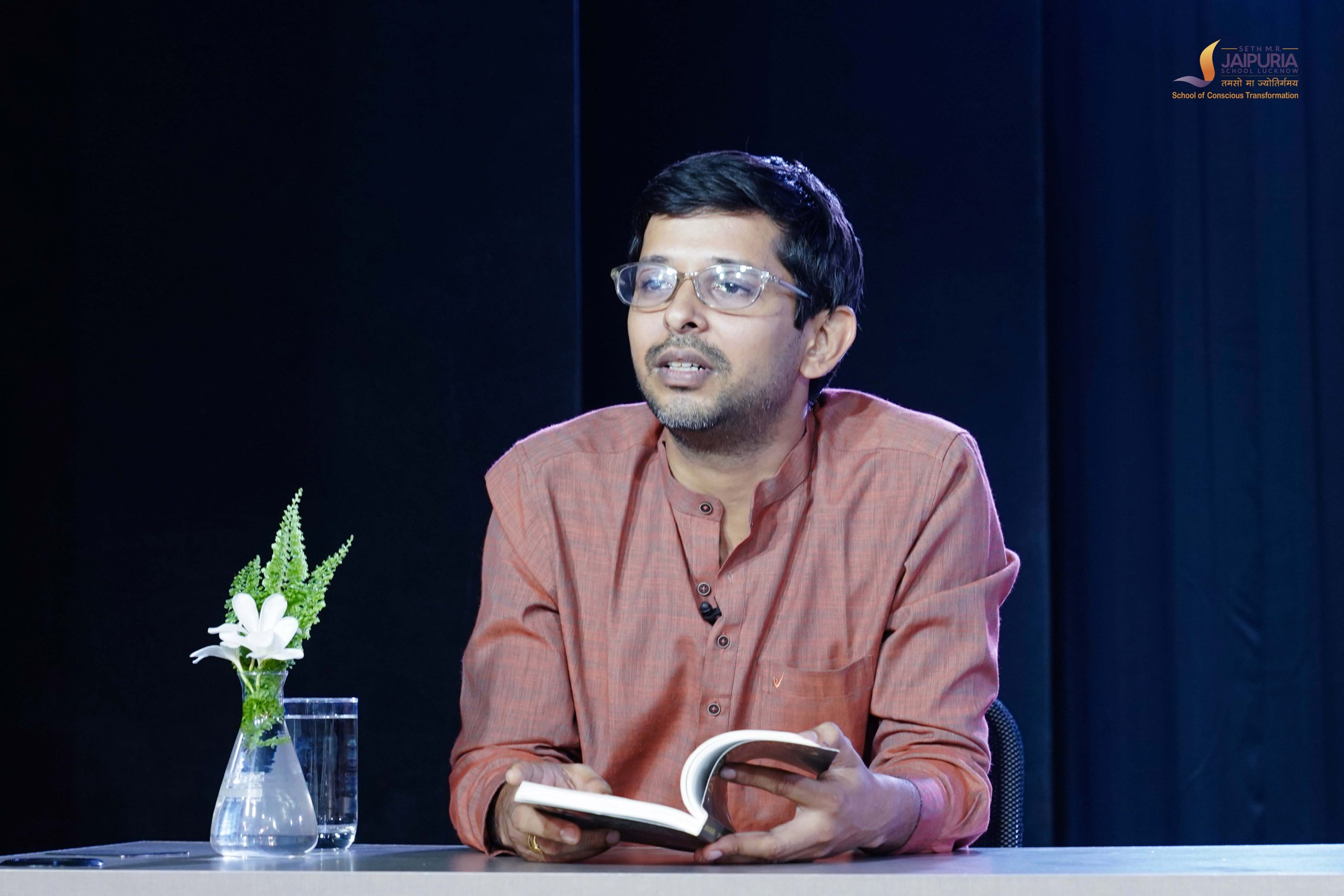

Concluding his discourse, Badhe highlighted that the essence of the Gita’s teaching lies in self-awareness and active engagement. “It’s not enough to meditate or retreat into solitude,” he emphasised. “True spirituality requires action rooted in knowledge and surrender. By studying and contemplating the Gita, we learn to transcend worldly limitations and align ourselves with Divine harmony. It helps us discover the best version of ourselves and realise that the real victory is over our doubts, fears, and ego.”
He summarised that the Gita is essentially an ongoing dialogue—a conversation between the Divine and the seeker—that provides solutions for internal battles. “If we internalise its teachings,” he concluded, “we find that life’s challenges become opportunities for growth and self-realisation. The Gita guides us at every step of life towards our highest potential.”
Even after the session concluded, students continued to gather around Sushrut, eagerly seeking answers to clarify their lingering doubts. Impressed by the thoughtful questions and curiosity of one student, Vishnu of Grade 7, Sushrut gifted him a copy of his book, Bhagavad Gita: The Rhythm of Krishna, as a token of appreciation.
Following a peaceful dinner, the students gathered their thoughts and learnings in their journals and later began working on their projects. Eventually, as the evening progressed, all made their way to bed for a meditative sleep.